
This post was originally published on here
December 5, 2025 | Dubai, UAE: The Gulf Arab states are making a significant stride in terms of travel integration. The pilot phase of the recently redesigned GCC one stop travel system was officially launched in the United Arab Emirates (UAE) and Bahrain on December 2, 2025.
In this plan, the citizens of the GCC member countries flying between the UAE and Bahrain will do all the necessary travel formalities at the same checkpoint before boarding the airplane including the immigration, customs and security checks. When they arrive they will not have to pass through additional checks: travellers are in short being pre-vetted.
Provided that this pilot is successful, the system will grow in stages to include all six GCC countries: the UAE, Bahrain, Saudi Arabia, Kuwait, Oman and Qatar.
The implication Of The GCC One Stop Travel
Conventionally, even on local travel between the Gulf countries, travelers have been required to pass through the entire immigration, customs, and security clearance at the departure and arrival gate, which has seen a repetitive checklist, long queues, and a lot of time wastage. The new GCC one stop travel model aims at transforming such an essential structure.
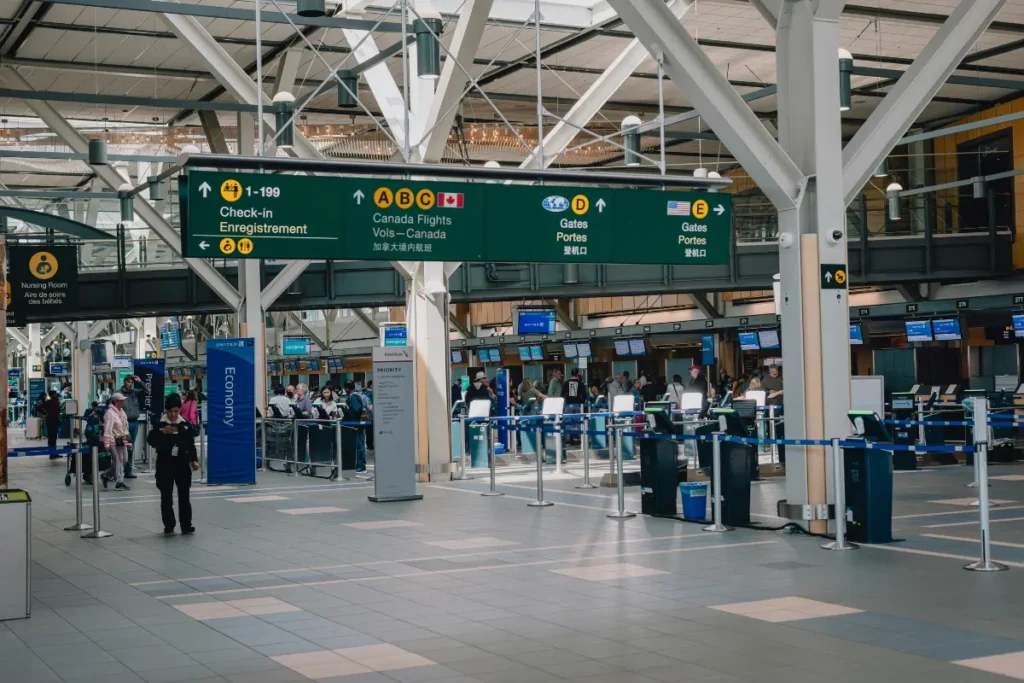
The system will focus on streamlining all the formalities at the border to one pre-departure checkpoint to ensure that intra-GCC flights become more of a domestic flight. This means that the hassles will be reduced, the processing time will be cut and the traveling experience of citizens of GCC states will be smooth and efficient.
An illustration: a passenger who is flying between Bahrain and Dubai will clear passport control, customs and security in Bahrain and on arriving in Dubai, he will just get off, like it was on a domestic flight.
The new system will be underpinned by a single electronic platform, assisting various Gulf nations to exchange and coordinate travel-associated information, safety conventions, as well as clearance measures. This e-platform is essential to the effectiveness of a cross border travel zone.
Importance Of The GCC One Stop Travel
The introduction of the new system of a GCC one stop travel is not just a convenience enhancement. It is an extension of a larger goal: to enhance the integration of the region, the ease of movement, and closer economic, business, and cultural relationships between the member states.
To the frequent traveller, be it a business person, expatriate or even a citizen who frequently visits his family, this may help a lot in reducing the friction and time spent travelling. The streamlined traveling system will benefit the Gulf-region tourism, business travel and the exchange of cultures as well.
Furthermore, this efficient travel system also supports other current GCC projects: one of them, a single regional tourist visa, is said to be in the pipeline, as a part of the long-term project to establish a truly integrated Gulf travel ecosystem.
The Next Pilot, Evaluation And Rollout
The first step is between UAE and Bahrain and is considered a pilot stage. The authorities will consider the ease of the system operation in real-life situations: operational coordination, security measures, data sharing, the passenger experience, etc.
When it works, the clearance model can be gradually introduced to the rest of GCC states, and eventually, the citizens of GCC will be able to travel to the other parts of the region without much border friction.
Nevertheless, although the GCC one stop travel is making the processes easier, it is not substitutive of visa or residence conditions. It extends to GCC nationals who have to travel within the region – and it is not to be confused with such proposals as a unified tourist visa, which has other objectives and is also not limited to the same set of eligibility requirements.
Prospective: A Gulf That Is More Interconnected
The opening of the new project of the GCC one stop travel is what may become a new chapter in the mobility of the Gulf. The vision is far-reaching, a single travel zone in which the Gulf citizens will almost be able to move interstate just the way that they can within their own borders, that is not only to go on holiday but also to work, to conduct business, to perform trade, to visit family, and so forth.
In case of a success, the project would establish a precedent in other regional integration projects: common infrastructure, synchronisation of regulations, cross-border trade and tourism. To the Gulf nationals, what would have been a time consuming process that involves multi-steps, can now be as easy as that of boarding a domestic flight.
Concisely, with GCC one stop travel, the Gulf is seemingly taking a step towards greater cohesion, more connectivity and rebranding the regional mobility as a new face.
Read More:UAE New VAT Rules Overhaul Set for January 1 – What Businesses Need to Know?