This post was originally published on here
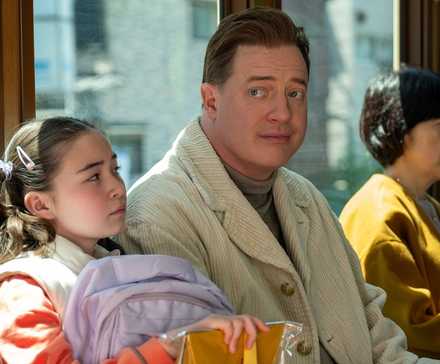
Rental Family feels like the role Brendan Fraser has been orbiting for years. He plays Phillip, an American actor living in Tokyo who makes his living selling rented emotional experiences to clients. Sometimes he’s a stand-in father, sometimes a best friend, sometimes simply the comforting presence someone needs in a difficult moment. It’s the kind of premise that could easily veer into quirk-for-quirk’s sake or collapse under cheap sentimentality.
But Fraser is the reason it becomes something warmer and more grounded. Drawing from the openhearted humor that powered Encino Man and The Mummy and the renewed audience affection sparked by his Oscar-winning turn in The Whale, he brings a sincerity that gives the film emotional weight. The performance feels like a quiet synthesis of everything Fraser does well: a storyteller who can project goodness without underlining it.
‘Rental Family’ Shows the Power of Fraser’s Gentleness
Fraser has always carried a disarming, natural warmth. Audiences instinctively soften the moment he appears onscreen. He’s likable, but more than that, he’s trustworthy. Rental Family builds its entire emotional logic around that quality. The film never needs to explain why people would hire Phillip to help act out what are sometimes their deepest and saddest moments; with Fraser in the role, it’s self-evident. When someone asks him to step into a role they can’t navigate alone, he makes the experience feel safe.
There’s a quiet wonder to the way Fraser plays men who enjoy being around others, and Phillip embodies that completely. Clients aren’t met with a performer playing dress-up, and Phillip isn’t a cynic who has to wrestle with newfound connection. Instead, he genuinely seems to like his clients and wants to help them feel seen. It’s the charisma Fraser excels at in his best films, a goodness that lets strangers hand him their most fragile moments.
‘Rental Family’ Review: Brendan Fraser Follows Up His Oscar With a Perfect Role | TIFF 2025
Hikari tells a sweet, tender story that could’ve gone deeper with its characters.
Phillip is not adopting elaborate personas or putting on disguises so much as offering presence. His work is the emotional labor of connection, and Fraser approaches it with a grace that feels instinctive. His closest precedent might be his three-episode guest role on Scrubs as Ben, the cancer patient whose brightness made everyone gravitate to him. There, Fraser showed how deeply audiences feel the loss of someone whose presence matters. Here, he gives the inverse and shows how much healing can come simply from having someone like Phillip show up.
Fraser Is a Great On-Screen Listener
Beyond charm, it’s Fraser’s gift for listening that anchors the performance. Phillip observes people with a gentleness that gives them space to reveal what they’re afraid to say. Whether he’s sitting with an aging director reminiscing about forgotten films or playing with a little girl who believes he’s her father, Fraser reads emotional rhythms with an attentiveness that feels both empathetic and lightly worn. It helps that Fraser’s career has been built around his ability to play off others, from big ensembles to Looney Tunes characters. His willingness to play along and his inherent kindness also help skirt some of the moral quandaries this type of story can sometimes skid into.
Crucially, the film resists centering Phillip as a misunderstood genius or a man defined by his own hidden wounds. Any sadness in his background is acknowledged only briefly, and even then as shading rather than the axis of the story. Instead, he operates as a catalyst whose quiet presence nudges others toward truths they’ve been avoiding. Director Hikari, who captured more combustible human interactions with the Netflix series Beef, smartly avoids forcing emotion into these scenes; she simply watches Phillip listen and lets the honesty of those moments carry the film.
This restraint makes Rental Family feel more honest than the kind of emotional manipulation Fraser has occasionally been saddled with, from The Whale to the moralizing sweep of Crash. Here, there are no grand speeches or engineered catharses. The drama stems from how Phillip’s ability to truly see his clients, something his coworkers often can’t, opens his eyes to the ethical complications of selling emotional closeness and becomes a fight for true catharsis and healing, to his clients and his colleagues. His desire to help people genuinely change, not just feel temporarily soothed, becomes the movie’s moral core.
‘Rental Family’ Is Fraser’s Best Showcase Yet
If Fraser’s resurgence has reminded audiences of his range, Rental Family feels like a culmination. There’s no vanity here, no explosive monologue designed to circulate online, no awards-bait theatrics. Even as his career gears up again with the possibility of returning to blockbuster action in a new Mummy film, this performance is defined by stillness and generosity.
He excels at playing men who lead with their hearts and want to do right by others, even as their own lives remain a bit unresolved. Phillip distills those instincts into a role defined less by what he says than by what he understands. It’s a portrait of emotional intelligence treated with the same reverence most films reserve for physical transformation.
In a career full of reinventions, hard pivots, disappearances, and triumphant returns, Fraser has found a part that captures exactly why audiences missed him. Rental Family gives him a space to be gentle without being sentimental, open without being naïve, and moving without demanding attention. It’s a beautifully calibrated performance and a reminder of the singular appeal Fraser has carried for decades, a warmth that can change the temperature of an entire film just by being in the room.
Rental Family is now playing in theaters.