This post was originally published on here
Hard science fiction is the sci-fi subgenre that attempts to play by the rules of the real world. The concepts usually kick off from an idea in physics, biology, engineering, astronomy, or psychology that already exists or is strongly supported by current research. It then spins the speculation from there, considering what the realistic trajectory might look like. When it works, this kind of sci-fi can, and often does, show us where we might be headed.
Videos by ComicBook.com
While not all the films on this list are specifically hard sci-fi, and many of them take creative liberties, each one builds its plot and world around scientific concepts that are largely, if not entirely, plausible. Accurate portrayals of spaceflight, genetic tinkering, and the psychological implications of technological acceleration are among the ideas these filmmakers explore. Regardless of topic, theme, or tone, all seven of these masterpieces contain science that checks out.
7) The Andromeda Strain
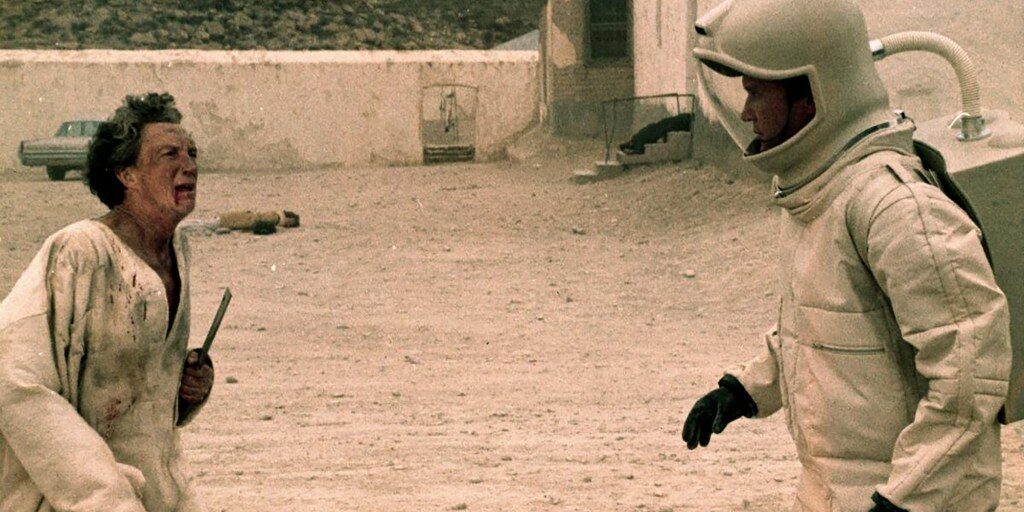
Robert Wise’s The Andromeda Strain (1971) adapts Michael Crichton’s novel about a team of scientists studying an extraterrestrial microbe retrieved from a crashed satellite. The movie roots its realism in microbiology and real methods of containment and investigation, with the majority of its runtime spent inside the Wildfire laboratory underneath the Nevada desert. The cast, led by Arthur Hill and David Wayne, plays scientists tasked with analyzing the organism’s crystalline structure and conducting controlled variable experiments.
The science in The Andromeda Strain seldom steps beyond the boundary of what existed at the time, and even when it did, the predictions were accurate. The portrayals of enzymology, immunology, and biophysics are all hyperrealistic. The central idea, that an alien microorganism is accidentally brought to Earth, requires no speculative tech outside the plausible satellite recovery. The film stays grounded in procedures that scientists use to this day, which makes its plot entirely plausible.
6) Moon
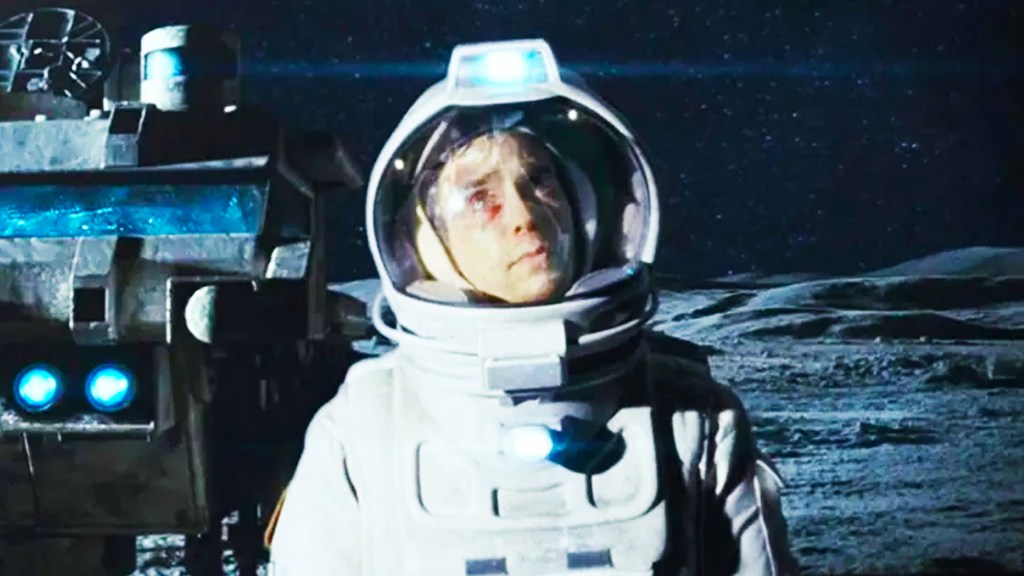
Directed by Duncan Jones and starring Sam Rockwell, Moon (2009) is about an astronaut nearing the end of a three-year solo stint on a lunar mining station. The science focuses on harvesting helium-3 from the Moon’s surface, a real scientific proposal supported by aerospace engineers, including Robert Zubrin. Taking cues from 2001: A Space Odyssey, the film also introduces GERTY, an advanced AI that manages station operations, and explores the psychological strain of long-term space isolation; all topics researched by real-world NASA.
Much of Moon’s tech and science reflects real engineering. Mining helium-3 is feasible, and its energy applications have been and still are under study. Advanced AI of GERTY’s type is still speculative, but looming closer than ever. Cloning is where the science really stretches itself, but thanks to successful experiments like Dolly the sheep, human cloning remains a plausible (albeit far-off) idea.
5) Her
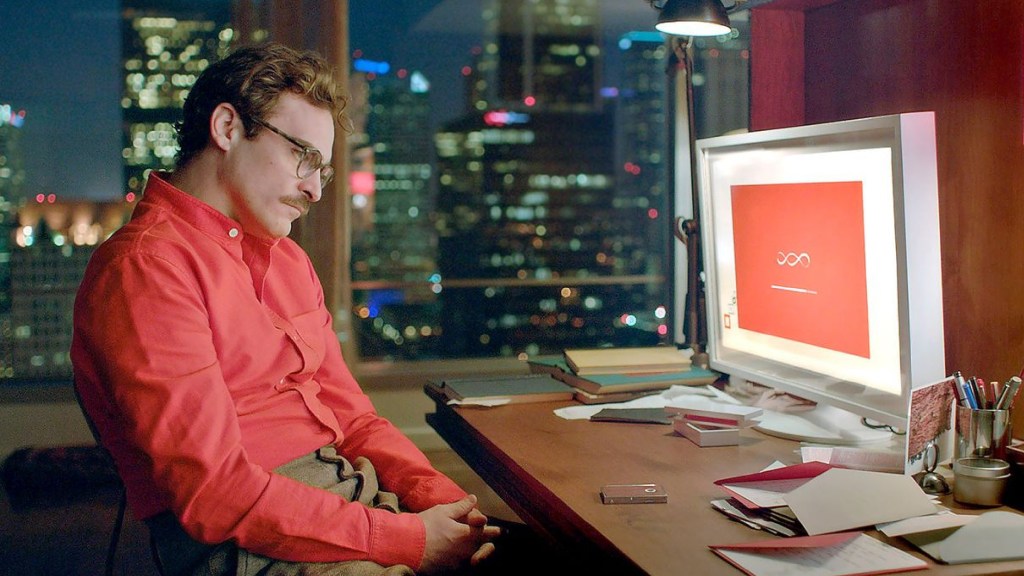
In Spike Jonze’s beloved 2013 film Her we follow Joaquin Phoenix’s Theodore, a lonely writer who develops a romantic relationship with an advanced AI operating system voiced by Scarlett Johansson. Rather than emphasizing scientific mechanisms, the film concentrates on the psychological and emotional consequences of lifelike artificial intelligence. Its core concept, a conversational AI that adapts to its user through machine learning, aligns a little too closely with real-world LLMs and increasingly emotional relationships between humans and chatbots.
Her’s honest and tender depiction of human behavior is strikingly realistic, and the movie succeeds in placing the audience in Theodore’s mind, creating compassion and understanding amid the rather dystopian situation. Individuals in an increasingly isolated world, forming emotional bonds with AI companions, is already happening, and Her predicted it years before today’s chatbots existed. The speculative elements come in with the OS’s exponentially increasing intelligence, a scientific reality yet to be seen. Yet the psychological effects seem to follow the same patterns we’re seeing today.
4) Solaris

Andrei Tarkovsky’s Solaris (1972) adapts Stanislaw Lem’s novel into a slow-burn cerebral sci-fi film about a psychologist, Kris Kelvin, sent to a space station orbiting the ocean planet Solaris to investigate the crew’s deteriorating mental state. Admittedly, the film’s realism does not focus on hard science, but on accurate human psychology and the idea that, as long as we cannot understand ourselves, we are unlikely ever to comprehend alien life. Based on Kelvin’s flawed and fragmented memories, the sentient planet reconstructs his dead wife. The station’s deteriorating condition, the crew’s exhaustion, and the fuzzy line between possibility and insanity all add to the realism.
While the idea of false resurrections aligns with today’s growing concerns about deepfakes, the science that truly works in Solaris is the psychology, specifically the limits of human understanding. Many scientists now believe that extraterrestrial life (if it exists) would be fundamentally unlike humans, potentially operating on principles we can’t readily sense or interpret, which is the exact idea Solaris pushes to its breaking point. The story explores how humans project their own emotions, guilt, and assumptions onto the unknown, and how little we understand even those closest to us.
3) Gattaca
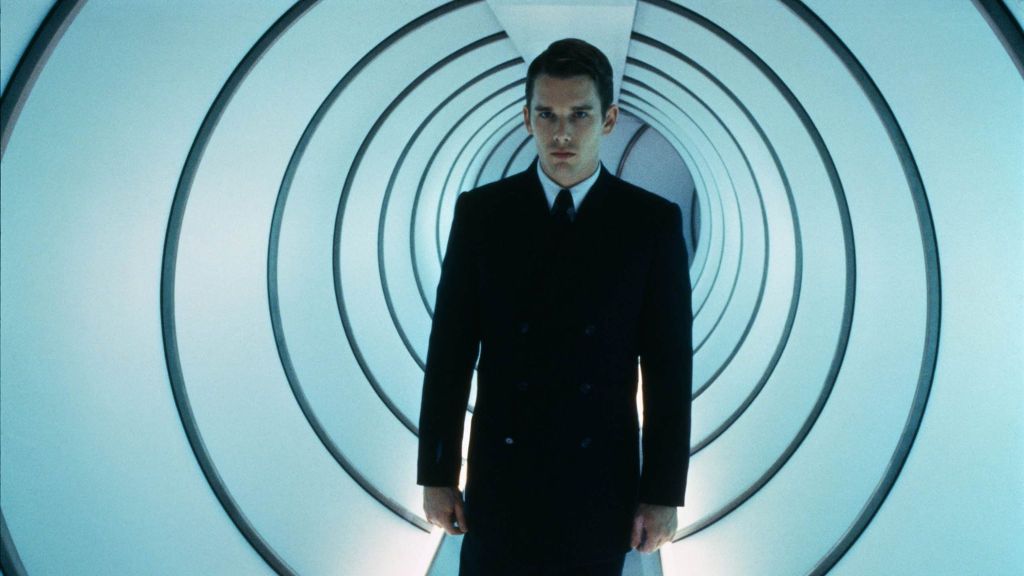
Andrew Niccol’s Gattaca (1997) depicts a near-future society in which embryo selection, implantation, and genetic engineering sort people into predetermined social roles. Starring Ethan Hawke, Uma Thurman, and Jude Law, Gattaca’s tech is almost eerily accurate to real-world technology currently in use and development. Techniques such as IVF, pre-implantation genetic testing (PGT), and genome editing are already in existence; however, the dystopian film speculates about the consequences of a society where these tools are normalized and expanded.
Perhaps more than any other film on this list, science has already caught up to the film’s premise. CRISPR and genome-editing research make widespread, selective genetic enhancement a conceivable reality. The social outcomes shown in Gattaca largely focus on the negative consequences of things like genetic determinism, i.e., workplace discrimination based on DNA. Its warnings about eugenics are the same concerns shared by real geneticists who study the ethical ramifications of these technologies.
2) The Martian
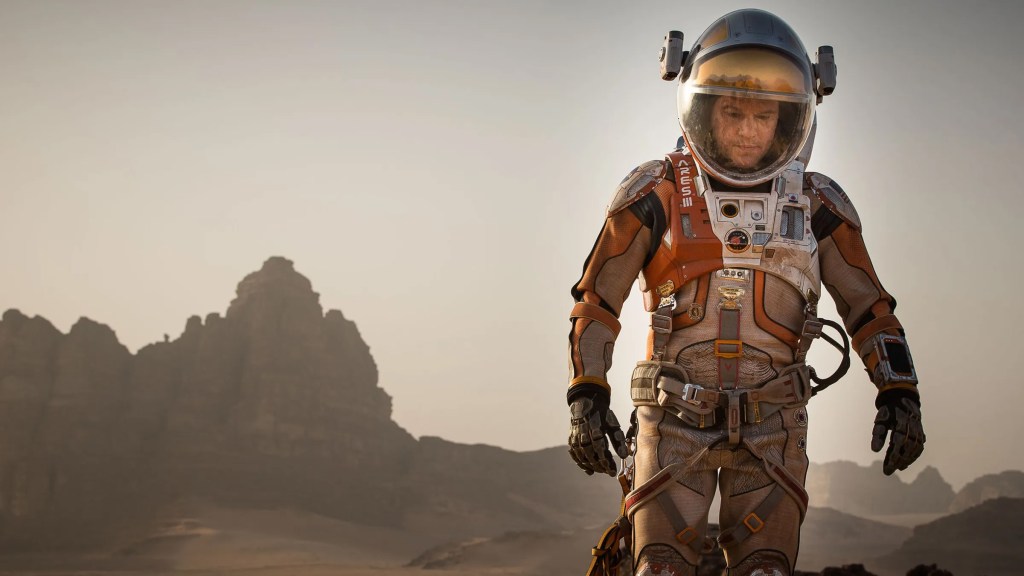
Ridley Scott’s The Martian (2015), based on Andy Weir’s novel, stars Matt Damon as Mark Watney, an astronaut stranded on Mars who survives using botany, engineering, and scrappy resource management. The film’s hyperrealistic science covers everything from growing crops in Martian soil to generating water from chemical reactions and using orbital mechanics for rescue missions. NASA consulted heavily during production, and the movie’s attention to detail earned praise from scientists, including celebrity astrophysicist Neil deGrasse Tyson, who called it the most scientifically accurate sci-fi film ever made.
The film succeeds scientifically because nearly every survival step Watney takes is theoretically feasible according to physics, chemistry, engineering, etc. The only significant inaccuracy is the opening windstorm, as Mars’ thin atmosphere means 100 mph winds would exert very little force. According to Weir, it was his only liberty in the story, necessary to initiate the plot. Everything else, from the jury-rigged life support repairs to the Hermes’ orbit slingshot, is totally plausible, making The Martian one of the most grounded hard sci-fi films ever made.
1) 2001: A Space Odyssey
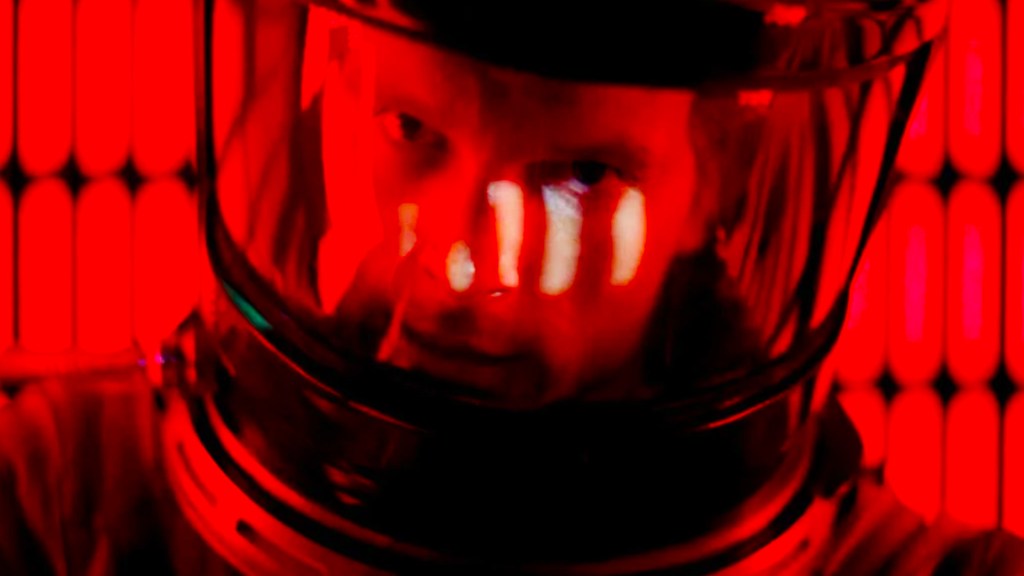
Stanley Kubrick and Arthur C. Clarke created 2001: A Space Odyssey in 1968 with direct consultation from NASA and leading experts of the era. The film covers early human evolution, permanent orbital stations, long-range spaceflight, and artificial intelligence, all with an unprecedented level of realism. Many technologies portrayed in the film, such as tablets and video calls, were invented decades after the movie premiered. The deafening silence of space, the zero-gravity modifications on the station, and even the specific spacecraft architecture were all extremely accurate portrayals.
The film earns the top spot because its scientific design still stands up more than 50 years later. The depiction of AI like HAL 9000 predates Moon, Her, and most other AI films, predicting the trajectory of tech nearly 57 years ago. Famously, the only significant scientific error involves a liquid drifting back down a straw in zero gravity. Otherwise, the portrayal of space is hyperrealistic, and Space Odyssey likely influenced the other films on this list, especially remarkable considering it predates the moon landing.
What sci-fi film do you think is most realistic? Leave a comment below and join the conversation now in the ComicBook Forum!