This post was originally published on here
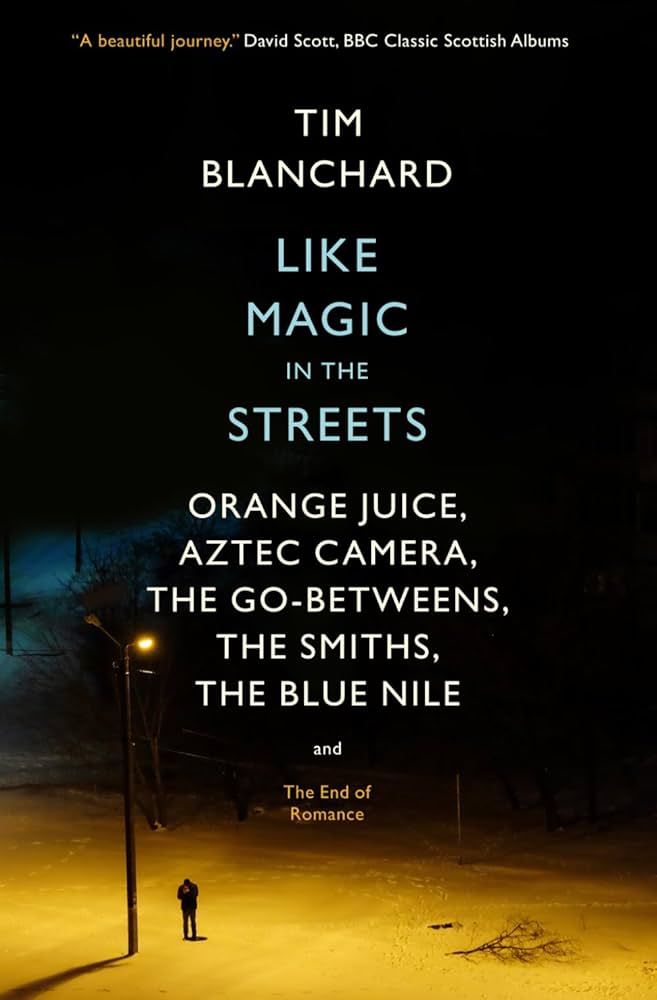
Like Magic in the Streets: Orange Juice, Aztec Camera, the Go-Betweens, the Smiths, the Blue Nile + The End of Romance (Crackle & Hiss pbk 2025)
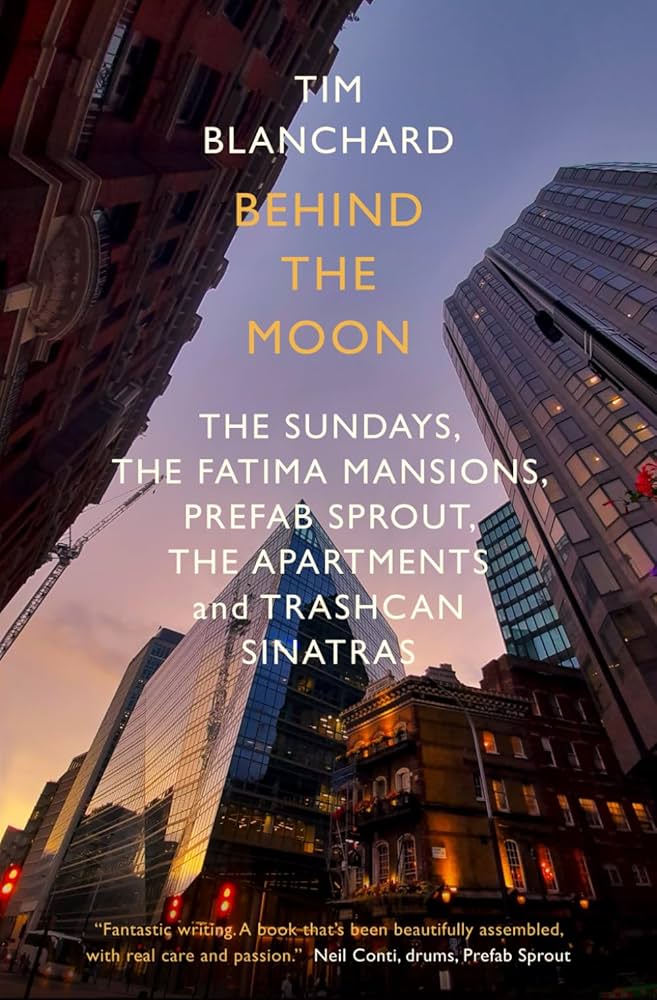
Behind The Moon: The Sundays, the Fatima Mansions, Prefab Sprout, the Apartments & Trashcan Sinatras (Crackle & Hiss 2025)
A paired celebration of indie’s shimmering brilliance, these two volumes by Tim Blanchard trace the poetic bite and quiet beauty of bands from Orange Juice and the Smiths to Prefab Sprout and the Trashcan Sinatras, capturing how their music reshaped the emotional landscape of the 1980s and beyond.
Tim Blanchard’s books take an in-depth look at some key 80s/90s indie groups and albums, using them as a standpoint for a wider perspective of the social and political atmosphere of the time. This takes in the political, social and cultural scenes, a febrile mix of early Thatcherism, the Miners’ Strike, the Falklands War, but also goes in close and small scale to evoke what it felt like to be a teenager growing up at the time. I was a bit older then, but I remember signing on at a dismal prefab in Brixton, where you couldn’t help noticing that just about everyone was under 30, a jilted generation sentenced to being part of ever-rising numbers through the decade.
 Initially, the New Romantic/Blitz Kids scene and groups like Culture Club et al seemed to offer an alternative to hair metal and other US influences, but most of the main players soon succumbed to the lure of big bucks, glossy MTV videos and were easily assimilated by the mainstream. However, the word “Romantic” is in many ways the author’s key theme through the two books. Not in the Duran Duran manner of expensive clobber and supermodel girlfriends, but harking back to the originals. “emotion recollected in tranquillity” as per Wordsworth and Coleridge, or William Blake, the original visionary soul rebel. Out of this came a style which was anti-rock and looking to create a new form of pop which dealt with life as it was actually lived by most people who weren’t cruising down the freeway or flying their private jet.
Behind the Moon concerns itself with Orange Juice’s album You can’t hide your love (1982), Aztec Camera’s High Land, Hard Rain (1983), the Go Betweens Before Hollywood (1983), the first Smiths’ album and Blue Nile’s Walk across the Rooftops (both 1984).
The books are really well researched, with a nice mix of contemporary quotes and older and wiser reflections. The books are quite different to things like the 33 1/3 Series with their track-by-track analysis of an album, taking a wider, more impressionistic approach. The author does a great job catching the nuances of the different main players. Edwyn Collins’ determination to escape rock’n’roll clichés and US influences, marked by a very sharp sense of humour, which no doubt helped him recover from a potentially career-ending stroke in recent years.
Along the way, we meet Alan Horn, whose Postcard Records (the sound of Young Scotland, only slightly tongue in cheek) was one of the DIY labels that were to typify the era, aided by things like squatting and the Job Enterprise scheme. By contrast, Aztec Camera mainman Roddy Frame comes across as disillusioned and embittered, though hopefully the ongoing love of tracks like Oblivious keeps the wolf from the door. There’s a big Byrds, Love, Big Star and Dylan influence to his songs – along with Burt Bacharach type melodies. Sadly though, the albums suffered from the clichés of 80s (over) production, smothered in syndrums.
It’s great to be reminded just what an impact The Smiths had when they came out at a time when guitar bands were starting to look outdated. With Morrissey’s carefully cultivated outsider image, sexual ambiguity, immersion in the more obscure aspects of popular culture, combined with Johnny Marr’s amazing dexterity and faultless taste, taking in soul and Tamla as well as the usual suspects, to produce an amazing sequence of songs, many of them hit singles. It’s all a big contrast to the man now, generally associated with dodgy politics and lawsuits against former colleagues.
I’ll make no secret of my huge bias towards the Go Betweens. Blessed with two superb songwriters in Robert Forster and Grant McLellan, they were never short of great material. Robert Forster had strong literary leanings as well, matched by McLellan’s fascination with cinema. However, they wrote as separate entities rather than the Lennon/McCartney style. This started a fault line that would eventually split the group. Forster explains how they needed to extend beyond Australia if they were to keep going, leading to months of poverty in London squats, playing occasional gigs. Unwilling to follow in the wake of groups like AC/DC or Men At Work, who were prepared to do whatever it took to make it, the Go Betweens were sidelined (along with the equally wonderful Triffids). It didn’t help that McLellan hated touring and preferred to stay at home, Brian Wilson style drinking and writing. But it’s his Cattle and Cane song that the group are probably best known for. Tim Blanchard does a really perceptive analysis of how the song works in evoking quite nuanced and subtle emotions, childhood memories, a sense of place, disorientation in unfamiliar places – subjects way beyond the scope of most rock music.
It’s hard to do justice to the scope of the two books in a review. There are some fictional passages scattered through the text of Like Magic in the Streets, evoking classic teenage angst of strained relationships at home, waiting for the oldies to go out, breaking curfew… Common to both books is the idea that 1985 was a turning point when the heavyweights of the music biz regained control, firstly through mega events like Live Aid. This tied in nicely with the advent of CDs, so it was a much easier option for record companies to remarket established favourites – all to be promoted on MTV, naturally. Much easier than running pretend indie labels to find the “next Smiths” or whatever. Apart from the remarketing of old stuff, the author describes how “Britpop” lurked round the corner, emphasising the new commerce of bigger, better megabucks a la Oasis, while sucking in a few long-term indie wannabes like Pulp and Blur along the way. The author makes a strong case for this victory of commerce over art as being “the end of romance”.
Both books contain much more than just the music, full of cool anecdotes and detail. Highly recommended to anyone interested in a time of change, musical, political and social, they really took me back to watching the Royal Wedding in a rundown squat while drunken hoorays outside raised their glasses to Maggie.
Available at all good bookshops.
~
All words by Den Browne. You can read more on his author profile here:
A Plea From Louder Than War
Louder Than War is run by a small but dedicated independent team, and we rely on the small amount of money we generate to keep the site running smoothly. Any money we do get is not lining the pockets of oligarchs or mad-cap billionaires dictating what our journalists are allowed to think and write, or hungry shareholders. We know times are tough, and we want to continue bringing you news on the most interesting releases, the latest gigs and anything else that tickles our fancy. We are not driven by profit, just pure enthusiasm for a scene that each and every one of us is passionate about.
To us, music and culture are eveything, without them, our very souls shrivel and die. We do not charge artists for the exposure we give them and to many, what we do is absolutely vital. Subscribing to one of our paid tiers takes just a minute, and each sign-up makes a huge impact, helping to keep the flame of independent music burning! Please click the button below to help.
John Robb – Editor in Chief