This post was originally published on here
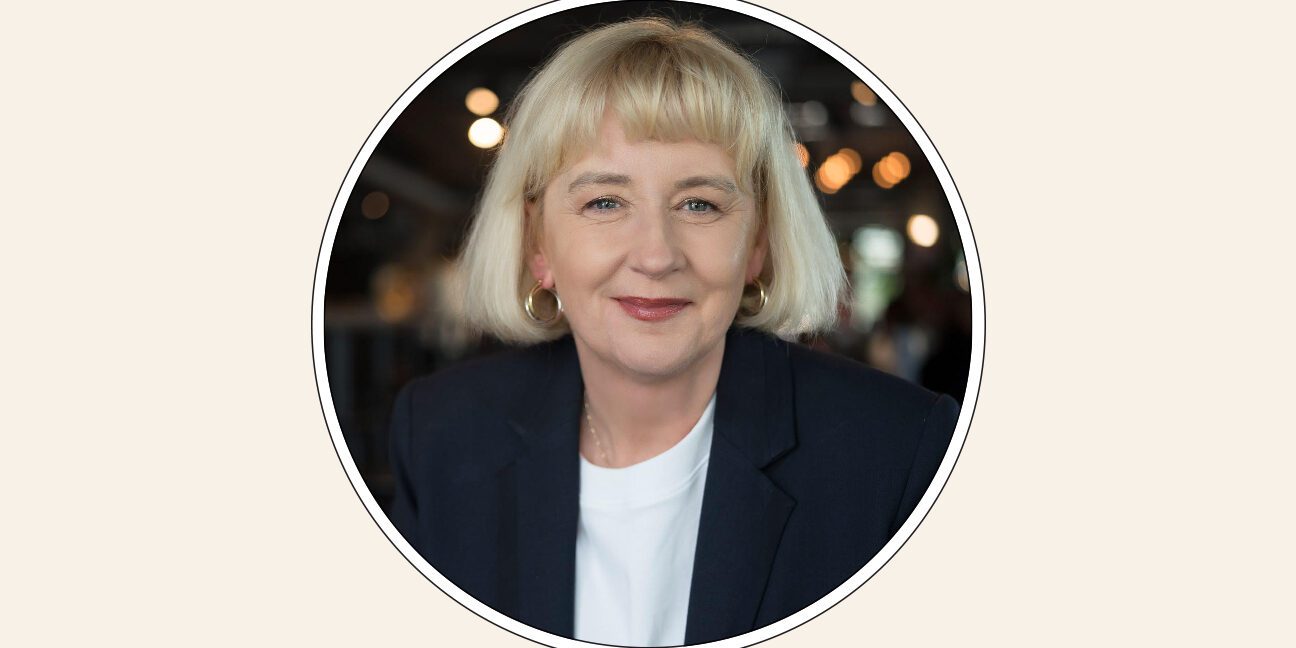
After more than three decades as a dogged movie reviewer, most recently as chief critic for the U.K.’s Screen International, Fionnuala Halligan stepped inside the film festival machinery earlier this year to accept the role of the Red Sea International Film Festival‘s director of international programs.
Halligan began her career in Hong Kong at The South China Morning Post before shifting into long-form criticism, industry reporting and authorship in London. At Screen, where she spent more than two decades and ultimately served as chief critic, she eventually developed an additional career track, spending five years as international programmer at the now-defunct Macao International Film Festival. In May, she stepped into her new post at RSIFF, succeeding Kaleem Aftab and joining forces with director of Arab programs Antoine Khalife to help shape the festival’s expanding international ambition to represent the best filmmaking of Asia, Africa and the Arab world. She also has helped oversee the festival’s ongoing push toward greater gender balance, with 37 percent of selected films in the 2025 lineup directed by women.
The Hollywood Reporter connected with Halligan over Zoom ahead of the Dec. 4–13 event to discuss her leap from criticism to curation, the mechanics of programming in Saudi Arabia, how she balances ambition with cultural sensitivity, and her favorite film of 2025.
What compelled you to take this role at Red Sea and leave criticism behind?
I’d done the same job at Screen for a long time. I wasn’t looking, but this arrived and felt like a fantastic opportunity. I’d admired Red Sea from afar through the films the Red Sea Fund had been backing. Once I really watched them, I saw they were trying something radically different from the usual European/Western lab approach. I’d always written about opportunity, diversity and representation — welcoming new voices to the table. With Red Sea’s focus on Asia, Africa and the Arab world, it felt like a chance to go have the conversation I’d been trying to get other people to have. Rather than writing about it, go and try it.
Talk me through your role. Do you have particular strands of the festival’s programming under your purview?
It’s an unusual setup. Antoine Khalife and I are co–directors of programming. He handles Arabic-language cinema (including archive), I handle international, and we work very closely — watching each other’s films and building the program together.
The main competition is restricted to Asia, Africa and the Arabic-speaking world — that’s our core remit, not a limitation. Other sections are split roughly 50/50, and we don’t quibble; we share goals and taste. In Festival Favorites, I target a healthy mix — say three from Africa, three from Asia — while International Spectacular skews more red-carpet. We still reflect the region and our audiences, and we only show MENA premieres.
The festival has a reputation for spending heavily to pull in the participation of A-list talent. How do you ensure that the festival’s emphasis on star power also translates into artistic quality?
From a programming point of view, the answer is simple. Red Sea runs a big “In Conversation With” program. I don’t program those talks and appearances. They’re star-driven, yes, and often booked at the last minute. We have red carpets, but those priorities don’t feed into programming. Programming comes first; celebrity comes after. They’re separate entities, in a sense.
My KPI is representation, diversity, equality — and serving audiences. Saudi’s overwhelmingly young population provides a unique opportunity to bring them into arthouse cinema, which isn’t widely available here yet. So I’m thinking of that the whole time. Whether talent can come is secondary. If not, we still play the film. Giant opened the festival because of its hook and local relevance — everyone here knows Prince Naseem — not because of who could show up. Some international titles come without talent — it’s the end of the year, people are in awards season. We totally get it. Star representation is handled elsewhere in the festival.
Saudi is changing fast, but historically had little access to arthouse movies, especially on big screens. How does that shape your approach? And what about cultural sensitivities or guardrails?
Cinemas opened in 2018 and it took off like a rocket — a massive multiplex build-out, very well serviced with Hollywood filmmaking. Arthouse venues have been popping up, further encouraging audience development. I think of it as a conversation; cinema is always a conversation between filmmaker and audience, and we’re facilitators. People in Saudi have seen cinema at home and via underground screenings — they’re sophisticated and savvy. Seventy-one percent of the population is under 35. Arthouse cinema has become less niche everywhere, too.
As for guardrails, we rate everything and it all gets checked. More importantly, I want a conversation with the audience in Jeddah where we’re moving together over time. I grew up in a very restricted society — Ireland, which was effectively a theocracy when I was growing up — so I know change takes time and comes through conversation and step-by-step progress. That’s why I wanted to come here. We’re respectful of culture while also introducing “strange” things for a Saudi audience — The Wizard of the Kremlin, The Secret Agent, Sirat — great films with challenging themes.
The recent Riyadh Comedy Festival sparked a backlash and a lot of heated discussion about Western artists’ participation in cultural events in Saudi Arabia. Did you encounter filmmakers or distributors hesitant to participate here for reputational reasons, particularly from the U.S.?
We’re a completely different ecosystem. For five years, the festival, fund, labs and Souk have been building a 360-degree film industry platform for the region — backing small films, supporting women, holding project markets, etc. This isn’t a one-hit celebrity event. They are building for the long haul.
So, reluctance? My main challenge has been getting MENA-premiere status for the films we’re seeking. With El Gouna, Doha, Cairo and Marrakech — great, friendly festivals — getting regional premieres can be complex. So, if people have political reservations, they haven’t expressed them directly to me. I welcome conversations about what we’re trying to do here. You’re not having a conversation “with Saudi Arabia,” you’re having a conversation in Saudi Arabia with Saudis — open screenings, Q&As, etc. Maybe a filmmaker tells a sales agent, “KSA is on my no-go list.” But if so, I don’t know about it. But no one has said anything like that to my face.
Are there elements of this year’s programming that you’re especially proud of — a risk you took, a discovery, something that encapsulates what you’re trying to achieve?
Every title this year feels like opening a conversation. We started in May, I was still finishing at Screen, and had to build a programming team. I’m grateful to rights-holders who trusted us with their “babies.” You want to be the midwife who doesn’t drop the baby — hold a great premiere, support the talent, facilitate great Q&As.
Thirty-seven percent of our directors are women, across everything we selected — that’s something I’m proud of. Mary Bronstein’s If I Had Legs, I’d Kick You — I’m excited to sit with that audience, especially among women, considering the film’s themes. Women here are strong, empowered and excited about opportunities. Our office is very woman-led — Jumana [Al-Rashid] is our chairwoman, Shivani [Pandya Malhotra] is MD, Faisal [Baltyuor] is CEO of the Red Sea Film Foundation. That energy is real.
A personal joy was programming Africa seriously for the first time. Our world premiere of Barni from Somalia, for example. We have strong voices across the lineup. Kohoku from Japan — which is three hours of kabuki — felt like a risk to push for after Cannes, but I thought audiences here would respond. Sales have been great. It’s a wonderful film. Rekha coming with Umrao Jaan — that’s huge for the Indian community and selling like hotcakes. On the Arab side, Antoine’s program is very strong: All That’s Left of You, A Sad and Beautiful World, The Voice of Hind Rajab, Palestine 36. What a year! Now I’m just excited to see people in theaters.
For those who haven’t been to the festival, what’s the vibe of attending Red Sea?
It’s bigger than you think — the whole country, the experience. More vivid. In Al Balad, where the festival is, it’s ancient — the smells and perfumes, mixed with the ambition that’s palpable here. The Souk is a wow, compared to most film markets. They build out an incredible footprint. And the red carpet is wild in terms of volume — Hollywood and Indian celebrities, Egyptian entourages, the glamour of the outfits. Don’t underdress like London or New York. You want your glad rags.
What’s been your favorite film of 2025?
Óliver Laxe’s Sirāt. I could pretend to think longer, but that’s it. I would have cried if we couldn’t program it. It took me by the throat. Just when you think you’re on top of what cinema can do, Sirāt brings you somewhere new. I’ve refrained from seeing it again — I’m waiting to watch it with the audience here. We positioned it as a powerful piece of cinema. I’m very curious to see how the audience responds. It may feel a little confrontational here — an assault on the senses, which it is. It’ll be a new experience for people.
You’re a true cinephile who has attended the world’s great film festivals many times over. Do you have a favorite single screening experience from your many years of moviegoing?
Probably the first Pulp Fiction press screening the year it premiered in Cannes. It became a mob scene. Security lost control on the Debussy steps; people were so desperate to get in. It was my first or second Cannes. It showed near the end of the festival and anticipation had been mounting the whole week. Uma Thurman, Bruce Willis and a long-haired John Travolta — and no one knew what it was, except that it would be very exciting. I remember stumbling on the steps on the way in, thinking, “I’ve never felt an energy like this trying to get into a film.” And the movie did not disappoint anyone.