This post was originally published on here
SINGAPORE – Once, a trip to Japan meant visiting Tokyo for its bustling Shibuya and Shinjuku districts. France meant Paris for the Eiffel Tower. Thailand meant Bangkok for the Sukhumvit shopping stretch.
Today, more Singaporeans are skipping the usual tourist trail and heading to quieter towns, regional cities and cultural centres, fuelling a trend that was once the domain of the more adventurous: second-city travel.
Experts who spoke with The Straits Times say this shift reflects a maturing travel palate shaped by cost pressures, destination fatigue and a desire for slower, more immersive experiences.
The outlook for 2026 across booking and metasearch platforms point to a surge of interest in destinations outside the central hubs that once dominated Singapore travellers’ itineraries.
For instance, comparing year-on-year searches by Singapore travellers, Skyscanner found a 316 per cent increase for Guiyang – the capital of Guizhou province in south-west China – and a 141 per cent rise for Padang, a city in west Sumatra, Indonesia.
According to Expedia, cities such as Chiang Mai in Thailand and Da Nang in Vietnam recorded a 20 to 30 per cent increase in searches, comparing data from July to November 2025 with the same period in 2024.
This trend extends well beyond South-east Asia, with secondary cities in Europe drawing growing interest from Singapore travellers.
Based on International Air Transport Association’s (IATA) AirportIS origin-destination passenger data from January to July 2025, the top 10 European cities without direct flights to Singapore but with the highest passenger traffic from Singapore were Madrid, Geneva, Dublin, Warsaw, Hamburg, Oslo, Dusseldorf, Lisbon, Stockholm and Edinburgh.
AirportIS is a market intelligence tool that provides comprehensive passenger traffic data for building air service development strategies.
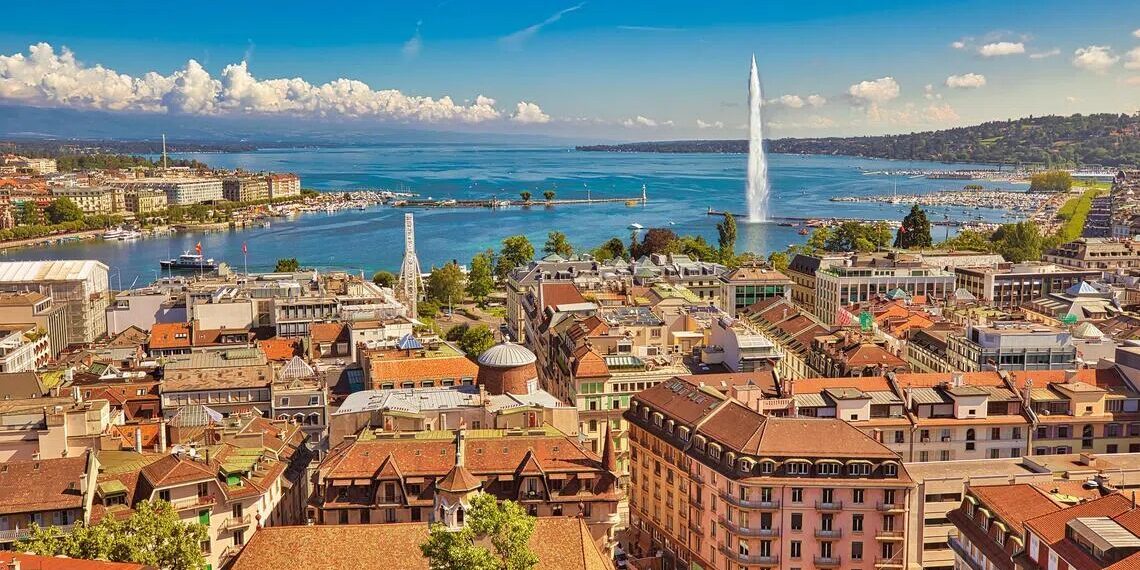
Geneva (pictured) in Switzerland, together with Madrid and Dublin, each recorded more than 10 per cent growth in passenger traffic from Singapore between 2024 and 2025, according to AirportIS.
PHOTO: THE TRAVEL CORPORATION
The data showed that Madrid, Dublin and Geneva each recorded more than 10 per cent growth in passenger traffic from Singapore between 2024 and 2025, while Poland’s capital city Warsaw posted the strongest increase at nearly 40 per cent.
Affordability is one of the strongest drivers behind the shift, says Ms Lavinia Rajaram, director of Asia public relations at Expedia Group.
“People want to travel, but with the rising cost of living and inflation, I think they are making more value-driven choices. Going into secondary cities is definitely a cost-saving measure,” she says, as these cities offer lower costs, from airfares and accommodation to food and attractions.
According to YouGov’s Singapore’s International Traveller Outlook 2026 report, rising costs and changing perceptions of value are reshaping how Singapore travellers plan their trips.
The report – which surveyed about 1,000 people in Singapore – found that 65 per cent said rising expenses affected their travel decisions in 2025, while 36 per cent are seeking more affordable destinations in 2026.
“With airfares and accommodation costs still elevated in key gateway cities, travellers are recalibrating what value means,” says Ms Tan Jie Ni, senior marketing communications executive at tour agency Chan Brothers Travel.

Chan Brothers Travel, which offers tours to destinations like Slovenia (pictured) and Romania, saw a 30 per cent increase in demand in 2025 for itineraries focused on lesser-known cities or regions, compared with 2024.
PHOTO: CHAN BROTHERS TRAVEL
“In many secondary destinations and regional gems, they find more generous room sizes, fewer crowds, better access to nature and fresh, varied experiences, which can lead to a relatively stronger price-to-experience ratio.”
When borders reopened after the Covid-19 pandemic was declared over in 2023, travellers rushed to book long-delayed holidays in a wave that came to be known as “revenge travel”.
Ms Tan says the pendulum is now swinging in a different direction.
“After the initial wave of revenge travel, many flocked to their favourite familiar destinations and have likely visited popular spots multiple times. They are now increasingly seeking more authentic, less rushed experiences than what some major capitals or tourism hubs typically offer,” she adds.
Ms Mae Cheah, managing director of The Travel Corporation (TTC) tour brands in Asia, describes the phenomenon as “destination fatigue”, adding that Singapore travellers are prioritising trips that feel more meaningful. TTC is the parent company of tour brands such as Trafalgar and Contiki.
In October 2025, Trafalgar recorded a 281 per cent increase in online traffic to its European countryside itinerary called Villages of France, compared with previous months. The nine-day tour takes travellers from Paris to the outskirt towns of Burgundy, Alsace and Champagne.
“Singapore travellers are opting for destinations that offer cultural depth and unique local experiences rather than just ticking off iconic landmarks,” she adds.
Social media has also played a powerful role in reshaping how travellers discover destinations, says Ms Rajaram. The rise of user-generated travel content, for instance, has provided social media users with visual inspiration and useful information for trip planning.

Fresh graduate Sarah Lim paragliding in Ohrid, a city in North Macedonia, in 2024. She was based in the Netherlands for a six-month exchange programme and spent that time travelling on her own to countries including Romania, Bulgaria, North Macedonia, Croatia, and Bosnia and Herzegovina.
PHOTO: COURTESY OF SARAH LIM
It was a TikTok video about the Hill of Crosses in Lithuania – a pilgrimage site marked by more than 100,000 crosses – that inspired fresh graduate Sarah Lim, 24, to do her first solo trip in the Baltics in March 2024.

A TikTok video on the Hill of Crosses, a pilgrimage site marked by more than 100,000 crosses in Lithuania, inspired fresh graduate Sarah Lim to explore the Baltics. She worked three jobs to save up for her travels before heading overseas.
PHOTO: SARAH LIM
“I remember seeing social media content of destinations that looked so beautiful and fairy-tale-like. I had never heard of these places until then,” she says.
“So I researched more and realised that beyond the usual touristy destinations in Europe, there was so much more to see. Lesser-known cities felt more local and there weren’t many tourists, so I could really immerse myself in the culture and have a more fulfilling experience.”
Ms Lim was in the Netherlands on a six-month exchange programme and spent that time travelling on her own to countries including Romania, Bulgaria, North Macedonia, Croatia, and Bosnia and Herzegovina. She had worked three jobs to save up for her travels before heading overseas.
Tour operators are already adapting to the growing appetite for second-city travel. Chan Brothers Travel saw a 30 per cent increase in demand in 2025 for itineraries focused on lesser-known cities or regions, compared with 2024.
To meet this demand, the agency has been curating more products in niche regions such as the Balkans and the Baltic states, as well as outskirt cities in traditionally popular destinations like China, Japan and Thailand.
“Major cities will remain the natural entry and exit points, especially as most direct flights are concentrated there, but we expect more travellers to treat them as one chapter of the trip rather than the whole book,” says Ms Tan.
Ms Rajaram says the trend could help ease overtourism pressures in major cities, adding: “The industry has to come together to develop a strategy of how to get people into smaller towns.
“It needs to be easy for travellers. Visas need to be easy to apply for and there needs to be good infrastructure for people travelling by land, air or sea. There’s a lot that has to be done behind the scenes first.”
These shifting travel patterns have not gone unnoticed by Changi Airport Group (CAG).
“We are seeing strong and sustained demand for several important European cities that are currently not directly connected to Singapore. In the near to medium term, we see potential in destinations such as Warsaw, Madrid, Geneva and Stockholm,” says Mr Lim Ching Kiat, its executive vice-president of air hub and cargo development. Changi Airport is currently connected to 16 cities across Europe.
He adds that CAG takes a holistic approach when evaluating potential new direct routes, including looking at traveller demand, growth trends, destination appeal and business sense for the airlines.
Singapore travellers may see more new routes in the years ahead as CAG works towards expanding Changi’s network from about 160 city links today to more than 200 by the mid-2030s.
Some of the newest non-stop routes at Changi include flights to Chiang Rai, which began on Jan 1, and to Oman’s capital city Muscat, which will start from July.
Mr Lim says: “We are actively expanding our connectivity to new cities across our traditional markets in Asia, as well as new regions such as the Middle East, Africa and Central Asia. For example, we hope to forge new links to Chinese cities such as Dalian and Urumqi, as well as to new countries like Kazakhstan and Uzbekistan.”
The question remains: Will this detour to the outskirts upstage perennial favourites such as Japan – the 2025 winner of the “no number of visits is enough” award – or continuously rising star China? The answer is likely no.
Online booking platform Trip.com’s analysis of data, published on Dec 15, revealed that the top countries Singaporeans are travelling to in the first quarter of 2026 are China, Japan and Malaysia. These remain the evergreens – for direct flights, favourable currency exchange rates, ample food and entertainment options, and familiarity.
Travellers here will still flock to major cities like Tokyo, Bangkok and Kuala Lumpur, but will increasingly dip into secondary cities as a gateway to lesser-known vistas.