This post was originally published on here
There are movies that just want to tell a story and give you a good experience. And then there are movies that know exactly what they’re doing and make a point of commenting on it. What does that actually mean? We’re talking about stories that play with their own rules, poke fun at familiar clichés, or even turn Hollywood itself into the punchline. Instead of pretending cinema is a flawless illusion, these movies pull back the curtain, question formulas, mock narrative structures, and critique the reality audiences have long accepted. The result? Essentially, masterpieces that tell a story, but also make you think about how and why those stories are told in the first place. These are meta movies.
Videos by ComicBook.com
These kinds of productions don’t stick to one specific genre; they can range from horror to drama without hesitation. What they all have in common, though, is that they know they’re movies and they use that to their advantage. The key is that they invite the audience into the game. With that in mind, we’ve gathered the 7 best meta movies of all time — films that understand this language better than most and deliver an experience that feels smart, layered, and unique.
7) Tropic Thunder
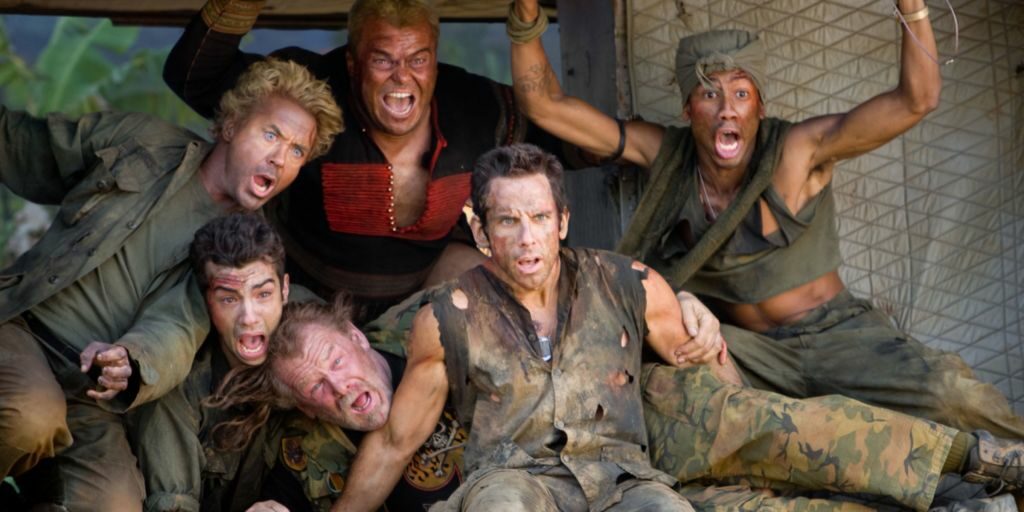
Being a satire doesn’t automatically make a movie good. But in the case of Tropic Thunder, it absolutely works because it knows exactly what it wants to say and how to say it. The premise makes that clear from the start: a group of problematic, self-absorbed actors are trying to shoot an expensive war epic when the production spirals out of control, and they end up stranded in a real jungle — still convinced everything happening is part of the movie. That’s where the meta structure kicks in and elevates the entire experience for the audience.
Tropic Thunder is a ruthless takedown of the film industry. It puts the spotlight on actors obsessed with awards, transformations clearly engineered for Oscar campaigns, desperate agents, and studios that market a film as groundbreaking before it even exists. The real joke is the filmmaking process itself. The movie takes aim at extreme method acting, manipulative marketing, and egos with dead-on accuracy. At its core, it argues that Hollywood is inherently absurd, and then proves it by using the industry’s own logic against itself. It’s kind of brilliant.
6) The Cabin in the Woods

The Cabin in the Woods is arguably one of the smartest horror movies ever made, and it probably deserves classic status. But even if it never fully gets there, when it comes to meta storytelling, it’s undeniably one of the best. At first, it looks like just another horror film about young people heading to an isolated cabin — but that’s exactly the point. The story follows five friends going away for the weekend, stumbling upon a creepy basement, and, of course, making the kind of questionable decisions we’ve seen a hundred times before. The twist? Everything is being controlled by technicians in an underground facility, manipulating each event as if they’re producing a show.
The film is a direct commentary on the horror genre and its long-standing reliance on classic archetypes: the athlete, the comic relief, the virgin, and so on. But it’s not just interested in flipping those clichés; it wants to expose why they exist in the first place because someone decided that horror had to follow those rules. The Cabin in the Woods basically asks: why do we keep accepting this formula? And what happens when it breaks down? It tears apart the genre’s so-called rulebook while still delivering a wildly satisfying, over-the-top third act.
5) Scream
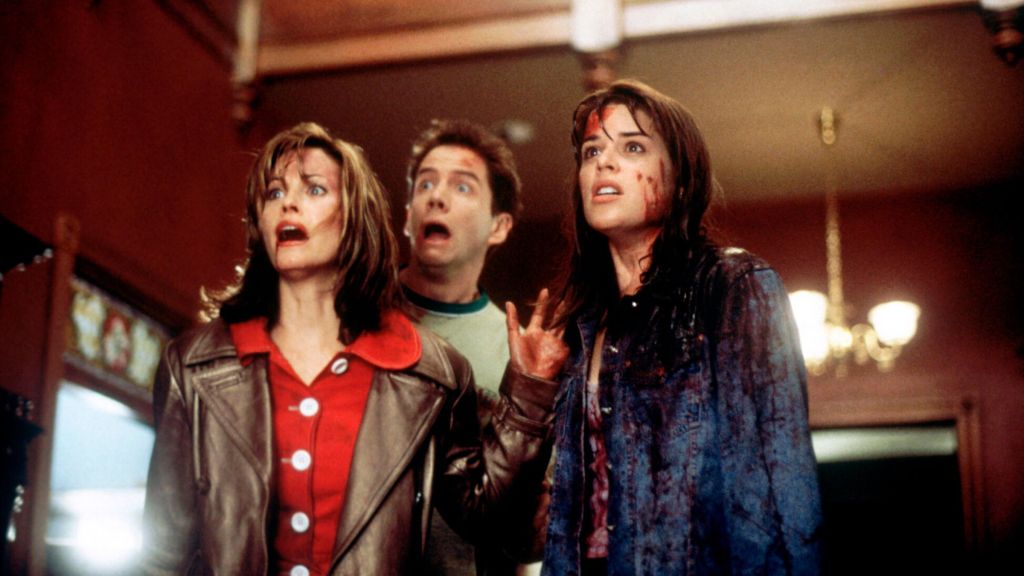
The Scream franchise is widely considered one of the best in horror, which explains why it’s still going strong today. But when it comes to the strongest entry, it always comes back to the original. At the time of its release, the slasher genre was running out of steam. But the twist that changed everything was brilliant: the characters know they’re in a horror movie. In the story, Sidney Prescott (Neve Campbell) becomes the target of a masked killer while her friends openly discuss the rules for surviving a slasher. And no, it’s not just a throwaway joke, because those rules really shape how the narrative unfolds.
But what sets the film apart is that it never slips into parody, because it’s still scary and still intense. The self-awareness actually heightens the tension because the audience knows the rules too, and keeps waiting for the moment they’ll be broken. Overall, Scream updates the genre for a generation raised on horror movies. It’s meta because it understands its audience is too smart to pretend they haven’t seen these tropes before, and it uses that awareness to its advantage.
4) The Truman Show

Here’s one of the greatest films ever made. The Truman Show is a classic on multiple levels, but the biggest reason is how simple and unsettling its key idea is. The question it asks is: what if your entire life was a reality show and you were the only one who didn’t know? After watching it, it’s hard not to look at the world a little differently. In the story, Truman Burbank (Jim Carrey) lives in a seemingly perfect town, surrounded by friends and family. But he starts noticing that things feel staged, almost like they’re playing out for hidden cameras. When the truth is revealed, it’s not just the protagonist’s conflict — it’s the film’s central critique.
What The Truman Show delivers is a clever commentary on media, voyeurism, and the way we consume other people’s lives as entertainment (topics that are still relevant). But the truly meta layer comes from how it mirrors the audience: we’re watching Truman, while inside the story, millions of viewers are also watching him. The film deliberately places us in the same position it’s criticizing. And the most impressive part? For a late ’90s movie, it predicted reality TV culture and social media obsession long before they completely took over.
3) Sunset Boulevard
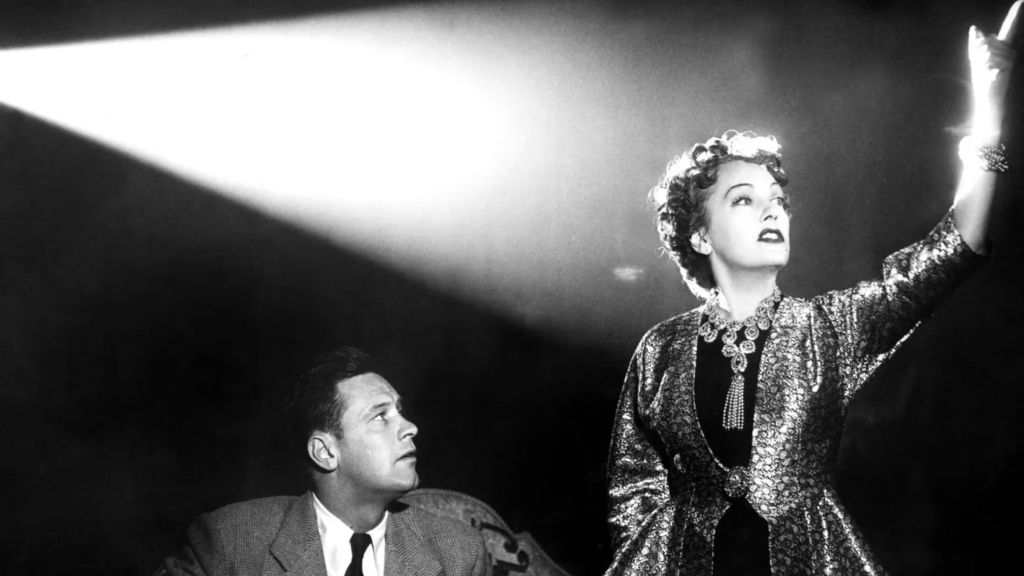
Not everyone is familiar with Sunset Boulevard, mostly because it’s a film from the ’50s, but its release era is part of what makes it even more impressive. What makes it so effective in terms of meta storytelling is that it chooses to expose Hollywood rather than romanticize it. The story follows Joe Gillis (William Holden), a struggling screenwriter who becomes involved with Norma Desmond (Gloria Swanson), a former silent film star clinging to the idea that she’s destined for a big comeback. Their relationship becomes a lens through which the movie shows how the industry builds idols, turns them into larger-than-life figures, and then casually discards them once they stop being profitable.
Much like Tropic Thunder, Sunset Boulevard critiques the very system that produced it. It takes a hard look at Hollywood’s obsession with youth, ego, and relevance. And despite being decades old, there’s nothing softened about its message. And that’s exactly why it still feels timeless — because the industry hasn’t really changed. Ultimately, the film isn’t interested in glamour but in exposing the cost of living inside a narrative manufactured by Hollywood itself.
2) Being John Malkovich

You know that kind of movie where the premise sounds completely absurd, but it’s so confident in what it’s doing that you just go with it? There aren’t many that pull that off, but Being John Malkovich does it so well that it won the BAFTA for Best Original Screenplay and even picked up Oscar nominations. The story follows a frustrated puppeteer who discovers a portal that leads directly into the mind of actor John Malkovich — allowing anyone to live inside him for 15 minutes. The concept is inherently meta, right from the start. But the film doesn’t stop at being a clever idea.
Malkovich plays a version of himself, which immediately blurs the line between reality and fiction. But the movie’s real focus is on identity, ego, and the obsession with fame. It also doubles as a commentary on the act of watching movies, since for two hours, the audience is essentially “inside” someone else’s experience. Being John Malkovich is incredibly smart because it knows exactly what it’s exploring and why it’s compelling: the desire to escape your own life and step into someone else’s perspective, even if just for a moment. And honestly, who hasn’t felt that?
1) Adaptation
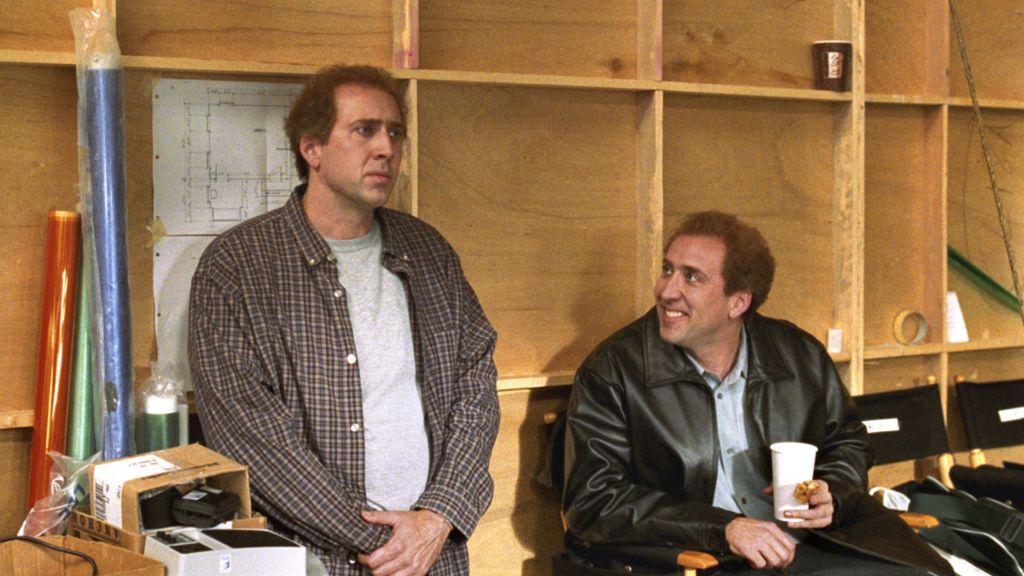
If this list is about meta movies, Adaptation is probably the most complete example. But why? In real life, screenwriter Charlie Kaufman was hired to adapt the book The Orchid Thief for the screen, and he struggled with creative block and serious insecurity during the process. That struggle eventually became a movie, and instead of hiding the difficulty, it turns the failure into the narrative. We follow a fictionalized version of Kaufman (Nicolas Cage) trying to write the script, while also introducing a made-up twin brother who represents a more commercial, Hollywood-friendly approach. Through that dynamic, the film openly debates its own structural problems as they’re happening.
Basically, Adaptation isn’t just an adaptation — it’s a movie about how hard adaptation actually is. It explores the creative process and puts that very process on screen, allowing the audience to see every insecurity, compromise, and structural decision that comes with turning a book into a movie. The result is something bold: a production that challenges Hollywood formulas while, ironically, also embracing them. The third act, for example, leans into the exact tropes the protagonist claims to hate — and that’s not inconsistency, it’s the point. The film focuses on exposing, in this way, all the tension between originality and market demands, and that a lot of people don’t even realize the true scale of.
Do you like meta films? Which one’s your favorite? Leave a comment below and join the conversation now in the ComicBook Forum!