This post was originally published on here
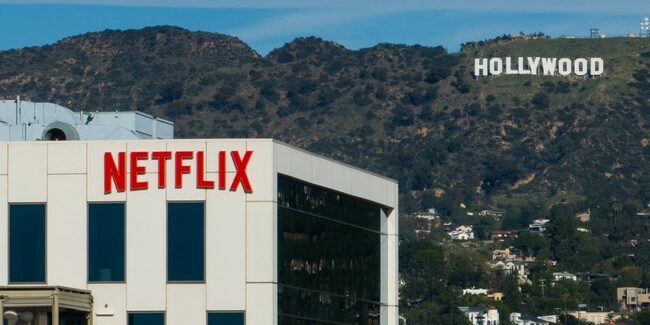
Netflix co-chief executive Ted Sarandos faced tough questions from members of Congress this month over Netflix’s pending acquisition of Warner Bros. Discovery. Lawmakers raised alarms about the company’s growing power and another massive consolidation in Hollywood. Even President Trump has said it “could be a problem” and shared an article on social media suggesting that his administration may sue to block the merger.
Advertisement
It’s easy to understand why.
Trump’s favorite movies include The Godfather, Goodfellas, and The Good, the Bad, and the Ugly, and all three have one thing in common: They wouldn’t exist without antitrust enforcement in the film industry.
Today, Hollywood stands at a similar crossroads as Netflix angles to buy WBD, the company behind HBO, the Max streaming service, and blockbuster franchises like Harry Potter, DC Comics, Game of Thrones, and Scooby-Doo — a deal that would create a level of industry concentration not seen since the old studio system. This deal would create a level of industry concentration not seen since the days of the old studio system.
Netflix is by far the country’s largest streamer, with nearly 88 million subscribers. By acquiring WBD, Netflix would pad its already substantial lead by taking ownership of one of its primary streaming competitors.
Together, Netflix and Disney would control approximately 60 percent of U.S. streaming subscriptions. The resulting duopoly could lead to higher prices for subscribers and give the two conglomerates significant control over what shows and movies get made.
Netflix has already increased its prices by 124 percent since 2014 — four times the overall rate of inflation. Acquiring Max would further reduce competitive pressure and make future price hikes even easier.
No wonder figures ranging from Sen. Mike Lee (R-UT) to Sen. Elizabeth Warren (D-MA) have raised red flags about the deal.
Recommended
Advertisement
Which brings us back to Trump’s taste in cinema.
Film historians often romanticize the period from the 1930s through the early 1960s as Hollywood’s “Golden Age.” In reality, it was a tightly controlled system dominated by a handful of vertically integrated studios. A few classics emerged — Casablanca and Citizen Kane, another Trump favorite — but they were exceptions, not the rule.
Studios focused on quality over quantity. Movies were shot in bulk on studio backlots rather than on location. Directors were treated as hired hands rather than artists and forced to operate within bland, unobtrusive conventions of cinematography and editing. Actors, directors, and screenwriters were locked into restrictive contracts that prevented some of the era’s hottest talents from ever working together. Studios forced theater chains to buy their films as package deals instead of letting them pick the movies they wanted — a practice known as “block booking.”
That all started to change in 1948 when the Supreme Court ruled that the film studios were violating antitrust law. Over the next decade-and-a-half, the ensuing reforms rendered the old business model obsolete.
Studios were forced to innovate. They gave unprecedented creative freedom to young upstarts like Francis Ford Coppola and Martin Scorsese, who’d studied film theory in college instead of working their way up through the studio system. Without block booking, studios made fewer films and invested more heavily in each one—ushering in the age of the blockbuster.
Advertisement
In other words, without antitrust, there would have been no Goodfellas or Godfather.
Technology has transformed the film industry since that 1940s Supreme Court case, which is why a federal judge threw out the old consent decrees in 2020. But the risks of monopoly remain as dire as ever.
By serving as both production company and distributor, Netflix has effectively recreated the old block booking system. Last century’s B-movies are today’s “streaming slop.” And the higher Netflix’s market share climbs, the more audiences will find themselves in the same position as Depression-era theatres: forced to pay through the nose for oceans of low-quality content they don’t care about just to access the few movies and shows they want to watch.
History is also repeating itself in the soul-crushing conformity — both ideological and stylistic — that market concentration creates. The Golden Age of Hollywood had the Hays Code and the studio-approved “classical” conventions of cinematography and storytelling. Today, we have woke ideology, diversity quotas, and a style that caters to what Netflix calls “second screen” viewers.
Matt Damon argued in a recent interview that Netflix wants movies that restate “the plot three or four times.” Screenwriters are reportedly being told to dumb down their scripts and to have characters “announce what they’re doing so that viewers who have this program on in the background can follow along.”
Advertisement
The company has the right to commission any type of content it so chooses. The problem arises when a single company dominates so much of the industry that filmmakers have no choice but to adhere to these rules.
Neither the old vertically integrated studio system nor today’s neo-monopolistic Hollywood would have greenlit The Godfather. Fortunately, the solution is the same today as it was back then: antitrust enforcement.
Antitrust gave us Coppola, Scorsese, and Sergio Leone. If we use it correctly now, it can also give us the next generation of cinematic genius instead of another decade of streaming mediocrity at sky-high prices.
Steve Cortes (@CortesSteve) is president of the League of American Workers and senior political adviser to Catholic Vote. He is a former senior adviser to President Donald Trump and Vice President JD Vance and a former Fox News commentator.
Editor’s Note: Do you enjoy Townhall’s conservative reporting that takes on the radical left and woke media? Support our work so that we can continue to bring you the truth.
Join Townhall VIP and use promo code FIGHT to receive 60% off your membership.