This post was originally published on here
“Project Hail Mary,” starring Ryan Gosling and coming soon to a theater near you, is based on the science fiction novel by Andy Weir.
That title could also apply to a book released in January and paid for by one of the North Bay’s most deep-pocketed families.
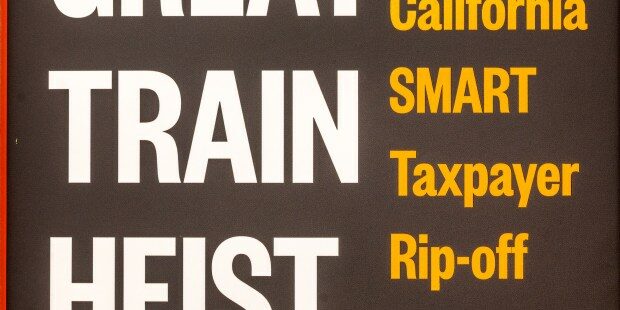
“The Great Train Heist,” by Michael J. Coffino, is a scathing, 182-page denunciation of every aspect of the SMART train system, “from conception to current operation,” according to its introduction, “a story we believe the public deserves to hear.”
Underwritten by the Gallaher family, the Sonoma County-based developers and longtime SMART foes, the book can also be seen as a late fourth-quarter attempt – a Hail Mary pass, if you will – to once again deny the train the financial lifeline it needs to survive.
Half of the revenue for the Sonoma-Marin Area Rail Transit system, about $51 million annually, comes from the quarter-cent sales tax passed by Marin and Sonoma county voters in 2008. That funding expires in 2029.
Molly Gallaher Flater, daughter of Bill and Cindy Gallaher and chief operating officer of Windsor-based Gallaher Companies, spent nearly $2 million six years ago to defeat a measure that would’ve extended that sales tax through 2059. Measure I lost decisively in 2020, falling 11 percentage points short of the required two-thirds majority.
But a similar measure is headed for the ballot June 2, this time needing only a simple majority to pass. That’s due to a 2024 bill, authored by SMART-friendly former Sen. Bill Dodd, D-Napa, specifying that, as a “local initiative ordinance,” the proposed tax extension needed only 50% plus one vote to take effect – a step Coffino condemns in his book as “a calculated circumvention of voter will.”
With that lowered bar, and with SMART on an impressive roll of late, opening new stations and setting ridership records – the ballot measure’s odds of passage are far better this time around.
Not if Coffino and the Gallahers can help it. The book’s subtitle is “The California SMART Taxpayer Ripoff: What Every Voter Should Know About the Upcoming SMART Sales Tax Measure.”
SMART, proclaims the dust jacket’s back cover, “will never function in a cost-effective manner.” Taxpayers, it goes on, “face a critical decision about continuing to subsidize this failed experiment. The answer should be a resounding ‘NO.’”
Bill and Cindy Gallaher founded Gallaher Companies, which has built thousands of homes in the region, and last year launched Gallaher Signature Living, reflecting their expansion into upscale senior communities. Bill Gallaher is founder and chairman of Santa Rosa-based Poppy Bank, and several years ago the family launched Gallaher Community Housing, a nonprofit developer focused on building affordable homes.
-

Christopher Chung / The Press Democrat
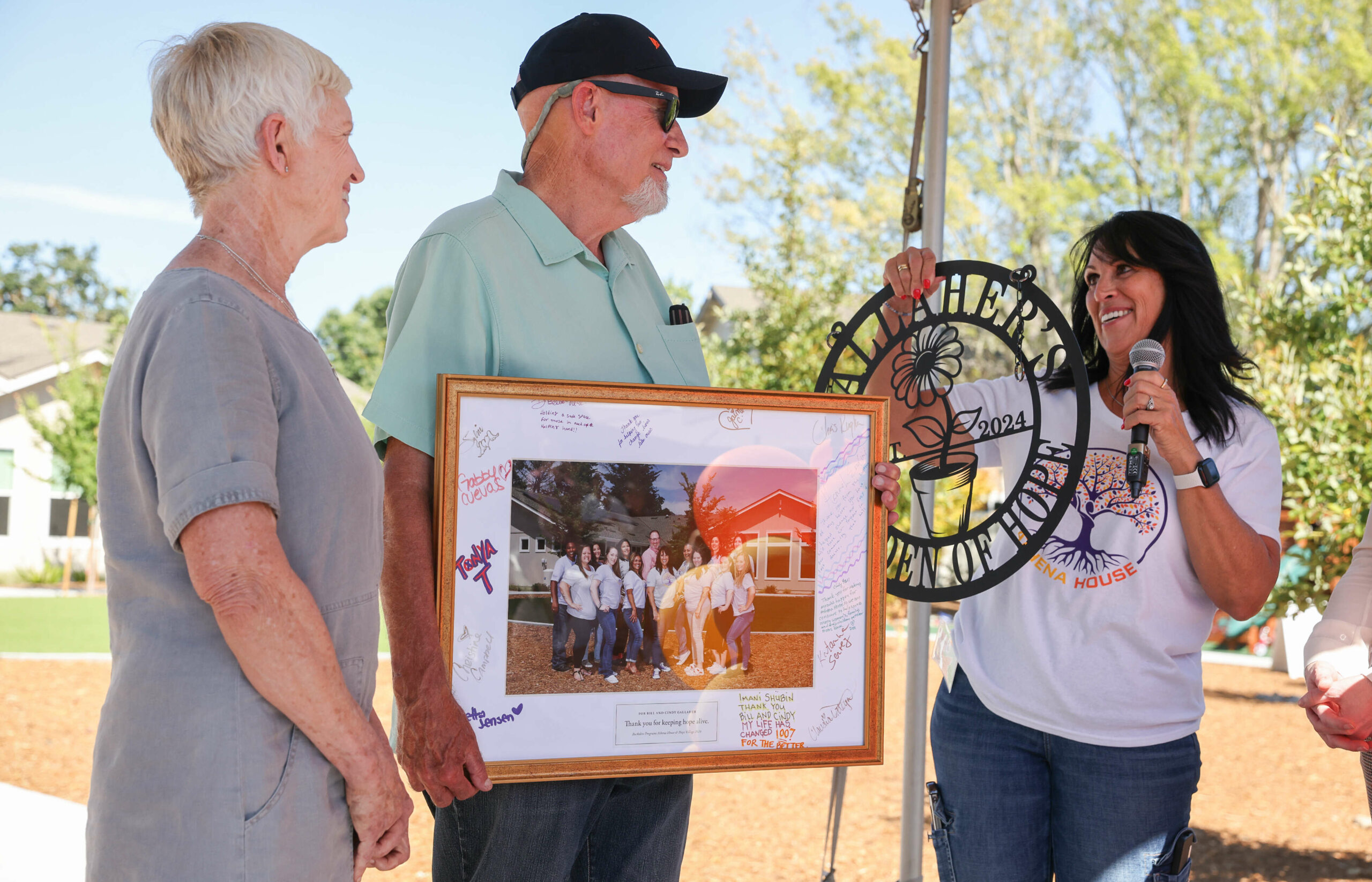
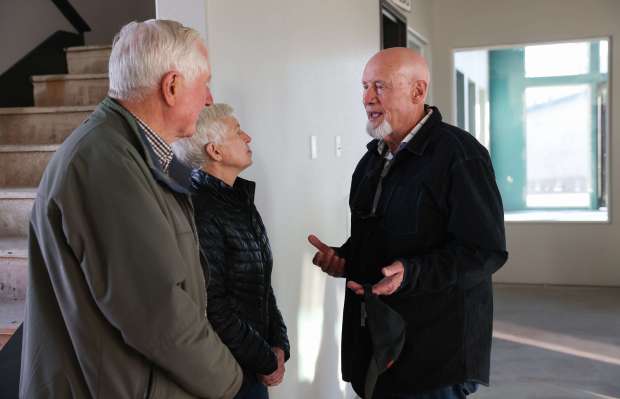
Sylvie De La Cruz, right, program director of Athena House and Hope Village shows a garden sign to Bill and Cindy Gallaher bearing their name during the Athena House and Hope Village open house in Santa Rosa, Thursday, June 27, 2024. (Christopher Chung / The Press Democrat)

Christopher Chung / The Press Democrat
1 of 3
Sylvie De La Cruz, right, program director of Athena House and Hope Village shows a garden sign to Bill and Cindy Gallaher bearing their name during the Athena House and Hope Village open house in Santa Rosa, Thursday, June 27, 2024. (Christopher Chung / The Press Democrat)
Cindy Gallaher said in a recent interview that she doesn’t expect the book to have much effect on the June referendum.
“We don’t have any delusions about being able to sway the vote,” she said.
“But I do think it’s important to expose all of what has gone on” with SMART, she said, referring to the same critiques that were amplified by Flater’s opposition campaign and reappear in Coffino’s lines of attack: inefficiencies in the system, shortfalls in transparency and oversight and a failure to put a dent in Highway 101 traffic congestion.
“If people choose to subsize the rail system at that rate,” said Gallaher, “if they think that’s a value, if they want to spend a bunch of taxpayer money on it, well, that’s their choice.
“I personally think there are far more pressing issues,” she said. Public funds would be better spent, says the book, on drug rehab centers, or crumbling roads, or addressing the county’s “homelessness and a housing crisis.”
Launched in 2017, today SMART operates trains on 48 miles of track between Larkspur and Windsor. The system’s buildout over the past decade has made for one of the North Bay’s largest transportation projects in a generation, behind the more than $1.5 billion widening of Highway 101 across most of Marin and Sonoma counties, which hit its last milestone last year after a quarter-century of construction.
The train’s taxpayer subsidy is not unique among public transit systems. Most in the U.S. have some form of subsidy to underwrite their operations, in addition to fare revenue and other forms of income.
BART, the Bay Area’s dominant commuter train system, will seek approval this November from voters in four counties for a half-cent sales tax to stabilize its finances, which took a hit through the pandemic-era shifts to remote work and have yet to recover.
In that regard, SMART has stood apart from many of the struggling transit systems, having grown its ridership in the past three years and extended service to Windsor, its new northern terminus, with most of the funding in place to begin on the next segment to Healdsburg.
Cindy Gallaher said the timing of the book’s release, five months before voters cast their ballots, was coincidental. The process of lining up an author, and getting the project moving, began in November 2021 – “long before the upcoming initiative was announced,” she said.
‘They act like time stopped’
To qualify the latest ballot measure as a voter-led initiative, a coalition of SMART allies and advocates needed to gather signatures from at least 53,869 registered voters in Marin and Sonoma Counties. They collected close to 72,000. In early January, election officials verified that the campaign had at least 57,418 valid signatures.
“It’s no secret that Bill Gallaher has opinions, and thinks things should be exactly as he wants them to be,” said Suzanne Smith, chair of that signature-gathering citizens group, The Smart Initiative.
“But the reality is, SMART is delivering on its promise. It’s something the community supports, as we saw with our initiative drive, when we gathered well over the number of signatures we needed, in half the time. It wasn’t a heavy lift to get people to say, ‘Oh yeah, SMART’s doing great.’”
-
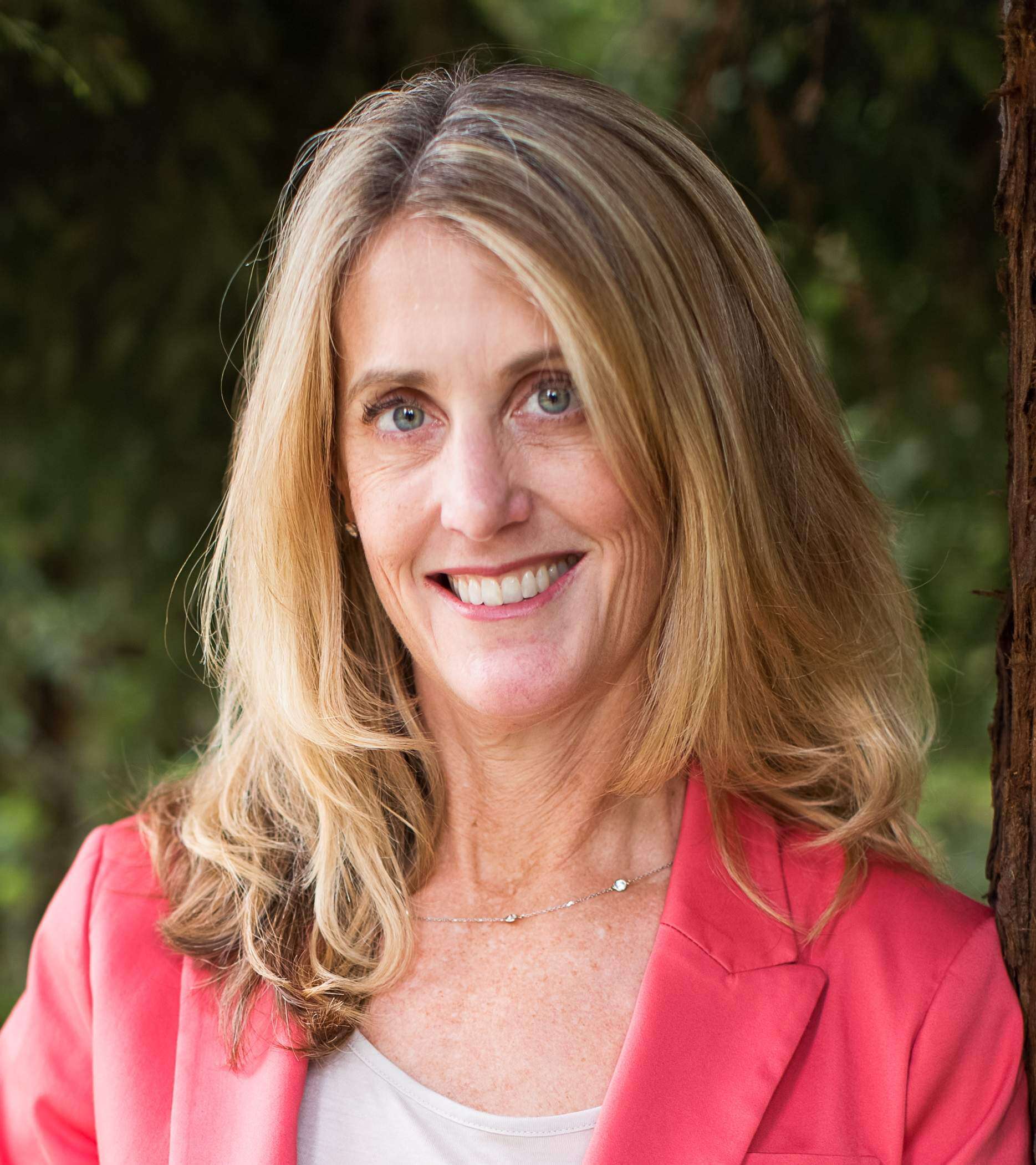
Suzanne Smith, executive director of the Sonoma County Transportation Authority
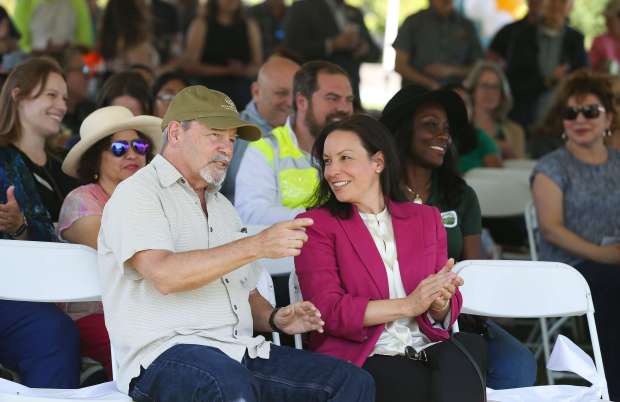

If the Gallahers “want the facts out there,” said Chris Coursey, a Sonoma County supervisor who chairs SMART’s board of directors, “they ought to find somebody who can actually find some current information.”
What “hacks me off” about Coffino’s book, he added, “is that they act like time stopped in 2020, and SMART hasn’t changed anything” since.
One of book’s basic tenets, said Coursey, “is that SMART is a failure because of low ridership. And they use the figure 2,800 a day, or 3,000 a day, throughout the book. And we’ve documented that, over the past year, it’s closer to 4,500.”
Some of the criticisms leveled against the passenger train by the Gallahers in 2020, when Flater spent heavily to defeat Measure I, “were valid,” Coursey allowed.
“And SMART paid attention to that criticism. And we’ve improved the system, and our performance, on just about every metric.”
The rail service carried 1,123,686 riders in fiscal year 2025, he noted – “More than double” its 2020 ridership – with nearly as many using the SMART bike and pedestrian pathway.
“We’ve expanded the system with new stations” – North Petaluma in January 2025, Windsor the following May – “we ‘ve added miles of pathway. And fare revenue is higher.”
Coursey also pointed out that shuttles now carry passengers the quarter-mile or so from the Larkspur Landing platform to the ferry terminal, and from SMART’s Sonoma County Airport Station to the actual airport, a mile west on Airport Boulevard.
Since the end of 2021, when Eddy Cumins succeeded Farhad Mansourian as the agency’s general manager, Coursey added, “transparency has been the north star of SMART, and oversight has been strengthened.”
Asked to comment on “The Great Train Heist,” SMART spokesperson Julia Gonzalez provided a statement that made no reference to the book, but which echoed Coursey’s observation that much of it is devoted to old problems that have been or are being addressed.
“Thoughtful criticism requires an understanding of the present,” said the statement.
“Any assessment of SMART that ignores current ridership, service expansion, improved cost efficiency, and the real-world role SMART now plays in the North Bay will miss the story that matters most—what the system is delivering today for students, workers, seniors, families, visitors, and the broader regional economy.”
Service ramping up in April
SMART is a system “in its formative years,” said Coursey, with another milestone scheduled for April, when it will increase the frequency of trains to roughly every 30 to 60 minutes, from 4 a.m. to 11 p.m. on weekdays.
That increase is part of a “reapportionment of regional transit dollars,” said Ariel Kelley, a member of SMART’s board of directors, to better serve shifting commute patterns. It’s detailed in a plan designed by the Marin-Sonoma Coordinated Transit Service (MASCOTS), an agency tasked with creating a more efficient, connected transit network in the two counties.
With fewer people riding Golden Gate Transit buses, particularly north of Novato, said Coursey, that service will be phased out, with SMART picking up the slack, increasing its trips by 19%, going later into the night, and becoming the main north-south public transit for the two counties.
Bus systems will “at some point” adjust their east-west routes and schedules “to better match up with SMART.”
When he sat down with Bill Gallaher a few months ago, Coursey recalled, “My message to him was, ‘Hey, you won. All these things you were talking about then, we fixed ’em.’”
Campaign literature?
The Gallahers had 15,000 copies of the book printed. In recent weeks, many of those volumes have been arriving by mail, unsolicited, at numerous addresses across the North Bay, including a dozen or so sent to The Press Democrat’s newsroom. Other recipients have included city and town councilmembers, county officials, and members of the Marin/Sonoma Mosquito and Vector Control District.
Coursey wondered aloud if the Gallahers reported their book-related expenses to California’s Political Fair Practices Commission, “because this is obviously a campaign piece.”
Cindy Gallaher said they had not reported those expenses to that agency, clarifying that “the book was intended to be an informational piece only.”
She did not disclose how much was spent on the book, which was published by New York-based Skyhorse Publishing, a conservative-leaning company known for taking on controversial subjects and figures. Its author list includes President Donald Trump and first lady Melania Trump, political consultant and activist Roger Stone, Health Secretary Robert F. Kennedy Jr., radio show host and conspiracy theorist Alex Jones and director Woody Allen.
Distributing a pamphlet or mailer, for or against a ballot measure, would appear to fit the definition of “express advocacy,” triggering disclosure rules. Books, however, fall “into a gray area, and opponents of SMART know that,” said David McCuan, a Sonoma State political science professor well versed in California campaign finance law.
Given that gray area and the general “fecklessness” of the watchdog commission, the Gallahers aren’t likely to face consequences, believes McCuan, who likened the state’s existing rules and reporting requirements to “a cyclone fence trying to keep out the Pacific Ocean.”
Coffino, a former trial attorney who began writing professionally in 2015, according to his dust jacket bio, doesn’t limit his criticism to the railroad. He spends a chapter arguing that The Press Democrat has not been objective in its coverage of the rail service, calling out the newspaper’s editorial board — separate and independent from its newsroom — for what he called its “staunch pro-SMART” stance. (The board has generally supported commuter rail in the North Bay since the 1980s, but has faulted SMART at times, pressing it to be more transparent and accountable.)
That did not deter him, in the next chapter and many other places in the book, from leaning heavily on the newspaper’s often critical reporting on SMART to help make his points.
Kelley pointed out that SMART is the Bay Area’s top-performing transit agency – and one of the best in that nation – when it comes to post-Covid 19 recovery, with ridership by early 2025 roughly 134% of pre-pandemic levels.
Opponents of the train, she said, “are going to have to update their facts. Unfortunately for them, and fortunately for SMART, things are trending in an incredible direction.”
That direction is north, to downtown Healdsburg, scheduled to start passenger service in late 2028.
“There is a palpable excitement about the train coming to town,” said Kelley, a Healdsburg City Council member. “It’s funded, and it’s coming.
“I think this is the best thing that’s happened to Sonoma County in a long time. If people are trying to squash that excitement, they should just go for a ride on the train.”
You can reach Staff Writer Austin Murphy at [email protected].