This post was originally published on here
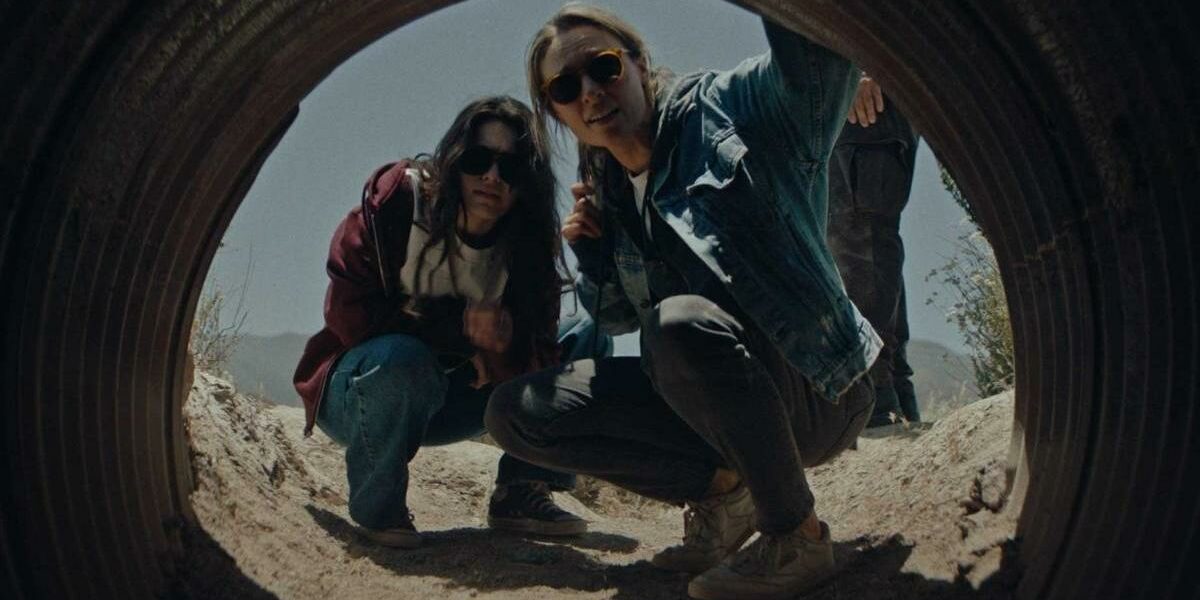
ComingSoon Senior Editor Brandon Schreur spoke to Redux Redux writers and directors Kevin and Matthew McManus about the new multiversal sci-fi thriller movie. The McManus brothers discussed how they went about creating the best movie of 2026 so far, balancing all the multiverse sci-fi aspects with some real emotion, and more.
A description of the movie reads, “In an attempt to avenge her daughter’s death, Irene Kelly (McManus) travels through parallel universes, killing her daughter’s murderer over and over again. With each kill, she grows addicted to the revenge streak, putting her own humanity in jeopardy.”
Redux Redux will be released on Friday, February 20, 2026, by Saban Films.
[embedded content]
Brandon Schreur: I’m saying this without any hyperbole or anything, but this is the best movie I’ve watched so far this year.
Matthew McManus: Oh, thanks, man.
Kevin McManus: Thank you so much.
I did not know what to expect at all. Even after the first 20 minutes, I was like, ‘What is this doing? Where are we going?’ But the journey this took me on was so incredible. Since I watched it on Tuesday, I’ve already texted all my friends like, ‘You guys have got to see this when this comes out in a couple of weeks. This is something else.’ I’m curious if you can tell me a little bit about how long you’ve been working on this project and what the inspiration was when bringing this thing to life?
Kevin: Yeah, honestly, it all kind of started about ten years ago when we started kind of wanting to play around with the idea of telling a multiverse story. Where it was really born from was this idea of, can we tell a multiverse story that feels a little more personal and a little more intimate? Time travel movies are sort of a close relative of the multiverse movie, right? When you look at the early time travel movies, so many of them felt like they used the opportunity to tell a fantasy story — like, how do we get our characters among the dinosaurs, or in King Arthur’s court, or something along those lines. It wasn’t until we were watching movies like Back to the Future or The Terminator where it felt like these stories are so much more personal, so much more intimate. In some ways, the time travel is sort of at arm’s length.
Even in movies like The Terminator, the world-building is still big, and there’s big world implications — any given scene is just between two characters and an unstoppable force coming after them. You can think it’s a horror movie. You can think it’s an LA crime movie. We started asking ourselves, ‘How can you do that with the multiverse?’ Instead of using the multiverse as a way of going to fantastical lands where everything is completely different, or it’s a ‘what if?’ situation that’s completely wild — what if there’s an infinite amount of universes out there, but the changes between and the next are infinitely small. How frustrating would that be, if you’re going through the multiverse trying to change your circumstances, but you can never find the right circumstances? What would that do to you, as a person? That’s really the seed of the idea that grew into the movie.
Totally. I love that concept — like you said, there’s been a lot of movies and shows out there that have played with this concept of the multiverse. It’s 2026, so we’ve all seen the MCU stuff, Rick and Morty, and all of that. But I love how you guys address it. After the first 30 minutes of this movie, I’m like, ‘Okay, I’m digging this, but I’m also wondering about this and this. What about alternate versions of this character?’ But by the time it ends, everything that I was wondering had been not only answered, but answered in a really satisfying way. I totally get how this all works, now, and I thought that was amazing. Can you tell me a little bit about the process of working on the script, mapping it all out, and making sure that everything did make sense by the end? Was that challenging to connect all these dots, or did you know where this was going right from the get-go?
Matthew: This was one of those ideas where we came up with the big tentpoles of what this movie was going to be pretty early on. That’s always exciting. Oftentimes, you’ve got one little idea, and then you’re trying to figure out what the rest of it’s going to be, and that can be kind of agonizing. This one, we knew a lot of the stuff right out of the gate. But, then, like you’re saying, there are questions that you do need to answer when it comes to certain science-fiction sub-genres.
The multiverse is actually relatively simple, but you do have to talk about doppelgängers, where the other versions of her are, and how many other universes have the ability for multiverse travel. You’ve got to basically answer these things. Oftentimes, the temptation is to front-load all of this stuff. You’ve got this big exposition dump, and that’s a drag. Instead, we were just trusting that the audience would be along for the ride. Eventually, when you reveal these moments of, ‘Oh, this is the reason she’s the only one, and this is the reason she’s doing this or that.’ Hopefully, that was satisfying, and hopefully we wouldn’t have lost the audience by then. I’m glad it worked for you, but it was definitely a long process of trying to answer all those questions in the cleanest and most satisfying ways that we could.
Sure. And I love that scene about halfway through the movie, where they’re in the truck driving, and she’s about to explain what the multiverse is, and [Mia] is just like, ‘I’m alive, I’ve seen stuff, I know what the multiverse is, now answer the real questions that I have.’ It felt so in tune with what I was thinking at the time, like, yes, perfect.
Matthew: That’s awesome. I love that.
Bouncing off that, this is about the multiverse, but I think what sets this apart from so many other things is the emotional core to this. We’ve seen multiverse stories where you go to these crazy worlds where everyone is bugs or something like that, but this is a story about real human beings, and we really grow to care about Irene and Mia throughout the course of this. How important was it for you guys when you were making this to really make sure the audience knows and understands these characters? How did you go about inserting all of that into the script and, ultimately, the movie?
Kevin: Yeah, I mean, at its core, the movie is only as good as the characters and the journey that they go on. I think the inspiration for Irene’s story was really born from the old adage that you should write what scares you. As a father of kids, the scariest thing in the world would be losing my kids. That’s really where this thing got started. And then the frustrations of not being able to change your circumstances because those worlds are so identical from one to the next, and how that would change that character — that’s really where this thing got started.
It’d be easy to lean into, ‘Well, it just gets more and more horrific the way that she kills this guy over and over.’ Eventually, that’d get morose. So, adding in the character of Mia to, in some ways lighten the mood, but in way more ways, to help with Irene’s journey. It shows how much Irene changes and what she’s like as a sort of surrogate mother; it gives us a clue as to what she was like as a mom in real-life. And her desire to try and save her surrogate daughter, as a way of trying to save her real daughter all over again. It all kind of bakes into the same character story.
Totally. I don’t want to spoil anything, but the whole movie, you’re kind of thinking, ‘What’s going to happen if she gets what she wants?’ And then, when does that happen, the way that ultimately plays out — and it feels exactly like how that should play out.
Kevin: I’m so glad. Trying to use some of those paradoxes to your advantage is something that we had a lot of fun with.
Totally. Continuing to talk about the whole multiversal concept of this, we’ve mentioned some titles — The Terminator, the MCU, and all that stuff. Was there anything that, when you were working on this movie and playing with this concept, you kept coming back to any specific thing and be like, ‘Okay, they did this, but what if we take it and do it a different way?’ Or, when you started working on it, was it more of wanting to do your own thing and not being influenced by anything else?
Matthew: We’d been writing this early enough that we didn’t have a ton of multiverse stuff to dig into, really, to be as inspired by. Really, it was revenge flicks that we were talking about a lot. Like, ‘Oh, this new way in feels like a different way to tackle a revenge movie.’ Movies like Blue Ruin, one of our favorite revenge flicks, was a huge inspiration for us. What I think it does so well is, the grievance — the thing that has happened to our main character — has happened in the past. You’re trusting the audience to pick up on what’s happened to him and what he’s doing next. Seeing his process unfold and seeing him just try to get a gun, and then he goes to a place and there’s a surveillance camera, so he can’t get a gun there. So he goes to a car and breaks into the car — you just see him do that process, and it respects the audience so much. It knows the audience is smart. I found that so rewarding, as an audience member, and that was a big thing we were trying to steal from them and put into our own film, here.
Totally. I interviewed Macon Blair, who I know didn’t direct the movie but was the star of Blue Ruin, back when The Toxic Avenger came out. He’s an artist who is so in tune and deliberate with everything he’s making, so that makes perfect sense.
Matthew: Yeah, he’s awesome.
[embedded content]
When it comes to the specific characters and the casting of this movie, I loved Irene and Mia so much. I loved the journeys they went on and everything we saw from them. Your sister, Michaela, is obviously playing Irene in this movie. She is great. I was also so blown away by Stella Marcus’ performance as Mia — I don’t think I’d ever seen her in anything before this, but when the movie switches to her story, I was just like, ‘This is a star. I want to see her in everything now.’ Can you tell me about what it was like working with both of them, both in terms of what you thought they’d bring to these characters, but also seeing them become the characters and interact with one another?
Kevin: Honestly, this was Stella’s first feature. And it was super exciting to put her in it. We just met her through the typical audition process. What we found with so many people who were thinking about playing that role and had different interpretations of it, a lot of the interpretations leaned a little bit more into contempt. You become an angry teenager who is a little bit pissed off.
What Stella brought to the table was a certain level of fun. She had fun with it, and that was what we were looking for — someone who had the range to be emotional, to be guarded, but also to be funny, and fun, and spunky in all the great ways. It was so fun finding her. And that dynamic worked so well off of Irene’s character in a way that we had a lot of fun with, too.
Our sister, of course, plays Irene. We’ve always known just the kind of range that she has as an actor, so it was so exciting to get to really show that off. Michaela has such a deep well that she can pull from, emotionally. So, we really put her through the wringer with a lot of scenes where, emotionally, she really had to go there. It was an 18-day shoot — that’s, like, every day, you’re putting yourself in a really bad place. But she was up for the job. And she crushed it. We were so happy with how it all turned out.
Yeah, and there are some intense moments that you give her throughout the course of this thing. Again, never could really figure out where it was going, but every twist and turn it took was just like, ‘Let’s see what happens now.’ Another person whom I’ve always been such a big fan of for years now is Jim Cummings. Any time he shows up in a movie, I’m like, ‘Oh, hey, it’s Jim Cummings!’ This is on me for not doing my homework, but I didn’t know he was in this movie. So Jim Cummings shows up, and I’m like, ‘Hey, Jim Cummings, awesome!’ I know you guys have worked together before on The Block Island Sound, but how did he get involved with this one, and what made you want to work with him again?
Matthew: Jim is an old friend of ours. We met in college, freshman year, and just hit it off immediately. He’s been one of our closest collaborators. It’s exciting to be able to keep pulling him back into these movies. As well as seeing his career just take off, and how amazing he’s been for other filmmakers. He’s a lovely guy. It was a no-brainer to put him in this movie, and we were lucky enough that he said yes. I’ll do anything with Jim.
Such a fun role, too. With no disrespect to Jim Cummings, but when he does show up in something, my first instinct is to be like, ‘What’s up with this guy?’ But then he’s actually a very normal, cool person in this. I loved it.
Matthew: This is one of his most normal roles, I think. It’s the closest to who he actually is in this one.
Redux Redux first played at South by Southwest last year. I’m so jealous of everyone who got to see this and experience it in a theater together. I have to imagine that the energy and buzz after it was over was huge. What was it like seeing the movie with a crowd for the first time? Did you immediately know that you guys had made something that people are going to really respond to, or was it more of a surreal experience?
Matthew: It’s always a strange experience, but I will say that it’s been a really great one for the theater experience. Especially if you’ve got a crowd in there, there’s electricity in the air. It’s hard for us to see outside of our own anxieties or whatever, especially in those first few screenings, but you can tell this was a fun one to see on the big screen. I’m hoping that people will show up and check it out when it comes in theaters. There’s something about not just seeing it on a big screen, but it’s also getting the full breadth of the sound. We got to do the sound mixing at Skywalker Sound…We’re just really proud of all of that. You can’t experience that the same way in a living room. There’s something about being in a theater that really separates it and packs a punch. That was a really special thing, getting to see it in so many theaters and film festivals all across the world.
Yeah. I don’t know if it’s coming to a theater near me yet because I live in a smaller city, but I’m really hoping that we get it here and there’s the chance to see it with a crowd. Again, the energy that comes off this thing — I bet it’s so much fun to see it with a bunch of people.
Matthew: Hell yeah. It’s coming to a decent number of cities, so there’s a good chance that it happens.
I’m hoping. Bouncing off that, I mean, it’s now being released on February 20 by Saban Films. I’ve been telling everyone that, one way or another, you’ve got to watch this movie because it is going to blow your mind. Is there a certain aspect of Redux Redux — whether it’s a specific scene or a broader aspect or theme — that you’re really excited for people to experience when watching it for the first time? What are you ultimately hoping people get out of this movie?
Kevin: You know, ultimately, I think the theme of the movie that really went into it and hope resonates with the audience is an old proverb that says, ‘No man can step into the same river twice. Different river, different man.’ That’s really the story of Irene, right? She’s trying to change her circumstances and do everything she can to try to get something that she’s lost. What she really needs is to accept it, heal from it, and move on. That’s kind of what we hope people get out of it.
Of course, don’t commit revenge is one of the other themes we hope people get out of it. But that idea of the healthy quality of moving on and healing instead of picking at that same scar over and over again.
Matthew: Yeah, I think that’s something Kevin and I are always trying to do. The top line is always, ‘I want this to be as entertaining as possible and have people be excited to go see Death Wish Groundhog Day or whatever.’ Hopefully, they get all of that. But we also Trojan Horsed a story that actually connects with them. That’s always the hope. Fingers crossed that that’s what people leave with.
Oh, I’m totally sure they will. I just have one last question for the two of you that I always like to end with when I have the time. You two are obviously prolific, incredible working artists in the industry who are making great art. So I want to ask, is there anything else out there, any kind of media — whether it be a movie, a TV show, a book, a play or anything that you’ve been into — that you’re crazy about and want to recommend to people?
Matthew: Oh, great question. This is so different from Redux Redux, but I saw a play in London last June — I think it’s either on Broadway now or it’s coming to Broadway — it’s called Giant. It’s about Roald Dahl. It just knocked me out. Theater is always something that we love.
Kevin: I actually have another play. I just saw this play called Sylvia Sylvia Sylvia, which is about Sylvia Plath. It’s not just about her, but it’s about someone else who lived in the same apartment 30 years later. It’s not a sci-fi twist, but there’s a bit of a supernatural twist to it where the two writers begin to communicate with one another. I found it really moving. I really loved it — I knew nothing going into it really, but it was really fantastic.
Matthew: So if you want something that is so different from our movie, go see either one of those plays.
Thanks to Kevin and Matthew McManus for taking the time to discuss Redux Redux.