This post was originally published on here
Steven Spielberg and the Academy Awards have long had a complicated relationship. When the wunderkind filmmaker failed to earn a Best Director nomination for “Jaws” in 1976, there was a whiff of resentment in the air. While the blockbuster was deemed worthy of a Best Picture nomination, voters opted to give Federico Fellini a nod for directing “Amarcord” over Spielberg. In the Academy’s defense, though, it was a ludicrously competitive field after the landmark year for movies that was 1975. Indeed, the other nominees were Robert Altman (“Nashville”), Stanley Kubrick (“Barry Lyndon”), Sidney Lumet (“Dog Day Afternoon”) and eventual winner Milos Forman (“One Flew Over the Cuckoo’s Nest”). Nevertheless, it felt like a pointed omission. A snub, even.
The Academy came around on Spielberg’s genius soon enough, obviously, showering him with Best Director nods for “Close Encounters of the Third Kind,” “Raiders of the Lost Ark,” and “E.T. the Extra-Terrestrial.” Losing to Woody Allen for “Annie Hall” and Warren Beatty for “Reds” for those first two films was understandable, but Spielberg getting elbowed out for “E.T.” by Richard Attenborough for the visually flat, sanctimonious monstrosity that is “Gandhi” was inexcusable. (Heck, Attenborough himself told Spielberg he’d made the better movie.)
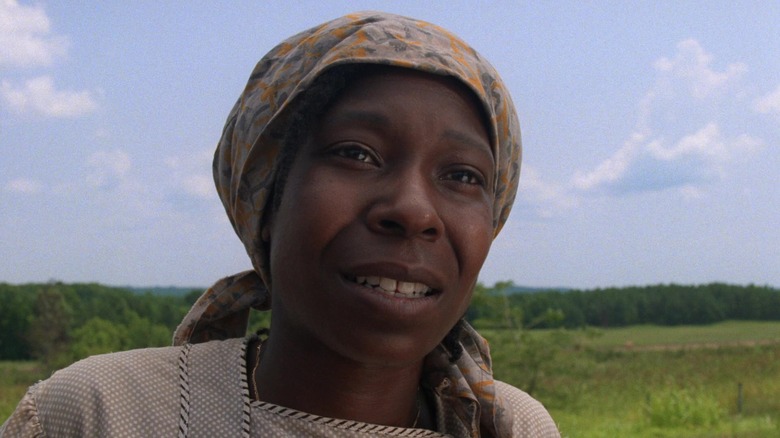
Then, in 1985, the Academy appeared ready to make amends when it bestowed 11 nominations on Spielberg’s adaptation of Alice Walker’s novel “The Color Purple.” Finally, he’d made a serious movie for adults. His storytelling brilliance felt like it had found a worthy, non-escapist subject in the Jim Crow South of the early 20th century. If you weren’t weeping when Whoopi Goldberg’s Celie reunited with her children, you were devoid of humanity. “The Color Purple” had everything going for it, and, shockingly, got nothing, tying with 1977’s “The Turning Point” for the record of most Oscar nods without a win.
Spielberg and The Color Purple went home Oscar-less in 1986
Amblin Entertainment
When Herbert Ross’ ballet drama “The Turning Point” earned 11 Oscar nominations in 1978, it felt like a curmudgeonly reaction to the visual effects heavy blockbusters “Star Wars: Episode IV — A New Hope” and “Close Encounters of the Third King.” It was a well-made film bolstered by knockout performances from Anne Bancroft, Shirley MacLaine, and Leslie Browne, but it was up against superior work in every category. Nearly 50 years later, good luck finding a cinephile willing to espouse the virtues of “The Turning Point.” The other two movies? Classics. That it got shut out on Oscar night wasn’t a big deal.
Growing up in a lily-white suburb in Northwest Ohio, I didn’t perceive “The Color Purple” as a classic. Then I spent two decades of my life in big, culturally diverse cities and realized Steven Spielberg had used his clout to make a movie that spoke to people who weren’t from lily-white suburbs. It’s a special film. But when Spielberg didn’t secure a Best Director nod in 1986, you knew his picture was doomed Oscar-wise.
Even then, watching “The Color Purple” never win once on Oscar night felt like a referendum on two things: Spielberg’s crowd-pleasing rep and the Academy’s lack of Black voters. That the organization crowned “Out of Africa” instead remains an insulting celebration of whiteness; a soaring score from John Barry and two, at best, game performances by Meryl Streep and Robert Redford aside, the film has no cultural or emotional resonance nowadays. Meanwhile “The Color Purple” got a stage musical adaptation that became a film in 2023.
To be fair, Spielberg’s adaptation was up against stiff competition, but those movies largely wound up being losers, too. Overall, 1986 was an embarrassing year for the Academy.