This post was originally published on here
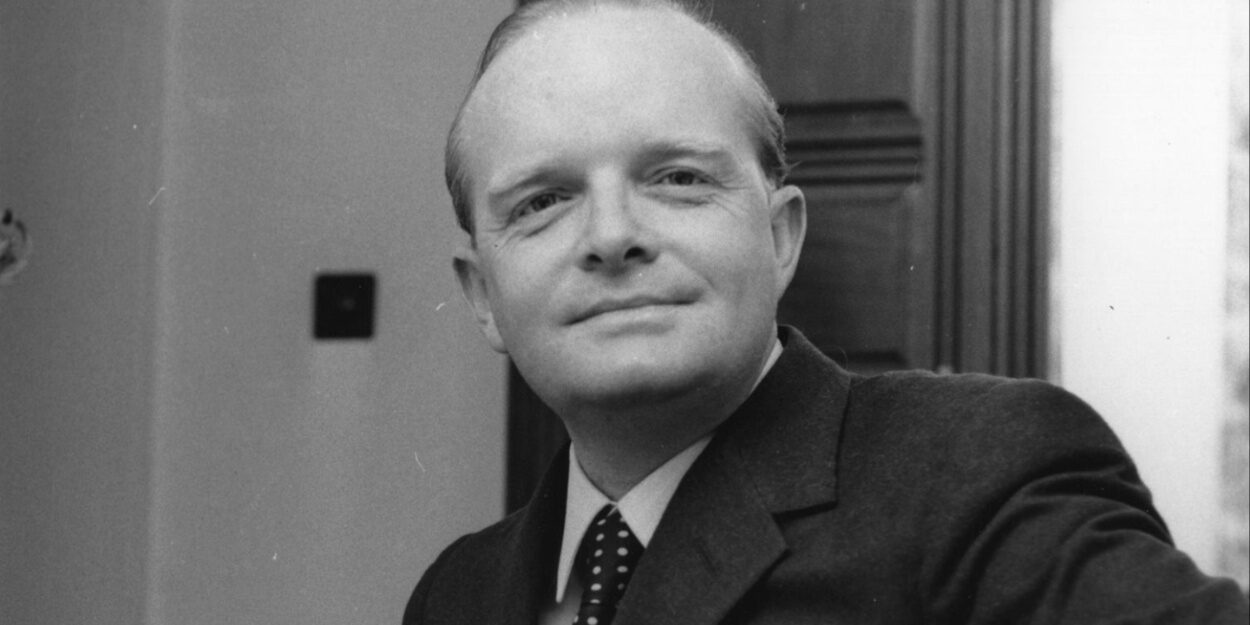
Truman Garcia Capote (born Truman Streckfus Persons; September 30, 1924 – August 25, 1984) was an American novelist, short-story writer, playwright, screenwriter, and actor. He helped create New Journalism by mixing storytelling with factual reporting and is seen as one of the most important writers of the 20th century. His books often looked at loneliness, identity, social class, and life in the American South. Capote never married and did not have children.
As of February 2026, Capote has been gone for over 41 years, but his impact is still felt. Breakfast at Tiffany’s and In Cold Blood continue to sell well and are often taught in schools. Recent projects like the 2024 documentary The Capote Tapes and the miniseries Capote vs the Swans (with Tom Hollander as Capote) have brought him back into the spotlight. There were no major new biographies or unpublished works released in 2025, but researchers still use his archives at the New York Public Library and other places.
Here is a quick overview of key facts about Truman Capote:
| Full Name at Birth | Truman Streckfus Persons |
| Date of Birth | September 30, 1924 |
| Date of Death | August 25, 1984 |
| Age at Death | 59 years old |
| Height | Approximately 5 feet 3 inches (1.60 m) |
| Cause of Death | Liver disease complicated by phlebitis and multiple drug intoxication |
| Wife | None (never married) |
| Children | None |
| Nationality | American |
| Net Worth at Death (1984 est.) | Approximately $1–$2 million (adjusted for inflation; from book royalties, screenplays, and estates) |
Truman Capote’s Wife
Truman Capote never married. He was openly gay as an adult and had several important relationships with men. His longest partnership was with writer Jack Dunphy, whom he met in 1948. They lived together for more than 30 years until Capote died in 1984, although their relationship became more of a friendship later on because of Capote’s struggles with addiction and emotional issues. Dunphy was the main heir in Capote’s will and received much of his estate. Capote also had relationships with Newton Arvin, a Smith College professor (to whom he dedicated Other Voices, Other Rooms), and later with John O’Shea and Bob MacBride. He did not have children and spent much of his personal life with close friends, other writers, and in social circles.
Biography Update
Truman Capote was born Truman Streckfus Persons on September 30, 1924, in New Orleans, Louisiana, to Lillie Mae Faulk and Archulus Persons, who was a salesman. His parents divorced when he was young, so he grew up mostly with relatives in Monroeville, Alabama. There, he became close to his cousin Nanny Rumbley Faulk, known as “Sook,” and his neighbor Harper Lee, who later wrote To Kill a Mockingbird. Capote taught himself to read and write at an early age and started writing stories as a child.
In 1932, Capote moved to New York City with his mother and her new husband, José García Capote. He went to private schools but left before graduating to work as a copyboy at The New Yorker in 1942. His first short story, “Miriam,” was published in Mademoiselle in 1945, which led to a book deal with Random House for his first novel, Other Voices, Other Rooms (1948). The novel’s success and Capote’s lively personality made him famous in the literary world.
In the 1950s, Capote wrote Breakfast at Tiffany’s (1958), which introduced the character Holly Golightly. His book In Cold Blood (1966), a “nonfiction novel” about the 1959 Clutter family murders in Kansas, changed true-crime writing and made him famous around the world. He spent years researching the case and got to know the killers, Perry Smith and Dick Hickock.
In his later years, Capote struggled with alcoholism, drug use, and became more isolated after publishing “La Côte Basque, 1965,” an excerpt in Esquire that revealed secrets from high society and cost him many friendships. He never finished his planned novel, Answered Prayers. Capote died on August 25, 1984, in Los Angeles at age 59. His ashes were said to be divided between Joanne Carson and Jack Dunphy, with some scattered at Crooked Pond on Long Island.
Movies
Truman Capote’s works and life have inspired many adaptations:
- Breakfast at Tiffany’s (1961) – Film starring Audrey Hepburn as Holly Golightly (Capote disliked changes from his novella).
- In Cold Blood (1967) – Film directed by Richard Brooks, starring Robert Blake and Scott Wilson.
- Capote (2005) – Biographical film starring Philip Seymour Hoffman (Oscar winner) as Capote, focusing on the In Cold Blood research.
- Infamous (2006) – Another Capote biopic starring Toby Jones.
- Truman Capote’s A Christmas Memory (1966, 1997) – TV adaptations of his story.
- The Grass Harp (1995) – Film based on his novel.
- A Christmas Memory (1997) – TV movie with Patty Duke.
- Truman Capote: The Tiny Terror (1997) – A&E Biography documentary.
- Capote vs The Swans (2024) – FX miniseries starring Tom Hollander as Capote.
Capote himself appeared in documentaries and briefly acted in Murder by Death (1976).
Height
Truman Capote was about 5 feet 3 inches (1.60 meters) tall. His small size, high-pitched voice, and unique mannerisms made him easy to recognize and often drew attention from the media.
Cause of Death
Truman Capote died on August 25, 1984, at age 59, at the home of his friend Joanne Carson in Bel Air, Los Angeles. The official cause of death was liver disease made worse by phlebitis and multiple drug intoxication, according to the coroner’s report. Years of heavy drinking and prescription drug use, including cocaine, tranquilizers, and painkillers, had badly affected his health. He had cirrhosis of the liver and other health problems in his last years. Capote died in his sleep, with friends nearby.
Books
Truman Capote published numerous acclaimed works:
Novels & Novellas
- Other Voices, Other Rooms (1948) – debut novel
- The Grass Harp (1951)
- Breakfast at Tiffany’s (1958) – novella
True Crime / Nonfiction
- In Cold Blood (1966) – “nonfiction novel” about the Clutter murders
Short Story Collections
- A Tree of Night and Other Stories (1949)
- Breakfast at Tiffany’s and Three Stories (1959)
- Music for Chameleons (1980)
- The Complete Stories of Truman Capote (2004, posthumous)
Other
- The Muses Are Heard (1956) – nonfiction
- Local Colour (1950) – travel essays
- A Christmas Memory (1956, 1966) – short story
- The Thanksgiving Visitor (1967)
- Answered Prayers (1987, unfinished, posthumous excerpts)
His books remain widely read, taught, and adapted, with In Cold Blood and Breakfast at Tiffany’s considered classics.