



This post was originally published on here
Strikes by writer and actors cut B.C.’s industry in half. But thanks to some big-budget U.S. productions and dependable Canadian series, studios are booking up and workers are busier
Article content
Reviews and recommendations are unbiased and products are independently selected. Postmedia may earn an affiliate commission from purchases made through links on this page.
After a handful of slow years, there’s guarded optimism within the production industry for the year ahead.
Advertisement 2
Story continues below

Article content
In 2022, the industry spent $4.4 billion in the province and had 50,000 full-time on the books. In 2023, actors and writers were out on strike, the industry went into a global contraction and B.C.’s numbers shrunk to just over $2 billion spent with 26,000 full-time jobs.
Article content
Recommended Videos
Article content
While Creative B.C. only had 2023 numbers at press time, insiders say 2024 saw similar numbers. Halfway through 2025 things began to pick up, and that upward trend is expected to hold as 2026 unfolds.
“We did see our production volumes increase in late spring and early summer. I’d say that’s probably when we hit our peak,” said B.C. film commissioner Marnie Gee (no relation to reporter) about 2025. “We were getting up in the mid-30s by that point. And … where we could see that was obviously a difference from 2024 and 2023.”
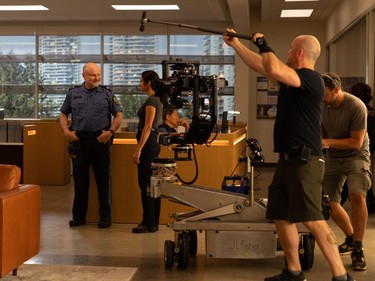
B.C. is typically a top jurisdiction globally, according to Gee. So those lower numbers hit hard.
“We didn’t hit where we would like to have hit in terms of the number of productions and the types of productions that we’re filming here,” she says. “So, it was a tough year, even though it was a better year.”
While the province’s competitive tax incentive, robust infrastructure of close to 150 studios, and deep crew and talent base — including multiple in-demand animation and VFX studios — make it a very competitive location, the film industry itself took a big hit globally over the last few years.
Advertisement 3
Story continues below
Article content
“One hundred per cent, yes it was a global issue,” said Gee. “It’s complex, because it’s not one thing. It was a number of different things.”
Factors such as labour issues (currently the U.S. Screen Actors Guild is negotiating a new contract with the Alliance of Motion Picture and Television Producers) and industry consolidation, as well as restructuring across streamers and broadcasters led to further industry contraction.
“There has been an overall decrease in the number of productions being greenlit internationally, and so that has nothing to do with our jurisdiction,” said Shawn Williamson, a veteran producer and founder of Brightlight Pictures. “That’s just an indication of the number of shows that the studios are actually green-lighting.”
Williamson added that the studios are looking closely at what they’re giving the go-ahead to, considering “is there an audience for it, not just domestically, in North America, but internationally.” And he adds there’s the consideration of how much they’re spending “to just create content to fill hours of programming.”
Screen B.C. chairperson and Martini Studios owner Gemma Martini is on the side of optimism as she’s seeing an uptick directly in her own business.
Advertisement 4
Story continues below
Article content
“Knock on wood. All the studios are full, and we’re looking forward to this year being busier,” said Martini, whose Langley-based operation includes eight stages over three studios.
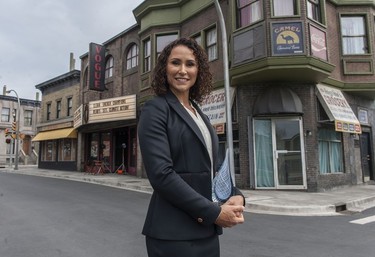
During a recent board meeting for Screen B.C., Martini found members of an industry working group that represents close to 150 member organizations from the TV/film community were positive about 2026.
“The room was optimistic,” said Martini, adding that the early part of any year in this business tends to be a bit slower. “I think we have 24 active productions as of today (mid-January), and that, of course, changes on a weekly basis. So that’s looking much better than it did last year. The unions have a larger percentage of their people working this year than they did last year.
“We’re not comparing ourselves to our best year, because we’re a long way off from that, but we’re all moving in the right direction with optimism.”
One of the big reasons for optimism in Hollywood North is that the major TV productions FX’s Shōgun, HBO’s The Last of Us, and Amazon’s God of War are all shooting here. All three of these big productions — think: US$200-million-to-US$400-million budgets — are either back to work now or gearing up.
Advertisement 5
Story continues below
Article content

We apologize, but this video has failed to load.
Rebecca Lee, the Emmy Award-winning head of the makeup department for Shōgun, says the production, on a regular basis, employs eight to 10 full-time makeup artists. That number balloons to 10 to 30 on days when the script calls for large crowd scenes and big fight sequences. The first season of Shōgun, also shot in B.C., employed around 350 people.
“We’re employing people again. I’m reaching out to my trusted makeup artists and saying, ‘Hey, I need help. It’s time to work,’” said Lee.
Looking back, Lee said people in the industry got used to those big years in the early 2020s, adding that the sudden downturn has been difficult.
We’re employing people again. I’m reaching out to my trusted makeup artists and saying, ‘Hey, I need help. It’s time to work.’
Emmy-winning makeup artist Rebecca Lee

“I’ve seen the industry go through cycles before, so it wasn’t that unusual for me to see that happen. But for such an extended period of time it has been difficult,” said Lee.
“Going forward into 2026, I think things are picking back up. I think we’re on an upswing. Three big shows that employ a lot of people is amazing … There’s a lot of other things starting up as well. I’m almost having trouble, not quite yet, but it’s going to be hard soon as everything starts up, and that’s just a great thing for everybody.”
Local line producer Catou Kearney says the return of shows like Shōgun and The Last of Us is the best advertising the local industry can get.
Advertisement 6
Story continues below
Article content
“It says a lot about the industry, and it says a lot about the calibre of our crew, as well as our vendors and the support that we have in Vancouver,” said Kearney, noting support from the film commissions and municipalities also help secure productions. “We’ve worked really hard to get here … we’ve worked very hard to be able to work small-budget, big-budget and everything in between.”
We’ve worked really hard to get here … we’ve worked very hard to be able to work small-budget, big-budget and everything in between.
Line producer Catou Kearney
Adding pressure to the B.C. industry is the fact that many other jurisdictions around the world have figured out that the TV/film production business likes a good tax credit. And that, combined with how the U.S. dollar performs against local currency, has meant studios are looking more broadly for locations.
According to an industry survey by ProdPro, high-budget productions over US$40 million were down 13 per cent in Canada and 20 per cent in the U.S. from 2024 to 2025. Those productions headed overseas, giving the U.K. a 15 per cent boost and Ireland a whopping 42 per cent increase.
“Globally, there is much more competition. I would say there’s probably 10 more jurisdictions that are in the game that were not in the game 10 years ago,” said Gee.
Early last year, the B.C. government increased the Production Services Tax Credit to 36 per cent from 28 per cent. The Film Incentive B.C. tax credit for Canadian-owned-and-controlled production corporations that are based in the province also increased from 35 to 40 per cent. Fifteen per cent of productions are domestic, while the remaining 85 per cent are service productions, which essentially means a Canadian company produces an American or foreign project.
Advertisement 7
Story continues below
Article content
Article content

“There’s definitely a lot more competition from jurisdiction to jurisdiction. But we feel confident because the tax credit change that was implemented last year by our local government, based on the labour spend in British Columbia, really put us back at the competitive table, and we’re seeing just now the influx of that,” said Martini.
While other locations are in the mix now, people here are confident that B.C.’s reputation and infrastructure have an undeniable edge when it comes to wooing producers.
“They love working here,” said Martini about U.S. studios that Screen B.C. meets with. “We are well-known there, and we’re just continuing to kind of double down on the advantages and the benefits that we have here.”
Those benefits include veteran crews and actors, a wide range of location options and studio space.
“We had 20 new sound stages with Bridge Studios coming online in June of 2025. So again, that just increased our capacity to have enough infrastructure to get back to the type of production volume that we’re interested in,” said Gee, adding Vancouver’s proximity to Los Angeles is also an attractive asset.
Kearney has been working in the local TV and film industry for close to three decades and points out it’s an industry that fluctuates by nature, and in order to have a long career in it, you have to keep that in mind and be prepared for the “ebbs-and-flows” of the industry. As she points out, pre-streaming services for network TV shows meant 22 episodes of work. Streaming shows are usually half of that or even less.
Advertisement 8
Story continues below
Article content
“You need thick skin, and you need to teach yourself how to budget,” said Kearney, who is currently working on the TV show Wild Cards. “It’s like any job that’s gig employment, where you’re really a contractor and you’re self-employed … You do have to learn to live through the frugal times. And it’s not easy. I’ve had friends … who really haven’t worked last year at all.”
Of course, the big-budget U.S. productions employ a lot people, and money also streams down into hotels, vendors and restaurants, etc. But also, Canadian productions like the TV series Allegiance, , Wild Cards and the many Hallmark movies filmed here all help to fill the financial bucket.
We apologize, but this video has failed to load.
“We just did Season 3; we rolled right into Season 4,” said Kearney about Wild Cards. “Even in our smaller footprint, we still have an impact locally.”
With such deep experience to her credit, Kearney is looking toward 2026 with a measured hopefulness.
“There seems to be more going on right now than there was at this time last year,” said Kearney. “I’m out here and I’m at Martini studios, and the other studios right across from me are full, and Tracker is shooting down the road, so these stages are all full, which is very positive. So, cautiously optimistic.”
Advertisement 9
Story continues below
Article content
And word within the industry is much the same.
“I’ve not heard anything negative,” said Kearney. “We’re all forecasting that it’s going to be a better year.”
Williamson, who is currently working on Season 3 of the AMC series Mayfair Witches, says he hopes to see more TV coming to B.C. His company is currently waiting to hear about their next projects.
“We have a number of shows that are on the edge of green-light, but those are things we don’t talk about,” said Williamson. “I’m too superstitious. I don’t want to jinx myself. It’s not a show until we’ve started hiring people, and there’s a number of shows that are circling that are on the edge of that.
“I’m cautious. I’ve been doing this too long. Everything’s not a go until the cheques are clearing.”
Article content






Comments