This post was originally published on here
Andrew Macdonald, Danny Boyle’s long-time producer, recalls the first time he met with U.K. exhibition icon Clare Binns, who will receive the BAFTA Special Award on Sunday for her Outstanding British Contribution to Cinema.
Macdonald met Binns at the time he and Boyle screened their first-ever feature, “Shallow Grave.” They had hoped to have the film selected at Cannes in 1994, but failed, so showed it as a market screening there instead. Binns attended, and loved the film, Macdonald tells Variety. “She was incredibly enthusiastic about it, and she was an exhibitor who actually wanted to put the film in a cinema, and I was so delighted. And since then, we’ve always been in touch.”
Macdonald, whose films also include Alex Garland’s films such as Oscar-nominated “Ex Machina,” commends Binns for her no-nonsense approach. “She’s one of those people who is brutally honest. She tells you if it’s too long, and she tells you if it’s boring,” he says.
Popular on Variety
“Shallow Grave” was released the following year, and by that time, Macdonald and Boyle were already underway with “Trainspotting,” and Binns came for a set visit, one of very few people to do so. “She was just super supportive right from the beginning, and super excited about British films playing,” Macdonald says. “And they both did great business, so it worked well for her, and, since then, I’ve always seen her at festivals, always listened to her, and it’s so pleasing that she’s getting this award. Somebody who really has made a difference. She’s so supportive of films, if she can be.”
Binns, the creative director of film exhibition company Picturehouse Cinemas, and its distribution and film financing arm Picturehouse Entertainment, elicits many such plaudits from those in the industry.
“Iron-clad resolve, huge energy, a wicked sense of humor, deep curiosity and a fierce intellect are all qualities Clare has in spades (along with many more), but one that stands out is taste – she has impeccable taste and her passion for a film gives everyone involved huge confidence – an incredible ballast in the making and distribution of any film,” Ed Guiney, the producer of Oscar nominees “Room,” “The Favourite,” “Poor Things” and now “Bugonia,” tells Variety, in a statement co-written with his colleagues Andrew Lowe and Emma Norton at Element Pictures.
“This was absolutely the case with ‘Pillion,’ which Clare and her team championed from the start, helped finance and then guided to an amazing result at the U.K. box office – and for which we are eternally grateful.”
Producer Stephen Woolley, whose career encompasses Oscar nominated “Mona Lisa,” Oscar winner “The Crying Game,” Oscar nominated “Michael Collins” and Oscar nominee “Carol,” among others, tells Variety, “It’s such a struggle, and always has been in our 40-plus years of doing so, to release independently financed films in the U.K., and Clare has been a terrific ally and enthusiast for so many of the films we have produced. Consistently helping us to preview our movies and championing the best of British and international films whenever they appear at festivals and on the release calendar. Not just a great cheerleader for our films but for all U.K. producers. She has helped build the Picturehouse brand in the last two decades with her fervent devotion to movies especially Great Indie Cinema.”
Selling Carrot Cake at the Ritzy
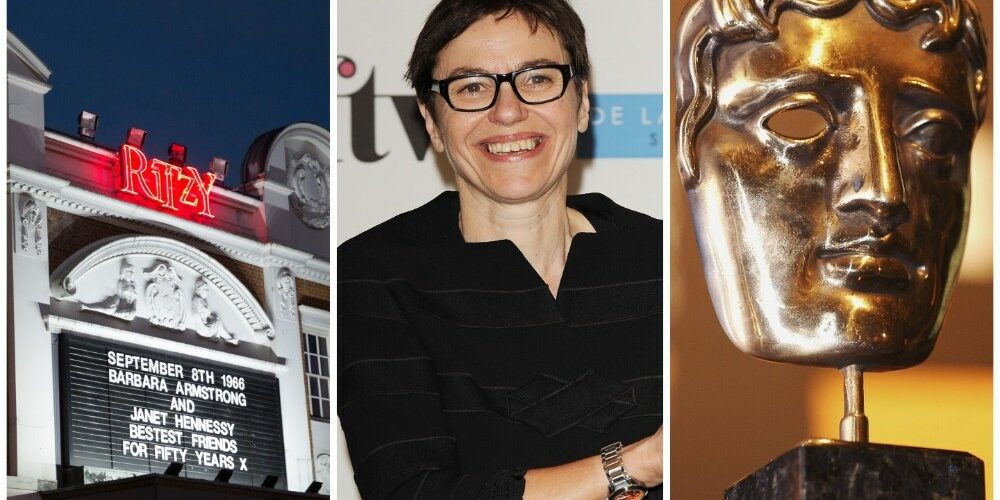
Binns’ love of cinema famously dates back to when she was an usher in the early 1980s at the Ritzy, an independent movie theater in Brixton, South London. She then worked her way up to projectionist and manager. So, Variety asked her whether that experience has informed how she has approached her roles as, first, an exhibitor, and now as a distributor and film financier.
“Yeah, absolutely, completely. It really is the bedrock of everything I’ve done in so many ways: Talking to customers, dealing with customers, watching customers, seeing films, how they react to films, being able to see the kind of films that I saw there, the number of films that I saw.
“We might have a film on for a week, and I might see it four or five times, to go in because I like certain sections of it, or watching how people responded to the films, and also the balance between the cultural and commercial and how important it was that you did sell people pieces of carrot cake and tickets and whatever, but you have the trust and faith that you could do that in a way that was meaningful. So, you know, all of that. And, also, now I know how hard it is to work in a cinema.”
What COVID Taught the Exhibition Sector
In the years following COVID, Picturehouse – like other movie theater chains – had to persuade people to come back into the movie theaters. How did it change her perspective of what the barriers are for people to come into a theater and how the chains can change things to encourage them to do so?
“Clearly we’ve had an uphill struggle for all sorts of reasons, but people just got completely out of the habit of seeing films, and I have noticed that we have to work even harder than we did before to make people… it’s almost like you’re bringing people in to see an event. What I hope is that eventually we will get to the point that we were at before COVID, which is people are interested in a director, or they’re interested in just seeing what’s out there, whereas now we have to persuade people that the film has something very special about it, which is very difficult if you want to have people come in June and July, when there’s no awards films, there may be very good films out there, but I think everybody’s hedging their bets as to when they release films, how they release films, so it’s much harder to persuade people to get off their couches into the cinema. We’re succeeding, but it’s difficult.”
Clare in the Community
Binns has built a reputation as an innovator in the U.K. exhibition sector, introducing a number of changes that have improved the experience for cinemagoers or made it easier for people to come into Picturehouse theaters.
“I think it’s about the offer of a cinema that is welcoming to everybody with food and drink and cafes and restaurants, and that there’s an opportunity for people to feel that it’s a part of their daily life,” she says. “So it’s not just that they will come in to see a film on a Saturday night; that they’ll drop by for a cup of coffee, that we’re welcoming. We have to be welcoming, and we have to go the extra mile to make people feel that they are number one. They are a VIP. Every person has to be a VIP I think would be the difference that’s what we aim to achieve. And the reason why the Ritzy is that template for me is because it is in the heart of the community, and has always offered that. And I think we have to replicate that, not just at Picturehouses, but multiplexes, every cinema, and I see it in a lot of local cinemas, people that I talk to who run smaller venues, it’s really important that we’re offering to our customers a friendly, welcoming service.”
Move into Distribution
Under Binns’ stewardship, Picturehouse has moved, first, into distribution through Picturehouse Entertainment, and more recently into film finance, backing films such as “Pillion.” What lay behind that evolution?
“I think the distribution initially came about… and the first iteration of Picturehouse Entertainment was… I was going to festivals, and I was seeing films that I knew our customers would enjoy, and they weren’t being released in the U.K., and that seemed to me a bit daft, that there would be an appetite for them, she says.
“Now, obviously, distribution has become much more complex. The change … the fact that, you know, there’s no DVDs, and that was always what made the films financially work. And now we’re dealing with getting our films onto digital platforms that have a certain demographic that they want to appeal to. So, the kind of films that we release need a digital home, but it was very much, and always has been, about bringing films into the U.K. that are different and not necessarily challenging, but films that audiences do want to see and need to be given the opportunity to see those films.
U.K. Exhibition Sector Faces Challenges
Binns sees a need for Picturehouse and other exhibition chains to be more integrated within the U.K. film business, and present a united front when dealing with government.
“I think obviously after COVID, we had the VAT [value-added tax, a tax levied on goods and services] reduction, which was incredibly helpful. And I think cinemas are such an important part of business, and bringing people to the High Street. Culturally, economically, they’re so important that we do need to be aligned to make sure that the government understands how much money they’re bringing into the economy, and that without those cinemas and without those businesses, it’s going to hurt the U.K. ability to weather a very difficult economic climate.”
In recent budgets the U.K. government has increased the minimum wage, which along with other measures, has had an economic impact on the hospitality sector, including the exhibition sector, and has affected profitability.
Binns comments, “Well, clearly, we want to be able to offer the people that work for us very good conditions and good pay, etc., and we have to go along with what government puts out in their budget, and we have to deal with that. But it has been, over the last few budgets, difficult for businesses in hospitality. It’s not an easy climate to be running those businesses in.”
Audiences Return to Theaters
Despite these challenges, Binns remains optimistic about the state of health of cinema in the U.K.
“I mean, you have to be an optimist. We’ve been through so many different crises over the last 30, 40, 50 years. What I have seen over the last 18 months is certainly better quality films being made, younger audiences coming in, a real appetite to see films on the big screen, and put away the mobile phone to spend some time without being interrupted. I think that is more and more appealing to people. And if we can offer a great film in a nice building with some nice food and drink beforehand, and then a varied program, that is appealing to people … and we have absolutely seen an upturn in audiences.”
Are Films Too Long?
When Binns was interviewed by the Guardian recently, she said that most films were too long. Did she have any particular films in mind?
“Well, I’m not going to name films, but I saw a film last week that I thought was absolutely outstanding, and I would give it 11 out of 10, but it could have had 10 minutes cut out of it. And so, I’m actually going to give it 10 and a half. Almost every film I see is too long, and that is not just me. You talk to people… When I made that comment, the number of people that have said to me, ‘Thank God, you’ve said it.’
“I don’t know what’s happened to people. I don’t know if it’s because people have been given too much money, that producers aren’t tough enough… I don’t know what it is, but even reading scripts… I read a script over the weekend, and it was a great script, but it was 125 pages long, which makes it over two hours, and it didn’t need to be. I could have edited that very easily. Something has gone wrong somewhere along the line.”
From a practical point of view, speaking as someone who runs movie theaters, this excessive length of films has an effect on how profitable exhibitors can be, she says.
“Clearly, if you’ve got a film at two and a half hours, you’re only going to get one evening show, right? And what I have noticed since COVID is that people want to get home earlier. So, actually, having a film that is two and a half hours or three hours long, as some of the films have been recently, really means that we’re, as a business, only getting one evening show.”
Quite a few people are getting up to go to the restroom during a film, which other cinemagoers can find infuriating. Is that another practical consideration? “Well, absolutely, and particularly if you’ve got an older audience. It’s an ask with every film, I would say. I mean, this is an exaggeration, maybe, but I would say almost 80%, 90% of films I see could be shorter. You can tell a great story in 90 minutes or 100 minutes,” she says.
Potential Warner-Netflix Deal
With the Warner-Netflix deal still in the work, does Binns think it will have a negative effect on the business?
“Well, the only thing I would say about that is, what it may mean is that if you put two companies, if you put Warner Brothers and Netflix together, what the result will be is less films, and that, to me, is more of a problem. What we want, and what the audience clearly wants, is original films, and we haven’t got enough of them. And if it means that there’s less films being made, that’s not good for anybody. It’s not good for audiences, it’s not good for production, it’s not good for the business as a whole, and getting more creative people out there. So that would be my only concern.”
Recent months have seen executives from Netflix and their rival in the bid to buy Warner Bros., Paramount, visit London and other European cities to lobby for their bids. Has Binns received any friendly visits from executives from Netflix or Paramount?
“No, but I think [Ted Sarandos] said that he will honor the theatrical window. And I think, you know, what we have to get away from is… we have to all work with each other to make our businesses work. And I would hope that Netflix would work with us to make the business work for everybody. So, I want to be positive about it, not negative,” she says.
‘Narnia’-Imax Deal
Another development in the exhibition space is a controversial deal Imax signed with Netflix giving Greta Gerwig’s upcoming “Narnia” an exclusive two-week theatrical run on its screens. Does she have any thoughts on that arrangement?
“Well, clearly, we want all great films to have a chance to be shown in cinemas. It’s as simple as that. There’s an appetite for film, and the more options we have to be able to play films, the better for everybody. I would have thought,” she says.
A Tough Negotiator
Binns is known by insiders in the film business to be a tough negotiator, but they add that she also exhibits such a passion for films that they accept that she is doing it for the right reasons. This reflects how she approaches the business and people in the business.
“I am tough, but I do it because I want the best for the customers,” Binns says. “And that takes me right back to the Ritzy. When I first worked at the Ritzy, the cinema landscape was very, very different, and films would open at a very restricted number of cinemas because it was 35 millimeter and you wouldn’t be able to get a print of a film if you were a certain cinema. And I thought, ‘Well, why is the Ritzy not able to show this film? This is ridiculous. Our customers want to see it.’ And so I hounded in order to get those films for our customers. And that’s what’s always driven me. I want the best films; the most diverse range of films; made by the most diverse range of people; telling stories that are not necessarily familiar, but might open a world up for people. That’s what’s driven me, and that happens to be good for business.”
Brutal Honesty
Referring to Andrew Macdonald’s memories of Binns’ support for “Shallow Grave,” Variety shares with Binns the producer’s assessment that she could be “brutally honest” with producers and filmmakers alike.
She responds with a lightness in her voice, “Yeah. And again, you know, I remember telling Danny Boyle once – I went on a set visit, and I was with a group of men exhibitors, and I said to Danny Boyle, ‘Well, I hope you make this film 90 minutes, because then we can get in two shows.’ And the men were all appalled that I should say this to a director, but I would very happily tell a filmmaker, ‘Your film is too long, and this is what I think the problem is.’ Just let me get at them, because sometimes I think people don’t hear the truth. Everyone’s too frightened to say the truth to people, and I think it’s much more beneficial to be honest about something than to just say the same old guff that you hear.”
Mentors and Colleagues
Looking back over her career, Binns is happy to acknowledge the assistance of mentors and colleague is the exhibition business. “The late, great Romaine Hart [owner of The Screen on the Green in Islington, North London] was an amazing woman who was very insightful, and, again, very sharply honest and could call a spade a spade. She was really quite something.
“Lyn Goleby [co-founder of Picturehouse Cinemas and currently its interim executive chair], Sara Frain [managing director of distribution arm Picturehouse Entertainment] … all the people that I work with now. It is absolutely a collaboration. It is not one person. I’ve got so many friends and colleagues who have, again, been honest with me, and we’ve had very open conversations about things and which way the business should go. Romaine Hart, Lyn Goleby, Sara Frain … all are people that I’ve worked closely with and enjoyed working closely with.”
Looking Ahead
Looking ahead, Binns sees a number of priorities for Picturehouse. “I think the priorities are making sure it is about film, that it’s not about entertainment. It’s about film and what that does, and how we can amplify how great film is. And I see my next phase as being about encouraging people to take risks, encouraging people to … to help them along the way, to take my experience and to help them along the way, and to, yeah, take that 50 years and say, ‘Don’t be safe. Take a risk. Take a chance. Trust your audience, trust your instincts, trust the business.’
“We’re here, and we’re going to stay here. We might have to change and evolve, and it will change and evolve, and it is different, and people have different views on things, but it’s about working together for something that you love, and this is what I love.”
Binns’ new role at Picturehouse is described as part-time. So how will she fill her time? “Well, I’ve got grandchildren. And playing the banjo, and I read and read and read. I love reading, and I love swimming, and I love going to see films.”
And how is she is feeling about her impending appearance on the stage of the BAFTA awards on Sunday? “Yeah, well, I’m scared shitless to be honest,” she says. “You’ve got a very little time to speak, and I want to say a few things, as well as the thank yous. And so I just want to make sure that I use my time well to say what I say, and also make it that I really am standing there for thousands of people that are working hard to keep the whole machine going.”