This post was originally published on here

See snow over Twin Cities as forecasters outline Minnesota’s spring outlook
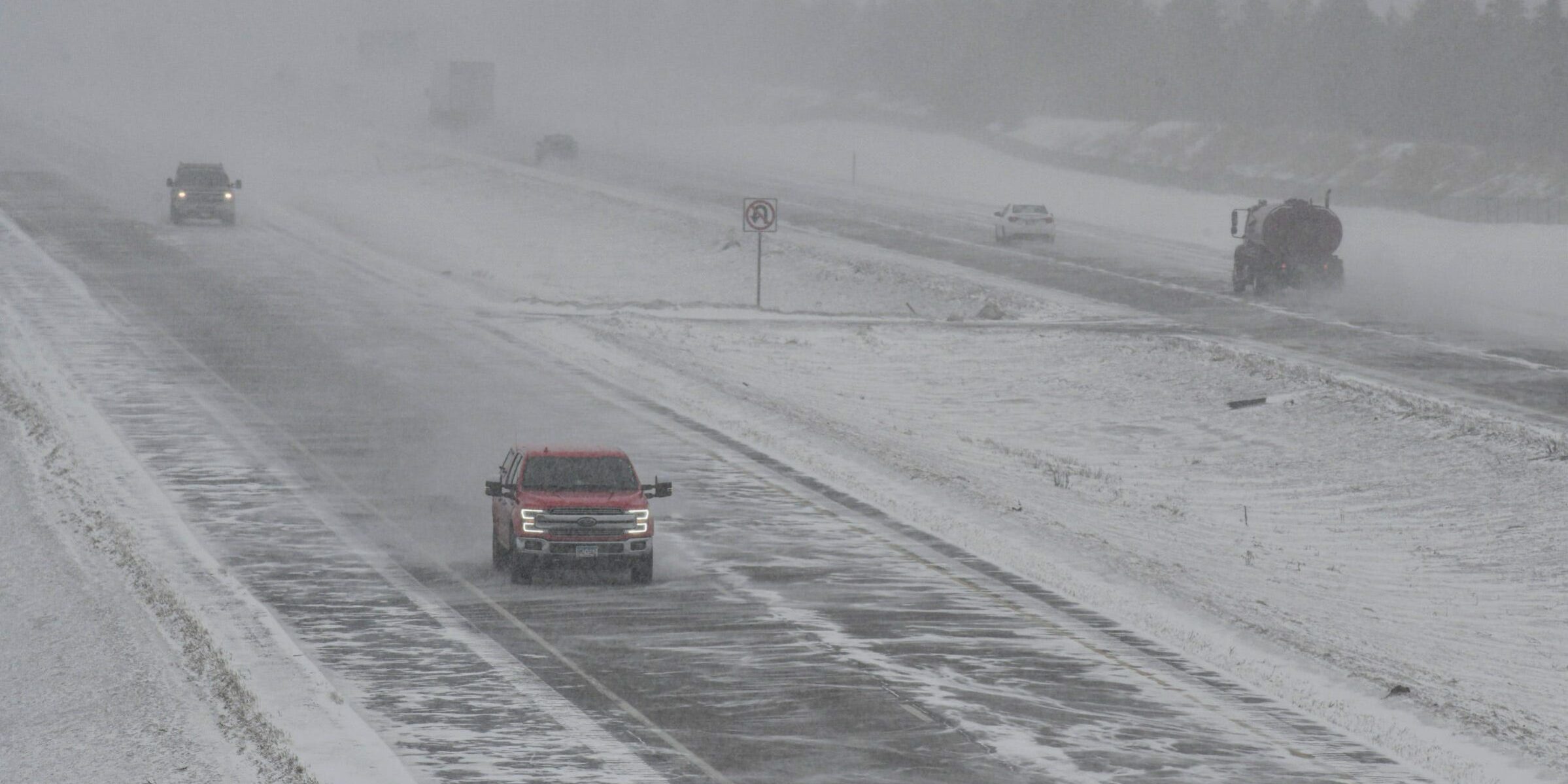
A passenger aboard an American Airlines flight captured a wintry Minnesotan landscape as weather forecasts for spring emerge.
We’ve learned a lot, over the past few weeks, about Minnesota.
But nothing we didn’t learn decades ago, from the movie “Fargo,” celebrating its 30th anniversary — hard to believe! — March 8. Minnesota is nice.
That wasn’t new, even then.
“Minnesota nice” is a cliché. It refers to the Lutheran-derived culture, in that part of the world, of politeness and community. It was well known, long before the Coen Brothers made their most celebrated film.
What “Fargo” taught us is that Minnesotans are nice, even when conditions are not.
Even when perpetual snow turn their state into a second Antarctica. Even when a crime spree results in bodies strewn in on the side of the road, in a parking garage, and — memorably — in a wood chipper.
And even when — to bring it back to the real world — their neighbors need escort, shelter, transportation and shopping assistance, because of the masked federal agents that are harassing them in the streets.
A study in contrasts
The contrast between the harshness of the setting, and the mildness of the people, is just one of the contradictions that make “Fargo” memorable. There are others.
“Fargo” is a movie that does not take place in Fargo.
“Fargo” is a “true crime” story that isn’t true. And “Fargo” is a comedy with this hilarious ending: a body being ground up in a woodchipper.
Snow-Globes with that bloody scene, handed out as gift-bag items at press screenings in 1996, are now rare and highly-prized collector’s items. The film itself is easier to find: it’s viewable on HBO Max, Amazon Prime, and other services.
Of all the cult movies turned out by the peerlessly eccentric team of Joel and Ethan Coen, “Fargo” may be the cultiest.
“No Country for Old Men” won more Oscars (four to “Fargo’s” two). “The Big Lebowski” may be more obsessed over. “O Brother, Where Out Thou?” has the great songs. But “Fargo” endures. It is the only one of their 18 features to spawn a TV series loosely tied to the original: the FX show “Fargo” launched in 2014.
World of ice
“Fargo” takes place in a bleak snowscape where everyone wears jackets with parka hoods, and not a single leaf, not a single blade of grass, breaks the panorama of endless white.
Carter Burwell’s mournful soundtrack — with its folksy fiddle — is the musical deadpan that makes the black comedy land. Another contrast.
In the world of “Fargo” it’s always cold, and everyone is always pleasant. “You betcha,” they say. Or, “do ya have a phone here, do ya think?” Or, in a real emergency, “For Pete’s sake!” It’s a place where a teenage boy would naturally have a poster of a polka musician, rather than a rock star, in his bedroom.
Some Minnesotans have objected to the caricature — it is a caricature, obviously — of their home state. But the Coen brothers were brought up near Minneapolis, so they should know.
Blood on the snow
Into this vanilla-white world intrudes Carl Showalter (Steve Buscemi) and his buddy Gaear Grimsrud (Peter Stormare) — hoods hired by a haplessly sleazy car salesman (William H. Macy) to kidnap his wife in a ransom plot that goes murderously, hilariously wrong.
They are no match for Marge Gunderson (Frances McDormand, who won an Oscar), the unworldly, pregnant police officer who would appear at first glance to be exceptionally unequipped for the job.
She has to jump-start her prowl car. She gets morning sickness at a crime scene. She remarks of a corpse: “He looks like a nice enough guy.”
A force for good
But not only is she more competent than she looks — she solves the crime — but she loses none of her niceness in the process. She’s as chipper as a chipmunk, even after she sees that famous severed leg being ground into mulch.
“And for what? ” she tells the killer, reproachfully. “For a little bit of money? There’s more to life than a little money, you know. Don’tcha know that? And here ya are, and it’s a beautiful day.” (It is, of course, as bleak and snowy as ever.)
“Well, I just don’t understand it,” she says.
She is an embodiment of unalloyed goodness. A sort of angel. Naturally, she seems a little ridiculous — as a good person, in a bad world, inevitably does.
“Fargo” is, on one level, a put-on. The film equivalent of an urban legend. And it spawned an urban legend of its own.
Story continues below video

Watch officers get creative to free deer tangled in hammock
Police in Washington County, Minnesota, used a pole and knife to help free a deer tangled in a hammock.
Did viewers take it at face value?
Some early viewers, it was said, took the film’s tongue-in-cheek opening title for real: “This is a true story. The events depicted in this film took place in Minnesota in 1987. At the request of the survivors, the names have been changed. Out of respect for the dead, the rest has been told exactly as it occurred.”
People, the story goes, actually went to Minnesota in search of the $920,000 that the Steve Buscemi character buried in the snow and never recovered. Among them was a woman named Takako Konishi, who traveled from Japan in December 2001, and died of exposure.
It was later determined that Konisha was depressed after losing her job, and had come to the U.S. looking for a former lover. Her death was a suicide. But Bismarck police officers thought they heard her saying the word “Fargo” and put two and two — incorrectly — together.
This tragedy, unlike “Fargo’s,” was real. It became the basis for its own film: “Kumiko, the Treasure Hunter.”
Would anyone really believe a story as preposterous as “Fargo”? Probably not.
Would Minnesotans — asked to turn on their neighbors — fight for their historic right to be nice?
You betcha.