This post was originally published on here
Travellers stranded by a widening war in the Middle East began departing the United Arab Emirates aboard a small number of evacuation flights on Monday, as governments around the world worked to extract their citizens from the region.
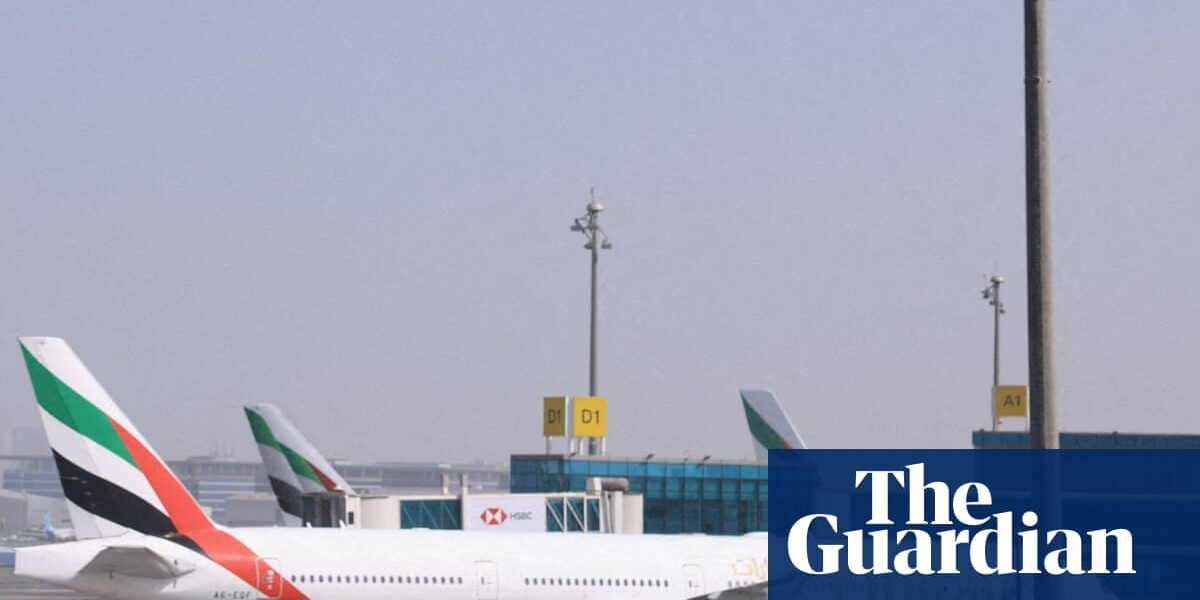
Airlines Etihad Airways and Emirates, based in Abu Dhabi and Dubai, and budget carrier FlyDubai said they would operate limited flights, in the wake of the chaos and damaged sparked by Iranian missiles and drones.
Since Saturday, at least 11,000 flights into, out of and within the Middle East have been cancelled, affecting more than 1 million passengers, according to aviation analytics firm Cirium. The travel chaos looks set to continue, with US president Donald Trump saying on Monday that the conflict had been projected to last four to five weeks but that it could go on longer.
Late on Monday the US state department called on Americans to immediately depart more than a dozen countries in the Middle East, including Saudi Arabia and the UAE, amid the spiralling conflict triggered by US-Israeli strikes against Iran on Saturday.
Mora Namdar, the state department’s assistant secretary for consular affairs, said US citizens should leave using available commercial transportation “due to safety risks”. The US has not organised its own evacuation flights.
In the UK, prime minister Keir Starmer said the government was sending rapid deployment teams to the region to support British nationals there, and wanted “to ensure that they can return home as swiftly and safely as possible”.
He told MPs: “We’re asking all British citizens in the region to register their presence so we can provide the best possible support and to monitor the Home Office travel advice, which is being regularly updated.
Etihad Airways flight EY67, carrying stranded UK nationals, departed from Abu Dhabi on Monday afternoon and landed at Heathrow on Monday evening, according to flight tracking company Flightradar24.
British foreign secretary Yvette Cooper indicated that 102,000 British nationals had registered their presence in the region, and that a total of about 300,000 British citizens were in Gulf countries targeted by Iran.
Dubai’s government urged passengers on Monday to go to airports only if contacted directly, warning that operations remained limited.
At least 16 Etihad flights left Abu Dhabi during a three-hour window on Monday, according to Flightradar24, heading to destinations including Islamabad, Paris, Amsterdam, Mumbai, Moscow and London. The airline’s website, however, said all its regularly scheduled commercial flights remained suspended until Wednesday afternoon.
Emirates said customers with earlier bookings would get priority for seats aboard the limited flights it planned to operate starting Monday evening. FlyDubai said it would operate four flights departing the city and another five arriving planes on Monday, adding that schedules could quickly change as the situation evolved.
The select departures brought some relief but did not indicate a return to business as usual.
Airspace closures remained in effect for Iran, Iraq and Israel, and Jordan instituted one starting Monday and lasting overnight. Total or partial closures in Qatar, Bahrain, Kuwait, Saudi Arabia and Syria were set to expire on Monday but could be expanded, according to flight-tracking service Flightradar24.
Even when the restrictions are lifted, commercial flights may not immediately resume. Airlines that operate evacuation flights are doing so with government backing, and the carriers’ home countries may be assuming part of the financial risk, said Henry Harteveldt, president of travel market research firm Atmosphere Research Group.
“If the countries reopen their airspace, that certainly is helpful,” Harteveldt said. “But airlines aren’t going to resume operations until they are fully confident that there is a zero – or as close as possible to zero – risk that their aircraft will be attacked.”
The Philippines upgraded its travel advisory on Monday for the United Arab Emirates, placing it – along with Bahrain, Kuwait, Qatar and Saudi Arabia – at a level that automatically triggers a deployment ban on newly hired Filipino workers, the country’s foreign affairs department said.
Indonesia said more than 58,000 of its citizens were stranded in Saudi Arabia, where they were visiting Islam’s holy sites in Mecca and Medina during Ramadan.
“It has become an urgent humanitarian and logistical issue,” said Ichsan Marsha, spokesperson for Indonesia’s Ministry of Hajj and Umrah, which was coordinating with Saudi authorities, airlines and Indonesian travel operators to arrange alternative routes or rescheduled flights.
Germany’s foreign ministry said about 30,000 German tourists were stranded on cruise ships, in hotels or at closed airports in the Middle East. The government said it plans to send aircraft to Oman and Saudi Arabia to evacuate ill travellers, children and pregnant people, while working with airlines to assist others.
The Czech Republic said it was sending several planes to Egypt, Jordan and Oman to bring home citizens from Israel and surrounding countries.
Leela Rao, a 29-year-old law student at Georgetown University in Washington, made it on to one of Monday’s Etihad flights. She said she learned of the airstrikes while waiting to make a connection in Abu Dhabi on Saturday and spent hours at the airport following news updates, hearing explosions and receiving shelter-in-place alerts before the airline arranged a hotel stay in Dubai.
“I am feeling so, so, so grateful,” Rao said via text message after arriving in Delhi in time for a friend’s wedding. “Everyone clapped when we landed.”
With Associated Press, Press Association and Agence France-Presse