This post was originally published on here
There is something genuinely wonderful about train travel. The rolling landscapes, the rhythm of the wheels, the sense that you are moving through a place rather than just over it. For millions of tourists each year, rail journeys through Europe, Asia, and North America rank among the most memorable parts of a trip.
Here is the thing though. Trains are also shared, intimate spaces with their own social codes. Many of those codes are never written down anywhere. Locals just know them. Tourists, on the other hand, often don’t. The result is a lot of unintentional friction, awkward stares, and occasionally genuine frustration from fellow passengers who can’t quite believe what they are witnessing. So before your next journey, let’s get into it.
1. Blocking the Doors While Boarding
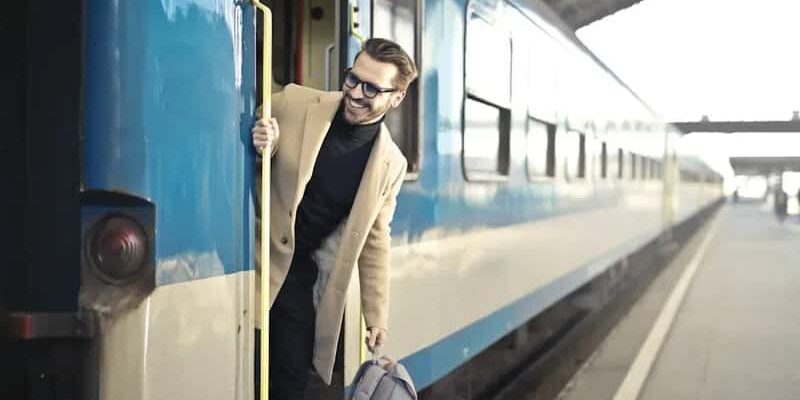
This one happens at practically every busy station around the world, and it is probably the most universally annoying mistake a tourist can make. When boarding a train, the proper etiquette is to stand off to the side of the open doors and wait for passengers to exit. Only once it’s clear should you attempt to board the train yourself. Seems obvious enough, right? Apparently not.
Let others off the train before you try and get on, and stand to the side of the train doors to allow disembarking passengers to exit easily. Neatly line up on each side of the door and remember, like many things in life, it’s first come, first served. Queue up in the order you arrived – it’s not a race. Tourists, often stressed about getting a seat or finding their carriage, routinely ignore this.
In general, most trains don’t stop for terribly long for boarding – thus if you are blocking the entrance with your bags, trying to figure out how to store them in the small oversized luggage storage area, no one else can board that car. A few seconds of patience at the door can save everyone a great deal of stress. Step aside, let people off, then step on. That’s all there is to it.
2. Treating Your Bag Like a Paying Passenger
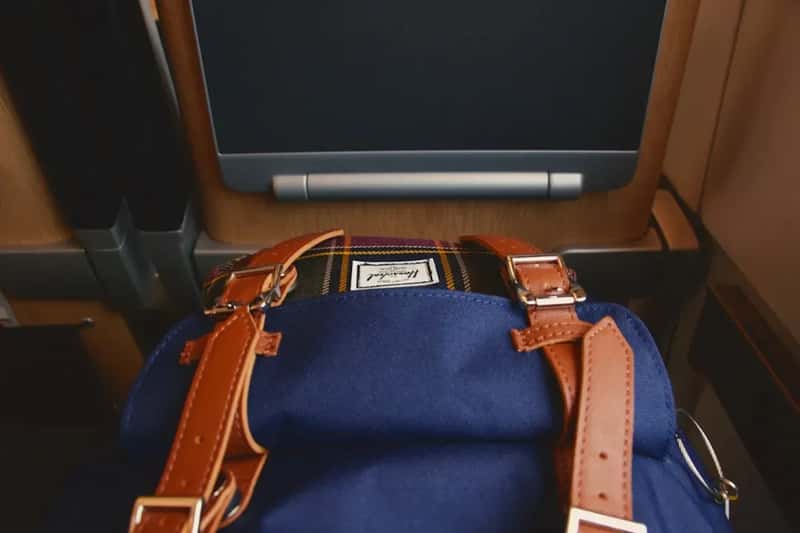
Honestly, the “bag on the seat” offence might be the one that annoys fellow passengers most consistently. Frequent rail riders say taking up too much space is one of the most annoying things other passengers do on trains. Seats are intended for humans, not your personal belongings or pets. This is especially important on crowded trains – such as those during rush hour – where available seating may be scarce. While you may be tempted to place a bag on the seat so you have extra personal space, doing so is considered rude.
We all love having extra space, but your bag is not entitled to its own seat. Many people lack the confidence to ask you to move it – the confrontation simply isn’t in our British psyche – but people should not have to stand up unnecessarily. This plays out across the world, not just Britain. Think of it like pulling into a full car park and taking two spaces. Nobody is impressed.
There’s no additional charge to sit in the Quiet Car, but passengers are asked to occupy only one seat per person. Please do not use adjacent seat space for personal belongings. The seat next to you is for the next person who boards, full stop.
3. Ignoring Luggage Storage Rules on High-Speed Trains
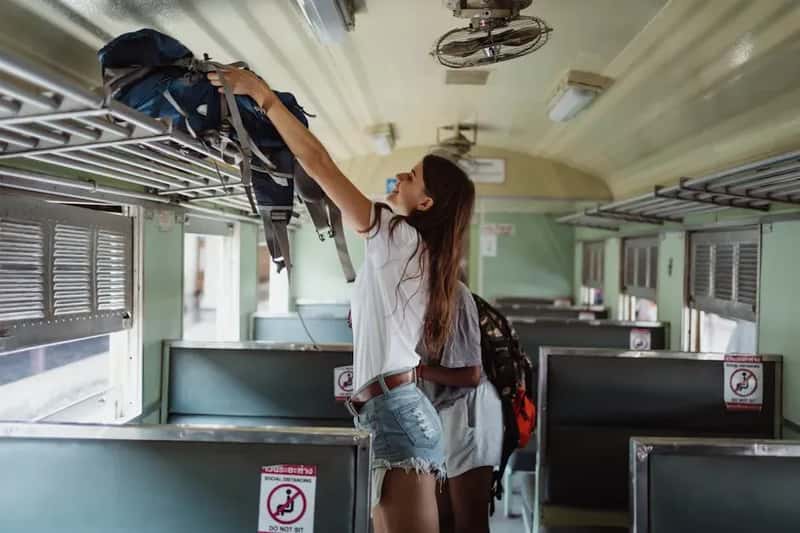
This particular mistake has been making headlines in Japan, and it is a perfect example of how tourist ignorance can cause real problems. Japan is known for prioritising good manners, and no place is that on greater display than on the nation’s trains. That’s what happened on a Shinkansen, when one local passenger let off steam online after seeing a foreign tourist misusing the oversized luggage space onboard.
In the cars with reserved seating, use of these spaces also requires a reservation, so if you put your luggage in this space without a reservation, you are likely taking up the space someone else paid for. That’s not a grey area. It is taking something that doesn’t belong to you. Signs in the oversized luggage section clearly say “Reservation required” in both Japanese and English. There are also frequent onboard announcements in English to remind foreign travellers that use of the oversized luggage space is by reservation only.
Europe is cracking down too. Starting from mid-September 2024, passengers now face a €50 fine for exceeding the luggage allowance, and limits on the number and size of suitcases became obligatory on France’s high-speed services. Ignoring luggage rules isn’t just rude anymore. In many countries, it will cost you actual money.
4. Bringing Enormous Suitcases Without a Plan
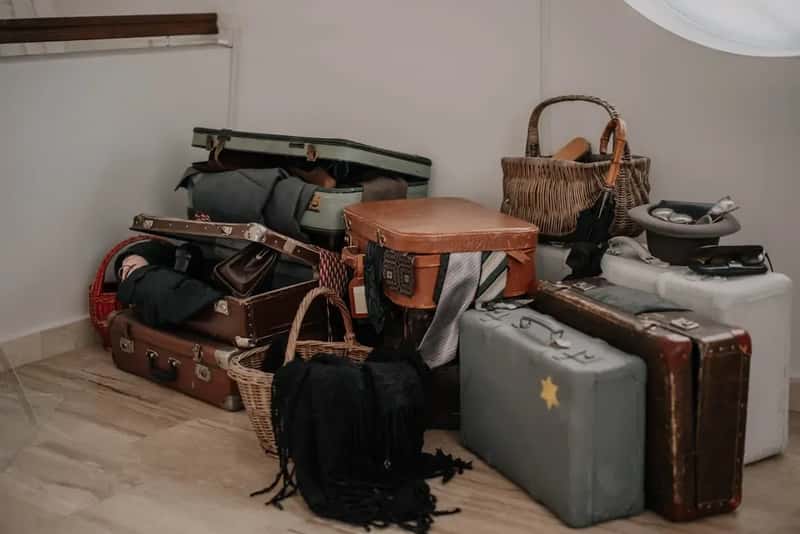
Let’s be real. Overpacking is a tourist signature move. Train luggage rules are more relaxed than airline rules, but passengers are required to carry their own bags and board the train without assistance. Bags are stored in the luggage racks at the end of each carriage or in the overhead compartments. The general rule is that travellers should carry one item of luggage per passenger plus one smaller item of hand luggage.
People bringing large suitcases onto trains that they cannot handle is a genuine frustration. In general, most trains don’t stop for terribly long for boarding – thus if you are blocking the entrance with your bags, trying to figure out how to store them in the small oversized luggage storage area, no one else can board that car. I think anyone who has watched a tourist wrestle a suitcase the size of a small wardrobe up a narrow stairway knows exactly how painful this is for everyone involved.
According to the GTC-CIV (General Terms and Conditions for the International Carriage of Passengers by Rail), passengers can take a maximum of three items of luggage. These items must be easy to handle and compatible with the space provided for luggage in trains. The greatest dimension of each item must be less than 85cm. Pack accordingly, or expect to struggle.
5. Ignoring the Quiet Car Completely
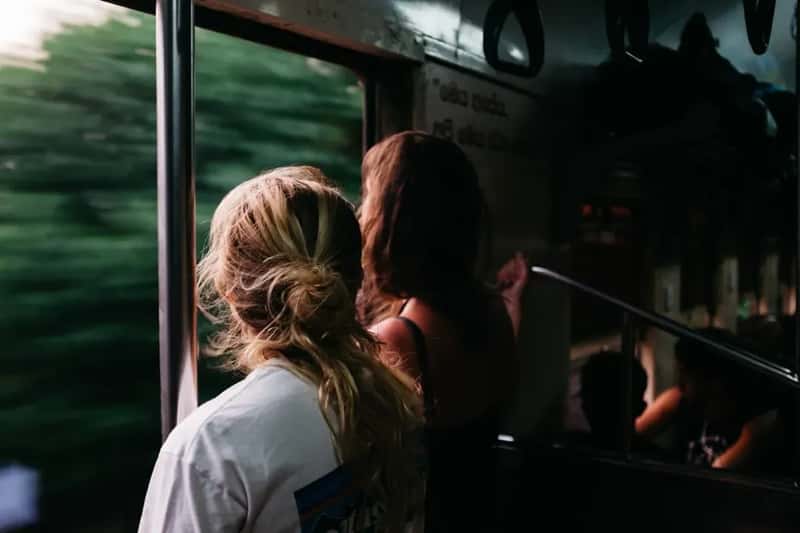
The quiet car exists for a reason. Multiple reasons, actually. It is a sanctuary for people who need to work, rest, or simply not listen to someone else’s phone call for two hours. The Quiet Car is a designated coach car where passengers agree to minimize noise and distractions. Think of it as the library of train travel. No phone conversations, no loud music, and definitely no conference calls on speakerphone.
Guests are asked to limit conversation and speak in subdued tones. Phone calls are not allowed, and all portable electronic devices must be used with headphones. Passengers using headphones must keep the volume low enough so that the audio cannot be heard by other passengers. That last part is key. Wearing headphones is not a free pass to blast music at full volume.
In the face of posted signs and intercom announcements, there are still passengers who keep breaking this “unofficial” rule on the Amtrak quiet car, which is frowned upon by others. This remains an issue for many passengers, particularly those who chose the quiet car to travel peacefully. The signs are right there. The announcements are made. Yet here we are.
6. Making Loud Phone Calls in Shared Carriages
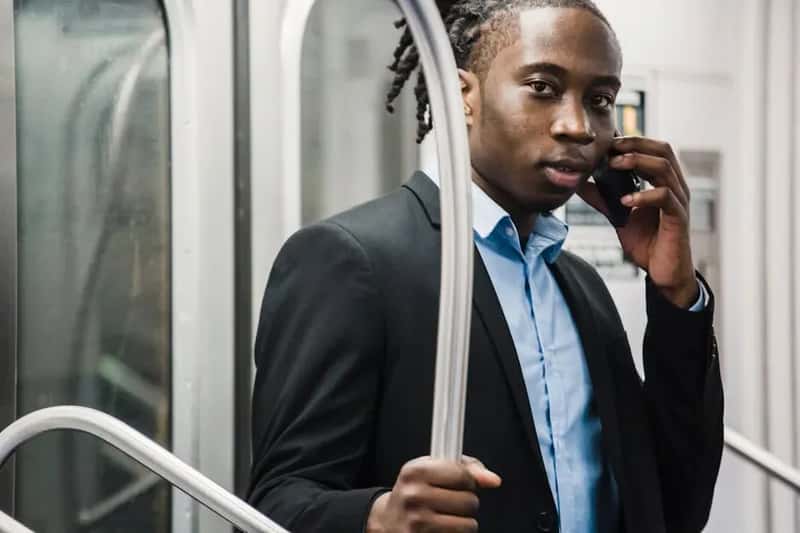
Outside of the quiet car, train etiquette around phones is slightly more relaxed, but “slightly” is doing a lot of heavy lifting in that sentence. Nothing is more annoying than hearing other people’s phone conversations. If it is urgent, go to the corridor or say you will call back. That is the whole policy, really. Take it outside, or wrap it up quickly.
Every country seems to have its own etiquette about using mobile phones. In London, everyone walks around with headphones. In Ireland, people speak into the bottom of the phone, no headphones. The general preference, however, is not to listen to a phone conversation on a train at all, but if you must talk the entire way, please use headphones.
In Japan, phone calls on local trains are effectively forbidden, not just frowned upon. In Japan the rule is that you take and make phone calls in the areas between cars. One traveller was politely informed of this by the conductor when he took a call on a limited express train in coach. He moved to the vestibule and finished the call. A simple, elegant solution that more systems should adopt.
7. Eating Strong-Smelling Food in a Closed Carriage
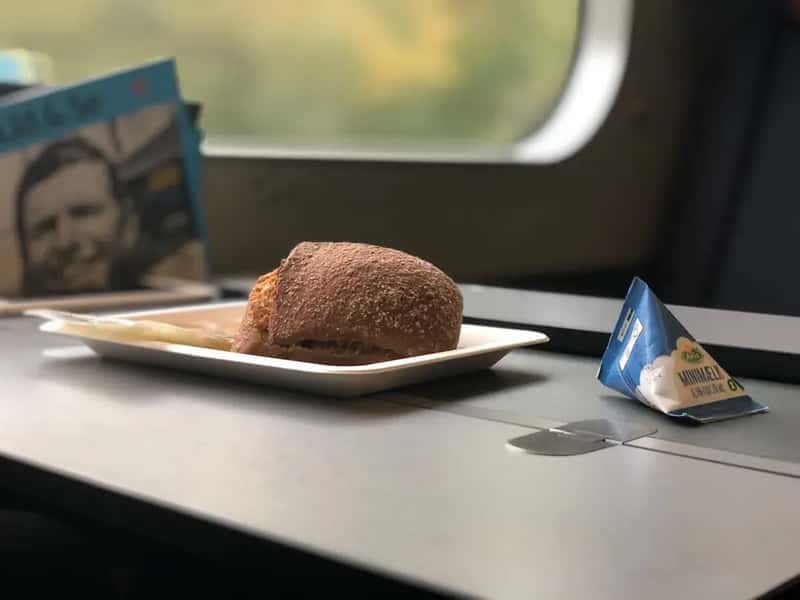
Food on trains is a topic that generates surprisingly strong feelings. Most train systems allow eating, but that doesn’t mean anything goes. If you buy food on the train, it needs to be “user friendly.” That means nothing that smells too strong, for example foods that reek of garlic or curry. Smells can linger in the carriage, and nobody wants to travel with a pong.
In Japan, the rules are even clearer. To make your train journeys smooth and respectful, essential train etiquette in Japan includes keeping voices low, as phone calls are considered rude. Eating on the train should be avoided on local trains, and even on the Shinkansen, you should avoid smelly food. Think of the carriage as someone’s living room. You wouldn’t crack open a tuna salad in someone’s living room.
Honestly, if you’re unsure whether your snack is acceptable, it probably isn’t. Bring something neutral, something wrapped, or eat before you board. Your fellow passengers will silently thank you from across the aisle.
8. Putting Feet Up on Seats
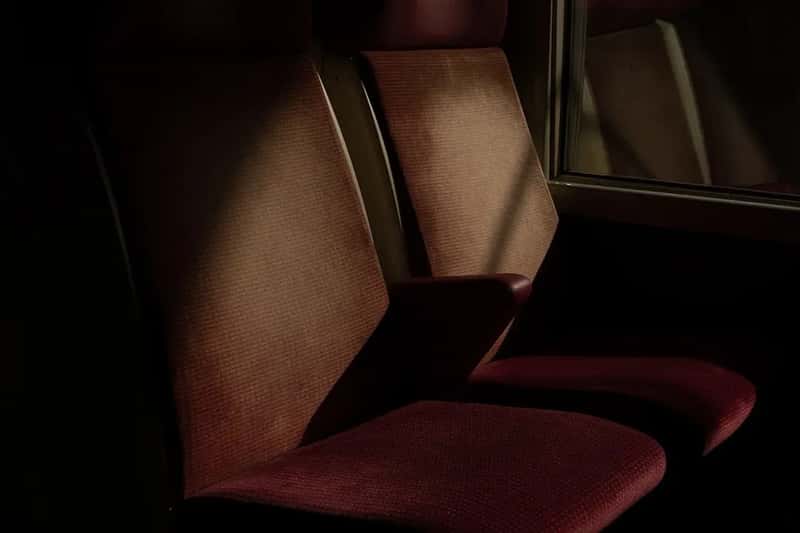
This one should need no explanation, yet it keeps happening with alarming frequency. Feet on train seats is a genuinely global problem, and tourists are often among the worst offenders, particularly on longer journeys where comfort starts to feel like a right rather than a privilege. Putting your feet on the seat, especially when you’re still wearing shoes, is not only rude, but it also leaves the seat dirty for the next person who sits down and wears down the leather or fabric of the seat over time. Plus, if you’re stretching your feet out on the seat in front of you, you may be blocking another passenger from sitting down.
It’s a bit like someone kicking back at a restaurant and putting their shoes on the table. You wouldn’t do it there. The logic is the same on a train. Manspreading is never acceptable, no matter how busy the train. If you’re a victim of encroachment from a neighboring passenger, you are well within your rights to ask them to make more room. Or, if you prefer non-verbal communication, a gentle nudge will do.
Seat space is shared space, full stop. Your legs, your feet, your elbows – all of it belongs in your own zone, not spreading into the territory of the person next to you or the seat in front of you.
9. Missing Country-Specific Rules Entirely
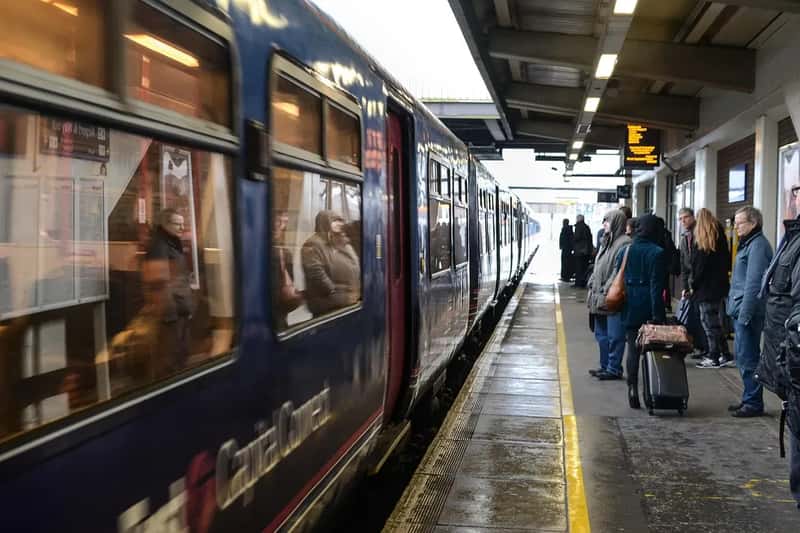
This is where things get genuinely interesting and a little surprising. Train etiquette is not universal. What is polite in one country can be considered strange or even offensive in another. Travelling the world and seeing new places can lead to the discovery of cultural quirks and surprising customs, and public transport is no different.
In parts of western Europe including Sweden, Belgium and the UK, as well as the USA and South Korea, passengers should adopt the “stand on the right, move on the left” practice. Simple enough once you know it, disorienting if you don’t. Countries throughout Asia including Japan and Malaysia operate female-only carriages to provide a safe space for women to travel. It’s illegal and frowned upon for men to travel in these carriages.
In many countries, including Brazil, Azerbaijan, and Germany, passengers are required to carry a valid form of photo ID like a passport as well as their tickets when travelling. Not knowing this rule before you board is the kind of thing that turns a pleasant journey into an unexpected headache. It pays, quite literally, to do your homework country by country.
10. Treating the Train Like a Private Space
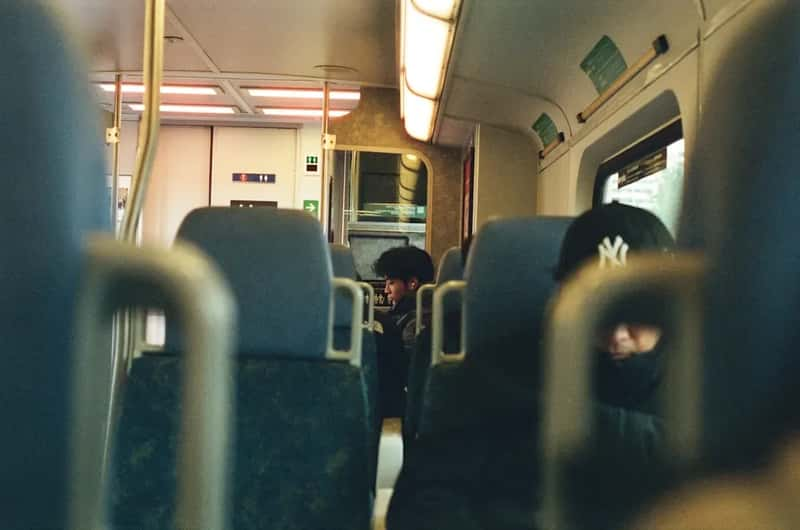
There is a broader attitude problem that underlies almost every other item on this list. Tourists sometimes approach train travel with a mindset built for airports and hotels, where personal comfort and individual experience are the main priority. Trains are different. They are communal, shared environments where everyone is in close proximity for an extended period.
When people go on a trip – say a group weekend away – they are usually very excited. Nevertheless, please spare a thought for your fellow voyagers and keep the noise down. Excitement is wonderful. Sharing that excitement loudly with an entire carriage for several hours is considerably less so. While chatting is fine, unless in a designated quiet carriage, it isn’t necessary for half the train to hear your discussions, especially if they are about sensitive, political or potentially lewd topics. Save it for later when you’re somewhere more private.
Train travel in 2026 isn’t just about getting from point A to point B; it’s about experience, engagement, and trust built along the way. That experience belongs to every person on the train, not just you. The unspoken contract of train travel is simple: be aware, be considerate, and leave the carriage in the same social state you found it. Locals have known this for years. Now you do too.
Conclusion
Train travel, when everyone plays by the unspoken rules, is genuinely one of the best ways to experience a new place. The rules themselves are not complicated. Most of them come down to a single principle: you are sharing a small, moving space with strangers, so act accordingly. Don’t block, don’t spread, don’t be loud, don’t smell, and know the local customs before you board.
The fact that complaints about sufficient room for all passengers to sit or stand was the second most common cause of complaint to British train operators in 2024-25, accounting for roughly one in eight of all complaints filed, tells you that the space issue alone is very much alive and unresolved. The rules exist because the problems are real.
Next time you board a train somewhere new, take a moment to observe what the locals are doing. Watch how they board, where they store their bags, how they use their phones. You will learn more in five minutes of observation than in any travel guide. Have you broken any of these rules without realising it? Tell us in the comments.