This post was originally published on here
The 1,200-year-old illustrated Gospel manuscript, famous for its intricate Celtic artistry, was likely created at Portmahomack monastery in Scotland
A manuscript previously described as ‘the most precious object of the western world’ may have originated in the Scottish Highlands, according to new research claims.
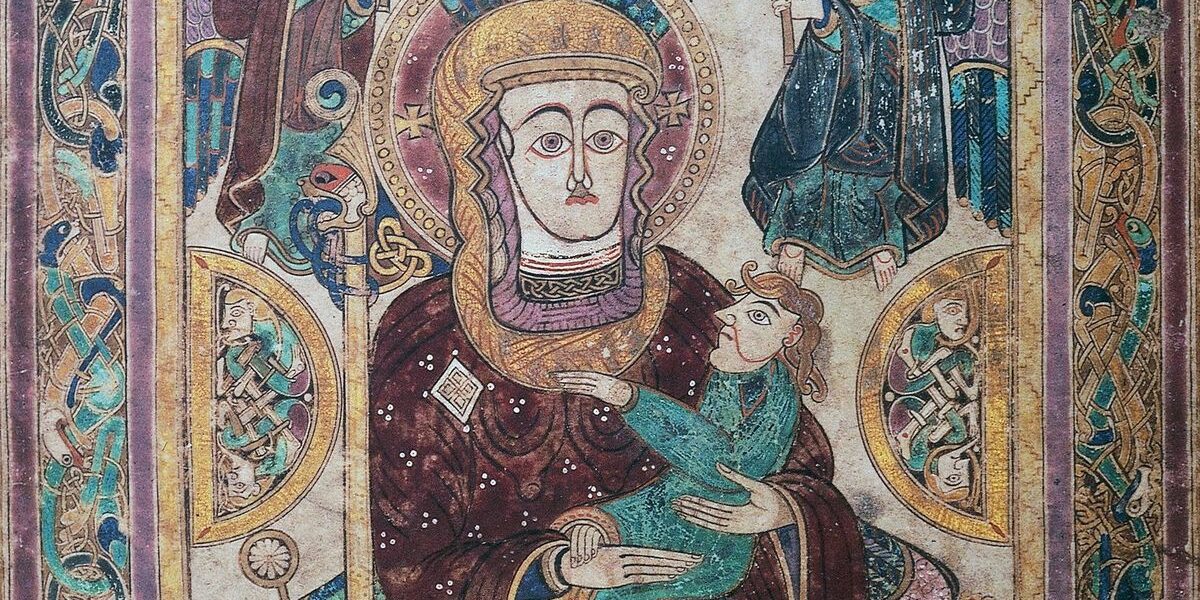
The Book of Kells is an illuminated manuscript featuring the four Gospels of Matthew, Mark, Luke and John.
It may have been produced 1,200 years ago by monks in the Ross-shire village of Portmahomack, Scotland – rather than the island of Iona as previously thought, a study suggests. The precise origins of the manuscript remain unknown, though scholars believed that following its creation, it was transported to Kells in Ireland by monks who survived a Viking raid.
READ MORE: Trump erects controversial statue near White House after it was torn down by protestorsREAD MORE: CDC issues global travel notice as incurable brain-bleeding virus reaches Americas
The manuscript has been characterized as “the work of angels” owing to its intricate lettering and imagery – and fresh research is poised to investigate the monastery workshop from which it potentially originated.
Craftsman Thomas Keyes will undertake an experimental archaeology project to analyze the parchmenarie – the workshop housing animal skinning implements, which may have been utilized to transform hides into parchment.
Keyes has received £2,779 from the Society of Antiquaries to spearhead the project later this year, during which he will recreate the workshop’s vellum tank and employ it to produce his own vellum – a delicate parchment manufactured from calf hide.
Scholars say the workshop represents the sole example of an early-medieval vellum-working location in Northern Europe, and consequently could have generated the original manuscript.
Dr Helen Spencer, head of research at the Society of Antiquaries of Scotland, characterized the evidence, explaining: “The footprints of craftworking buildings were found along with evidence for different stages of production, including the creation of vellum, pigments for the pages and glass stud mounts for the cover and bindings.
“Incredible gospel books were definitely produced at Portmahomack and Thomas Keyes’s experiment could bring us closer to knowing whether the Book of Kells was one of them.”
Due to funding from the Society, Keyes will now be capable of building a replica of the washing tank discovered on site which was utilized to prepare the animal hides for vellum production using seaweed lye, remnants of which were discovered in hearths near the original tank.
This experimental archaeology approach will produce vellum samples which will subsequently be analyzed against surviving manuscripts from the era, including the Book of Kells, enabling specific production methods to be linked to particular manuscripts which could assist in establishing their origin.
Keyes explained: “The parchmenarie (vellum workshop) at Portmahomack is both unique and unusual.
“Usually, lime is used in the production of vellum parchment, but this is not found locally.
“Seaweed lye may have been used instead which is a less caustic process with bacteria growing in the solution to process hides.
“Pages from some manuscripts from the period, including the Book of Kells, have numerous pock mark holes which could be evidence of bacteria eating through the hides as they were being processed.
For the latest local news and features on Irish America, visit our homepage here.
“Reconstructing the hide soaking tank will shed light on the finer details of this process and the parchment samples produced can be compared directly with original manuscripts.”
The findings will be made available online through Tarbat Discovery Centre and presented during a public lecture in late 2026. The newly created vellum will be utilized in additional projects to produce further examples of the manuscript types created at Portmahomack 1,200 years ago.
Calum Thomson, Chair of Tarbat Historic Trust, said: “The Tarbat Discovery Centre has been delighted to work with Thomas over the past few years on the Stories on Skins project.
“The possibility that Portmahomack was where the Book of Kells was first produced is incredibly exciting for the region and this new research could provide more evidence for this. We look forward to welcoming visitors to our museum to learn more the early Pictish monastic site and see the four amazing manuscript pages already created by Thomas.”
For all the latest news straight to your inbox, sign up for our FREE newsletters here.