This post was originally published on here
The recent news that Canadian writer Thomas King does not have Indigenous ancestry has prompted necessary conversations across literary communities about the need to vet accurate representations.
An award-winning author, King was positioned as one of the most widely taught Indigenous authors in North America. His work featured prominently on high school and university syllabi, and on library reading lists.
He has received the Order of Canada and the National Aboriginal Achievement Award for arts and culture, the latter of which he told the Globe and Mail he intended to return after learning there is no evidence he has Cherokee ancestry.
King’s work was often praised for its accessibility for broad audiences, particularly non-Indigenous readers encountering Indigenous literature and realities for the first time.
The widespread acceptance and celebration of King’s work stands in contrast to the experiences of many Indigenous authors and artists, whose work, while more culturally relevant, is often seen as less palatable.
Read more:
Sovereignty over stereotypes: The data behind false Cherokee identity claims in Canada
Insights from the Indigenous Literatures Lab
The Indigenous Literatures Lab at the Ontario Institute for Studies in Education at the University of Toronto is a literary hub that seeks to build bridges between academic researchers, school practitioners and Indigenous communities.
As members of the lab, we’re interested in directing readers toward the vast field of Indigenous literature that expands, contradicts, integrates and challenges the western literary canon. Part of this means introducing new literary genres that are core to Indigenous philosophies, world views and understandings of non-linear time.
King’s legacy
In addition to replacing King’s works from reading lists, syllabi or bookshelves, we implore readers — including educators who may have selected his books to teach — to consider how King became so ubiquitous in the first place — and what gaps his teachings left unfilled as a result of his lack of lived experience.
We believe part of the answer lies in how King was so often framed as digestible and accessible to a non-Indigenous readership, including through his CBC Massey Lectures, The Truth about Stories: A Native Narrative.
The late Mohawk writer Beth Brant beautifully articulated the truth about stories in her 1994 work, Writing as Witness: Essay and Talk, a book released long before King shared his false truths at Massey Hall in 2003.
Brant’s work examines stories as inter-generational, transcendent of time, ceremonial, spiritual and relational. Was Brant too political to be a mainstream figure of reconciliation? Were her calls to justice not palatable enough for a settler audience?
We offer stories that are unapologetically Indigenous, complex, uniquely beautiful and rightfully palatable. Extending the work of Cree/Metis scholar Kim Anderson, these stories offer a true recognition of being. They holistically embody the nuances of Indigeneity and expand beyond the racial tropes and gender binaries imposed upon Indigenous Peoples.
We invite non-Indigenous readers to ethically engage through an anti-colonial reading lens that honours the spirit and intent of Indigenous writers.
A critical expansion and intervention
We recently launched a series of reading circles to support informed dialogue and praxis for engaging Indigenous literatures.
(Penguin Random House)
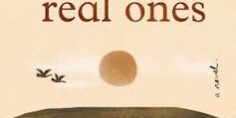
Our conversation around the allure of King’s work was prompted by our reading of Katherena Vermette’s 2025 novel, Real Ones. This novel was reminiscent of the experiences and harm that accompany false claims to Indigenous identity among celebrated icons.
Real Ones offers important reflections on the rippling effects of false claims to Indigenous identity and the ongoing harm inflicted when people appropriate and misrepresent the lived experiences of Indigenous Peoples.
Conversely, the situation underscores the importance of what Cherokee scholar Daniel Heath Justice has referred to as “good medicine” stories.
Read more:
Sovereignty over stereotypes: The data behind false Cherokee identity claims in Canada
Such stories are life affirming and extend community narratives of strength — whether they’re on cusp of fantastical and realist fiction or they’re breathtaking “wonderworks” that mark new worlds and trouble the settler colonial imaginary.
Reconceptualizing ‘the truth about stories’
Since the public news of King’s false identity claims, there have been numerous posts on social media pages that vet resources of Indigenous content. For instance, there’s been an uptake in posts seeking replacement texts for King’s Borders or The Inconvenient Indian in online discussions among teachers of Indigenous content.
As our research continues to examine, there’s much to discuss when teaching Indigenous literature. Readers should not be limited by the literary themes forwarded by false identity claims.
We also know it’s not enough for teachers to simply introduce Indigenous literature. The texts must be accompanied by anti-racist teaching practices.
For these reasons, rather than offer “replacement” texts for King’s work, we reconceptualize “the truth about stories.”
In doing so, we recommend some that resist settler myths about Indigeneity and reclaim the creative intellectualism of Indigenous storytelling.
Recommended books
(Arsenal Pulp Press)
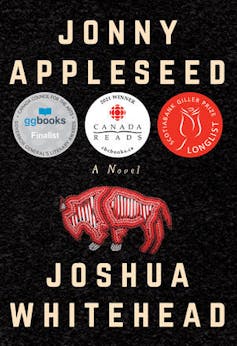
Joshua Whitehead’s Johnny Appleseed offers an Indigiqueer coming-of-age delight exploring Indigenous boyhood from a two-spirit lens and examines notions of maternal figures, love and kinship.
Sara General’s beautiful collection of short stories and other writings, Spirit and Intent, weaves in Haudenosaunee teachings alongside contemporary visions. The fantastical and imaginative connections to writers like Tolkien alongside the everyday experiences of Indigenous womanhood situate this collection in a wider body of literature concerned with Indigenous futures.
(Canadian Scholars)
Drew Hayden Taylor’s Crees in the Caribbean is a story about “human connection across cultures … comic joy of love rekindled and self-discovery.” Taylor cites the sheer power, presence and quality of Indigenous humour as having immense influence.
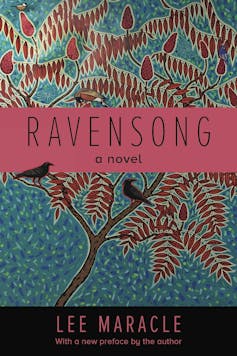
Lee Maracle’s Ravensong is a timeless coming-of-age novel that centres the restoration of matriarchal authority — what the work of Jennifer Brant, founding director of the Indigenous Literatures Lab, has described as “matriarchal worlding.”
Alicia Elliot’s And Then She Fell is a riveting debut novel that weaves storytelling with the everyday contemporary realities of Indigenous womanhood. As a novel defined as realist fiction on the cusp of fantasy and horror, And Then She Fell shape-shifts between realism and the fantastical, and is a brilliant “wonderwork.”
(Portage & Main Press)
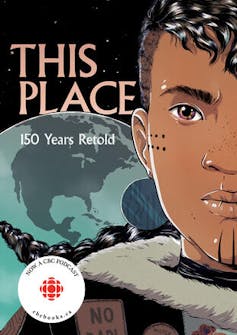
The graphic anthology This Place: 150 Years Retold brings forward elements of wonderworks and speculative fiction, examining Canadian history over the last 150 years from the point of view of Indigenous authors and creatives.
We hope readers are inspired to select one of the many books championed here and on our thematically curated reading list, all of which provide thoughtful narratives that align with the lived realities of Indigenous readers.
Reimagining reading lists
We hope that readers and educators are now reimagining their reading lists and recommitting to Indigenous literature in the wake of the King controversy.
We celebrate that there’s no shortage of extraordinary Indigenous writers to choose from, whose work unsettles and expands literary study beyond broad accessibility.
“The truth about stories” is that Indigenous Peoples have been telling stories since time immemorial. As literature scholar Heath Justice notes, these ancient and contemporary literary traditions are “inclusive of all the ways we embody our stories” and include ceremonial teachings, social exchanges and pathways towards Indigenous futures.