
This post was originally published on here
Sometimes it can be difficult to judge contemporary science fiction films because the genre is so deeply entwined with current events and fears of the future. Sure, big flashy space stories and movies about bringing back dinosaurs to fill theme parks are almost always going to be popular, but what about the under-the-radar sci-fi flicks that genuinely deserve to become classics?
We’re just far enough out from the 2010s to start thinking about what’s going to be classic from that era, though not quite far out enough to determine whether they still “hold up” like some sci-fi classics from the 2000s and before. There are some phenomenal big budget sci-fi films from the era ranging from Christopher Nolan’s “Interstellar” and “Inception” to several “Avengers” sequels and even the excellent “Dawn of the Planet of the Apes” (which happens to be set in 2026), but there are some great smaller films that deserve a lot of love, too.
In no particular order, here are five of the best science fiction films of the 2010s that seem to have mostly been forgotten but encompass the full breadth of the genre. The following films will make you laugh, cry, scream, and more, but most importantly of all, they’ll make you think.
The Girl with All the Gifts (2016)

StudioCanal
Quite a few zombie movies straddle the line between horror and science fiction, but the 2016 Colm McCarthy film “The Girl with All the Gifts” definitely leans hard into its sci-fi origins. Based on the novel of the same name by “Lucifer” comic co-creator Mike Carey, “The Girl with All the Gifts” is set in a near future where a fungal parasite has turned most of humanity into zombie-like creatures called “hungries,” but scientists are trying to develop a cure using children who have been infected with the virus via birth but show no outward signs, acting only as carriers. One of these children, Melanie (Sennia Nanua), seems to have the potential to finally help them find the cure, but at great cost to herself. “The Girl with All the Gifts” goes in wild directions that feel remarkably fresh despite the over-saturation of zombie stories in that decade, and its ending is one of my personal favorites in sci-fi movie history.
In addition to a killer script and some great filmmaking, “The Girl with All the Gifts” also features performances from greats like Gemma Arterton, Paddy Considine, and Glenn Close, though it’s relative unknown Sennia Nanua who really steals the show. Her performance is one that honestly deserved Oscar recognition, and takes “The Girl with All the Gifts” from good to genuinely great.
Detention (2011)

Detention Films
From the outset, Joseph Kahn’s “Detention” might look like a hyper-stylized teen-speak knock-off of “Scream,” telling the story of a slasher called Cinderhella who mimics an in-world horror movie series and starts killing off teens at Grizzly Lake High, but it is not that movie. After a group of students end up being sentenced to detention on prom night because they’re each suspected of being connected to the real killer, things start getting weird. Like, “time-travel in a grizzly bear, flying saucers, and body-swap” weird. So very, blissfully weird.
“Detention” is an amazing time capsule that captures the end of the MTV era in a hyperactive, chaotic way that alienated some audiences at the time, but might feel a little more fun in retrospect. Kahn, who co-wrote the film with Mark Palermo, spoke with the podcast formerly known as The /Filmcast about how he built the worlds within “Detention,” which makes for a fun listen after you’ve seen the movie. The less you know, the better, but “Detention” is a post-modern sci-fi comedy all-timer.
The Vast of Night (2019)
GED Cinema
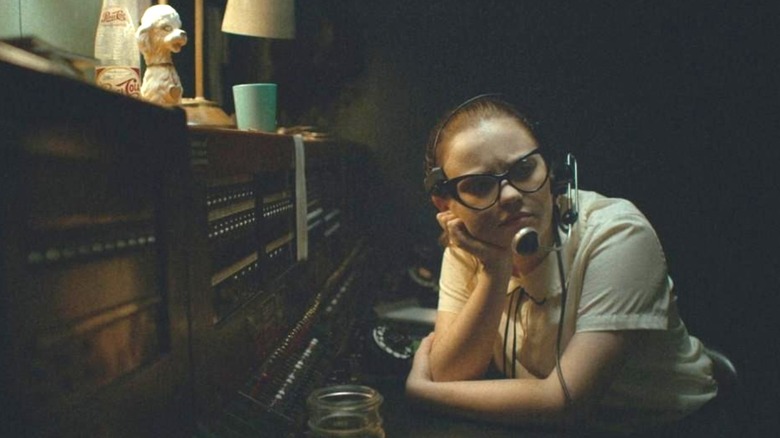
For a 2010s sci-fi flick about teenagers that’s tonally the total opposite of “Detention,” look no further than “The Vast of Night,” a slow burn story set in 1950s New Mexico that’s loosely based on incidents with extra-terrestrials believed by some to have actually happened in the region. “The Vast of Night” is the kind of independent miracle that makes the most of its tiny budget; it’s a gorgeous-looking movie made for less than a million dollars.
“The Vast of Night” almost entirely follows Fay (Sierra McCormick), a teenaged switchboard operator, and her friend Everett (Jake Horowitz), a DJ who hosts his own radio show. After Fay hears a weird sound on the switchboard and Everett plays it over the air, locals start calling in with alien theories and the two teens start trying to figure out their town’s little unsolved mystery. “The Vast of Night” is more radio drama than traditional cinematic storytelling, but that’s a big part of what makes it so cool. With a style that’s reverent to the subgenres it draws from while also being truly unique, and with an ending that’s sure to surprise most viewers, “The Vast of Night” slipped under the radar far too easily.
A Cure for Wellness (2016)
20th Century Fox
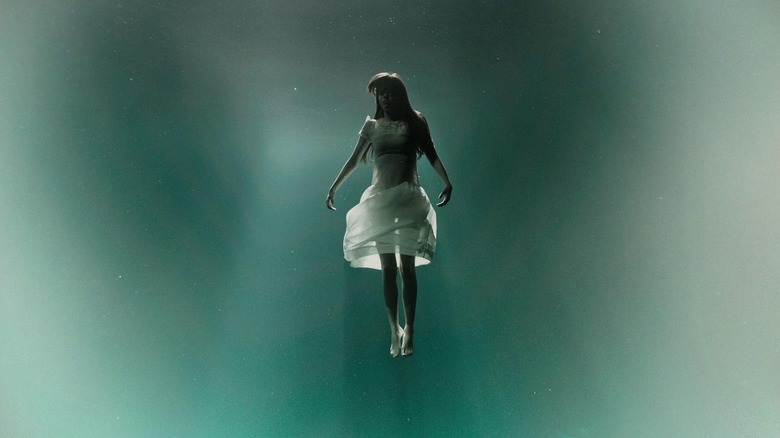
Gore Verbinski’s “A Cure for Wellness” wasn’t particularly beloved by critics when it first came out, with many finding its scares derivative or its plot twists predictable, but they’re sort of missing the point. “A Cure for Wellness” is one part the Greek myth of the Lotus Eaters (as told by Verbinski himself) and one part Mary Shelley’s “Frankenstein,” following young executive Lockhart (Dane DeHaan) as he tries to retrieve his company’s CEO from a bizarre wellness center in the Swiss Alps. The wellness center is actually a front for something much more sinister, with the uber-creepy Dr. Heinreich Volmer (Jason Isaacs) performing horrific experiments on the patients. Also there are eels. So many eels. As Lockhart goes from trying to determine what’s happening to just trying to escape, the audience is taken on a surreal and nightmarish journey.
“A Cure for Wellness” isn’t the kind of movie you watch and try to make sense of; it’s the kind of movie that you have to experience and let wash over you. It’s moody and slow-burning and as beautifully shot as it is disturbing; quite simply, it rocks. Fans of Guillermo del Toro’s Victorian ghost tale “Crimson Peak” and Jonathan Glazer’s terrifying alien film “Under the Skin” would be well served by checking out “A Cure for Wellness” — just expect a similarly upsetting ending.
Beyond the Black Rainbow (2010)
Mongrel Media
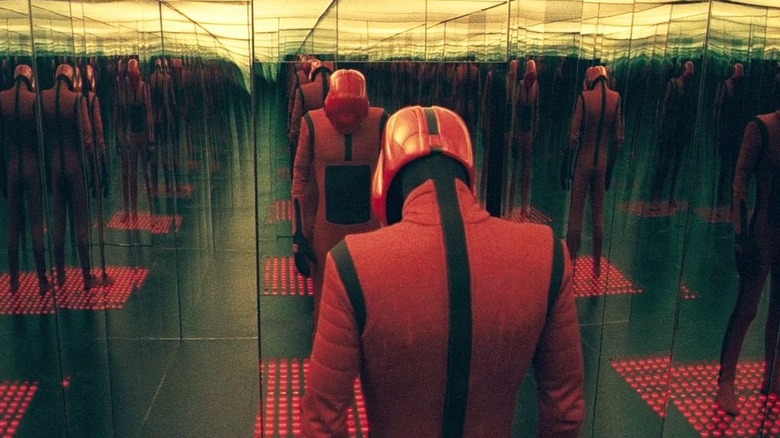
Before unleashing his nightmarish psychedelic revenge horror flick “Mandy” upon the world, writer and director Panos Cosmatos created a uniquely unsettling look into the sci-fi abyss with “Beyond the Black Rainbow.” Like “A Cure for Wellness,” it’s a movie that’s more about vibes than actual plot, as its acid trip-esque sequences make for a particularly tough narrative to follow. That doesn’t matter, however, because “Beyond the Black Rainbow” is a sci-fi head trip to match the end of “2001: A Space Odyssey,” with some truly stunning visuals and ideas that are impossible to forget.
Eva Bourne (credited as Eva Allan) stars as Elena, a young woman with psychic abilities, studied by Head of Research Barry Nyle (Michael Rogers), who is going insane from the work. As Elena gains more control over her talents and Barry grows increasingly mad, the story becomes a battle of wills for her freedom.
Financed using residuals from his late father George P. Cosmatos’s work directing the Western classic “Tombstone,” “Beyond the Black Rainbow” is a stunning debut film that shows the director’s unique flair for hallucinogenic imagery. While Cosmatos took that talent to new heights with “Mandy,” “Beyond the Black Rainbow” is a must-see for fans of surreal science fiction nightmares.