This post was originally published on here
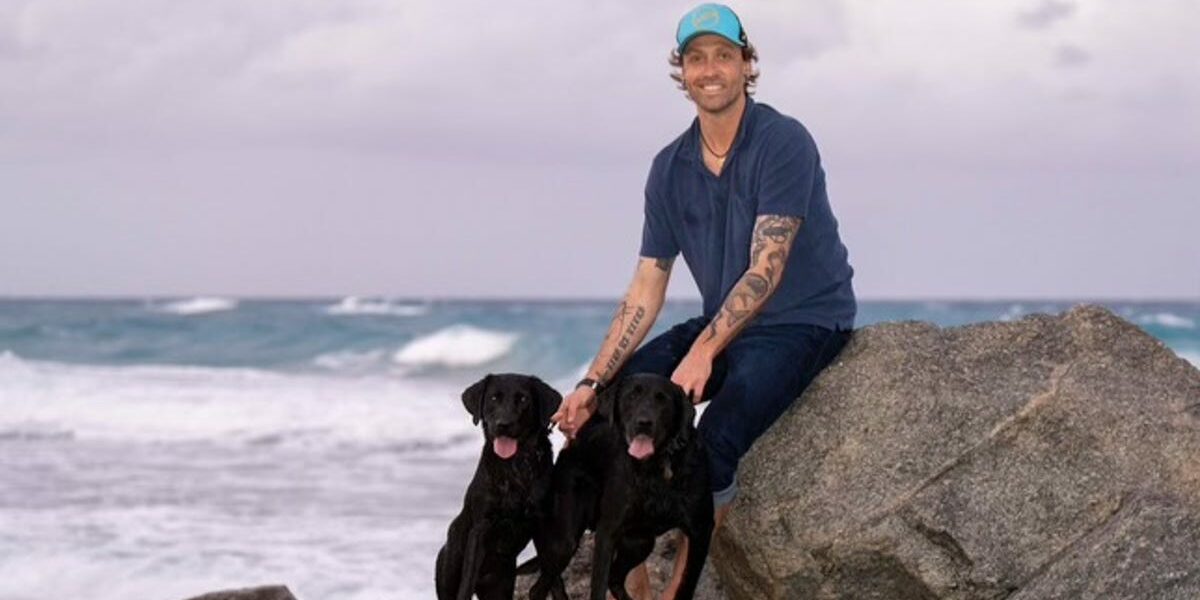
A feature film inspired by the life of late freediver Virgil Price III — whose disappearance off the Treasure Coast nearly two years ago drew widespread attention — is now in post-production, bringing his story of risk, struggle and resilience to the screen.
“God of Tides” draws on the life of Price, a diving instructor who grew up in the Palm Beaches and graduated from the Benjamin School. His parents Virgil Price II and Kate Cerasaro live in Palm Beach.
The film, starring Grant Gustin as Price, filmed for nearly a month in South Florida, primarily in Fort Lauderdale, with additional shooting in Gainesville and New York. The film also stars Campbell Scott, Rainey Qualley and Elias Koteas. Production began Feb. 9 and wrapped at the end of March.
Price, 39, went missing May 12, 2024 — Mother’s Day — while exploring a World War II shipwreck off the coast of Jensen Beach. He had planned to return in time to celebrate with his family, but he never resurfaced. The U.S. Coast Guard searched for him before suspending efforts the next day.
Freediving, a sport Virgil Price III excelled in, is a form of underwater diving in which a diver takes a single breath before submerging instead of using scuba gear. Freediving limits how deep and how long a person can dive, even at advanced levels, experts say.
Price’s father produced “God of Tides” through his company Sterling Productions. He said he was inspired by the public’s response to his son’s memorial at First Presbyterian Church in North Palm Beach, which was held about week after he went missing. Because there was no traditional funeral or recovery, Price said the gathering of people whose lives his son had affected led him to tell his son’s story on screen, including both his strengths and struggles.
“What inspired me was seeing all of these people that my son touched,” Price said. “They stopped what they were doing to come to his memorial.”
“We haven’t left anything out”
The film portrays all aspects of Price’s life — as a skilled diver and instructor who inspired others, and as someone who struggled with addiction. His father said showing both his strengths and challenges creates a more honest picture.
“A lot of people never want to admit their flaws,” he said. “A lot of people never want to say so-and-so in the family is an alcoholic or having drug problems. But that’s all going to be in the film. Why? Because that was my son. He had his great side. Everyone loved him. He was a great diver. But he had his demons, which were alcohol and drugs. We haven’t left anything out.”
“God of Tides” director Cruz Angeles — who also wrote the screenplay with his wife, Maria Topete — said the story goes beyond the diver’s life to explore family dynamics and the balance between maintaining control and letting go.
The film also is a father-and-son story, Angeles said, showing how two strikingly different personalities shape their relationship and choices.
“It’s a story about two different souls with two different sorts of philosophical takes on life,” he said. “One is very cautious and very much risk-averse. And the son is the opposite — it’s like, ‘You only live once,’ and might as well live it to the fullest. That’s the main conflict in the story.”
“God of Tides” is the fourth film Angeles and Price have made together, following the award-winning 2009 film “Don’t Let Me Drown,” about two Brooklyn teenagers who bond after the Sept. 11, 2001, terrorist attacks; 2010’s “Fernando Nation,” which tells the story of pitcher Fernando Valenzuela’s rise and the cultural phenomenon he sparked among Los Angeles Dodgers fans; and 2019’s “Valiant,” a documentary about the Vegas Golden Knights’ inaugural NHL season.
“I think it’s multidimensional”
What sets “God of Tides” apart, Price said, is its mix of personal storytelling and broader themes, including the beauty and risks of the ocean and the complexities of family life.
“I think it’s multidimensional,” Price said. “You’ve got what’s positive, but you’ve got what’s negative, and that’s what’s going to resonate with a lot of people.”
To film the underwater scenes, Gustin, known for his role on TV’s “The Flash,” trained for two months with a world-class freediver, while stunt doubles handled the more difficult dives in Fort Lauderdale and surrounding waters, Angeles said.
“The biggest challenge is that it’s a very hard sport, very esoteric,” he said. “To have actors who can also do some of that underwater stuff — even if it’s not as deep as what our stunt doubles are doing — is pretty difficult to teach and pretty difficult to learn. Not everybody could do it. Which is remarkable for what the real Virgil was able to do.”
Although the diver’s story is centered in Palm Beach County, filming was shot in Broward County, where tax incentives and easier access to locations made production more feasible, Angeles said. He added the area offered a visually rich setting that helped bring the underwater and coastal elements of the story to life.
“It was a good fit,” he said. “It’s a beautiful location. The crew is amazing here, and the film commissioner really helped us to have access. That’s the most important thing with the film.”
Angeles, along with a crew of 75, filmed at locations throughout Broward County, including Fort Lauderale’s International Swimming Hall of Fame, Force-E Scuba Center and Anthony’s Runway 84 restaurant. Crews also shot at First Presbyterian Church of Fort Lauderdale, the Dania Beach Pier and private residences.
Price, who is divorced, visited the sets almost every day with his longtime girlfriend and producing partner, Gail Obenour.
“It’s pretty neat to see,” he said of the filming process. “We sit right here and watch the monitors.”
Will movie be shown at film festivals?
With filming complete, work has moved into post-production, including editing, sound mixing, and color correction. The film’s producing team expects the movie to be finished by August, though there is no official release date.
Ged Dickersin, a producer on the film, said the post-production process will include roughly 12 weeks of initial editing followed by four to five weeks of final editing, plus another week for final color correction. The producers are applying to screen the movie at major festivals to gain exposure once the film is complete.
“We’re applying to festivals like the Toronto International Film Festival, Venice International Film Festival, Telluride, and Sundance,” Dickersin said. “We expect to get in, but you never know with these things.”
Beyond the production and festival plans, Price spoke about the element at the heart of the film — the ocean.
Price said the sea was a central part of both his life and his son’s. He calls the ocean “she” — as is traditional in literature and poetry — and said its power and mystery drew his son in. That connection became a key part of the film.
“Throughout history, she has called so many boaters, fishermen and sailors to their deaths,” Price said. “That siren song really got to my son. Here it was Mother’s Day. All he had to do was get to his mother for a Mother’s Day lunch. They decided to go freediving early in the morning on Mother’s Day. And we all know the rest of what happened.
“I said to Cruz all along that one of the greatest shows I ever saw back years ago was called Victory at Sea,” he continued. “It showed how the naval forces did so well in the Hawaiian Islands during World War II, but it had this great theme to it. All we would see is the ocean. The biggest character in this film was that ocean, and it called all these sailors to their death — and it called my son to his death.”
Jodie Wagner is a journalist at the Palm Beach Daily News, part of the USA TODAY Florida Network. You can reach her at [email protected].