This post was originally published on here
In the modern world global travel shouldn’t be so complicated, writes M.E.N Tourism Writer Liv Clarke
In theory there has been no better time to travel abroad than the age we live in. Technology, engineering, and communication has come on leaps and bounds since the first commercial airline flight in 1914.
In 2026 pretty much every destination across the globe is within reach thanks to the ease of modern air travel – and nearly every aspect has been streamlined and simplified.
Flights can be purchased within minutes online and air fares for the likes of Europe are frequently cheaper than domestic train tickets.
Even our bags and suitcases are lighter and more practical than ever before.
Click here to get the biggest stories straight to your inbox in our Daily Newsletter
Gone are the days of travellers’ cheques and trudging to your local travel agent to book a holiday; today we live in a connected world where you can be half way across the globe in less than a day and use the same bank card (or lets face it, the wallet on our phones) everywhere you go.
Even once you’ve made it to your destination contacting home couldn’t be simpler thanks to the internet, for most people now sending a postcard is a thing of the past. Going abroad on holiday for many of us is no longer a rarity, it’s become routine.
So it’s rather ironic that travelling overseas seems to be increasingly difficult. Last week four humans made history by heading further into space than mankind has ever been before and safely returned to Earth as part of the successful Artemis II mission.
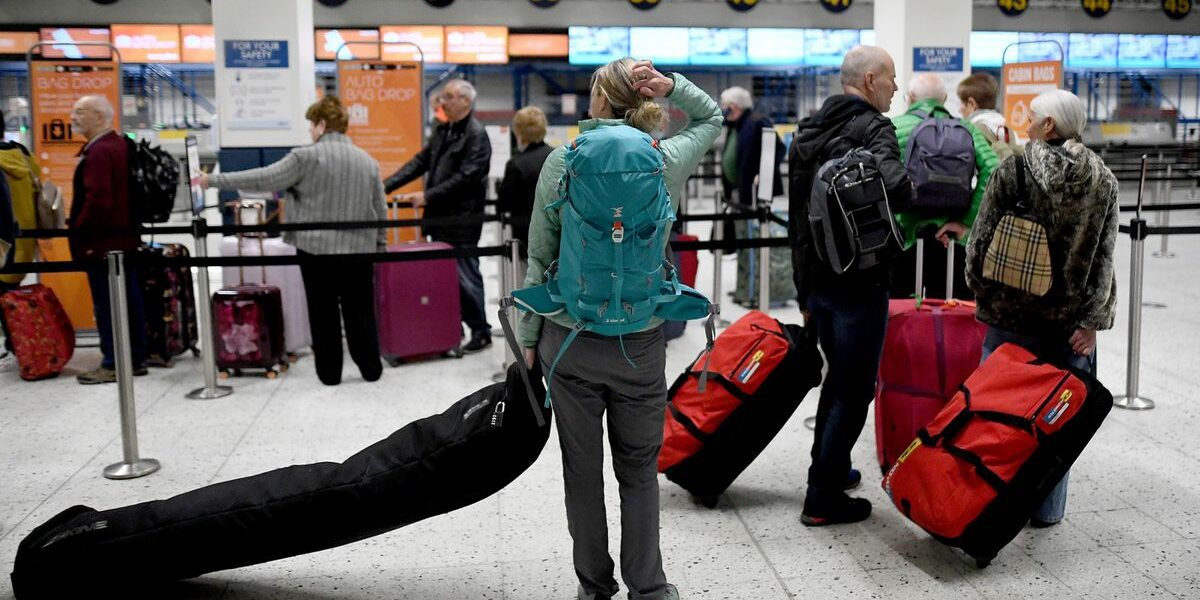
That same week around 100 Manchester-bound passengers were left stranded in Milan after they missed their easyJet flight due to the long queues at passport control, a result of the EU’s new Entry Exit System (EES) for the Schengen Area. If we can send people successfully into space, then surely a border check for a short haul flight would be a doddle.
I know the two situations aren’t comparable, but it does sometimes feel like it’s two steps forward, one step back in the world we live in. Ultimately the EU has had years to ensure that the EES is up and running, so we should expect better.
Even when concerns were raised during the initial rollout of the system – which began in October last year – the EU maintained the hard deadline of April 10 for the EES to be fully implemented. Yet given the long queues faced by British travellers and other non-Schengen residents at the moment, it’s not gone quite according to plan.
Leading transport bosses have called for the EU to temporarily pause the EES during peak travel periods, something I agree with. There’s nothing wrong with admitting the technology doesn’t work yet, but please don’t ruin people’s holidays by subjecting them to lengthy queues and missed flights.
The EES queues follow weeks of uncertainty for global travel due to the Middle East conflict, which plunged aviation into chaos. Thousands of flights were cancelled daily as major travel hubs in Dubai, Abu Dhabi and Qatar were forced to pause operations, disrupting vital connections between the West and the East. Even airlines who did not operate to and from the region were still impacted by airspace closure, forced to re-route to avoid the Middle East.
It can really feel like one thing after another. Yes, you could argue that maybe we’ve been spoiled over the years: that travel has become too easy, that we’ve forgotten what a privilege it is to visit another country, and that we expect a process that was once so complicated to now always be seamless. That’s without mentioning the climate concerns of air travel and the impact of mass-tourism on local communities, a key topic of discussion in Europe in recent years.
Many of those arguments are completely valid and they’re topics that do deserve consideration. Yet the importance of travel and what it brings to us is without a doubt of equal value.
Visiting a foreign country and experiencing a different culture adds a richness to our lives in a way that nothing else does. Travel opens your mind and shows you a new way of viewing the world. At the very least, a holiday provides an opportunity to escape our daily lives, discover a new place and make memories that last a lifetime.
Perhaps this is the new normal and travel has truly become more complicated. Ultimately you can’t have everything: I imagine many would happily swap online bookings, apps and digital scans for a good old fashioned paper ticket and a passport stamp.
In the meantime we can only hope that the queues at the EU border will ease, whether that’s through pausing the EES or getting the EU to call IT.
Oh, there is one alternative, a holiday with no passports, not border checks, in fact no flights at all. The Great British staycation can always be relied upon – maybe it’s time we go back to Blackpool? The only catch: sunshine is not guaranteed.