This post was originally published on here
Thrillers get ranked too neatly when people talk about them. As if there is one obvious answer and the rest are just honorable mentions orbiting below it. I do not buy that for a second. The greatest thrillers do radically different things to your nervous system. Some tighten one room until it feels like the whole world is trapped inside it. Some weaponize curiosity. That is why the best thriller ever argument never really ends, and thank God for that.
What matters is not only quality. It is a specific kind of possession. The movie that keeps you leaning forward even when you know the turn. The one where every rewatch makes the setup feel more ingenious or the dread feel more intimate. The one whose images have stopped being scenes and turned into permanent furniture in your mind. These ten all qualify. I could absolutely imagine somebody planting a flag on any one of them and saying, no, this is it, this is the greatest thriller ever made. And honestly, on the right day, I might agree with them.
10
‘Zodiac’ (2007)
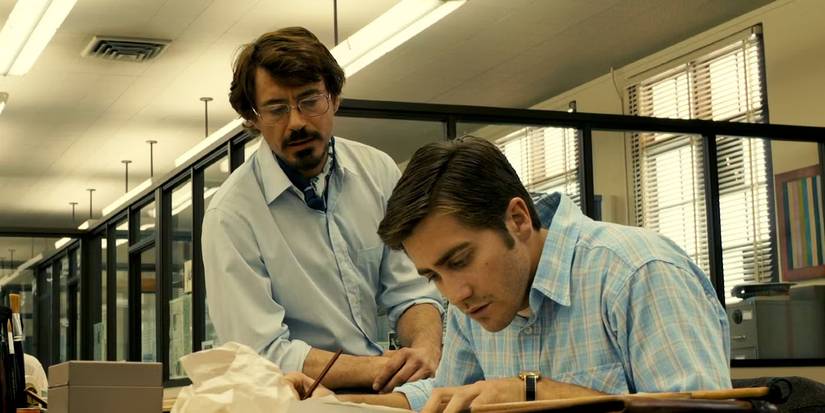
What makes Zodiac worthy of this conversation is that it understands obsession as suspense. That sounds simple until you really sit with what David Fincher is doing. The killer is terrifying, yes. The murders matter, yes. But the movie’s deepest hook is that the case becomes a slow spiritual infection in the lives of the men trying to understand it. Robert Graysmith (Jake Gyllenhaal) does not just get curious. He gets claimed. The further he moves into the case, the more the movie stops being about crime-solving in the ordinary sense and starts becoming about the terrifying human need to force pattern onto chaos before chaos humiliates your whole idea of order.
That is why it gets better every time. The basement scene is famous for obvious reasons, though the movie’s real power lies in how mundane obsession can look while it is eating a life. Offices, paperwork, handwriting samples, phone calls, awkward home-life deterioration, long stretches where nothing thrilling in the conventional sense is happening, yet the movie keeps tightening. That is a rare skill. Zodiac proves a thriller can be procedural, melancholic, and almost anti-climactic on purpose.
9
‘Memories of Murder’ (2003)

Image via CJ Entertainment
Pain is what gives Memories of Murder its place in this conversation. It starts with the shape of a serial-killer procedural, rural detectives, women being murdered, clues half-grasped, mounting panic, incompetent local policing trying to become adequate under pressure. The cops are often foolish, brutal, improvisational, vain, out of their depth. That is the point. Evil has entered a world not prepared to meet it, and the unpreparedness becomes part of the horror.
The reason somebody could call this the greatest thriller ever is that it never treats the murders as isolated mystery beats. They alter the moral atmosphere of the town, the investigators, the weather, even the fields. Rain starts feeling cursed. Darkness starts feeling like accomplice terrain. Detective Park Doo-man (Song Kang-ho) becomes the movie’s central wound, a man who begins with arrogant instinct and gradually discovers instinct is useless against certain kinds of absence. It is a thriller about the unbearable emptiness after the thrill should have ended.
8
‘Oldboy’ (2003)
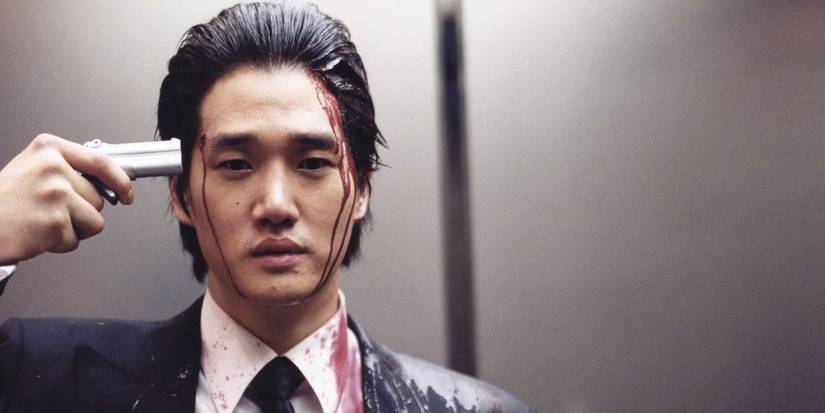
Image via FilmDistrict
There are thrillers that twist. Then there are thrillers that take your sense of emotional safety out back and beat it with a hammer. Oldboy is in the second category. The premise is already bizarre enough to hook anyone, a man imprisoned for years without explanation, suddenly released, then thrown into a revenge mystery where every answer seems designed to make the question worse, but that only explains the skeleton. What makes the movie genuinely great is the way revenge mutates from purpose into poison here. Oh Dae-su (Choi Min-sik) moves through the story like a person whose whole identity has been distorted by captivity and hunger and the need to know why.
That is what gives the film its terrible rewatch power. The corridor fight is spectacular and brutal and deservedly iconic, but the real violence in Oldboy is architectural. The villain has built a psychological space for Dae-su to suffer inside long before the two men meet face to face. Every encounter, every clue, every erotic beat, every tenderness, all of it has been contaminated in advance. That is why someone could argue it is the greatest thriller of all time. Very few thrillers are this formally alive and this emotionally cruel at once. It is not content to surprise you. It wants to leave your soul feeling rearranged.
7
‘The Silence of the Lambs’ (1991)
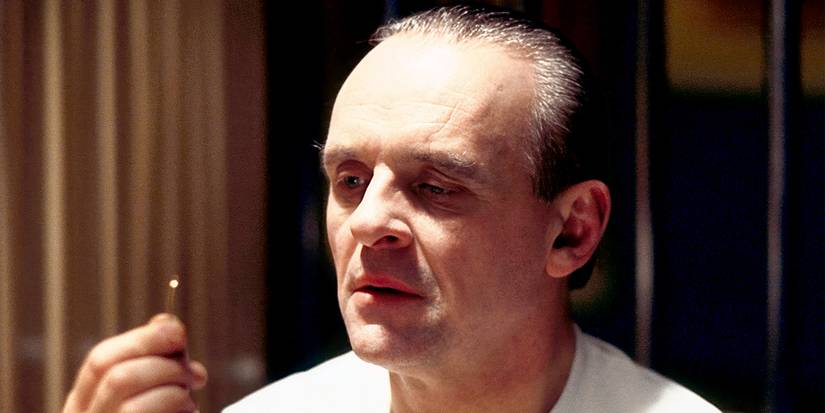
Control alone would give The Silence of the Lambs a place in this argument. It is almost offensively precise. Not a wasted scene. Not a wasted gesture. Not a wasted piece of information. Clarice Starling (Jodie Foster)’s journey works because the film understands from the start that suspense becomes more charged when it is running through a character who is not just trying to solve a case but trying to move through rooms built to diminish her. That is the first genius. Clarice is always reading menace on more than one level, literal violence, sexual scrutiny, institutional condescension, male pathology dressed as intellect, and Foster makes all of that visible without ever turning Clarice into a symbol instead of a person.
Then there is Hannibal Lecter (Anthony Hopkins), obviously, but what makes him unforgettable is not mere creep-show brilliance. It is that the film uses him as a different kind of threat than Buffalo Bill (Ted Levine). Lecter attacks psychologically, aesthetically, conversationally. He makes insight feel invasive. The movie becomes extraordinary because Clarice has to move between two distinct nightmares, the cultivated one that wants to know her and the chaotic one stalking women’s bodies in literal space. That is why the climax works so hard. The basement sequence, in particular, is the whole movie cashing its emotional checks at once. Gender, vulnerability, darkness, training, fear, instinct. It all converges. If someone called this the greatest thriller ever made, I would not fight them much.
6
‘Se7en’ (1995)
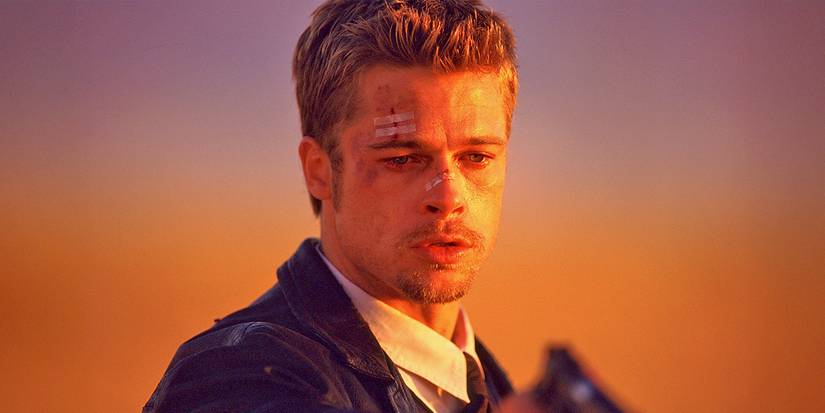
Disease is what gives Se7en its claim. Fincher here does not just stage a murder investigation. He creates a whole city where moral decay seems to have turned into weather. Rain, grime, cramped apartments, fluorescent fatigue, everyone in the movie looks like they have already been sleeping badly for ten years. That matters. John Doe’s (Kevin Spacey) crimes do not feel like intrusions into ordinary life but like a monstrous logic emerging naturally from a world already halfway broken. That is what makes the film so sickeningly persuasive.
The structure is brilliant because it keeps the two detectives from becoming simple archetypes. William Somerset (Morgan Freeman) is not only weary wisdom. David Mills (Brad Pitt) is not only a hotheaded youth. They are two different reactions to living in a world that keeps forcing the soul into uglier and uglier shapes. Their conversations matter because the movie is really asking whether despair is intelligence or surrender. Then once John Doe enters physically, the whole film changes temperature without losing momentum. That is hard to do.
5
‘Rear Window’ (1954)
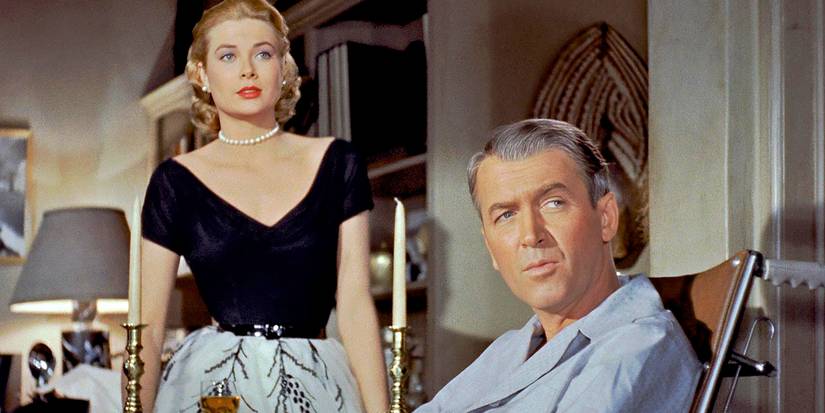
This may be the purest movie ever made about the way suspense and spectatorship are secretly married. Rear Window gives you L.B. Jeffries (James Stewart) stuck in his apartment with a broken leg, looking out at windows across the courtyard, watching strangers live pieces of their lives, and then slowly starting to believe he has seen evidence of murder. That setup is one of Alfred Hitchcock’s most beautiful acts of cruelty.
It makes the audience complicit immediately. Watching becomes the movie. Curiosity becomes danger. Distance becomes intimacy. You are not just seeing Jeff be trapped. You are trapped inside the same act of looking. What makes the film universal is that it understands voyeurism as something almost embarrassingly human. You do not need to be bad to start looking too long. You only need time, proximity, fragments, boredom, imagination, and a slight suspicion that what you are seeing may add up to something awful. Lisa Fremont (Grace Kelly) and Stella (Thelma Ritter) are incredible additions because the suspense gains extra emotional texture once Lisa starts entering the danger physically while Jeff remains forced to watch. That helpless-watchfulness is the whole genius of the movie.
4
‘North by Northwest’ (1959)
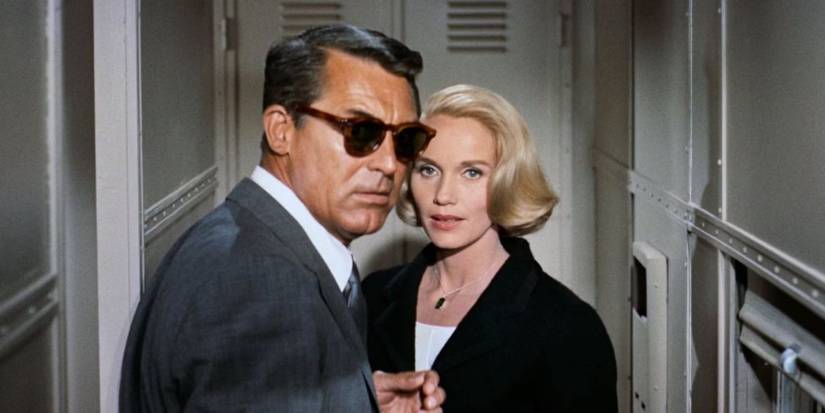
Elegance is what lets North by Northwest make its case. Hitchcock takes Roger Thornhill (Cary Grant) mistaken for a nonexistent spy and turns the whole American landscape into a running misidentification nightmare. Thornhill is witty, vain, poised, and then slowly forced to discover that poise is not protection once the plot stops caring who you think you are. That gap between style and vulnerability becomes part of the movie’s rhythm, and it is one of the reasons the film remains so easy to fall into.
The set pieces are immortal, the crop duster, the auction, Mount Rushmore, all deservedly, but they are not iconic just because they are well staged. They are iconic because the movie knows how to isolate a person inside open space. Vastness can be as claustrophobic as a locked room if the threat is organized correctly. Eve Kendall (Eva Marie Saint) matters enormously too, because the romance is not decorative. It is part of the trap and part of the thrill. North by Northwest makes suspense feel sexy, funny, and expansive without ever going soft. That is almost impossible.
3
‘Jaws’ (1975)
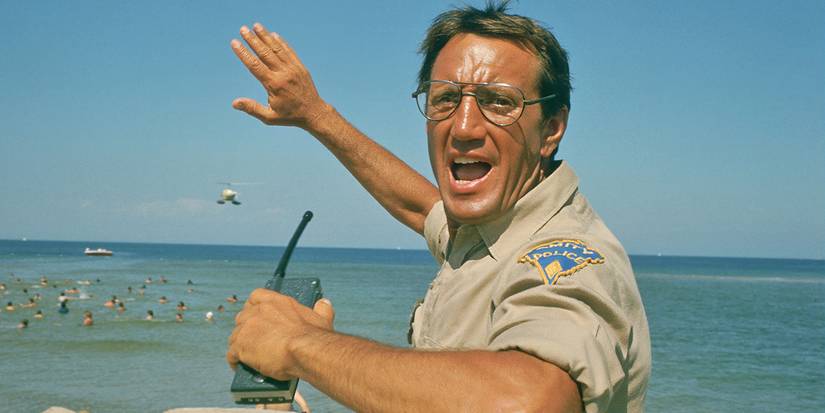
Jaws is such an unbeatable contender for thrillers too and precisely because of primal fear. The shark matters, obviously. The attacks matter. The beach dread matters. But the film is perfect suspense because it never relies on the creature alone. It gives you town politics, masculine pride, public denial, class arrogance, economic cowardice, parental terror, sea-myth bravado, and one of the best dramatic escalations ever built in studio filmmaking. Chief Martin Brody (Roy Scheider) becomes the center of that escalation because fear enters through the shark and then infects the whole social body around him.
Once the movie leaves the shore and goes onto the Orca, it becomes almost impossibly good. Brody, Quint (Robert Shaw), and Matt Hooper (Richard Dreyfuss) are three different relationships to fear, knowledge, and masculinity locked on a boat with a force of nature that does not care about any of them. By the end, the water is no longer setting. It is judgment. That is why Jaws sits near the very top of this argument.
2
‘Psycho’ (1960)
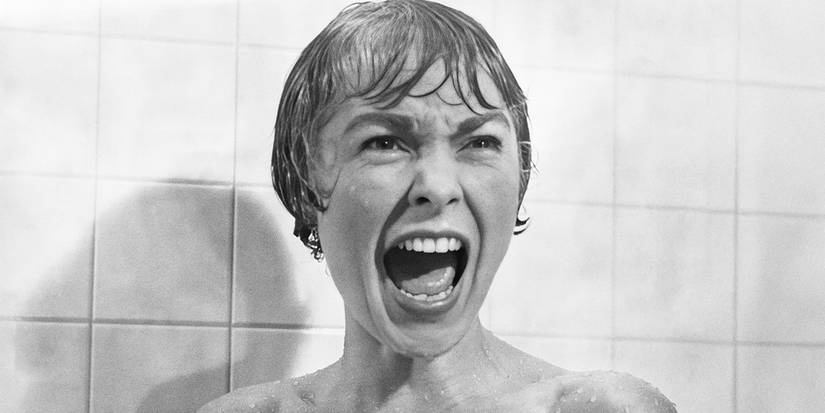
This is such a radical piece of thriller storytelling that even now, after decades of imitation, Psycho still feels like the genre realizing how much it can get away with. The film begins as one movie, stolen money, guilt, escape, Marion Crane (Janet Leigh) making increasingly bad choices while the audience gets pulled into the nervous momentum of her attempted reinvention, and then Hitchcock tears that movie apart midstream and replaces it with something much stranger and more destabilizing. That move alone would secure Psycho’s place in the canon forever.
But the reason somebody could call it the greatest thriller ever is that the film keeps getting better even after the famous shock. Norman Bates (Anthony Perkins) is the reason for that. He is unsettling not just because he is off, but because he is recognizable. Lonely, eager to please, trapped inside family poison, awkwardly boyish, desperate to seem gentle. That is what makes the horror inside him so effective. The Bates house, the motel, the stuffed birds, the swamp, the conversations, all of it feels like a complete psychological landscape. And the shower scene is not only iconic because of violence. It is iconic because the film has taught you to care about Marion’s panic before it destroys her. That is the deepest thriller trick of all: take away the future you had already started projecting. Psycho still does that better than almost anyone.
1
‘Vertigo’ (1958)
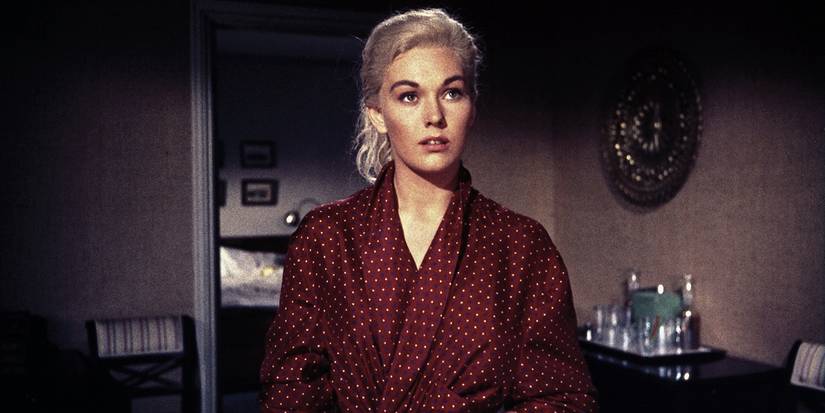
This is number one because Vertigo feels like the thriller genre dreaming about itself and then waking up sick with desire. It is not the most propulsive film on this list. It is not the most overtly violent. It is not even the one with the most conventional suspense clock. What it has, and what almost no other thriller has in this exact measure, is obsession as atmosphere. Everything in the movie bends toward fixation, Scottie Ferguson (James Stewart)’s fear, Madeleine Elster/Judy Barton (Kim Novak)’s performance, Gavin Elster (Tom Helmore)’s scheme, San Francisco’s dreamlike geography, color, repetition, mistaken identity, the impossible fantasy that love can be preserved by remaking the object of love until it becomes what your grief and desire demand. That is extraordinary thriller material because it makes looking itself dangerous.
Every rewatch deepens the wound too. The first half plays like haunted romantic mystery. The second becomes one of the cruelest studies of male obsession and erotic control ever put on film. Stewart is astonishing. Scottie’s weakness is the movie’s engine. It makes Steward a man whose acrophobia, yearning, vanity, and susceptibility make him usable by the plot long before he understands he has been used. Novak has one of the hardest jobs in cinema and delivers something uncanny, split, vulnerable, manufactured, and heartbreaking all at once. Vertigo is the greatest thriller ever, or close enough that the argument barely matters, because no other thriller on this list fuses suspense, romance, pathology, and visual hypnosis with this much power.