This post was originally published on here
Sci-fi is more than just space operas and fantasy epics like Star Wars or Dune. It may not be for everyone, but hard sci-fi is its own subgenre, with movies dedicated to the real world science of robots, space travel, black holes, and much more. When a character needs to solve a crisis, they use actual math the average person would never understand, and when a wormhole opens in space, the visual effects resemble pictures from a textbook.
However, there aren’t very many movies where that’s the case. That’s why experts, including astronauts and other scientists, have often voiced their appreciation when directors manage to finally get things right. Their endorsement highlights how rare it is for filmmakers to embrace realism instead of spectacle, and how science doesn’t need to be rewritten for the big screen to be cool. Here are 10 hard sci-fi movies with scientific accuracy praised by experts.
Why You Should Trust Me: Sci-fi is the genre that I tend to know best, so it wasn’t difficult to recall numerous hard sci-fi movies that were grounded in real world science. Each of these movies were recognized by cosmologists, astronauts, physicists, and engineers for how closely they adhered to reality.
Honorable Mentions
‘2001: A Space Odyssey’ (1968)— Stanley Kubrick’s sci-fi classic will always be well-regarded when it comes to physics and human‑machine interaction. It might not be the most accurate, but it has been widely praised, and its take on artificial intelligence feels eerily plausible these days.
‘Ex Machina’ (2014)— Alex Garland’s take on artificial intelligence is grounded in its procedural structure, as we watch Nathan Bateman and Caleb Smith collaborate to build a robot. The film’s depiction of machine learning is fairly realistic when you consider other movies, and the ethical questions raised by Smith echo actual debates that engineers are having today.
‘Her’ (2012)— Spike Jonze’s approach to human-AI romantic relationships in Her was surprisingly ahead of its time, predicting various technological advancements. It remains one of the most accurate depictions of artificial intelligence, but doesn’t go into as great detail as other movies when it comes to science.
10
‘The Martian’ (2015)
The most realistic depiction of NASA in recent memory
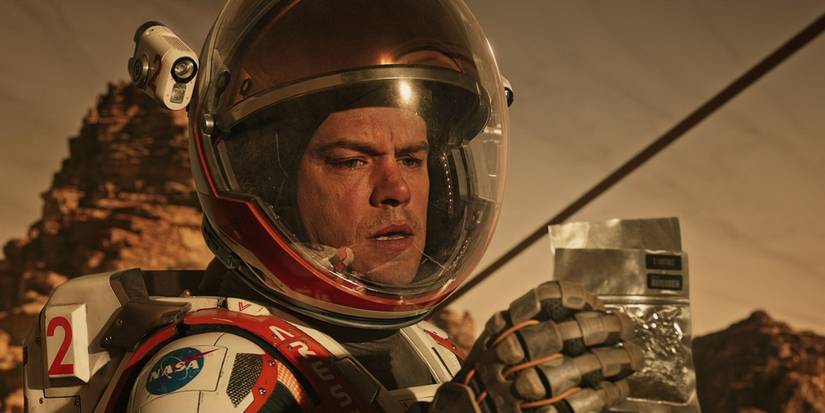
Ridley Scott’s The Martian is among the most scientifically celebrated films of all time, as experts have complimented its take on orbital mechanics and engineering as a whole. Astronaut Clayton C. Anderson wasn’t alone when he praised the film and compared it to his own experience with NASA, saying, “It shows the dedication of NASA’s workforce, working together, sometimes at huge personal sacrifice, to get the job done.” The movie’s portrayal of resourcefulness under pressure, from repurposing equipment to recalculating flight paths, mirrors how astronauts and ground teams are forced to respond in emergencies. It’s for that reason that The Martian continues to be thought of as one of the most accurate cinematic depictions of modern space exploration.
9
‘Interstellar’ (2014)
Cinema’s most accurate depiction of black holes ever
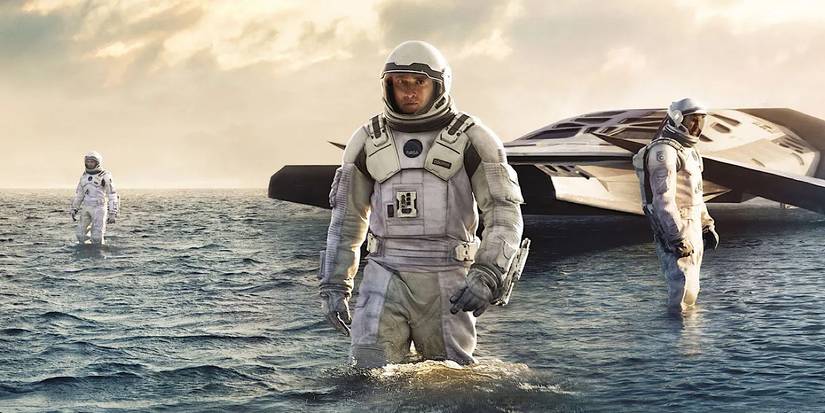
When Christopher Nolan was making Interstellar, he enlisted cosmologist Kip Thorne who assured the film remained scientifically sound, from the way that black holes looked, to the concept of time dilation, and even the science behind wormholes. Nolan’s movie is frequently credited as the most accurate black hole visualization on film as a result of Thorne’s calculations. In fact, the wormhole and black hole VFX models were so precise that Thorne incorporated them in academic papers.
Praised by astronomers for the film’s approach to potential alien life
Although you may not think of Contact as being grounded in the real world due to its subject matter, it’s widely considered by astronomers to have some of the most accurate representations of SETI (Search for Extraterrestrial Intelligence) ever on film. And, of course, it makes sense, as the script was based on Carl Sagan’s novel. Astronomer Jill Tarter was famously the inspiration for Jodie Foster’s character, Ellie Arroway, and said, “The movie explores the implications of aliens making contact with Earth, but does it from more of a scientific perspective than most films.” Her sentiment was shared by many who are also in her field, citing the film’s emphasis on data and radio astronomy which were based on actual SETI protocols.
7
‘Arrival’ (2016)
A surprisingly realistic take on a famous linguistic theory
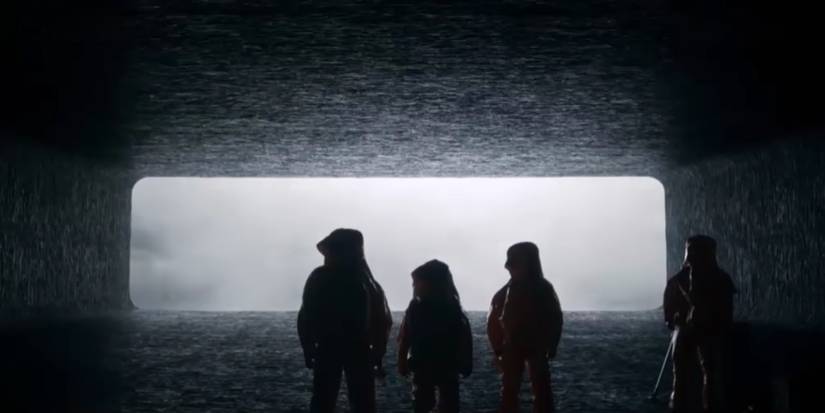
Denis Villeneuve’s Arrival imagined a bizarre and otherworldly take on aliens unlike anything else we’ve ever seen before, but its approach to how another species might communicate with humanity earned praise by experts. Similar to the way in which Thorne partnered with Nolan on Interstellar, physicist Stephen Wolfram worked with Villeneuve in regard to the film’s non-linear concepts. Arrival even featured the Sapir-Whorf Hypothesis as a central plot device, a real hypothesis which states that language influences and shapes your perspective of the world. Although some linguists disagreed with the film’s take on the idea, many cognitive scientists complimented Villeneuve’s approach to the hypothesis.
6
‘Gravity’ (2013)
A movie based on one of NASA’s worst case scenario
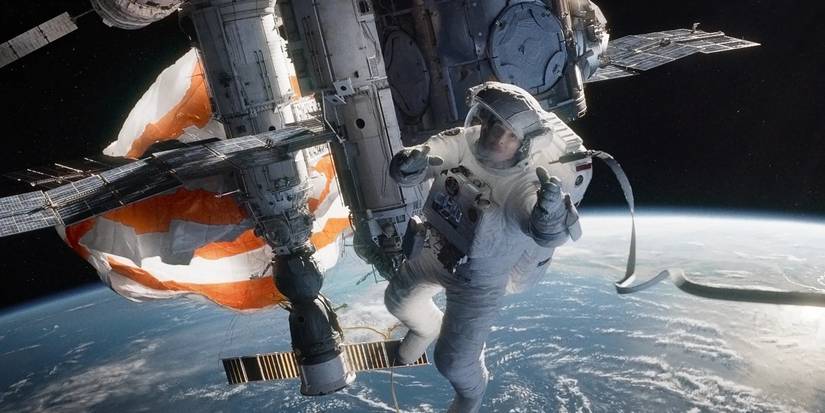
Alfonso Cuarón’s Gravity was more than just a cinematic event, because when real-life astronauts saw it, they couldn’t believe how it managed to get physics in space right for the first time. Famous astronaut Buzz Aldrin even said he was impressed in a guest review on The Hollywood Reporter, mentioning the depiction of zero gravity. Cuarón paid close attention to the actual science, incorporating Kessler Syndrome as a key part of the premise, which was a theoretical situation posed by astronauts in the event that debris in space caused an accident.
5
‘Project Hail Mary’ (2026)
Bizarre aliens are the most realistic kind of alien
Much like The Martian, Andy Weir spent a lot of time making sure Project Hail Mary was grounded in actual science, and when it was adapted as a film, astrobiologists praised its depiction of extraterrestrial life. Astrophysicist Jacqueline McCleary even gave the movie credit for its truly alien take on Rocky, saying it’s plausible with how scientists theorize what life elsewhere in the universe might be like. The collaboration between human and alien characters might sound impossible, but Weir’s story provides a glimpse at something which scientists often discuss when imagining first‑contact scenarios, and it’s a big reason why the film has been embraced by experts.
4
‘Apollo 13’ (1995)
A faithful depiction of historical events
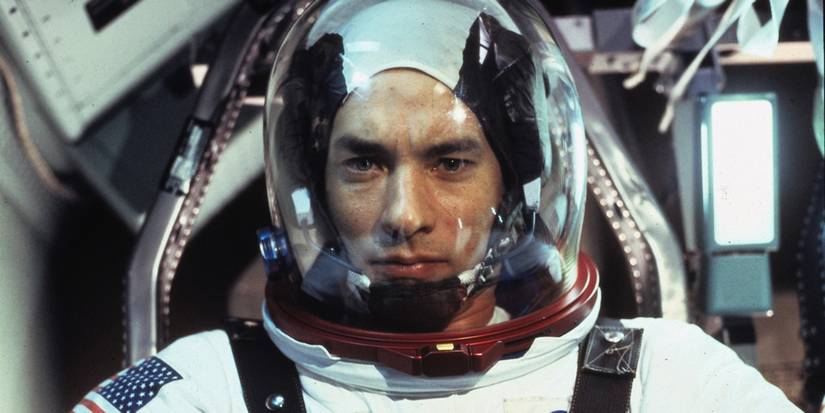
Ron Howard’s Apollo 13 is among Tom Hanks’ most iconic films, and it’s also widely considered to be one of cinema’s most accurate representations of spaceflight. According to many astronauts, like former astronaut Garrett Reisman, Apollo 13 is the gold standard for space travel in film. Unlike many sci-fi movies, it’s an actual retelling of historical events, even incorporating the transcript as dialogue. While Star Wars features light-speed and Project Hail Mary imagines an epic scenario requiring an advanced spacecraft, Apollo 13 sticks to the real world, and its efforts did not go unnoticed.
3
‘Moon’ (2009)
Inspired by lunary resource research
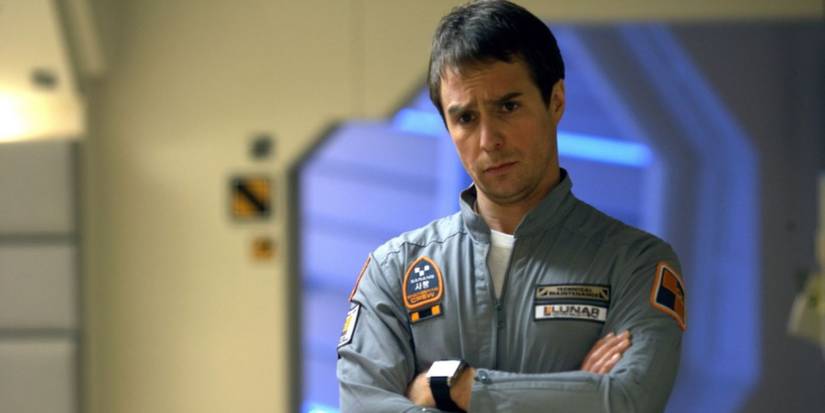
You might assume Duncan Jones’ Moon is just an underrated sci‑fi gem, but it’s also widely praised for its grounded depiction of lunar mining. The film’s key storyline, harvesting helium‑3 from the moon’s regolith, isn’t just a sci‑fi concept— it’s rooted in decades of actual research. When Jones screened the film at NASA, many of those in the audience commended its attempts at concepts never put to screen before, at least in realistic fashion. Moon was never just a fun indie thriller. It’s one of the rare hard sci‑fi films that scientists felt respected their research.
2
‘Tenet’ (2020)
An unconventional take on time travel

When Christopher Nolan brought his take on time travel to movies in Tenet, it wasn’t quite as highly reviewed as his other films. However, physicist Kip Thorne, who had worked with Nolan previously on Interstellar, acknowledged many elements grounded in real physics and explained that the movie does a good job articulating our experience of time and entropy. He didn’t quite think Tenet presented a genuine concept for time travel, but still gave credit to Nolan for reframing the sci-fi trope. As Thorne put it, “…they may call it time travel, but what they have in mind is just inverting your entropy. Inverting your notion of time and using that as a device.” That distinction matters because it shows Nolan was never attempting a literal time travel movie. Instead, he considered physics to create a hard sci-fi thriller.
1
‘Sunshine’ (2007)
A disturbingly realistic scenario in the future
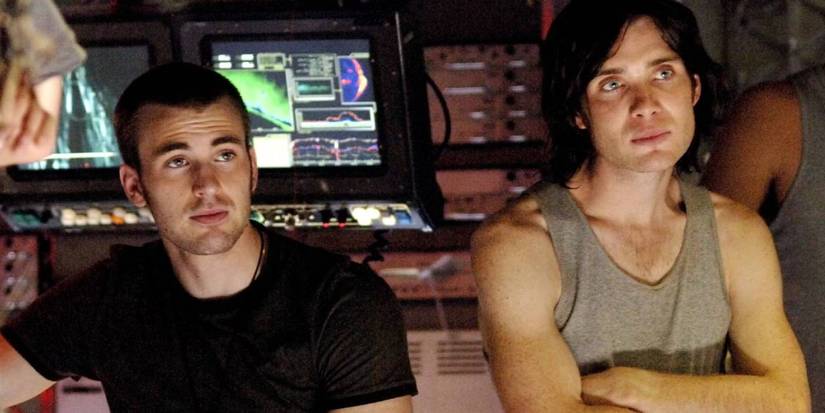
Danny Boyle’s Sunshine fuses together astrophysics with realistic spacecraft design, and with physicist Brian Cox advising on the film, it was bound to get some things right. Cox praised its commitment to realism— not just in the depiction of radiation and stellar physics, but in the way it captures the psychological toll of astronauts assigned to long‑duration space travel. Boyle approached the material with a kind of grounded intensity, saying, “I am not like Tim Burton or Luc Besson who can do rather flamboyant sci-fi. I like realism, then to disfigure it. This was science possible, not science impossible.” And his grounded approach is evident throughout the film, as Icarus II feels like a lived‑in spacecraft, while the threat of solar radiation feels overwhelming.