This post was originally published on here
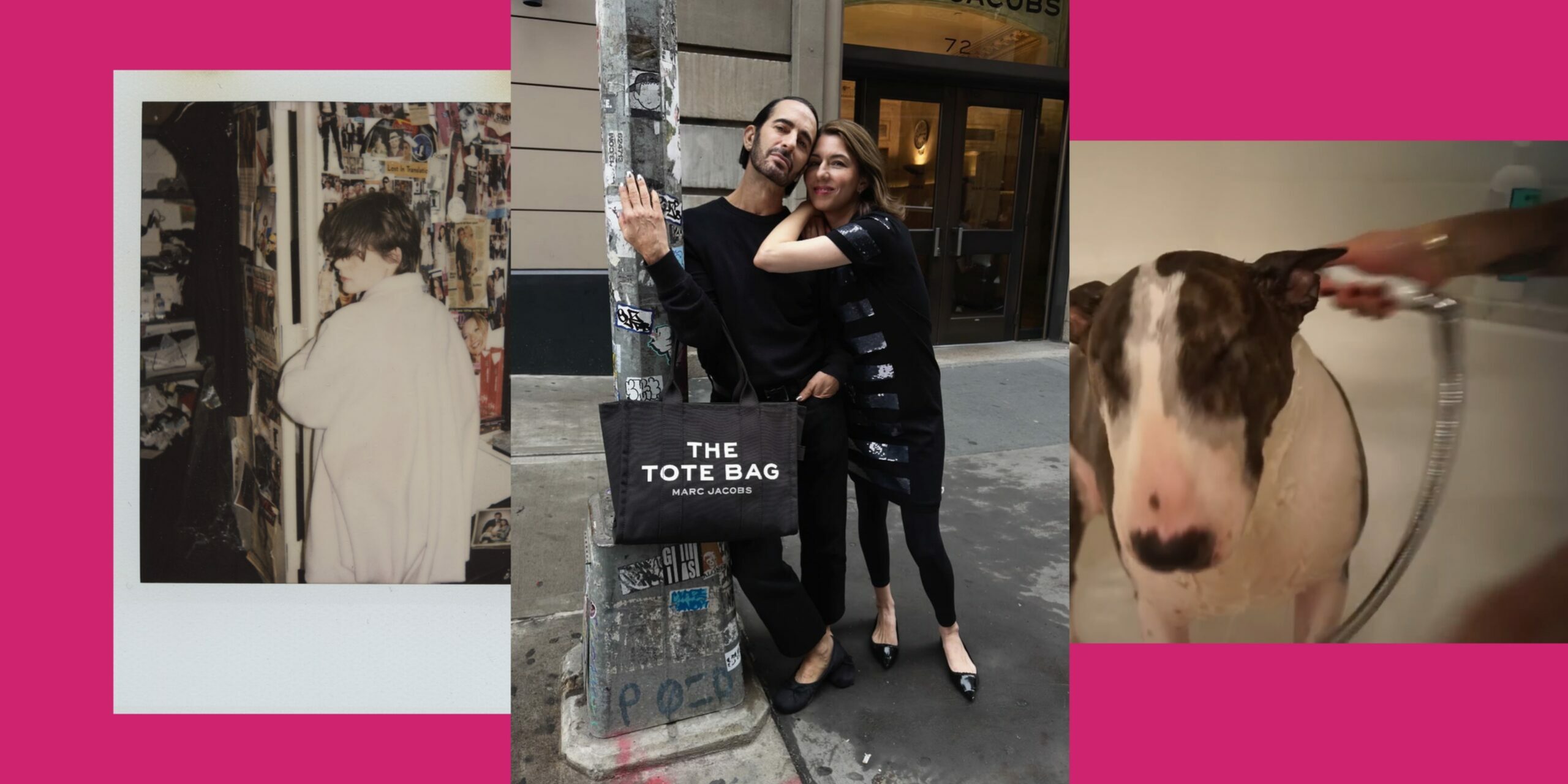
Polaroid by Robert Rich. Marc and Sofia, Neville the Dog Photos courtesy of Marc Jacobs International.
In Marc by Sofia, a new A24 film that follows Marc Jacobs as he prepares for his paper doll inspired Fall/Winter 2024 show (which, dear reader, I was blessed to attend), there’s no line between friendship and filmmaking. In true Sofia Coppola form, the director embraces montage, collage, and music to tell the life story of a legendary fashion designer, who happens to be her long time friend. For some, snippets of Liza Minelli’s Cabaret didn’t make up for the softball questions directed toward Marc, but Coppola’s no journalist, and I’m more interested in aesthetics than ethics when it comes to fashion films. After all, a good runway show is just like a movie—a story that utilizes costume, set design, direction, performance, and sound to create a transcendent work of art. And Sofia, with her unrivaled talent for storytelling, achieved it all in this sanguine documentary. So what’s next for the Priscilla director? As she tells me over Zoom, it’s time to step back into her own imaginary world.
———
SOFIA COPPOLA: Hi, how are you?
TAYLORE SCARABELLI: Good. Thanks for joining. Do you have a crazy day of back-to-back interviews?
COPPOLA: Just a couple this afternoon, and then I’m meeting Marc for a Q&A tonight.
SCARABELLI: Nice. I saw the movie a couple of weeks ago. It was cool to see how your aesthetic shone through, even though this was a new genre for you.
COPPOLA: That’s nice to hear.
SCARABELLI: I want to start by asking you how you prepared for this. Were there any documentaries that you watched in advance for inspiration? I know your mom was a documentary filmmaker as well.
COPPOLA: I didn’t watch anything, but the editor I worked with, Chad Sipkin, we’ve done short-format fashion films and stuff. So we’ve worked together in this kind of abstract collage style, and I thought if I’m going to do this, I’d want to do it with him.
SCARABELLI: Right.
COPPOLA: I hadn’t watched it in a long time, but I was thinking of Bruce Weber’s film Chop Suey Club, which mixed interviews with Diana Vreeland and surfers. And it had a very free style, so I wanted to incorporate Marc’s references and train of thought and be free about it. I didn’t want to make a conventional talking-head documentary. I wanted it to feel like we were putting all these elements in a blender and making a collage—that felt like Marc.
Polaroid by Robert Rich. Marc and Sofia, Neville the Dog Photos courtesy of Marc Jacobs International.
SCARABELLI: I’m curious, because you obviously have been following Marc’s career and been friends for so long—did you feel like you had to go back and do some research beforehand? How did you prepare your questions?
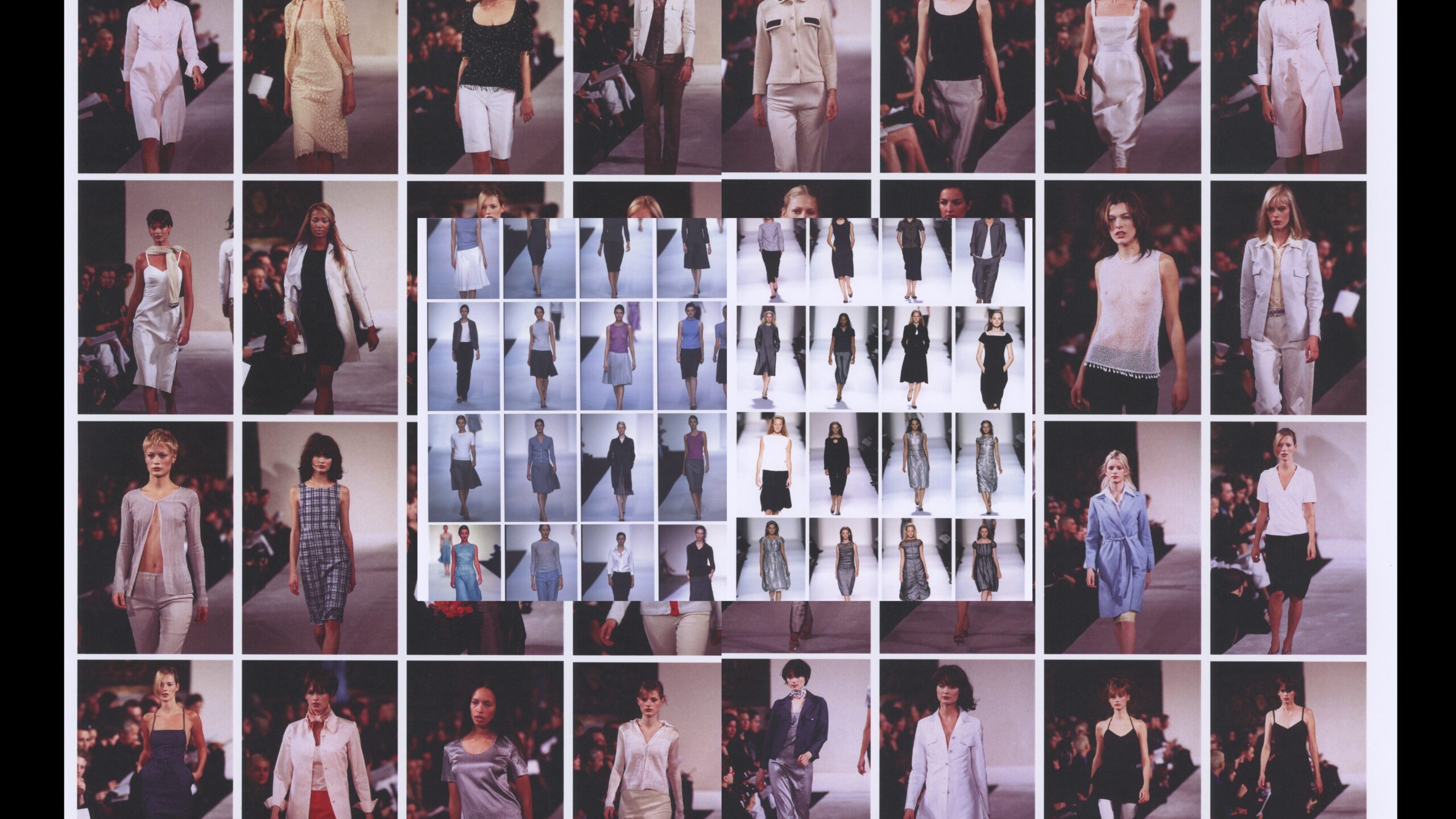
COPPOLA: I thought about questions that I wanted to ask him, and then I asked Lynn Hirschberg, who’s a great interviewer, what questions I should ask. I didn’t do much research, but it was fun for me to revisit the collections that I loved over the years, and go over Juergen Teller’s photography. We also had a great team of young editors who were finding stuff online and bringing a new perspective, showing me things that I forgot about, like the X-Girl fashion show.
SCARABELLI: That’s so crazy that you forgot about that because practically every person I know has it on their mood board.
COPPOLA: Yeah. It was a long time ago.
SCARABELLI: What was the most surprising thing that you learned about Marc throughout this process?
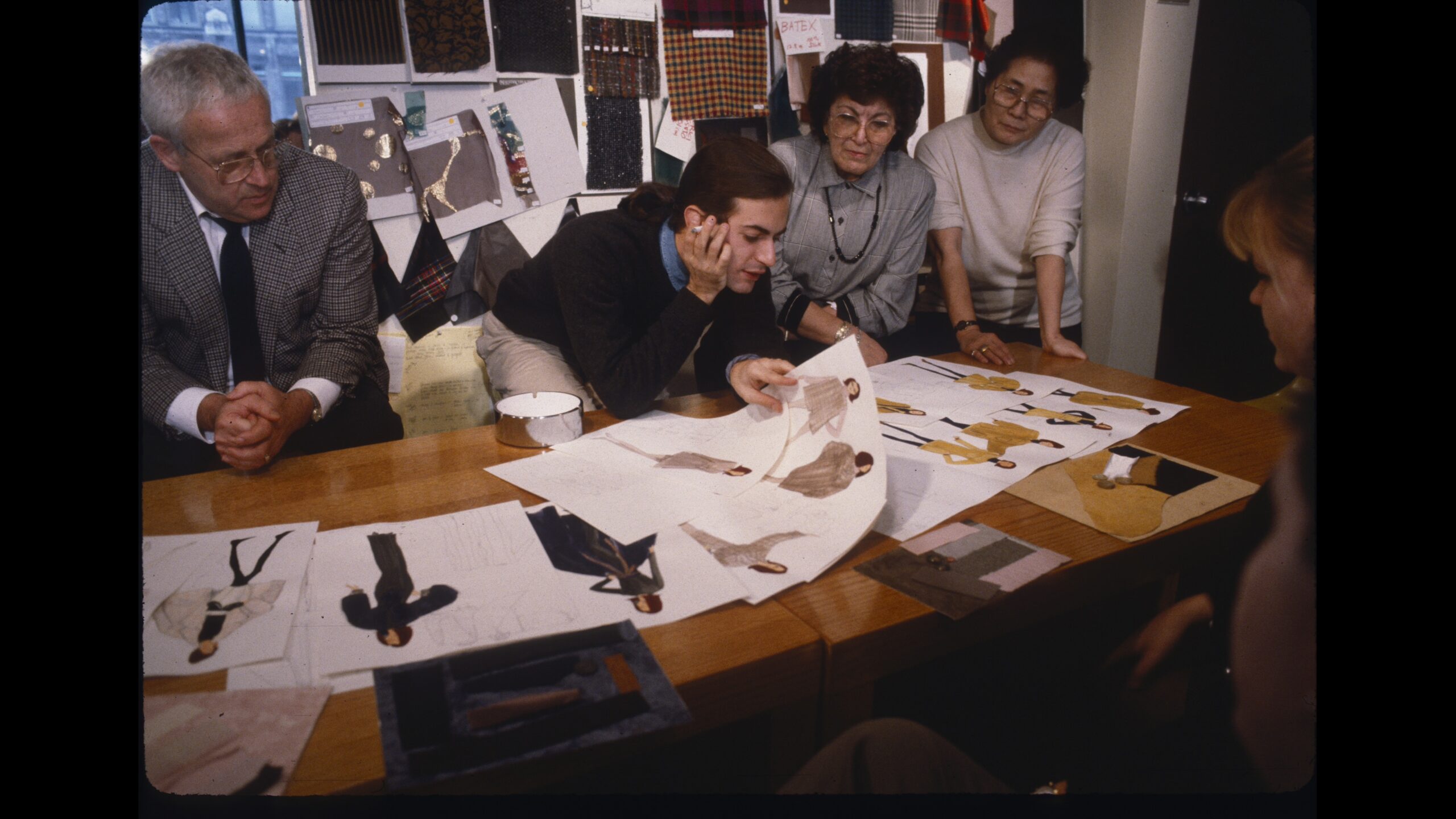
COPPOLA: I knew he was very detail-oriented—but to see the amount of time and detail that goes into the ten shades of beige-pink nail polish he’s choosing between for the runway models, that looks the same to anyone else. And I’m always surprised by how he finds his way as he goes, which was the same process I was doing with the documentary. He doesn’t have a plan at the beginning, it just evolves from trying things and seeing what they feel like. So it was cool to see his process and how relatable it is to any creative process.

SCARABELLI: Have you and Marc ever bounced ideas off each other in the past for your films and stuff? Because I feel like your films are so fashion, and his shows are so theatrical.
COPPOLA: No. It’s always a surprise what he’s doing. A lot of times I’ve visited him in the studio and I’ll see all these fabrics and colors and sketches, and I’ll get excited like, “Oh, I can’t wait to see the show.” And then I go to the show, and it’s totally different.
SCARABELLI: Right.
Courtesy of Marc Jacobs.
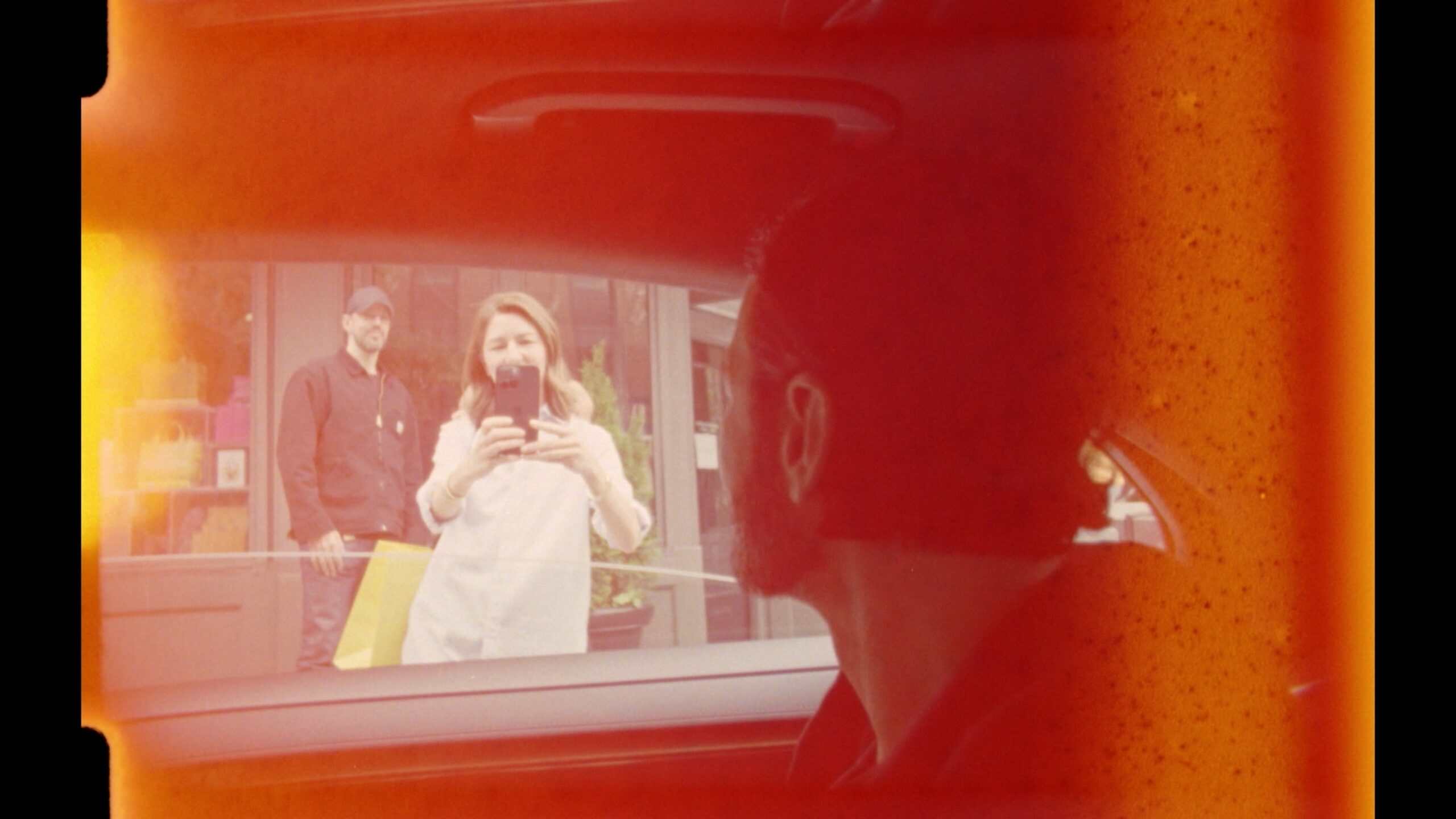
COPPOLA: Another thing that was a surprise—I’ve never been backstage at his show. I’ve always been in the audience. So it was fun to see the excitement and him being nervous.
SCARABELLI: Do you think there’s a connection between filmmaking and fashion shows?
COPPOLA: I think for anything creative, you go through the same process. There’s always a point when I’m making a film where it just looks like a big mess, and then somehow, magically, it comes together into something. We definitely had that during this. And I saw that same thing happening with Marc.
SCARABELLI: How did it feel working with a smaller crew?
COPPOLA: That was really fun, because the first day it was just me and my brother and a sound person. So it just felt like making a home movie. It takes the pressure off, and it feels personal and intimate. And then sometimes when I would go back to shoot Marc, I would just have my own one little camera. It’s so different from having a big crew. It’s always fun to be stealthy. And I think people forget that there’s a camera there—it’s not like it looks like anything.
SCARABELLI: I’ve talked to a few people who’ve seen the film, and a couple of them complained to me that it wasn’t personal enough about his life and experience. What would you say to that?
COPPOLA: I think there are so many different ways to approach it, and I didn’t want it to be the typical or conventional way. I wanted it to capture an essence of him, or how I saw him. There are lots of those kinds of documentaries about other people. And I hope that it can just be a feeling of him—and then people can learn more about him if they want. They can look into it.
SCARABELLI: Well, to me, it seems like you achieved what you set out to do, and I found it really entertaining. Also, the music was great—how did you go about making selections for the film?
COPPOLA: We were trying to capture the era of the archival stuff we were looking at, and then just the energy. Chad, the editor, helped me a lot with just knowing my personality, and finding things that we liked and felt right. Some of it’s music from the actual show, and then there’s things like Beastie Boys—because it’s that era of New York. We were just trying to keep it energetic.
SCARABELLI: It must have been very nostalgic for you.
COPPOLA: Definitely. Revisiting that time and seeing pictures of Marc when I had first met him and Anna Sui, and then seeing the X-Girl show—that brought all those memories back that I’d totally forgotten about.
Courtesy of A24
SCARABELLI: Would you do another documentary film after this?
COPPOLA: I really enjoyed the process, so I am open to the idea of it, but now I want to do something more structured after having that experience. I missed creating an imaginary world.
SCARABELLI: Can you tell me anything about your next feature?
COPPOLA: No, I’m just in the writing stage right now.
SCARABELLI: Okay, cool. Where do you write?
COPPOLA: I have a little office near my house where I was editing.
SCARABELLI: Are you super regimented day-to-day?
COPPOLA: No, I wish. I’m not very disciplined.
SCARABELLI: Okay, one last question: how do you decide when something’s right—that you’re going to pursue that story?
COPPOLA: When I can’t get it out of my mind—when it just keeps coming back in my head and I can’t ignore it—then I feel like I have to give it attention.
SCARABELLI: Cool. Okay, thank you so much for chatting with me.
COPPOLA: Nice talking to you.
SCARABELLI: Bye.