
This post was originally published on here
Sand City (2025)
|
Khona Talkies/Cinema Cocoon
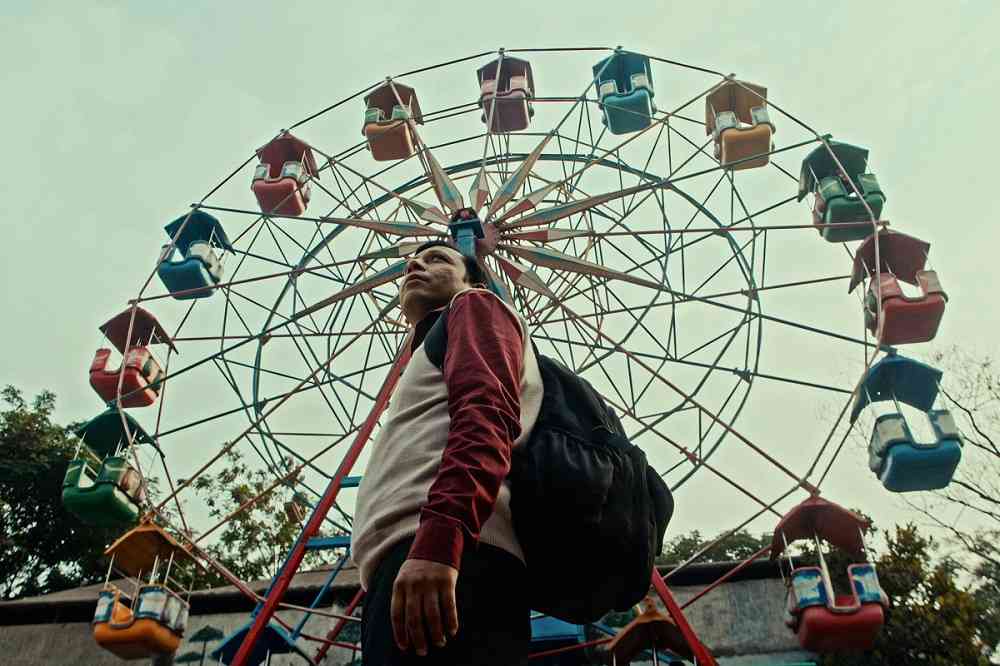
Sand City mines the fantastic from the ordinary. Bangladeshi filmmaker Mahde Hasan’s riveting feature debut follows two lonely individuals in Dhaka who share a preoccupation with sand.
Hassan (Mostafa Monwar) pilfers samples of silica sand, limestone and soda ash from his workplace so that he may set up a glass factory of his own someday. Emma (Victoria Chakma) needs the sand for her cat’s litterbox.
They prowl about like feral creatures, retreating from the city’s chaos and congestion to their homes to examine their loot. The sand throws up unexpected objects – a mobile phone for Hassan, and a female finger with a crimson-shaded nail for Emma.
Sand City is among the titles at the Indian Film Festival of Los Angeles (April 23-26). The 100-minute movie is awaiting a release in Bangladesh.
Also written and edited by Mahde Hasan and brilliantly shot by Mathieu Giombini, Sand City is a leading example of what film scholars call urban sensorium cinema – movies that mesh together a city’s diverse architectural elements, modes of housing, criss-crossing movements, lighting textures and fragmented modes of living.
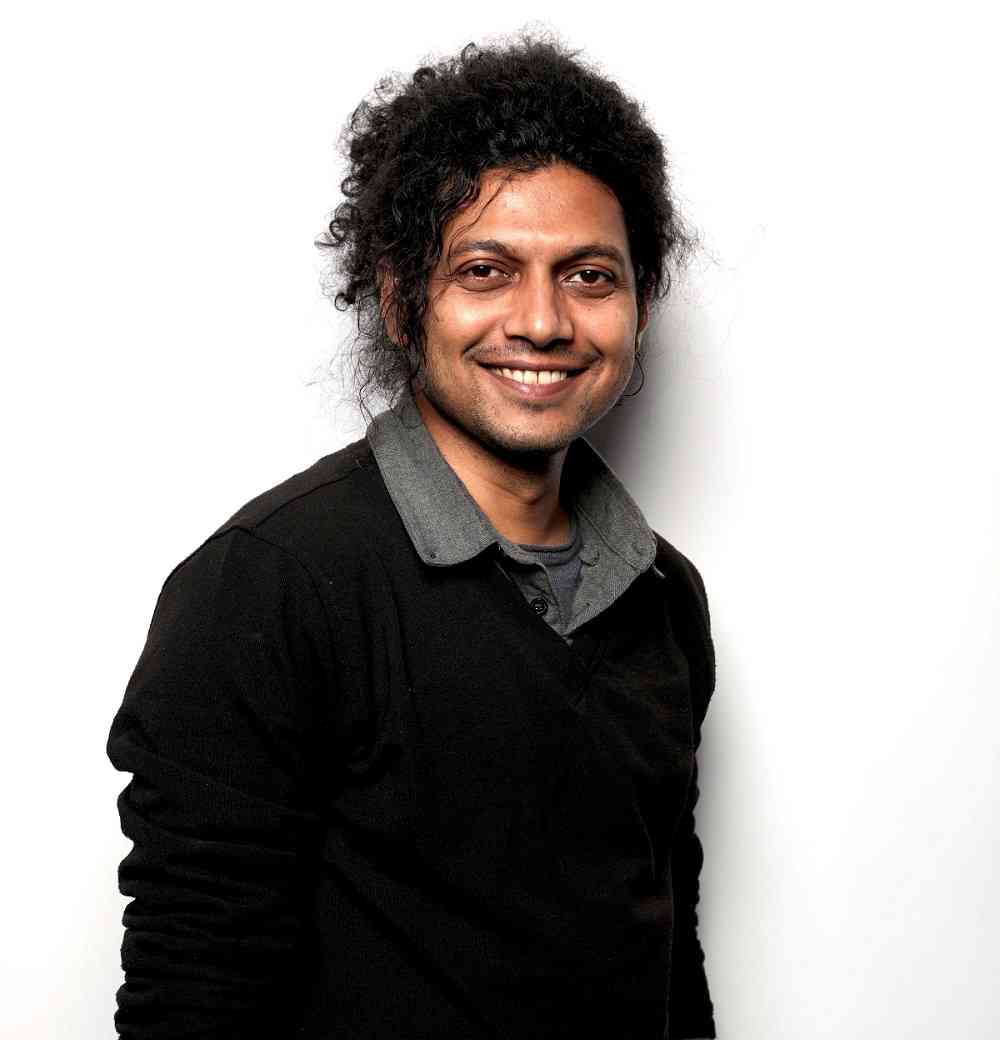
Before Sand City, Mahde Hasan directed a few acclaimed short films. The 39-year-old filmmaker spoke to Scroll about why he chose sand as a leitmotif for an exploration of big-city blues, and why his film is both typical and atypical of independent Bangladeshi cinema. Here are edited excerpts from the interview.
Sand is an unusual inspiration for a film about Dhaka.
Sand is a very mundane thing, an ordinary and tiny element. But it’s through the smallest of elements that we can explore deep truths about our lives.
Also, sand is very fragile – you can barely grab it. Through sand, I wanted to explore the fragility of urban, modern life. There’s a dichotomy to sand – you can build whole cities with it. So I chose sand because of the contradictions in this tiny thing. I felt that I could explore the inner and outer states of my characters and the city as well.
How did the device of two characters connected by sand come about?
Around 2015, my partner and I lived on the edge of Dhaka. We had cats at our home. In Bangladesh, we sometimes use sand as cat litter because we don’t always have the money to buy proper sand litter.
My partner drove around on her Vespa looking for sand. She came across strange stories and met people who asked weird questions. I thought I could create a character based on her activities. Then I added other elements.
I thought of making a collage, an abrupt, non-linear film. So I created another character who is a contrast to the woman, who has indirect connections with her. In terms of the soundscape and the day-to-day aspects, there are similarities, but otherwise they are totally different.
The film is mostly about alienation. We cannot hold anyone, grab anyone, love the way we could love once. Everything is slipping away. The rabbit that Emma gets from Hassan is like a love letter, in one sense, something to transfer from one person to another. There is some optimism.
What is the film saying about Dhaka, which is shown in your film as fragmented parts of an inchoate whole?
Dhaka is like a scattered city – very chaotic and crowded. It’s abruptly built-up.
There’s also the extended city. There is a river beside the city, and big companies collect sand from the river and then fill the river with the sand again. The new housing is actually built on this sand land. This extended city is being built on fragile elements.
It’s unstable, economically and socially. There are areas with very rich people living right next to extremely vulnerable people. Especially during Covid, many people moved out of the city after their savings were wiped out. Middle-class families became lower middle class.
The city is complex and fragmented. People don’t have anything to hold onto. Every day is a new day, with new dangers.
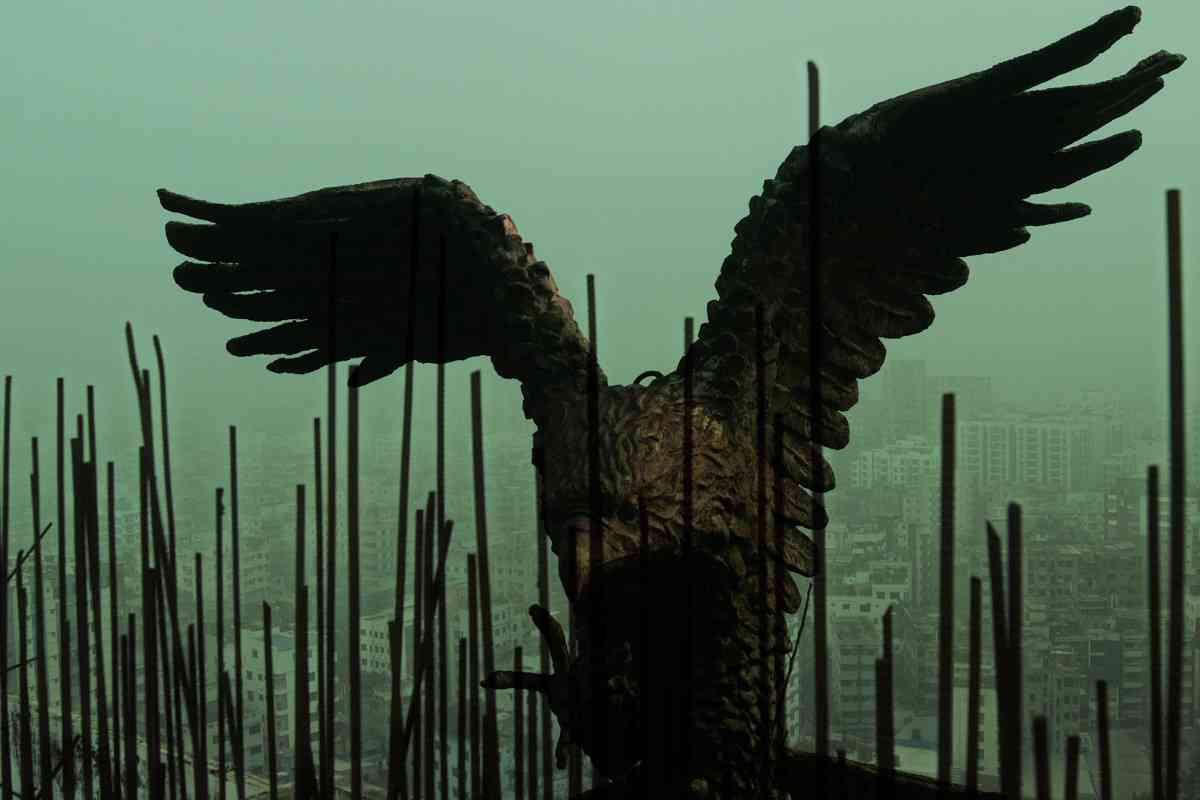
Sand City has a distinctive visual palette. You’ve clipped out the chaos. Mathieu Giombini’s compositions are tightly controlled and colour-coded. Apart from writing and editing the film, you have worked on the production design too. How did the film’s imagery come about?
I am very much into visuals. I have been taking photos of Dhaka for several years.
I love the films of Pedro Costa and Michelangelo Antonioni, which are very precise visualisations of inner worlds. I also like Taiwanese director Edward Yang’s films a lot. But when shooting Sand City, we had to forget the inspirations and focus on the real world.
Everything was designed. I did the storyboards. I already had all these photographs. I am a bit of a perfectionist, so everything had to be in order. We had only 17 days to shoot the film, so we had to be very precise. Otherwise, it would not have been possible.
The cinematographer had never been to Asia before. I shared the photographs and storyboards with him. He was very smart, he came up with the lighting patterns very quickly. He totally understood what I wanted.
We took new photographs at the locations. We chose the aspect ratio of 3:2, which was neither too wide nor too square. I also worked intensely with the art director on the colour of the walls and the costumes. The pre-production lasted six months.
This heavily aestheticised approach has its detractors. They say it’s derivative and doesn’t reflect the realities of non-Western cities; in your context, not Bangladeshi enough. Have you encountered this criticism?
Yes, people have told me that your film is a festival film, it doesn’t look Bangladeshi. I have been hearing this since I started making films in 2012. I have always been very clear that this is my approach.
Many visuals elements are of Western origin. The films of people like Satyajit Ray or Abbas Kiarostami or Mani Kaul are very rooted even though they have a Westernised language.
A critic told me, the shots are very aesthetic and that Dhaka doesn’t look like this. But this is deeply subjective. Some paintings are abstract, others are precise. Films shot in Paris look aesthetic but also have hand-held and shaky camera movements.
It’s different from director to director – that’s the beauty of it. Sand City has rooted elements of Dhaka as I have experienced them.
People also asked me why I cast an indigenous person, a Chamka actress in the role of Emma. Of course, she is from Bangladesh. Many films have actors with the same features. That’s a stereotype.
Perhaps part of the problem is that because there aren’t too many independent filmmakers in Bangladesh, the burden of representation is on every one of them.
We have a community, but it’s scattered. It’s a very small scene. It’s really hard to make independent films in Bangladesh in terms of funding and distribution.
I want to challenge geography. I don’t want people to say, this is a Bangladeshi film. Sand City is from Bangladesh, but you don’t necessarily need to feel it.
Also read: