This post was originally published on here
Telesur’s ongoing commitment to the economic growth and development of communities in Suriname is a cornerstone of its operation.
The multinational organisation has been at the centre of communication in the country for four decades, controlling the entire fixed-line and broadband market, and dominating the mobile market. Now, they are pushing ahead with new technologies that will unlock even more financial potential in the South American country.


The company grew from TV broadcasting in the 1980s, to cellular and internet services in the 1990s, then telecommerce, and multimedia technologies, and recently started offering triple-play packages. In 2019, they completed the rollout of their National Broadband Package, which will support their collaborative project with the Ministry of Education, Science and Culture to provide all schools with internet access. It was an important step in their objective of enriching the lives of citizens through digital communication.
However, their support of communities has gone further than that. They were instrumental in helping Suriname respond to the Covid-19 pandemic, providing facilities and free means of telecommunications for the National Coordination Centre for Disaster Management, the Bureau for Public Health Office, and hospitals. This support included smart devices, free calling for contact tracers and doctors, internet for ICUs, and call centre services for 178 agents. They even provided data packages for students and teachers to visit certain sites free of charge.
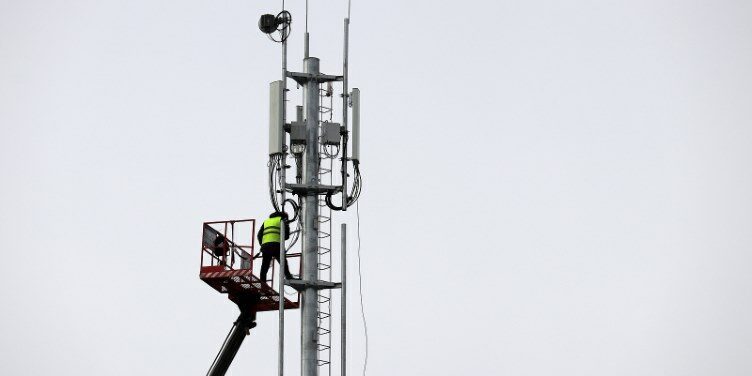
In many ways, their adoption of the latest technology enables Suriname to jump ahead of its neighbours. In 2019, Telesur also launched the first 5G network in the Caribbean and are playing a big part in Suriname’s above-average mobile penetration rate compared to other countries in the region.
Upgrading their network and introducing a new Business Support System/Operational Support System (BSS/OSS) are key steps in the company’s efforts to create an e-services platform, part of an e-Suriname project. The aim is that these digital transformation projects will support the country’s socio-economic growth, now and into the future.
Squire Technologies’ Inter-Working Mediation Function (IWF), a part of Sigla, makes BSS/OSS integration with a core network seamless across multi-generation networks. The IWF provides forward and backward compatibility as signalling traverses multiple networks, with comprehensive protocol support for 5G Nchf/HTTP2 protocols, 4G/LTE Diameter, legacy 3G CAMEL, and more. It also provides resilience through redundancy, load sharing and balancing via sophisticated on-board routing.
Doric Ramlakhan, Chief Technical Officer at Telesur
Systems Integration is a key part for any BSS/OSS replacement. Telesur needed a solution to seamlessly integrate our core network with the new BSS/OSS, and we found it with Squire’s Interworking Function (SVI-IWF). We had a smooth deployment with the excellent deployment team at Squire.
Ben Teversham, Sales Manager at Squire Technologies
It’s fantastic to work with a business that is so focused on social value and ensuring that citizens can access the latest communications technology. It’s a great stamp of approval from a market leader to be utilising our IWF solution in such an important project for the country and we’re ready to support Telesur in its future projects as it continues to lead the way in the region.