This post was originally published on here
By Richard Kalasky, M.Ed, MBA; Public Sector Mobility Solutions, Panasonic Connect North America
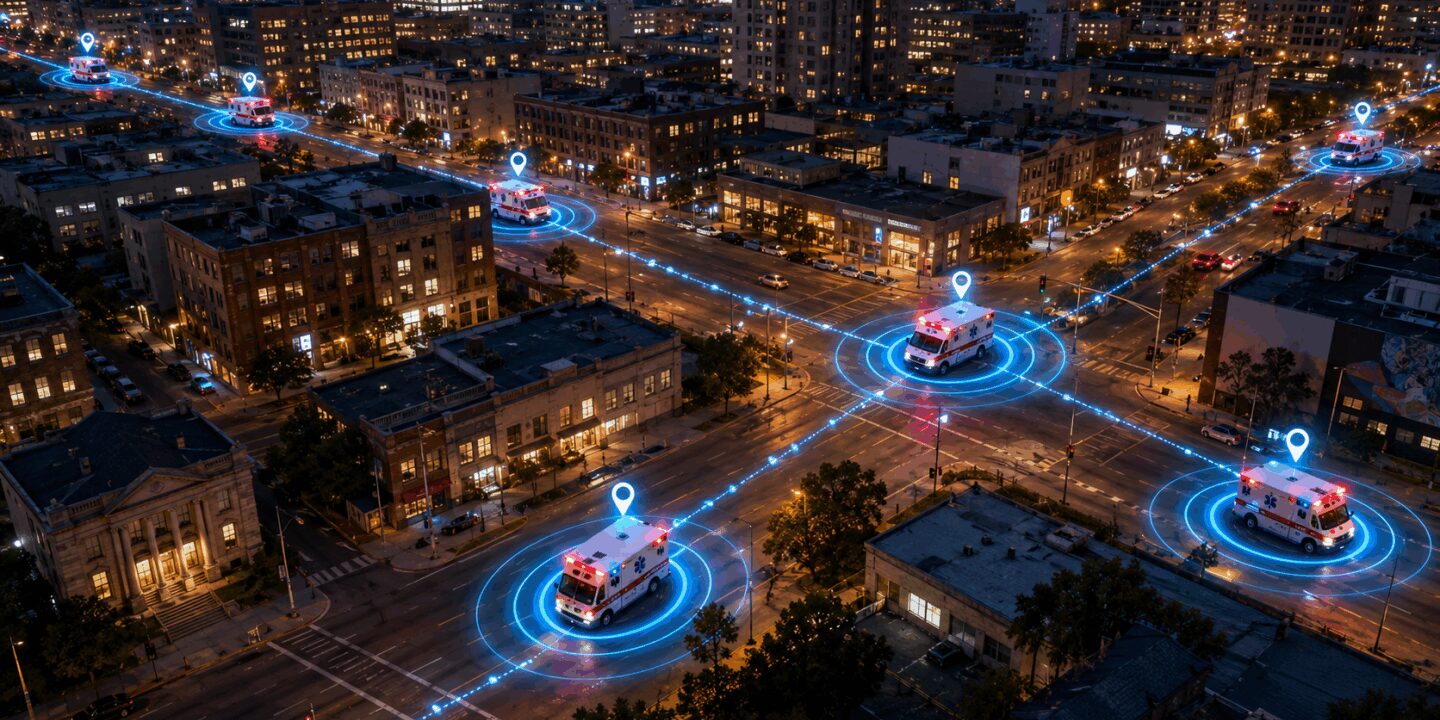
EMS agencies today are operating under pressure from rising call volumes, worsening traffic congestion, and persistent staffing shortages. But one challenge that often gets overlooked is how difficult it can be for responders to get the information they need while on the move. EMTs and paramedics often still rely heavily on manual updates, radio coordination and systems that don’t always connect with each other. Connected vehicle technology is helping close those gaps by giving agencies a clearer, real-time view of what’s happening across responding units and vehicles.
| MORE: EMS1 Leadership Institute: AI and the future of EMS
Modern EMS response environments are far more complex than simply turning on lights and sirens. Ambulance crews frequently respond alongside fire trucks and police vehicles, often while operating on separate systems that do not fully communicate with one another. That fragmentation can slow response and increase the risk of collisions during high-pressure incidents where EMTs are making rapid decisions with incomplete or inconsistent information.
Connected vehicle systems help bring true situational awareness. Instead of juggling separate devices and disconnected tools, agencies can pull information from vehicles, dispatch systems and mobile devices into one place. That gives agencies a better understanding of where units are, what conditions they’re facing and how to respond more effectively.
Improving coordination and response safety
One of the biggest challenges in emergency response is making sure everyone is working from the same information. EMS, fire, law enforcement and dispatch teams all need to stay connected during a response, especially in large-scale or high-risk situations. When systems don’t communicate well, crews in the field are left filling in the gaps while navigating traffic and preparing for the incident ahead.
At the same time, response conditions are getting more difficult. EMS response times have trended upward in many U.S. systems over time, with traffic congestion consistently identified as one of the contributing factors, along with staffing shortages and unit availability. In New York State, for example, ambulance response times to life-threatening emergencies increased by nearly 30 seconds in a single year, marking the fourth consecutive year of worsening response times. For EMTs, that means spending more time driving in stressful and unpredictable conditions while still trying to stay focused on patient care.
Connected vehicle technology helps reduce some of that pressure by improving shared situational awareness across the response chain. Real-time visibility into responding units allows dispatchers and supervisors to coordinate resources more effectively during multi-unit incidents. It also gives crews a clearer picture of who is arriving on scene and what’s happening before they get there.
Connected systems can also improve driving safety by helping emergency crews avoid traffic bottlenecks or roadwork areas, and reduce risk at intersections, which is one of the most dangerous parts of emergency driving. In fact, each year roughly 50% of all traffic injuries in the U.S. are attributed to intersections.
Overall, these tools are helping EMS move away from fragmented, vehicle-centric workflows, toward a more data-informed response ecosystem where EMTs operate with greater clarity, coordination and safety.
Turning EMS fleet data into operational insight
Connected vehicle systems are also changing how EMS agencies use data from their fleets. Modern telematics platforms collect streams of data from ambulances, including speed, braking behavior, location, vehicle status and route history. On their own, these data points are descriptive. Within AI-powered connected vehicle solutions, these inputs are interpreted in context and converted into real-time insights to help with better decisions and incident responses, reducing the need for manual interpretation by dispatchers, supervisors and field crews.
This same capability extends to fleet safety and performance management. AI can identify emerging risk patterns, such as repeated hard braking events, route delays or early indicators of mechanical issues before they escalate into operational disruptions. For EMS supervisors, this enables a shift from reactive oversight to proactive management, where interventions can be made based on live conditions and predictive signals.
Supporting the future EMS workflow
Rising demand, staffing constraints and more complex response environments are accelerating the need for more data-driven EMS operations. Connected vehicle systems, like TOUGHCommandby Panasonic Connect, support this shift by consolidating vehicle, dispatch and environmental data into a shared operational picture, reducing manual coordination and improving efficiency across EMS, fire and law enforcement during response. It’s now less about adding new tools and more about aligning existing ones into a coordinated workflow that reduces fragmentation across dispatch, response and fleet operations. This unified approach also supports greater cost efficiency by reducing the need for multiple software platforms, overlapping integrations and separate system maintenance, helping lower overall technology and operational spend.
Interoperability, situational awareness and AI-driven insights are converging into a unified operational model that supports field crews and system leaders.
Ultimately, the goal is not simply faster response, but more informed and coordinated response, where agencies can better support their crews, improve safety on the road and deliver care with greater confidence from dispatch to arrival.
ABOUT THE AUTHOR
Richard Kalasky is a retired tactical paramedic/firefighter with more than 28 years of public safety experience and 18 years leading business development, medical sales and strategic partnerships within the healthcare and public sector markets. He currently serves as territory account manager for Public Sector Mobility Solutions at Panasonic Connect North America, where he works with public safety and government agencies across the western United States to deploy mobile tech solutions that support first responders’ efficiency and situational awareness. He holds an M.Ed. and MBA, and brings a unique combination of frontline emergency response expertise and strategic leadership to help frontline organizations improve operational performance.

Clear, applied guidance for agency leaders on how to evaluate and implement AI to support clinical care, reduce documentation burden, improve decision-making, streamline operations and simplify workforce management.
At NEMSMA’s leadership conference, Dr. Brent Myers makes the case that waiting for federal guidance is a losing strategy — and local governance is the only path forward.
From suspended Medicare funding to unchecked artificial intelligence, unpacking the issues threatening the system
COO Danielle Thomas shares how an AI app is slashing cognitive overload, boosting crew confidence, and redefining onboarding
From overworked volunteers to red tape-heavy agencies, public safety leaders face distinct hurdles in adopting AI
From hazard mapping to resource deployment, AI is changing the way agencies prepare for major incidents