This post was originally published on here
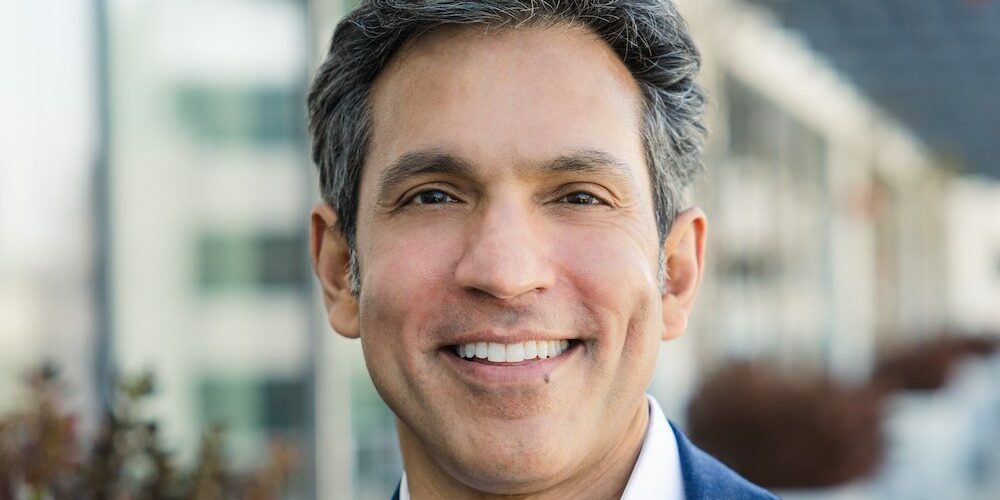
The stunning box-office success of “Spider-Man: Brand New Day” stems from the movie’s emotional impact — which is unlike other recent superhero movies, according to Sony Pictures Entertainment chairman and CEO Ravi Ahuja.
Ahuja exulted in the blockbuster’s record-breaking run, which has smashed box office expectations by raking in more than $2.4 billion worldwide, ranking as the third-biggest theatrical release ever.
“It’s a tremendous result. We obviously hadn’t forecast that. We thought it would do incredibly well, but we didn’t know that would do that well,” said Ahuja, speaking Wednesday at the BofA Securities 2026 Media, Communications & Entertainment Conference in New York.
Popular on Variety
Ahuja said that with “Spider-Man: Brand New Day,” “really everybody came together to create a great thing.” But, he added, “the movie itself is very emotional… So a little bit different to what some of the more recent superhero movies have been. Still very much a superhero movie — there are a lot of big action scenes. It’s a lot of fun. But it’s emotional. Some people come away crying, so that is something clearly that resonated with the audience.”
“Brand New Day’s” high audience Rotten Tomato and CinemaScore ratings come down to “the incredible creative team.” That includes director Destin Daniel Cretton and the cast led by Tom Holland, Zendaya, Jacob Batalon, John Bernthal and Sadie Sink. “Our producers Kevin Feige, Amy Pascal did an amazing job, and our film studio also did a tremendous job in the marketing and the distribution,” Ahuja said, adding that it was distributed to more than 80,000 worldwide screens at the same time, which was a record.
Ahuja said “Spider-Man” is one of SPE’s three biggest franchises, alongside “Jeopardy!” and “Wheel of Fortune.” About Spider Man, he said, “there’s so much appeal to the character of Peter Parker, right? So much appeal to the character, but you got to execute it right. And this movie really did.” When’s the next one coming out? Ahuja said, “We don’t have a date for it yet. A couple years, right? Usually, but there’s a Spider-Verse movie coming next year.”
Ahuja also spoke about the advantage Sony Pictures Entertainment has with its position as an “arms dealer” to the rest of the industry, because it’s an independent studio that doesn’t have a general-entertainment streaming arm. And he also said SPE isn’t interested in engaging with large-scale M&A at this point.
The CEO addressed Sony Pictures Entertainment’s exclusive worldwide pay-one windowing output deal with Netflix, after theatrical and home entertainment, which was the first of its kind in the industry.
“For one, it speaks to the value of the theatrical model, right? So by being dedicated to theatrical, it creates a very high bar for the movies that you can make. For example, we can’t make 30 or 40 movies, right? You can make about a dozen really big movies because they all have to meet that threshold, and there’s a lot of marketing, right, that follows it,” Ahuja said.
“So our movies do very well when they’re on Netflix or wherever they go. It also says as an independent studio, we’re able to do a deal like that. If we had our own streaming service, we wouldn’t do a global pay-one output deal. We’d keep the movies for ourselves. And the fact that there’s no other large studio that does that puts a lot of value on our output, so I think it speaks to the to the value of the strategy.”
The pay-one deal with Netflix “gives us is a lot more certainty and the ability to take some creative risk, right? As we know how globally it’s going to pay off when we achieve a particular result in box office.”
Netflix also released Sony’s musical animated movie “K-Pop Demon Hunters,” which became a roaring success in 2025 “It seems very obvious now, but at the time it was first being developed in 2021, Netflix felt like the right home, and I’d argue it really was the right home,” Ahuja said. “I mean, if you look at the trajectory of ‘K-Pop Demon Hunters,’ it didn’t start that strong, but it built over time. So the Netflix platform really helped to build ‘K-Pop Demon Hunters.’ Had it been theatrical, I mean, boy, this is such a hypothetical. Who knows if it would have had a big opening weekend? But it’s done incredibly well on Netflix.” Ahuja added that SPE is working on a sequel for Netflix.
Regarding “K-Pop Demon Hunters,” Ahuja said, “By being platform agnostic and content-focused, we’re able to build that franchise by hitting people in different places, when you really wouldn’t do that if you were just stuck in one platform. We’re able to benefit from media fragmentation and to really build these content assets and to build franchises.”
Ahuja became CEO of Sony Pictures Entertainment in January 2025, after previously serving as SPE’s president and COO. He stepped down from the board of Roku (which recently struck a $22 billion deal to be acquired by Fox Corp.) shortly after he took the helm at Sony Pictures Entertainment.
Asked about Sony Pictures Entertainment’s interest in mergers or acquisitions, Ahuja said “mega M&A, if you call it that, buying a diversified large-scale media company or merging with one, isn’t our priority for us.” That’s because “it’s very disruptive. Getting a deal done, getting a deal approved, the integration work — it sets you back for years. And this industry is dynamic and evolving, and you really have to position yourself for how it’s going to evolve over the next five to 10 years, not just drown in M&A. Particularly when I am doubtful of having increased scale and content creation making a big difference. These companies are not factories, right?”
Ahuja recalled that SPE was interested in a deal to buy Paramount Global in 2024 together with private equity firm Apollo Global Management. “We were interested in it briefly, but [that was really more about the IP,” he said. “So it’s consistent with the strategy of looking for IP and capabilities.” But Ahuja said that, at that time, a deal to acquire Paramount would raised issues with CBS stations being owned by a non-U.S. company, and “we weren’t interested in linear or cable [TV].”
David Ellison’s Skydance Media ended up buying Paramount — and now Paramount is trying to swing a $111 billion deal to merge with Warner Bros. Discovery. About industry consolidation, Ahuja said he’s “not too concerned about it.”
“Look, I think for us as a supplier to different companies, if for example hypothetically you went down to two or three companies, yeah, that’s not great. But I think to me, it’s more about the health than it is about the absolute number, right? Because I think we’ll have more than four [studios], for example, right? And I think it’s more about the health of the remaining companies that they are active buyers with us. Our biggest buyers are the biggest streamers, the ones that you’d expect, and I think they’re they’re in great shape. So it’s not something I lay awake at night thinking about.”
During his talk, Ahuja also noted that Sony Pictures Entertainment recently combined all its YouTube groups together. YouTube is “a partner, not a competitor” for Sony Pictures Entertainment — again, because SPE does not have a general entertainment streaming business.
For example, SPE has launched a “Jeopardy!” YouTube edition that is runs a few times a year, hosted by Ken Jennings, featuring YouTube influencers competing with each other in the game show. “And by the way, the people that watch that extremely young, so it’s people in their teens and 20s,” Ahuja said. “And they know ‘Jeopardy!’, but they’ve hardly seen it. So this is an opportunity for them to see it.”
“I think that YouTube, as a percentage of total viewing, will continue to grow,” Ahuja said.
While it doesn’t have a Netflix competitor, Sony Pictures Entertainment operates the subscription streamer Crunchyroll, with Sony Music Entertainment Japan’s Aniplex, and the service recently surpassed 21 million paid subscribers. “Anime has become one of Sony Group’s most important growth areas,” Ahuja said. For Crunchyroll, “we think there’s a lot more growth ahead, and the Crunchyroll will continue to be a growth engine for us.”