This post was originally published on here
Nicolas Cage occupies a singular space in the history of American cinema. His career path defies the traditional trajectory of a Hollywood leading man, oscillating wildly between prestige dramas and direct-to-video thrillers with little regard for critical consensus. Audiences often associate him with the manic energy of films like Face/Off or the internet-famous outbursts of The Wicker Man, performances that have led some to mistake his deliberate “Nouveau Shamanic” acting style for a lack of discipline. However, beneath the eccentricity lies a performer of profound sensitivity and technical precision. Films such as Leaving Las Vegas and Pig demonstrate his ability to convey quiet tragedy just as effectively as he portrays unhinged rage. While Cage’s vast filmography contains both undeniable classics and baffling misfires, one specific entry from the early 2000s stands as the definitive showcase of his abilities.
Videos by ComicBook.com
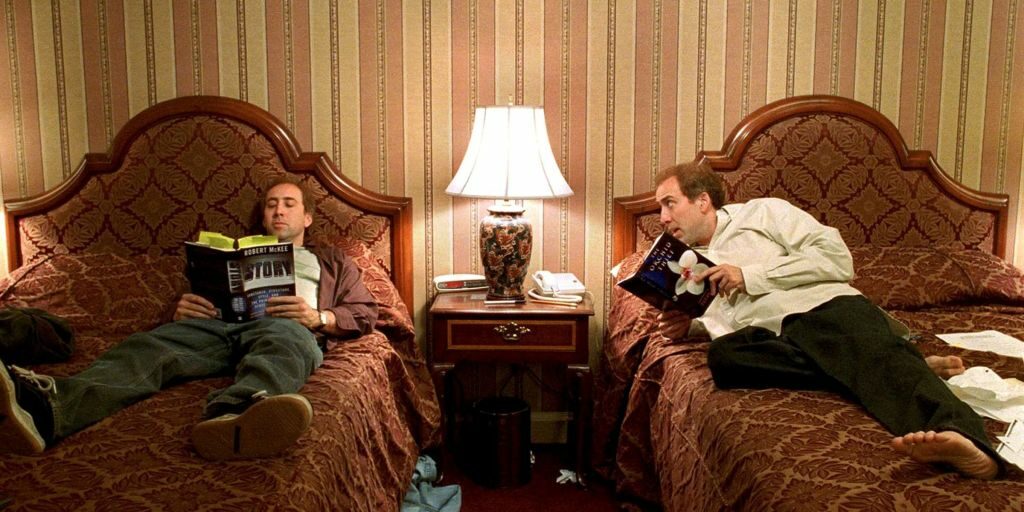
Premiering on December 6, 2002, Adaptation is a meta-cinematic drama directed by Spike Jonze and written by Charlie Kaufman. The film serves as a semi-autobiographical account of Kaufman’s real-life struggle to adapt Susan Orlean’s non-fiction book The Orchid Thief into a functional screenplay. Cage (Charlie Kaufman) stars as the neurotic writer who finds himself paralyzed by his own artistic insecurities and crippling self-loathing. In a stroke of narrative brilliance, the film introduces a fictional twin brother named Donald Kaufman (also Cage) who serves as Charlie’s foil. Donald is confident, dim-witted, and effortlessly successful at writing the kind of formulaic Hollywood blockbusters that Charlie despises.
Nicolas Cage’s Adaptation Performance Is Still One of His Best
Upon its release, Adaptation was a critical success that earned praise for its intellect and humor. It performed modestly at the box office by grossing $32 million against a $19 million budget, but its legacy was solidified by the awards circuit. Chris Cooper (John Laroche) won the Academy Award for Best Supporting Actor, and Cage received a nomination for Best Actor. Despite this acclaim, the film often gets lost in discussions of Cage’s career, overshadowed by his action blockbusters or his more recent work.
The brilliance of Cage’s work in Adaptation lies in the absolute seamlessness of his duality. Playing twins is a common cinematic trope that is often used for comedic misunderstandings or technical showboating, but Cage treats Charlie and Donald as two completely distinct biological entities. Charlie is a man shrinking in on himself. He is constantly sweating, his voice is tight with anxiety, and his posture is permanently hunched in defeat. Donald occupies space with a loose and unbothered confidence. He speaks with an open and easy cadence that immediately differentiates him from his brother. Through this distinction, Cage manages to create chemistry with himself and makes the audience believe in the fraternal bond between two characters who share the screen through digital trickery. The performance is so convincing that it becomes easy to forget the same man is playing both roles.
As the movie spirals into a chaotic thriller that serves as a deliberate parody of the very Hollywood clichés Charlie hates, Cage maintains the emotional core of the story. He does not play Donald as a caricature of a stupid person but rather as someone possessing a genuine joy that Charlie lacks. This allows the audience to love Donald and makes the film’s climax surprisingly heartbreaking. The famous scene where Donald tells Charlie that “you are what you love, not what loves you” is delivered with such sincerity that it resolves the film’s central emotional conflict. In short, Cage’s performance honors the artistic struggle of the tortured writer while simultaneously validating the simple and commercial pleasures that Donald represents. It is a balancing act that requires immense control and proves that Cage is capable of nuanced human performance even when the script is deconstructing reality itself.
Adaptation is available for purchase or rental on VOD.
What is your favorite Nicolas Cage performance? Leave a comment below and join the conversation now in the ComicBook Forum!