This post was originally published on here
Erige Sehiri’s “Promised Sky” won top honors at the Marrakech Film Festival on Saturday, capping a lively year for the Moroccan event, marked by swelling audiences and deeper integration into the global awards circuit.
Heralded by Variety’s Tomris Laffly as “a unique drama about marginalized African immigrant women fighting for their dignity and place not in Europe… but on their own continent,” the film follows four generations of Ivorian immigrant women who navigate moments of support, tension and displacement. Their already complex bonds grow ever more strained in a country of entrenched social and economic divides.
“As a Tunisian woman myself, I’m deeply frustrated to see that we can’t welcome migrants with dignity, even though we’re from a country with such a wide diaspora,” Sehiri said. “We act as if we weren’t all living on the same continent, as if we weren’t all Africans.”
Popular on Variety
The film opened this year’s Un Certain Regard, ahead of standout showings in London, Zurich and Lugano. Its top prize in Marrakech further strengthens the festival’s reputation as a key launchpad where first and second features can build momentum, widen their exposure and connect emerging auteurs with some of the most influential figures in world cinema.
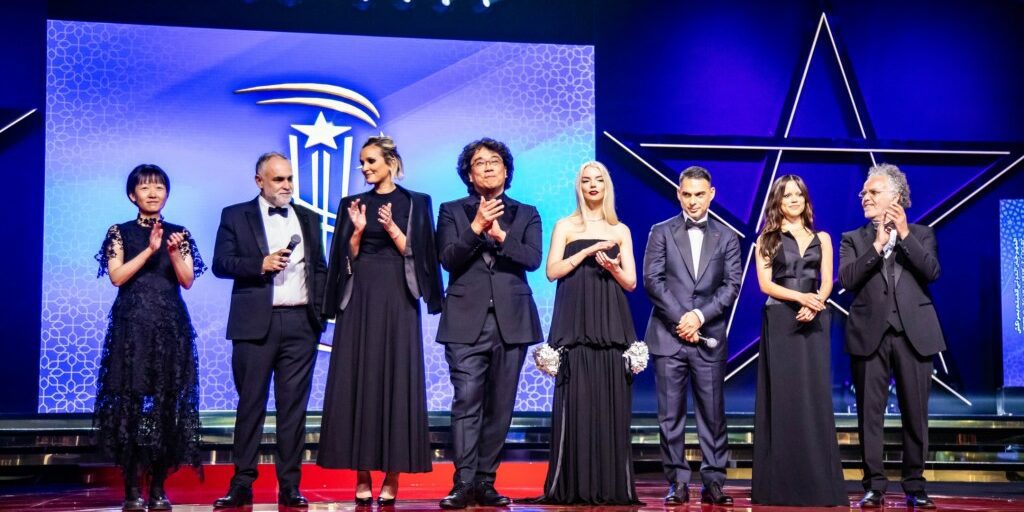
The jury — led by director Bong Joon-ho and joined by Jenna Ortega, Anya Taylor-Joy, Julia Ducournau, Celine Song, Karim Aïnouz, Hakim Belabbes and Payman Maadi — jointly awarded Jihan K’s “My Father and Qaddafi” and Vladlena Sandu’s “Memory” with the aptly named Jury Prize. They also singled out the absurdist war comedy “Straight Circle,” giving actors Luke Tittensor and Elliott Tittensor a special mention and honoring filmmaker Oscar Hudson with the festival’s directing trophy.
“My Father’s Shadow” and “Promised Land” leads Sope Dirisu and Debora Lobe Naney won the respective best actor and best actress awards — the latter by unanimous vote, as the jurors made sure to point out.
For its 22nd edition, the Marrakech Film Festival drew over 45,000 attendees, surpassing last year’s record by 5,000. Young adults and students from Moroccan film schools played a key role in this surge, a success largely credited to an outreach program aimed at engaging youth audiences in Rabat and Marrakech in the months leading up to the festival.
The strategy clearly paid off, resulting in full-capacity screenings and lively discussions every day. (It wouldn’t be entirely accurate to call the events “sold out,” as all screenings are free of charge—a factor no doubt contributing to their broad appeal.)
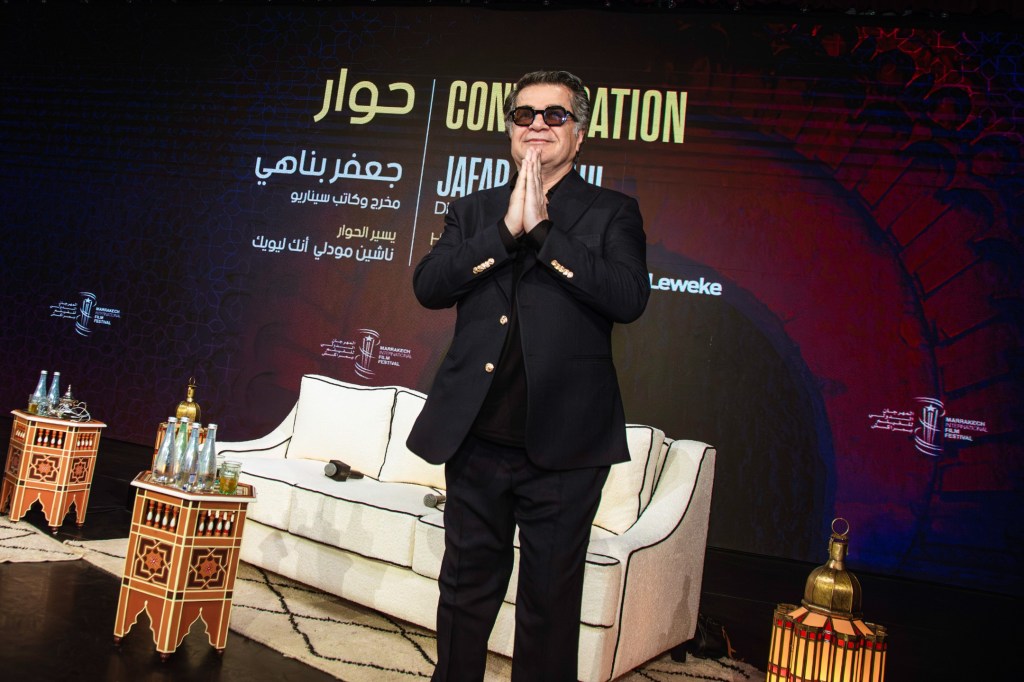
Altogether, nearly 400 eager attendees had to be turned away from a standing-room-only, geopolitically charged conversation with Jafar Panahi, which accompanied a screening of his Palme d’Or-winning film “It Was Just an Accident” — two of this edition’s most coveted events.
Meanwhile, the world premiere of the Umm Kulthum biopic “El Set” set a new festival record, sparking a standing ovation that erupted into spontaneous dancing, leaving both organizers and audiences dazzled for more than ten minutes.
Festival coordinator Ali Hajji was especially struck by the screening’s youthful audience. “I expected an older crowd,” he admits. “So it was striking to see so many young people, people in their twenties, born decades after she passed away [in 1975]. But the Moroccan public has a deep connection to Umm Kulthum, and that spans all generations. We fought hard to get it, and we’re glad it premiered here.”
The world premiere felt all the more significant given the fierce competition for the film and the nonstop circuit of Arab festivals from October through December (if you’re wondering why, blame the heat).
Hajji credits the festival’s Atlas Workshops industry program — which spotlit both “El Set” and “Promised Land” as works-in-progress last year — as central to Marrakech’s distinctive appeal. “They trusted us,” says Hajji. “And their experience at the Workshops made them want to come back.”