This post was originally published on here
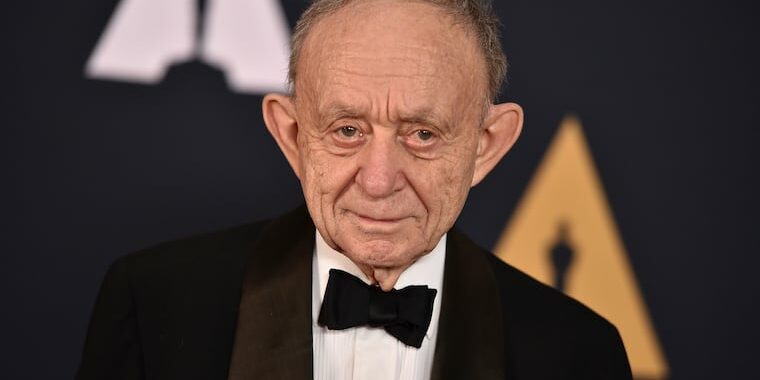
Renowned documentarian Frederick Wiseman, who chronicled life at Northeast Philadelphia High School in a 1968 film that caused a years-long controversy in the city, has died. He was 96.
Zipporah Films, a company that has distributed Wiseman’s films for more than 50 years, confirmed the filmmaker’s death in a statement Monday.
Known for his direct cinema style, Wiseman started his a career as a law professor at the Boston University Institute of Law and Medicine before turning to film. His lengthy filmography stretches back to 1967 with the release of Titicut Follies, a controversial exposé focused on the treatment of the patient-inmates of Bridgewater State Hospital for the Criminally Insane in Massachusetts.
That film was banned in Massachusetts for more than two decades.
His follow-up, 1968’s High School, a foundational cinéma vérité documentary filmed at Northeast High School here in Philly between the assassinations of the Rev. Dr. Martin Luther King and Sen. Robert F. Kennedy, was similarly controversial. In fact, Northeast High leaders found it so incendiary, it did not receive a local premiere until 2001 — 32 years after its initial release — for Wiseman’s fear of legal action.
At 75 minutes, High School depicted what viewers at the time saw as a bleak vision of life at Northeast High. Contemporary reviews agreed, with Variety writing that it showed the school taught “little but the dreary values of conformity, [and] blind respect for authority.” Newsweek, meanwhile, noted that the film showed “high schools are prisons where the old beat down the young.”
In one scene, a guidance counselor tells a student they may not be college material. In another, a teacher tells a girl her legs are too fat for a dress she sewed. Another shows a dean shutting down a student who was complaining about unfairly receiving detention.
As early as mid-1969, Wiseman refused to make a copy of the film available locally, citing “legal repercussions,” according to Inquirer reports from the time. The Board of Education, meanwhile, declared the documentary “biased,” and demanded it be shown to students and faculty.
High School, however, would not receive its first official local public showing until August 2001, at the Prince Music Theater. About 400 people attended, The Inquirer reported, most of whom were faculty or alumni of Northeast High.
Five days later, it aired on the PBS series, POV Classic.
“I took him to the annual press tour the year we aired High School and never had a funnier, more incisive companion to compare notes with on the state of cinema,” said Cara Mertes, who was then the executive producer of POV Classic. “He was perpetually young, incredibly smart, and did not suffer fools, and still he was always generous with his time and immense talent as one of America’s greatest chroniclers, in any medium.”
Ten years before, in 1991, High School was selected for preservation in the United States National Film Registry by the Library of Congress.
“It is everything you need to know about 1968 middle-class America in microcosm,” said Mertes. “So many scenes and characters have taken on iconic status. It captures the tectonic social shifts happening in the most ordinary of exchanges in the day-to-day of a touchstone of American life: the high school experience.”
“Wiseman pulled a fast one on Northeast,” said English department head Irene Reiter after seeing the film. “It was a setup to attack the educational system.”
Former students, however, largely seemed to disagree. Andrea Korman Shapiro, a student featured in a scene in which a vice principal admonishes her for wearing a minidress to prom, called it “accurate.”
“[It’s] a chronicle of the inner life of people not permitted to speak,” she said.
Even others who had more positive experiences at the school argued the film’s strengths outweighed its shortcomings. As Marilyn Kleinberg, a 1978 graduate, put it: “It felt real to me, even though I had an excellent experience.”
Shapiro, meanwhile, said it would be wise to view High School as a “trauma model.”
“A trauma, if it doesn’t get resolved, gets replayed and reenacted,” she said. “There needs to be some kind of learning to let it go.”
The year High School debuted in Philadelphia, Wiseman told Current, a nonprofit news organization associated with American University’s School of Communication, that his concerns about legal action over the film were perhaps overblown.
“This was soon after the Titicut Follies case, and I didn’t want another lawsuit on my hands,” he said. Possible legal threats, he added, were merely the “vague talk of no one particular individual.”
In 2016, Wiseman received an honorary Oscar at the 89th Academy Awards for his “masterful and distinctive documentaries” that “examine the familiar and reveal the unexpected.” Making films, he said in his acceptance speech, presented opportunities to “learn something about a new subject.”
“The variety and complexity of the human behavior observed in making one of the films, and cumulatively all of the films, is staggering,” Wiseman said in 2016. “And I think it is as important to document kindness, civility and generosity of spirit as it is to show cruelty, banality and indifference.”
The article has been updated with quotes from Cara Mertes.