This post was originally published on here
Sword and sorcery distinguishes itself from high fantasy by grounding its stakes in individual survival rather than the preservation of ancient kingdoms or divine bloodlines. In addition, the protagonists of these narratives are rarely noble heirs or chosen ones; instead, they are typically mercenaries, rogues, or outcasts who navigate a world that remains entirely indifferent to their existence. Finally, in this subgenre, magic is presented as an occult power that corrupts the user or requires a devastating personal sacrifice to wield effectively. This dynamic creates a grimy atmosphere where the primary resolution to conflict is physical combat—the “sword”—pitted against the dark, incomprehensible manifestations of the “sorcery.”
Videos by ComicBook.com
Conan the Barbarian remains the definitive apex of the sword and sorcery tradition, with the performance of Arnold Schwarzenegger in the 1982’sfilm adaptation establishing an industry standard for the hulking, stoic warrior. Similarly, The Princess Bride captured a more whimsical side of the genre, though the journey of Westley (Cary Elwes) retained the central focus on personal quests and expert blade-work. Despite the massive cultural footprint of these classics, the golden age of sword and sorcery in the 1980s produced a vast library of films that explored the boundaries of the genre with varying degrees of success. Many of these projects were overshadowed by larger blockbusters or relegated to the niche world of home video, yet they offer some of the most creative examples of the genre’s core tenets.
7) Deathstalker II
Deathstalker II represents a rare instance where a sequel successfully pivots the tone of a franchise by embracing a self-aware approach to the genre’s tropes. The film follows the titular warrior Deathstalker (John Terlesky) as he assists a displaced princess, Reena (Monique Gabrielle), in reclaiming her kingdom from a treacherous sorcerer. The sequel installment utilizes a playful, low-budget charm to highlight the absurdity of the muscular barbarian archetype. Plus, Deathstalker II benefits from the chemistry between its leads. By acknowledging the limitations of its budget through witty dialogue and physical gags, the movie creates a distinct identity that distinguishes it from the sea of generic barbarian clones. This shift allows the narrative to focus on the rogueish qualities of its protagonist, positioning him as a clever opportunist rather than a humorless killing machine.
6) Fire and Ice
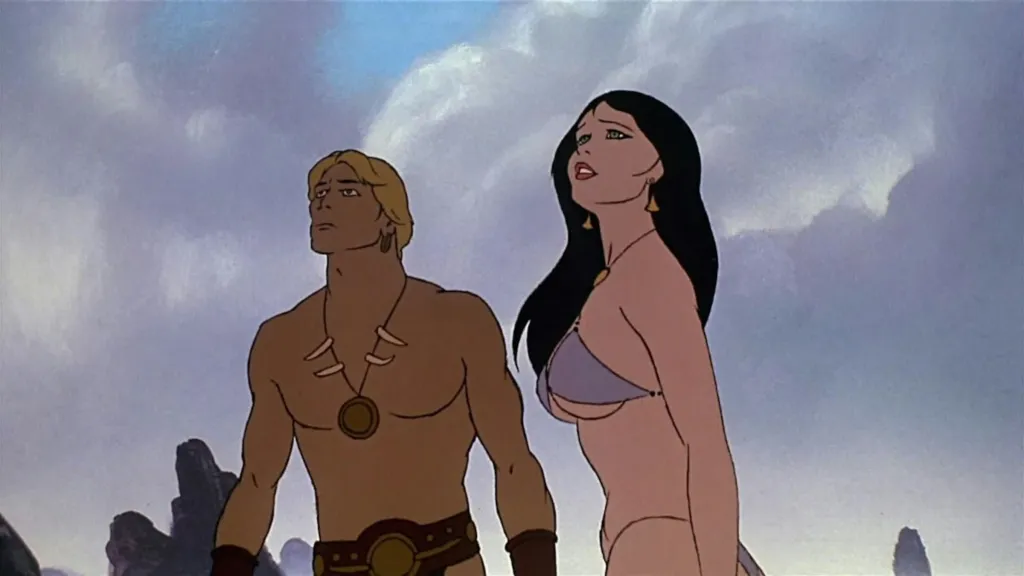
A collaboration between director Ralph Bakshi and legendary illustrator Frank Frazetta, Fire and Ice utilizes the rotoscoping technique to bring a literal painting to life. The story centers on Larn (voiced by William Boyd), a young survivor of a village destroyed by the icy armies of a wicked queen and her son. The production stands as a visual celebration of the Frazetta aesthetic, emphasizing the exaggerated musculature and dynamic posing that defined the visual language of sword and sorcery literature. Furthermore, the animation process provides the combat sequences with a fluid, human weight that was often impossible to achieve in live-action low-budget films of the 1980s. Furthermore, the film’s portrayal of Darkwolf (voiced by Steve Sandor) as a mysterious, unstoppable force of nature perfectly encapsulates the archetype of the lone barbarian outsider.
5) Hundra
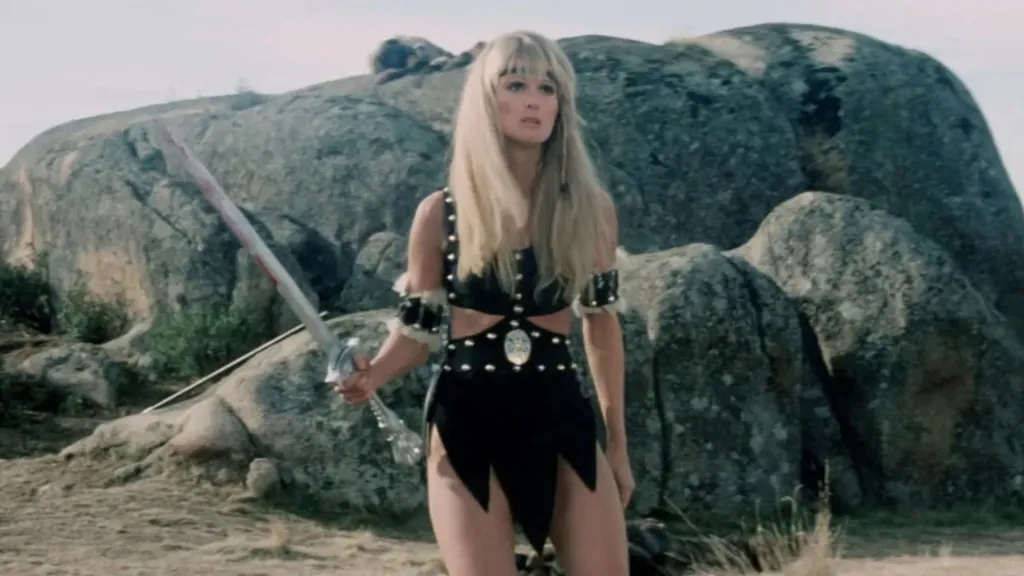
Directed by Matt Cimber, Hundra serves as a gender-flipped response to the barbarian craze of the 1980s, centering on a fierce warrior from a tribe of Amazons. In the movie, the titular Hundra (Leann Hunley) seeks to preserve her lineage after her people are slaughtered, leading her on a quest that confronts the patriarchal structures of the surrounding civilization. The film is notable for its refusal to treat its lead as a secondary character or a romantic prize, instead focusing on her physical prowess and tactical intelligence. The production also features a sweeping orchestral score by Ennio Morricone, which provides a sense of epic scale that exceeds the actual budget of the film. While it shares the visceral combat and grimy atmosphere of its contemporaries, the movie distinguishes itself through its subversion of traditional gender roles within a historical fantasy setting.
4) Hawk the Slayer
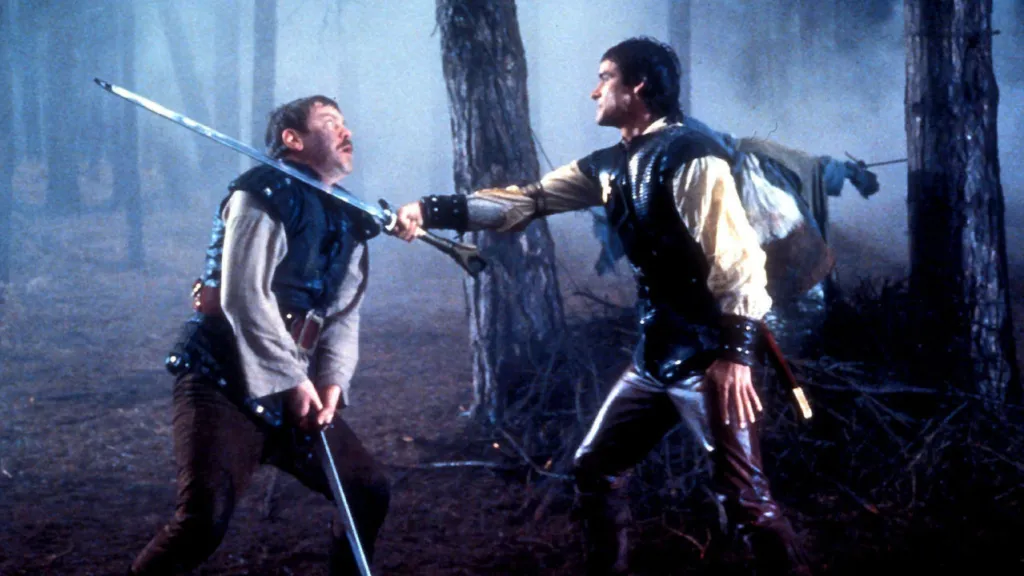
Hawk the Slayer is a British production that leans into the more fantastical elements of the genre while maintaining the gritty, revenge-driven core of sword and sorcery. The narrative follows Hawk (John Terry), a man who possesses a mystical mind-sword, as he recruits a diverse band of warriors to rescue a kidnapped nun from his evil brother, Voltan (Jack Palance). This recruitment structure mirrors the classic “men on a mission” trope, providing each character with a specific skill set utilized in the movie’s frequent skirmishes. The film’s atmosphere is built by its innovative use of slow-motion and synthesized music, creating a surrealist tone that contrasts with the traditional orchestral approaches of other fantasy epics. While the special effects were hampered by the era’s technological constraints, the earnestness of the performances and the inventive choreography of the combat ensure Hawk the Slayer remains engaging.
3) The Sword and the Sorcerer
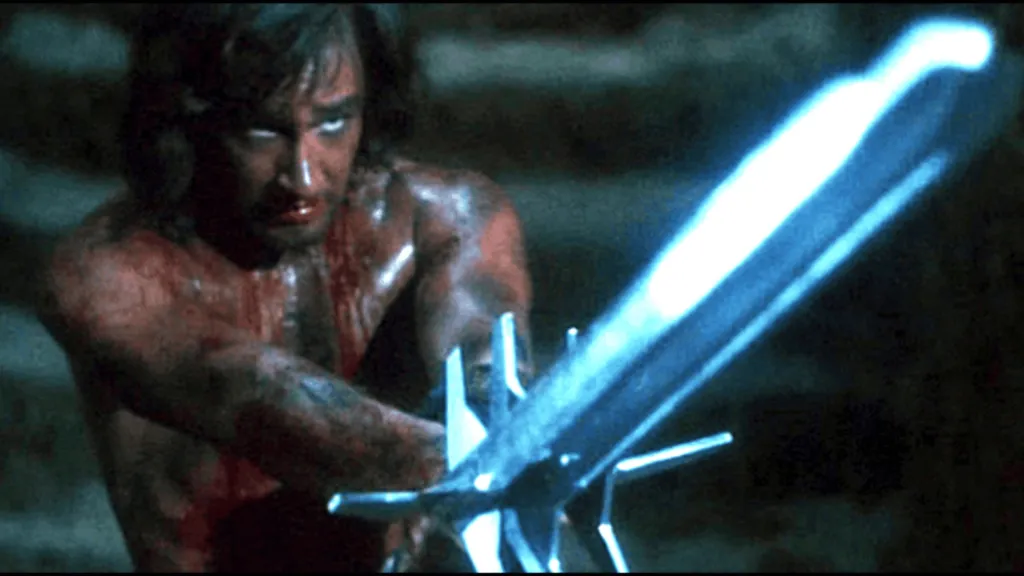
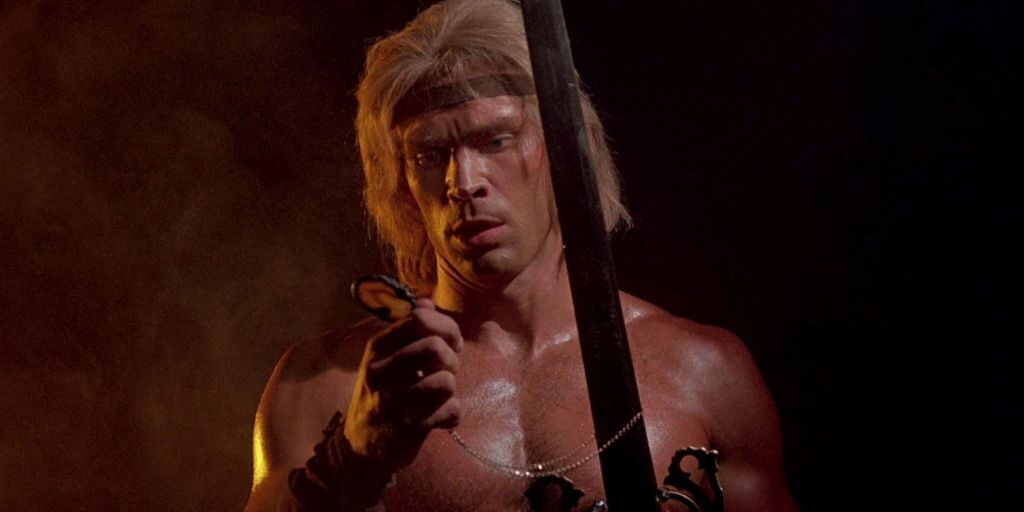
The success of The Sword and the Sorcerer is largely due to the iconic triple-bladed projectile sword wielded by the protagonist (Lee Horsley). The film follows Talon, a roguish mercenary who uncovers his royal lineage while fighting to liberate a kingdom from a tyrannical king and a resurrected sorcerer. The production excels at blending the swashbuckling energy of classic adventure films with the darker imagery typical of the occult fantasy tradition, with the creature designs and practical makeup effects for the sorcerer being particularly effective. Furthermore, the film’s pacing is relentless, moving through a series of elaborate traps, dungeons, and large-scale battles that emphasize the physical danger of the environment. Unlike more philosophical entries in the genre, this project prioritizes spectacle and kinetic energy, creating a blueprint for the “sword” half of the genre’s namesake through high-intensity stunt work and inventive weapon design.
2) The Warrior and the Sorceress
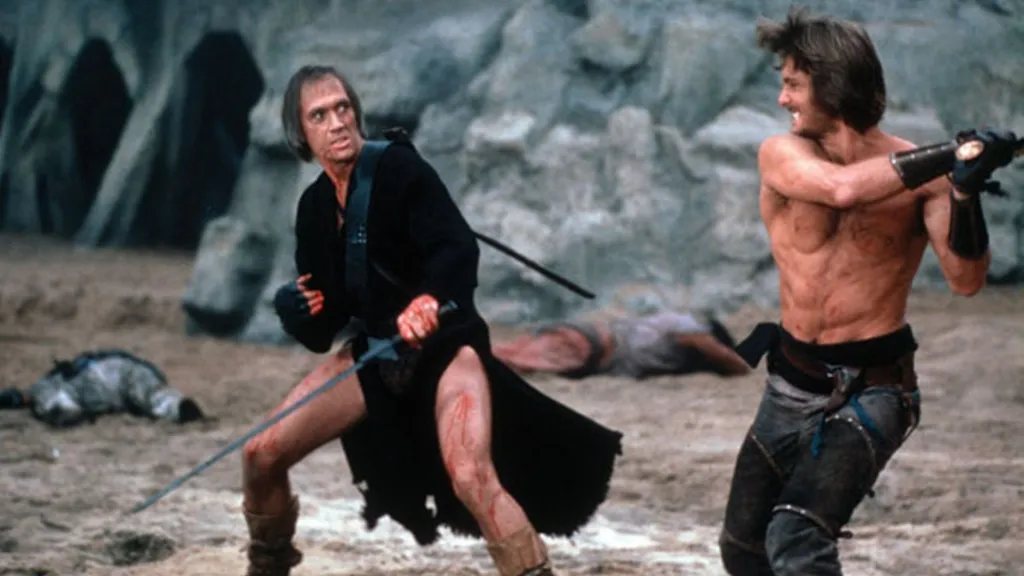
The Warrior and the Sorceress serves as a stylistic exercise that essentially transplants the plot of classic samurai cinema into a post-apocalyptic, barbarian setting. In the movie, David Carradine stars as Kain, a wandering swordsman who arrives in a desert town where two rival factions are warring over the only remaining water well. This scenario highlights the mercenary nature of the sword and sorcery protagonist, as Kain systematically manipulates both sides for his own benefit. The film’s aesthetic makes the best of its stark, sun-drenched landscapes and alien-looking architecture, which provides a unique visual departure from the standard European forest settings of the genre. Finally, the inclusion of bizarre creature designs emphasizes the occult nature of the world, suggesting a reality that has diverged significantly from human history.
1) Conquest
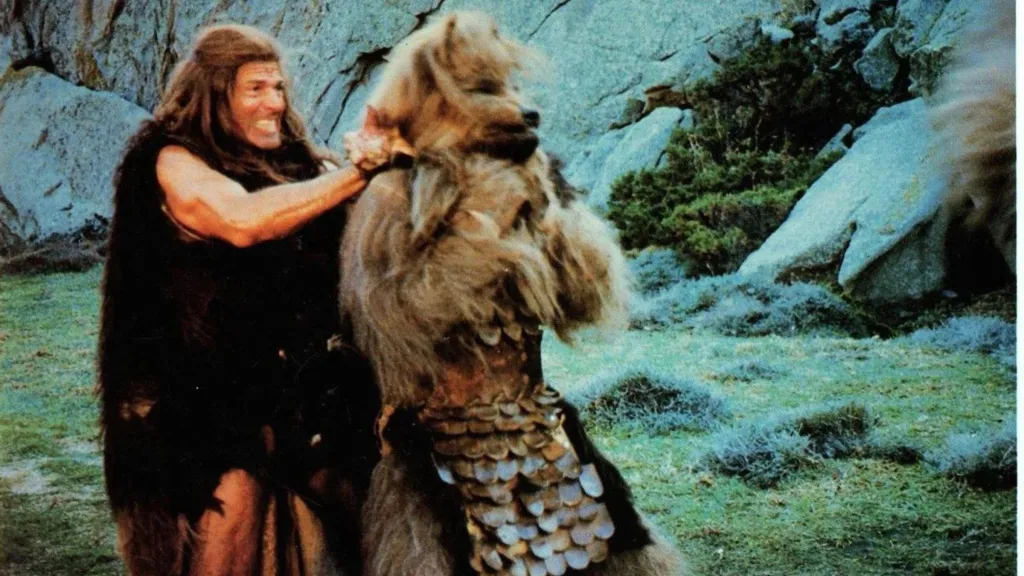
Directed by the Italian horror master Lucio Fulci, Conquest is a hallucinatory and often grotesque entry into the sword and sorcery subgenre that prioritizes atmosphere over traditional narrative logic. The story follows Ilias (Andrea Occhipinti) as he travels through a mist-shrouded, prehistoric landscape to defeat a wicked sorceress. Along the way, he partners with a feral warrior named Mace (Jorge Reynoso), creating a dynamic built on mutual survival in a world filled with monstrous humanoids and supernatural traps. Fulci utilizes heavy fog, saturated lighting, and extreme close-ups to create a nightmarish vision of the ancient past. The film’s gore effects are visceral and creative, reflecting the director’s background in horror and ensuring the sorcery feels truly foul and dangerous. This project stands out for its unique tonal texture, presenting a world that feels primitive, damp, and entirely alien to modern sensibilities.
Which underrated sword and sorcery film do you believe captures the visceral spirit of the genre best? Leave a comment below and join the conversation now in the ComicBook Forum!