This post was originally published on here
These are the fiction titles our reviewers liked best this month.
Mule Boy, by Andrew Krivak
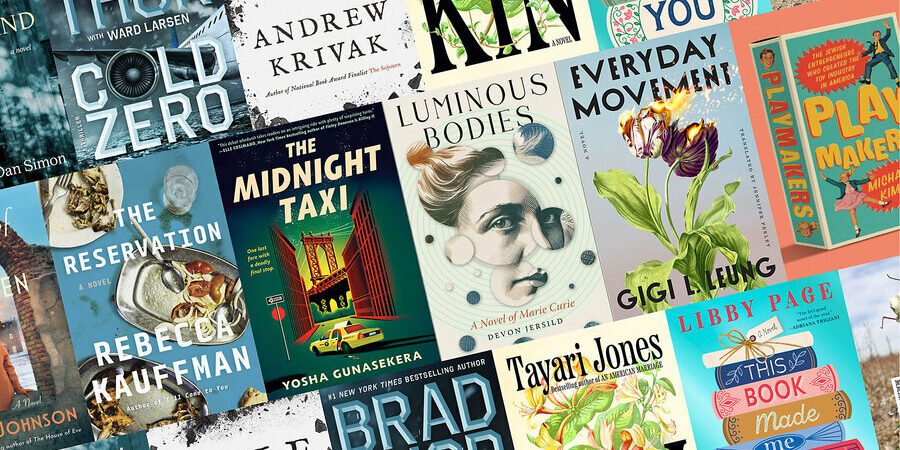
Ondro Prach, the 13-year-old sole survivor of a mine collapse in Pennsylvania’s Blue Mountain hills, mulls his life’s many imprisonments – guilt, fear, regret – in the decades since the 1929 disaster. Written in a flowing oral style in which “every clause is a thought and every comma is a breath,” Andrew Krivak’s novel is an extraordinary work of rescue, witnessing, and redemption. – Erin Douglass
Why We Wrote This
Our reviewers’ picks for this month include an action-adventure thriller set in the Arctic, a locked-taxicab mystery in New York, and a group biography of three intrepid women journalists who covered the globe.
Kin, by Tayari Jones
Tayari Jones follows up “An American Marriage” with the vibrant tale of Annie and Vernice, “motherless girls that everyone felt sorry for” from Honeysuckle, Louisiana. As the best friends grow up and move away – Vernice to the privileged world of Spelman College, Annie to Memphis, Tennessee, and the school of hard knocks – they flourish, yearn, and struggle. Jones’ prose rings with truth, delights in detail, casts some side-eye, and provides rich ground for the novel’s vivid cast. The hurts and consequences keep coming, but Jones wraps both her characters – and readers – in a generous embrace. – Erin Douglass
Cold Zero, by Brad Thor, with Ward Larsen
“Ripped from the headlines” might sound clichéd, but applied to Brad Thor’s latest thriller, it’s more than apt. After a New York-bound plane carrying the inventor of an artificial intelligence superweapon gets taken down over the Arctic, a CIA operative and an ex-Air Force pilot must aid survivors, jury-rig shelter, and protect that AI weapon (yes, it’s in a briefcase) in the frigid cold. Help is on the way; so, too, are Chinese ships, a Russian sub, soldiers called Ice Wolves, and one big storm. The pages fly by. – Erin Douglass
Ashland, by Dan Simon
Dan Simon’s family drama ponders life’s joys and losses using a patchwork of first-person narratives from folks in small-town Ashland, New Hampshire. The novel is a refreshingly meditative, modern “Our Town” with a hat tip to the blessings of nature, books, and writing. – Stefanie Milligan
This Book Made Me Think of You, by Libby Page
Tilly Nightingale’s grieving, brokenhearted life is about to change – month by month with 12 letters and 12 books, surprisingly gifted to her by her devoted late husband, Joe. In Libby Page’s sensitive and life-affirming novel, Tilly embraces new adventures and friendships and discovers an unexpected kindred spirit in Alfie, the bookshop owner. – Stefanie Milligan
Autobiography of Cotton, by Cristina Rivera Garza, translated by Christina MacSweeney
Cristina Rivera Garza superimposes a fictional story of her grandparents’ experiences onto accounts of a Mexican cotton workers’ strike in 1934 that also included author and activist José Revueltas. Exposing corruption and exploitation, the book is at once a novel, a family memoir, and a work of astute social commentary. The author gives a voice to people whose stories have been expunged from history. – Joan Gaylord Read the full review here.
Keeper of Lost Children, by Sadeqa Johnson
“Where was her life stored?” wonders Sophia, a Black teenager in 1965 Maryland with questions about her bare-bones past. “Who was keeping track?” Sadeqa Johnson intersperses Sophia’s hunt for her true heritage with the stories of a U.S. Army volunteer sent to Germany in the late 1940s, and Ethel Gathers, a military spouse stationed in Mannheim in the early ’50s. Ethel works to find homes for the offspring of Black U.S. servicemen and white German women left behind after the war. The story roars by, and the good-hearted characters search, stumble, and grow. – Erin Douglass
The Reservation, by Rebecca Kauffman
In her Midwestern mystery, Rebecca Kauffman’s rich menu of characters – from the dishwasher and busser to the pastry chef and prep cook – offers its takes on a searing theft at Aunt Orsa’s fine-dining establishment. Seasoned with the lingo and labor of a bustling restaurant, the story seeks to uncover who stole 22 rib-eye steaks from the walk-in cooler before a night of VIP bookings. Both peppery and poignant, it’s an appealing brew. – Erin Douglass
The Midnight Taxi, by Yosha Gunasekera
In Yosha Gunasekera’s winning debut, Siri, a 20-something taxicab driver in New York City, faces the unthinkable: murder charges for the inexplicable death of a solo fare in her back seat. With assistance from a criminal defense lawyer – and fellow Sri Lankan – she races to prove her innocence, relying on pointers from true-crime podcasts, her immigrant family’s support, and the restorative power of a chicken curry meal. Gunasekera’s story of friendship and tenacity zips. – Erin Douglass
Luminous Bodies, by Devon Jersild
This captivating historical-fiction debut novel brings Nobel laureate Marie Curie to vibrant life. Devon Jersild imagines Curie’s life, from her upbringing in Poland to her battlefield humanitarian work during World War I. The book illuminates her inner thoughts and experiences as a daughter, wife, mother, scientist, lover, immigrant, and friend. – Stefanie Milligan
Everyday Movement, by Gigi L. Leung, translated by Jennifer Feeley
Gigi L. Leung dedicates her timely novel to “all who carry anger and sorrow,” and touches on the hope and struggle for democracy. Set during the 2019 Hong Kong summer protests, Leung’s kaleidoscopic story follows the lives of students, teachers, and others who encountered a devastating new political reality with China’s crackdown. Leung’s stirring novel echoes with humanity’s courage, dignity, and resilience. – Stefanie Milligan
These are the nonfiction titles our reviewers liked best this month.
Playmakers, by Michael Kimmel
In “Playmakers,” his fascinating, wide-ranging history of the American toy industry, Michael Kimmel makes a convincing case that the Eastern European Jews who immigrated to America between 1881 and 1924 helped change the nature of American childhood in the 20th century. Imagining an idealized childhood that had eluded them, they as well as their offspring dreamed up iconic comic book heroes, including Superman and Popeye, and thousands of popular toys, including teddy bears and Barbie – and created toy companies like Hasbro and Mattel that still exist today. – Heller McAlpin Read the full review here.
Starry and Restless, by Julia Cooke
The spectacular lives of three intrepid women journalists and solo travelers – Rebecca West, Emily “Mickey” Hahn, and Martha Gellhorn – come into focus in Julia Cooke’s “Starry and Restless: Three Women Who Changed Work, Writing, and the World.” Cooke offers readers a whirlwind tour behind the headlines and a fresh perspective on the origins of literary journalism. – Mackenzie Farkus