This post was originally published on here
Sunday is Pearl Harbor Remembrance Day, marking nearly 85 years since the USS Arizona was sunk, on a day that President Franklin D. Roosevelt said would “live in infamy.”
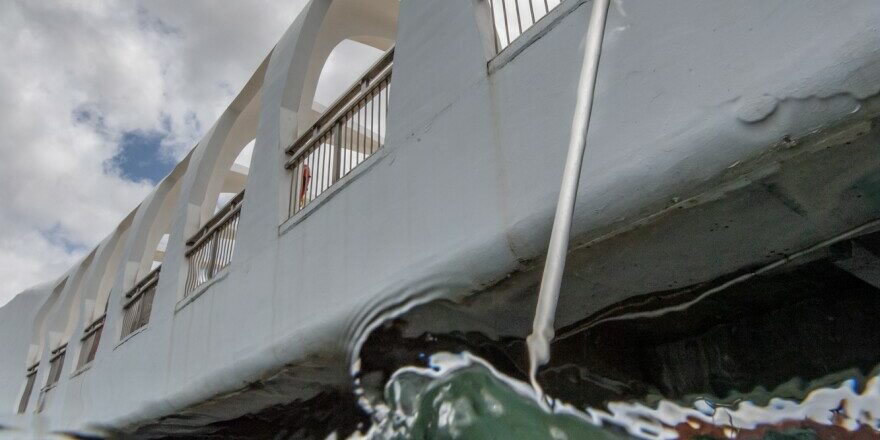
And, it turns out, the ship has been leaking oil since that time. New research details those small leaks and what scientists have been able to learn from them.
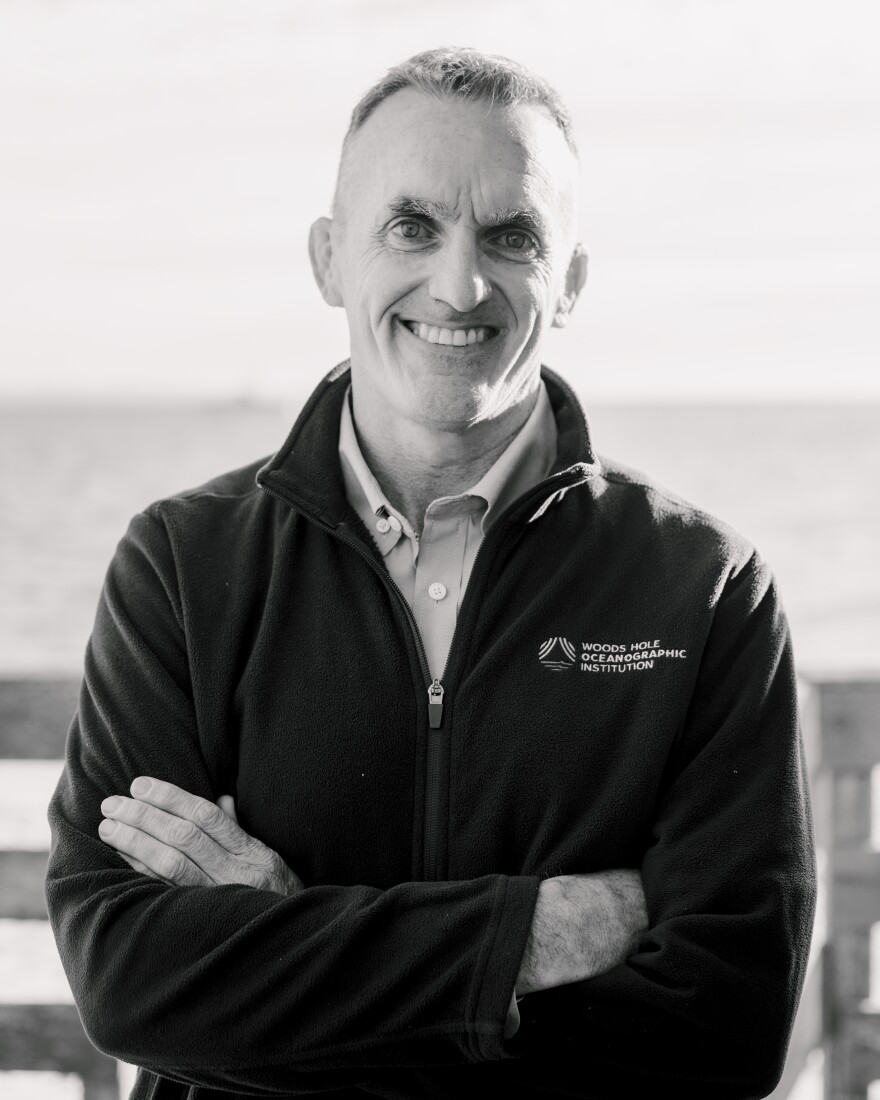
Chris Reddy is a scientist at Woods Hole Oceanographic Institution on Cape Cod. He joined The Show to talk more about the work he’s been doing at the site of the USS Arizona.
Full conversation
MARK BRODIE: Chris, is it surprising that this number of years after it was sunk that the ship is still leaking oil?
CHRIS REDDY: Yeah, I mean, so the USS Arizona was sunk on Dec. 7, 1941, by the Japanese when they attacked Pearl Harbor, and 1,177 souls were lost. And from all accounts, oil has been leaking from that ship since then, and now it’s part of a memorial.
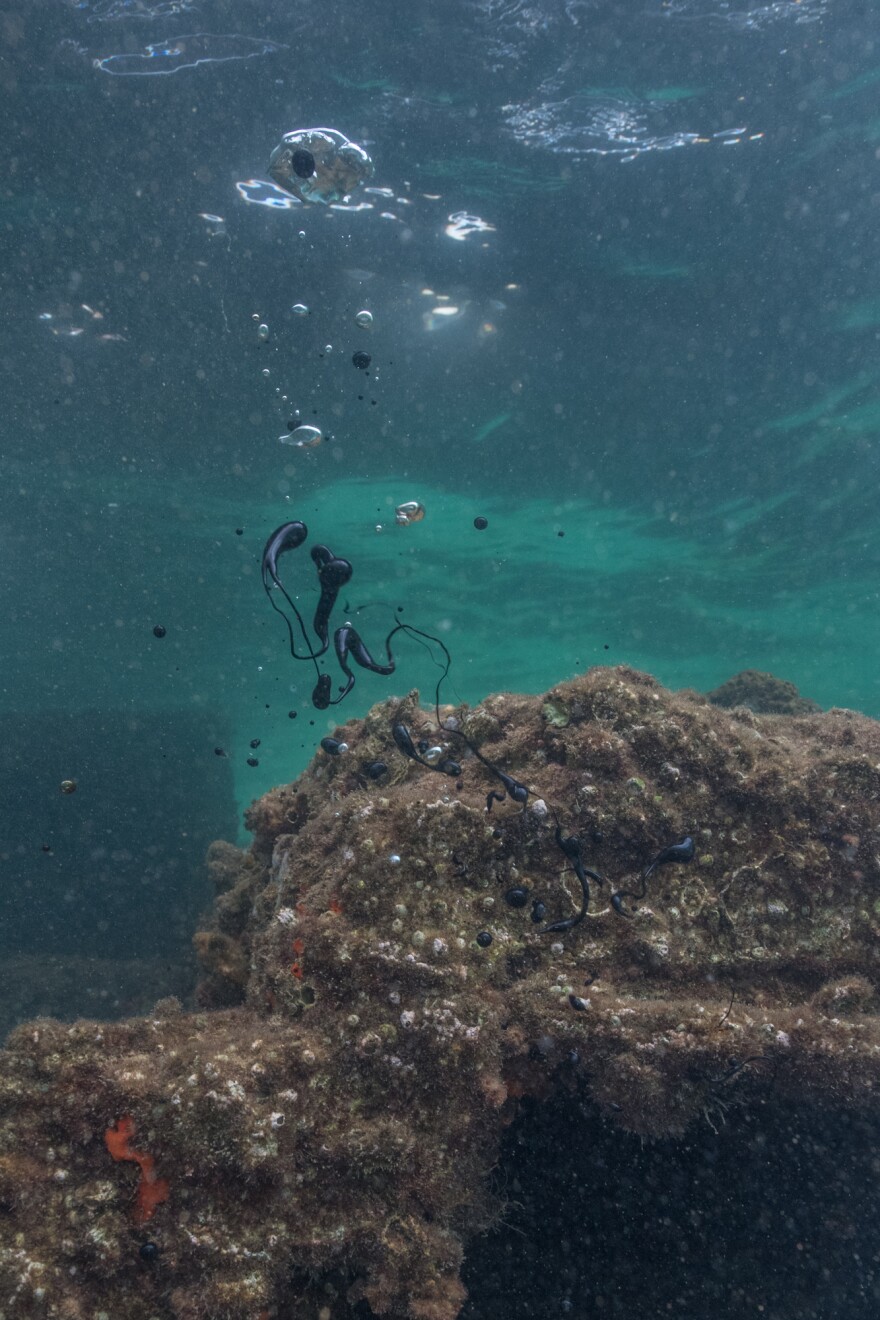
Best estimates are about 1 gallon a day to 2 gallons a day but there were 1.6 million gallons on the ship. It got filled up, unfortunately, the day before the attack, so I had a full load, and best estimates are that there’s probably about 600,000 gallons still on the ship.
BRODIE: Wow. And how does that oil now compare to the makeup that it had in 1941?
REDDY: Oh yeah, that’s why I go to work every day. So thanks for asking that, Mark. Yeah, because, you know, I’m always curious about how nature responds to uninvited guests, because that oil in that tank, you know, nature is trying to figure out a way to push back on it or if it’s even getting released.
And so we don’t know what that oil looked like on Dec. 7, but we have a pretty good idea. And I would say that surprisingly, the oil has not changed that much in 80 years. Some microbes have eaten a little of it, but I can tell you, I’ve worked on other oil spills where we have seen more degradation in six weeks than the 80 years that we see, at the USS Arizona.
Brett Seymour
/
NPS Submerged Resources Center
BRODIE: Wow, why do you think that is?
REDDY: Well, it’s about packaging, which is that all that oil in the USS Arizona is still pretty tight in the tanks. And it’s not very well aerated, so you know, think about a fish tank where you have to bubble in oxygen that helps keep the ecosystem going. There’s not a lot of oxygen there. The water is not always getting refreshed.
You think about it, that oil is stored really deep in the bowels, and it’s leaking out a little, but it’s not a great place for the microbes to want to eat. And so the end result is that they have relatively fresh oil 80 years later.
BRODIE: It sounds like it’s almost more pure than what it would have been, maybe had there been a bigger leak or had there been maybe a bigger hole in the ship or something.
REDDY: Absolutely, absolutely. You know, this is an unusual occurrence. There’s 5,000 World War II shipwrecks. And, you know, the key thing is they all have some fraction of oil on it, and it’s not an if but a when all these oil starts to release. Some are already, you know, the USS Arizona is only 1 gallon a day, and it is of no concern in the big picture.
I wouldn’t think about trying to remove that oil. It’s a national shrine. I think it has the shrine and the significance of that supersedes this relatively small volume of oil, but what it does do is it does give us a snapshot of what oil looks like after 80 years, at least in one location, and it’s surprising. It’s surprising how a well-packaged, well-built ship like the USS Arizona, has not corroded enough so that you have much attack on the oil in these tanks.
Brett Seymour
/
NPS Submerged Resources Center
BRODIE: So does that tell you then that shipbuilders of today should be looking at the USS Arizona to try to determine how to build their ships in the hopefully unlikely event that they sink or otherwise like are in a position where their oil might leak?
REDDY: You know, I’m not a metallurgist or a marine architecture person, but I do think we wanna celebrate that the corrosion, resilience of the USS Arizona is certainly good news. But the value of the USS Arizona is that it is a living laboratory. That allows us to understand what happens to oil 80 years later.
There are 5,000 other wrecks thrown in the Atlantic and Pacific, and we’re constantly trying to assess the threat of oil that releases from them. But for the most part, we haven’t analyzed the oil from those wrecks. It’s hard to get at, and so we’re trying to plan for a problem, but we don’t have all the data in hand.
And that’s where the USS Arizona comes in place because we at least know where the oil came from, we know when it was sunk, we know where it’s been, and so at least gives us a little bit of a toehold into what we might be expecting in the future.
Daniel Hentz
/
Handout
BRODIE: So do you anticipate then that what you learned from the USS Arizona will be most helpful in dealing with other shipwrecks from many decades ago, as opposed to oil spills maybe more recently?
REDDY: Absolutely. I can tell you right now that the value that we have gotten from studying the USS Arizona is paving the way for having a better understanding of oil that’s releasing at what they call Iron Bottom Sound, which is from about 100 ships or about 60 Japanese ships and 40 or 50 American ships are sunk as part of the Battle of Guadalcanal. And so we’re using that information to help understand ongoing leaks that are happening from Japanese or American ships there.
BRODIE: Is there any reason to believe that the conditions on the USS Arizona will change either the condition of the oil or the rate at which it’s spilling out?
REDDY: Well, you know, that’s an active project. The National Park Service oversees the USS Arizona memorial and a larger part of a memorial at Pearl Harbor. And they’re actively studying the corrosion there.
You know, it’s hard to predict moving forward. I tend to think that a lot of the oil is below the mud line, which is buried below. And that’s kind of good news because when you get deep into mud, there’s not much oxygen, and so there isn’t any rust going on. And so I’m pretty hopeful based on the data we have in hand that, you know, it’s pretty secure for the time being, to the point where I would say that no plans should need to be done in the near future to try to think about removing the oil.
BRODIE: Interesting, and I would imagine if you had to do that, that would be quite a sensitive project given the nature of the USS Arizona and as you say that the memorial that it includes.
REDDY: This is such a non-trivial, you know, the USS Arizona is such a critical component of our national history, that we have to move. I will say though that when I first started working, on the site with the National Park Service and United States Coast Guard, one of the first things I had asked was, “is this OK?”
You know, I’ve been on the USS Arizona collecting samples, and, you know, it’s incredibly moving. One day I was the only person on the memorial. The dock that they use to deliver 2 million visitors a year was broken, and so I was able to access it by kind of an emergency chute type ladder, and it is incredibly moving. It’s probably one of the high points of my career.
But I’ve asked multiple times and the Park Service has spoken to when they started working on the corrosion in earnest in the ‘80s and ‘90s, they spoke to the survivors, they spoke to the survivors’ families. They are supportive of the science that’s being done there and they constantly try to update those folks and it’s treated with tremendous respect.
KJZZ’s The Show transcripts are created on deadline. This text is edited for length and clarity, and may not be in its final form. The authoritative record of KJZZ’s programming is the audio record.