This post was originally published on here
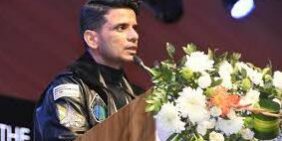
Indian Air Force Group Captain Shubhanshu Shukla, the first Indian astronaut to visit the International Space Station, said on Saturday that India is progressing rapidly in science and technology and that the country’s growing self-reliance in these fields is a matter of pride for every citizen.
Shukla interacted with students and science enthusiasts during a session at the four-day India International Science Festival. He urged young people to pursue science and space research with determination, stressing that the responsibility of achieving the vision of a developed India by 2047 rests on the shoulders of the youth. When they progress, he said, the nation progresses.
He recalled that Prime Minister Narendra Modi’s 2018 Independence Day announcement that a son or daughter of India would soon travel to space inspired him to begin working toward a space mission. From that moment, he said, he made consistent efforts despite challenges. Success follows persistent effort, he told the students.
Responding to a question, Shukla said a new framework is being developed that will allow individuals from various fields to pursue careers as astronauts, not only those entering through the Air Force. He said India’s first astronaut, Wing Commander Rakesh Sharma, was his source of inspiration and courage. He expressed confidence that many more Indians will travel to space in the coming years.
Sharing experiences from his mission, he said the view of India from space was breathtaking. During his stay on the International Space Station, he conducted several scientific experiments and gathered important data for the Gaganyaan mission, which he said will add a new chapter to India’s human spaceflight programme.
Speaking to reporters later, Shukla said he enjoyed his interaction with children at the festival. He described the event as a good platform that celebrates science and helps create excitement among young students. For India to realise the ambition of a Viksit Bharat by 2047, he said, it is important to celebrate science and give children opportunities. He noted that the country has now made it possible for children to consider becoming astronauts as a real career choice.
Shukla said that after he returned from his mission, the Prime Minister spoke to him and emphasised the need for a pool of 40 to 50 astronauts and a strong ecosystem for human space missions. Work is underway in this direction, he said, although it remains a challenging task that will take time.
Shukla became the first Indian to visit the International Space Station as part of the Axiom 4 mission. He returned to India on August 17, 2025, after completing the 18-day mission in space.