This post was originally published on here
Just do it is easy to say. But for a lot of people, the first steps from couch to 5K and beyond are the hardest. Nike’s Project Amplify is a radical, almost trans-humanist, effort to get them up and running.
Project Amplify by Nike
(Image credit: Nike)
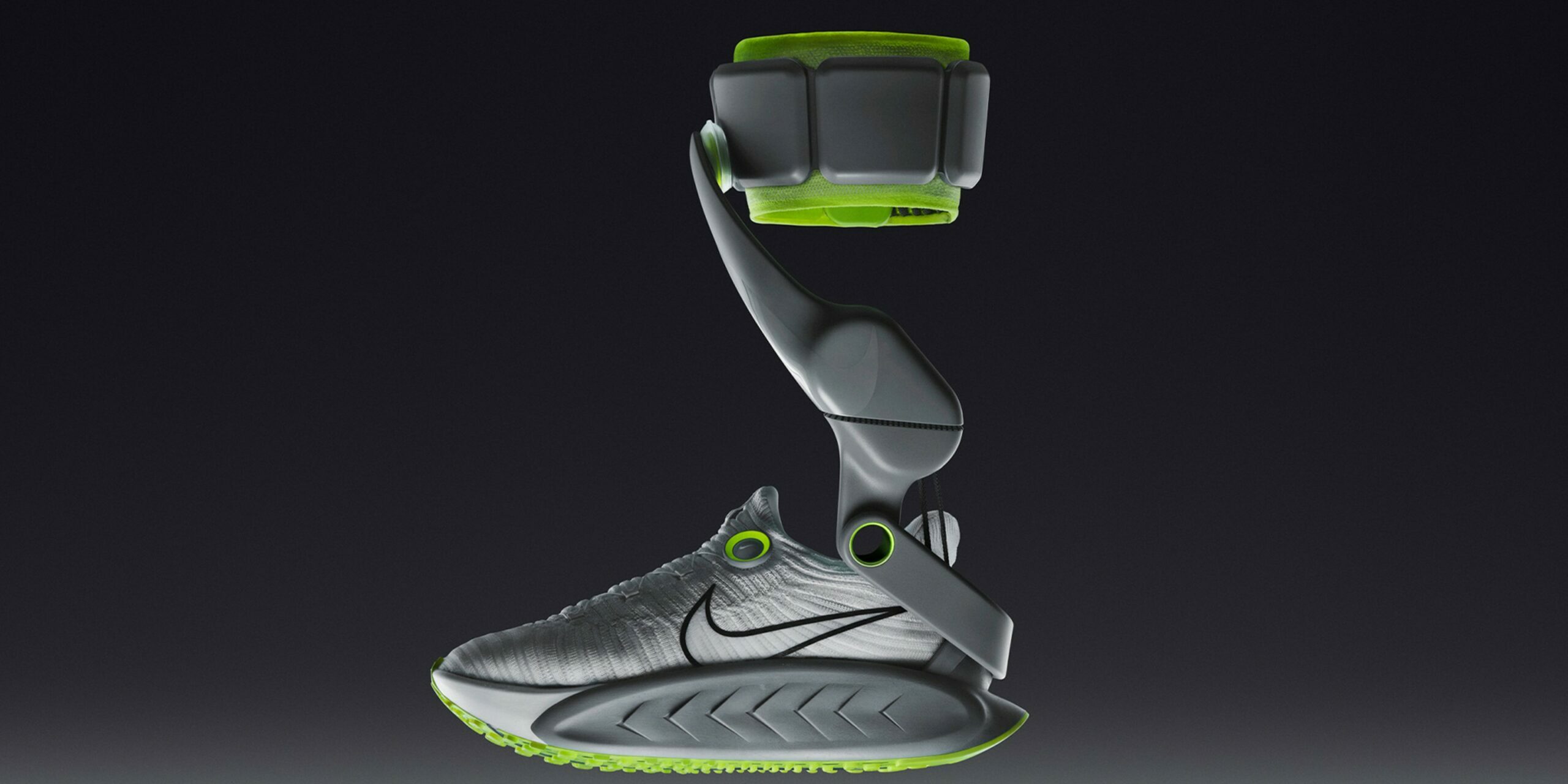
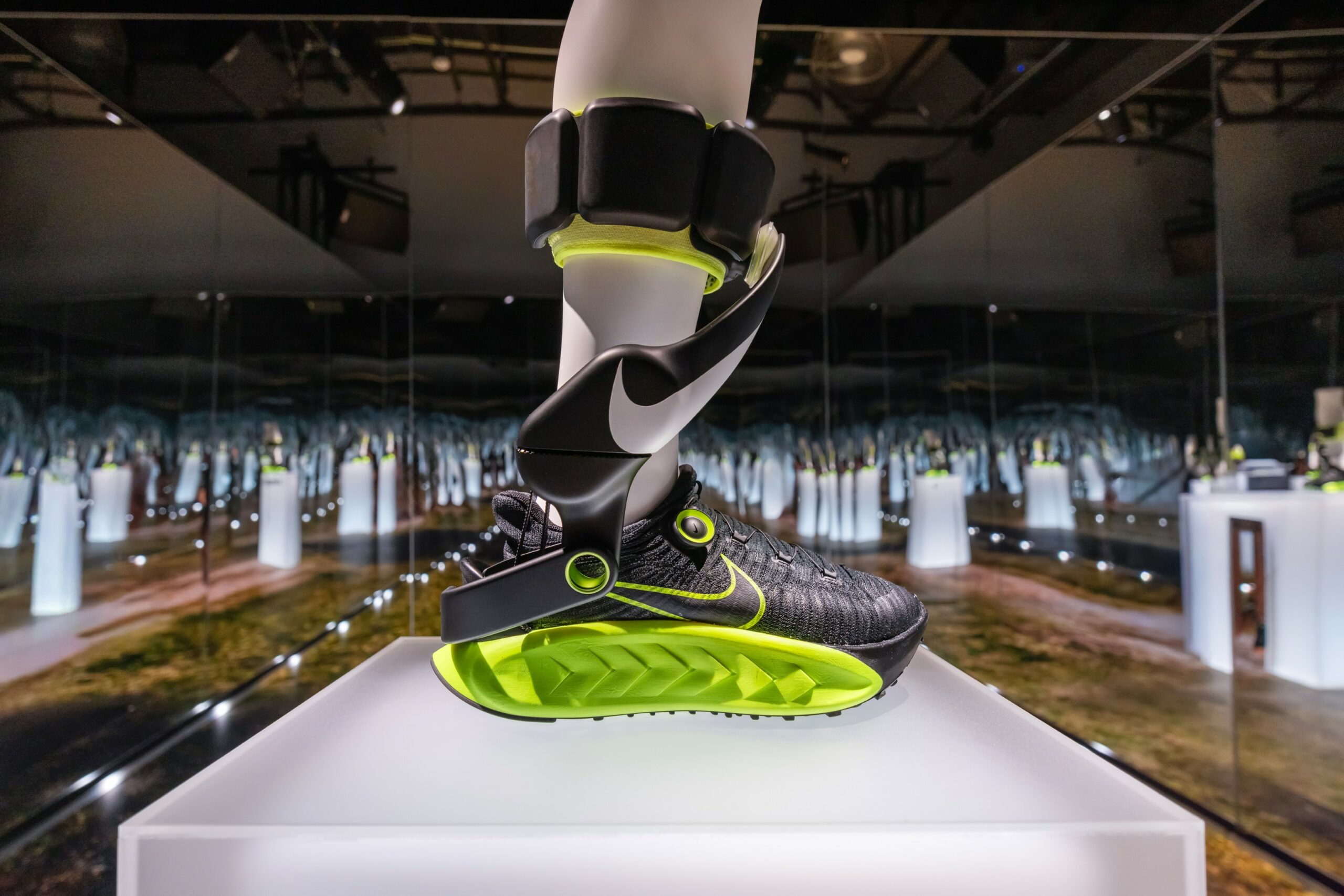
Developed with robotics partner Dephy, what looks like a space age leg brace is actually a lightweight motor, drive belt and battery cuff paired with a carbon-plated shoe and smart sensors. Nike says that the miniaturisation of batteries and motors, driven by the drone industry, is now making this kind of consumer-friendly, exoskeleton tech possible.
Project Amplify by Nike
(Image credit: Nike)
‘It’s essentially an electric bike for movement,’ says Phil McCartney, Nike’s chief innovation, design and product officer. The design essentially helps you lift your heel every time you take a step. ‘You’re trying to create an artificial calf and Achilles tendon,’ McCartney explains. ‘And when you use it, you feel that mechanism learning your algorithm, feeding back into your foot strike and your gait. Every time people try it, you see the big smile on their face.’
Project Amplify by Nike
(Image credit: Nike)

Nike’s chief innovation, design & product officer Phil McCartney
(Image credit: Nike)
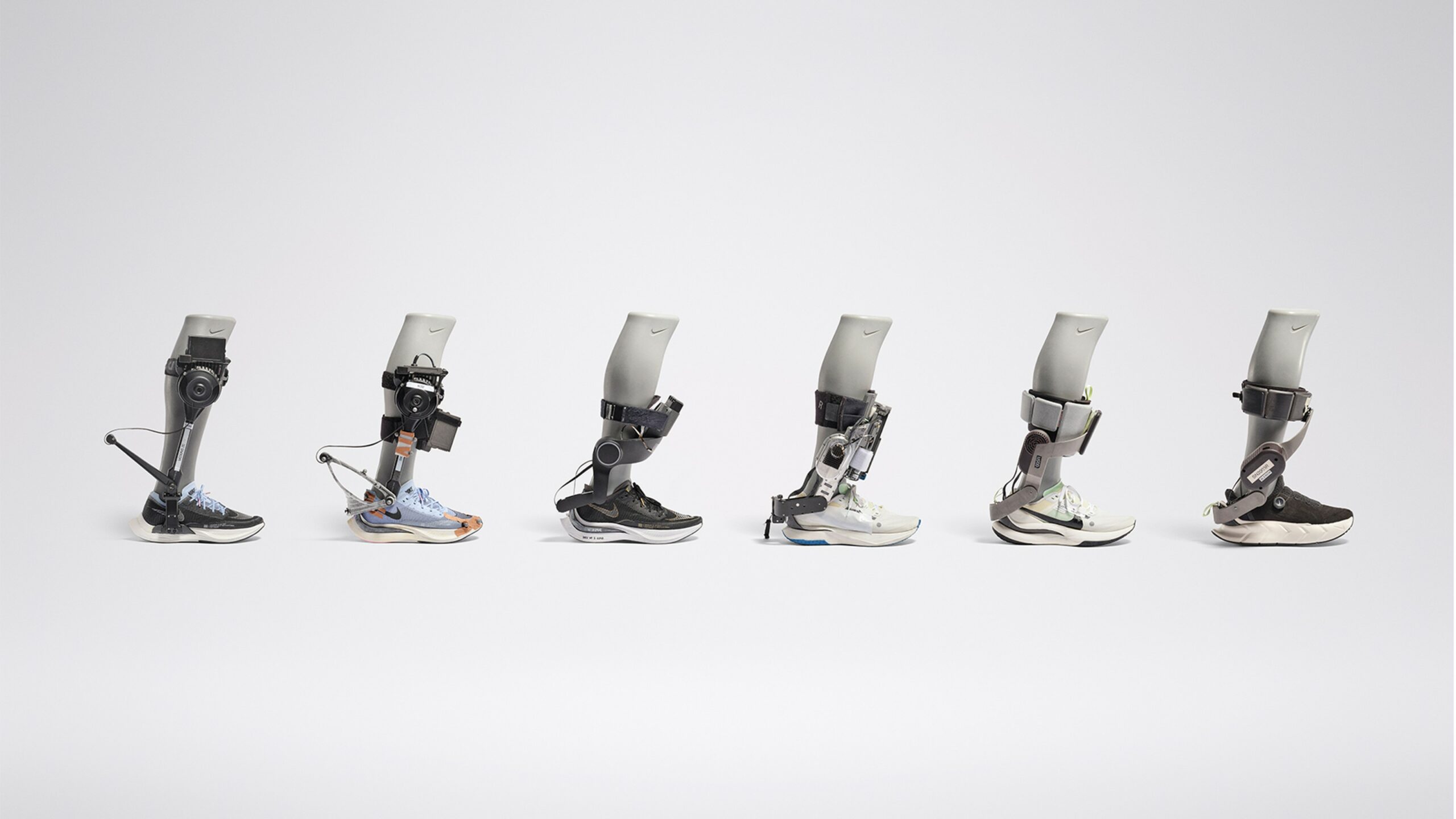
Project Amplify is still in development, but more than 400 athletes have tested early prototypes, logging over 2.4 million steps across nine hardware iterations. And in another first, Nike now plans to do more of that testing in public. ‘We’re going to embrace more of a beta-testing approach,’ McCartney explains. ‘Rather than waiting for something to be perfect at scale, we’ll connect it to communities who’ve already shown interest. They’ll pay for it, use it in real life, and that helps us fine-tune both the product and the service.’
Behind the scenes at Nike Innovation
(Image credit: Nike)
Nike expects to launch a final version of the tech around the LA Olympics. It makes clear, though, that it’s not aimed at elite athletes but the gentle jogger clocking miles at a ten- to 12-minute pace. But given the success of e-bikes, there is clearly broader potential for this kind of ‘assistive technology’. It’ easy to see the appeal to older adults, or anybody with mobility issues, who want to walk further and for longer and tackle steep hills.
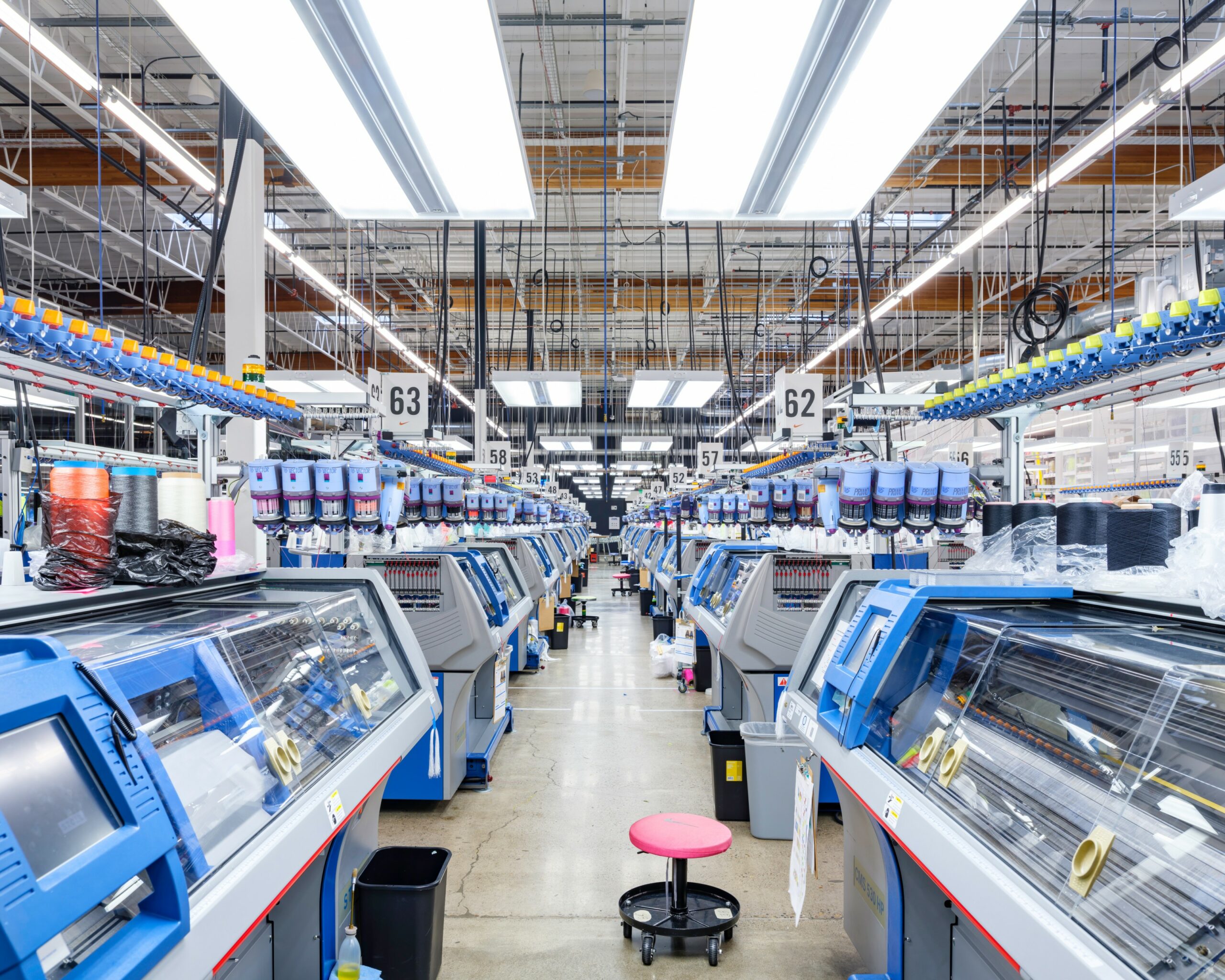
Behind the scenes at Nike Innovation
(Image credit: Nike)
Project Amplify, more light robotics than sportswear, is a clear departure for the brand. It’s part of a broader wave of science-backed innovations that signal a shift in emphasis under Nike’s new CEO Elliott Hill. And shift was desperately needed. Nike has been off the pace in the last few years.
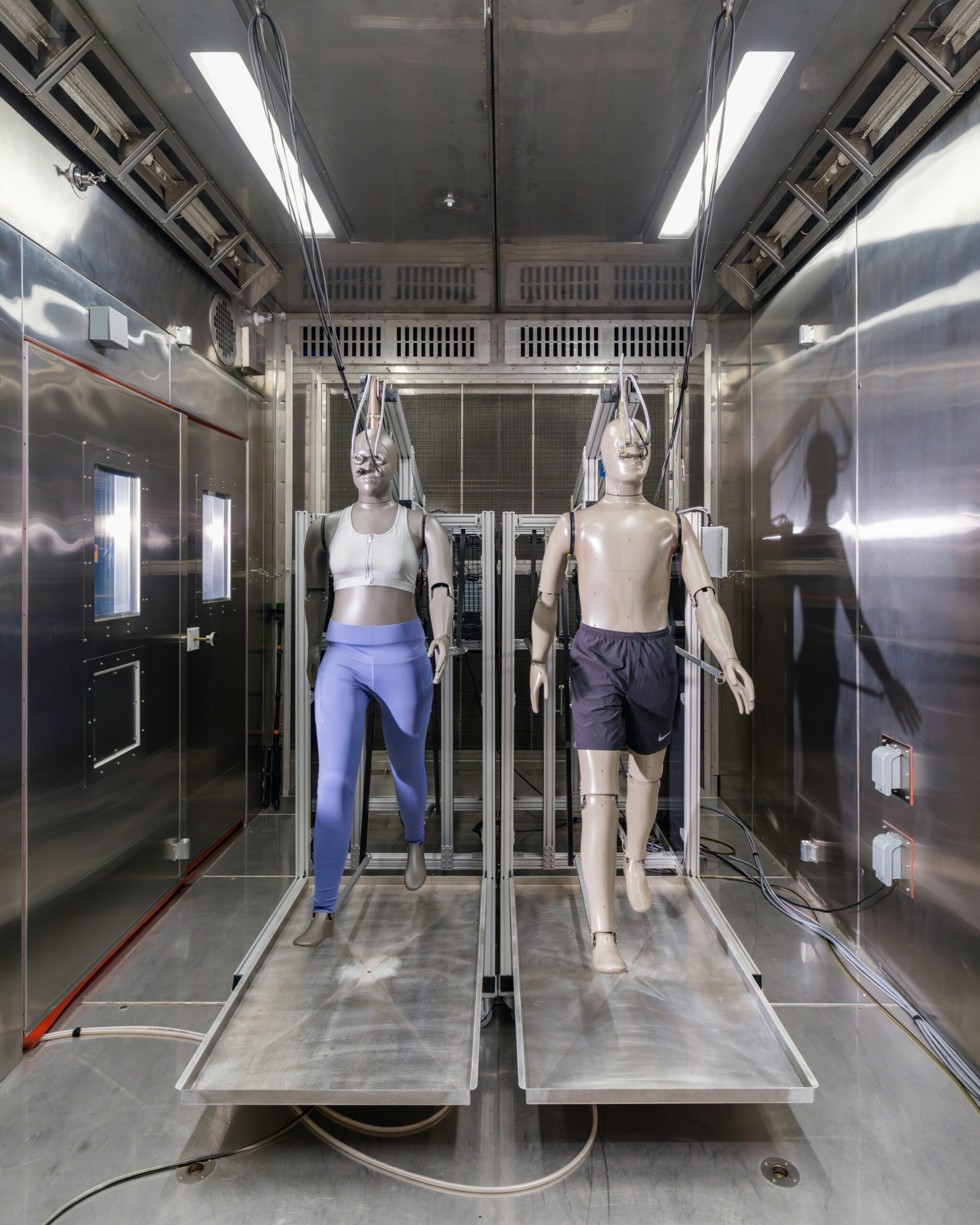
Behind the scenes at Nike Innovation
(Image credit: Nike)
Sales have dipped. In running, the sport central to its origin story, upstart brands such as Hoka and On have taken sales and built an appeal based on sharp design and distinctive technology with a clear story to tell.
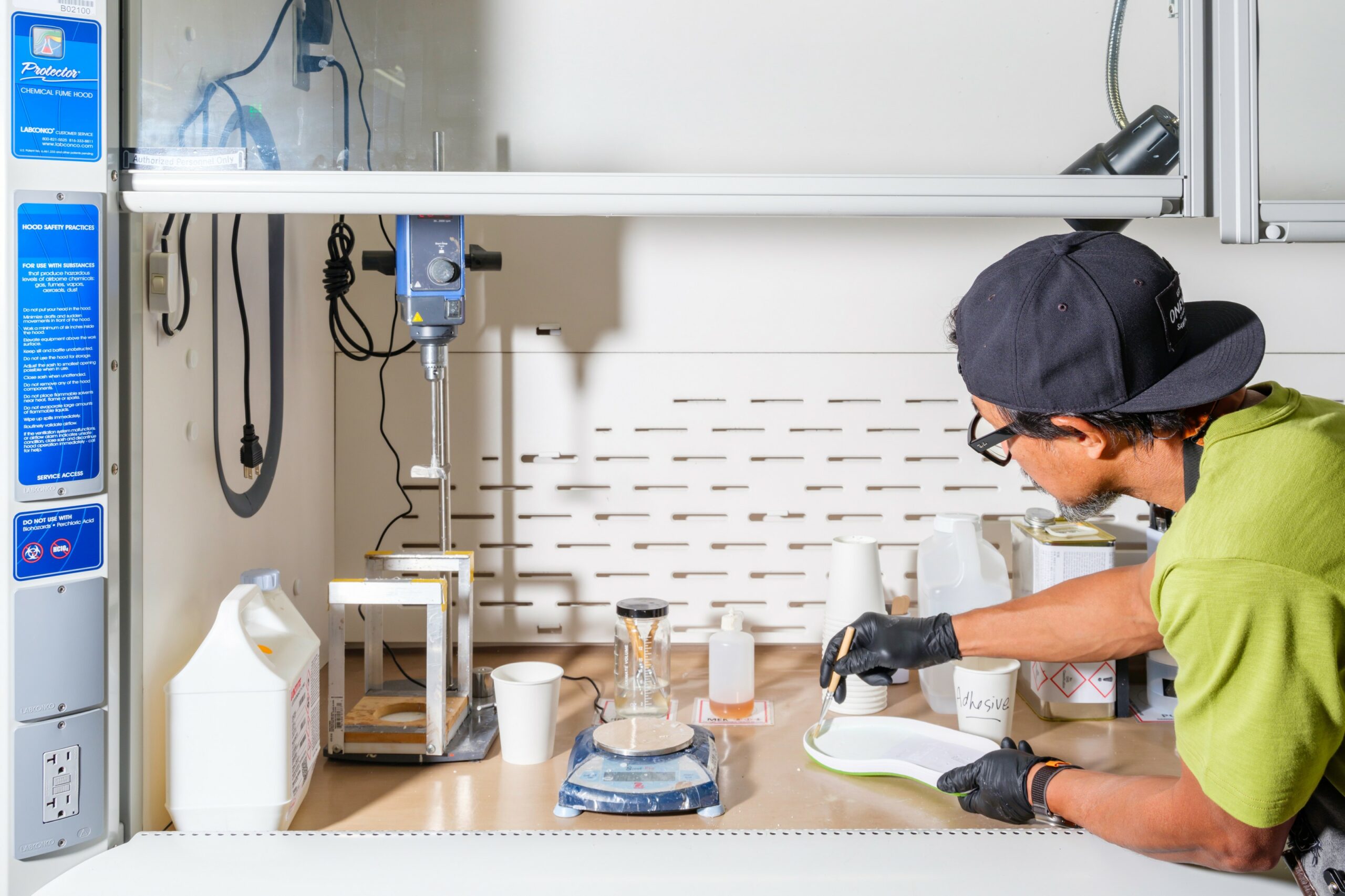
Behind the scenes at Nike Innovation
(Image credit: Nike)
And while hipster running clubs have been springing up in Brooklyn, Kreuzberg and Hackney, and the interest in ultra-running has exploded, it’s niche-brands such as Tracksmith, Soar and Satisfy that members are mixing and matching to set off their leg tattoos.
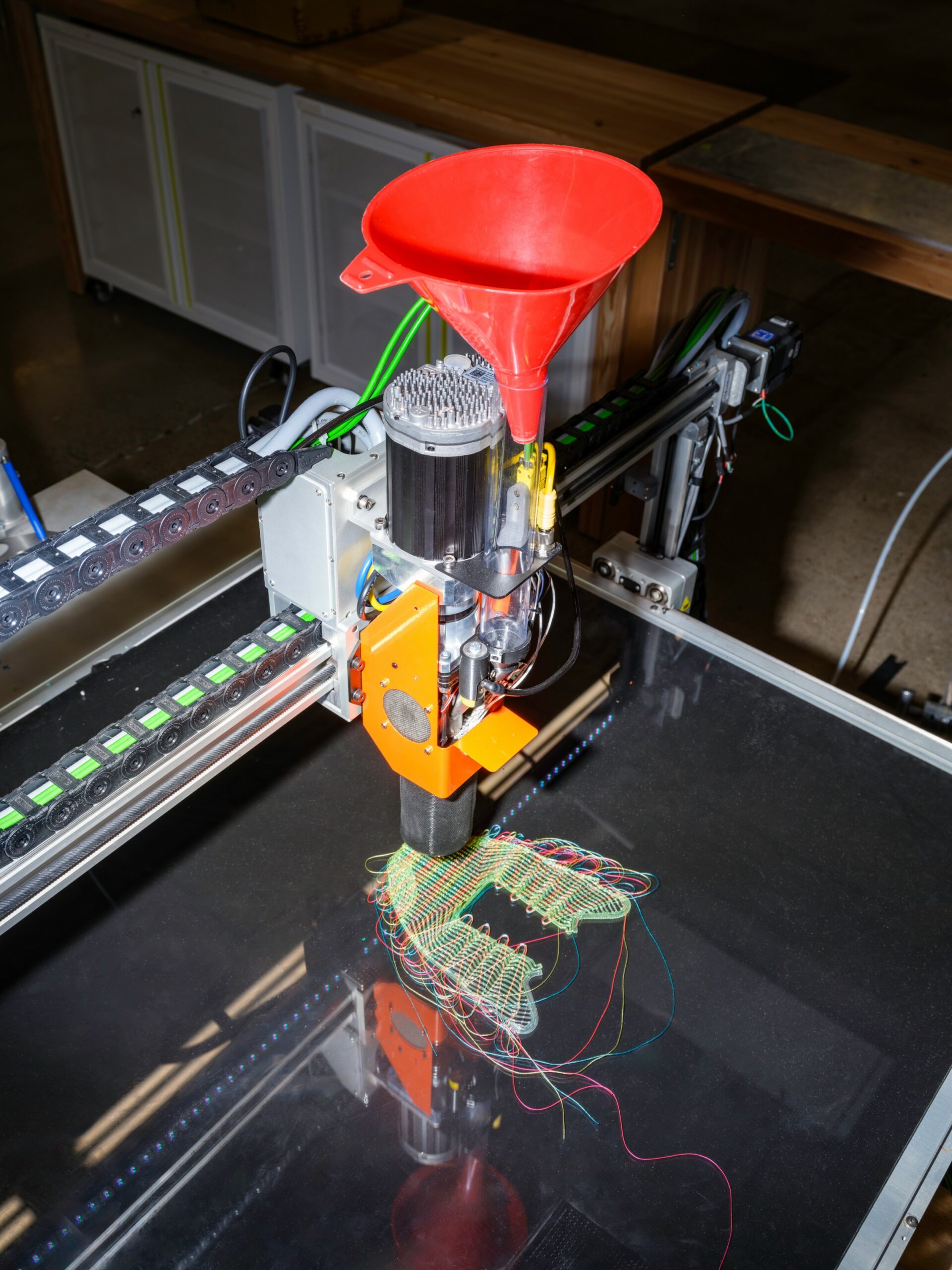
Behind the scenes at Nike Innovation
(Image credit: Nike)
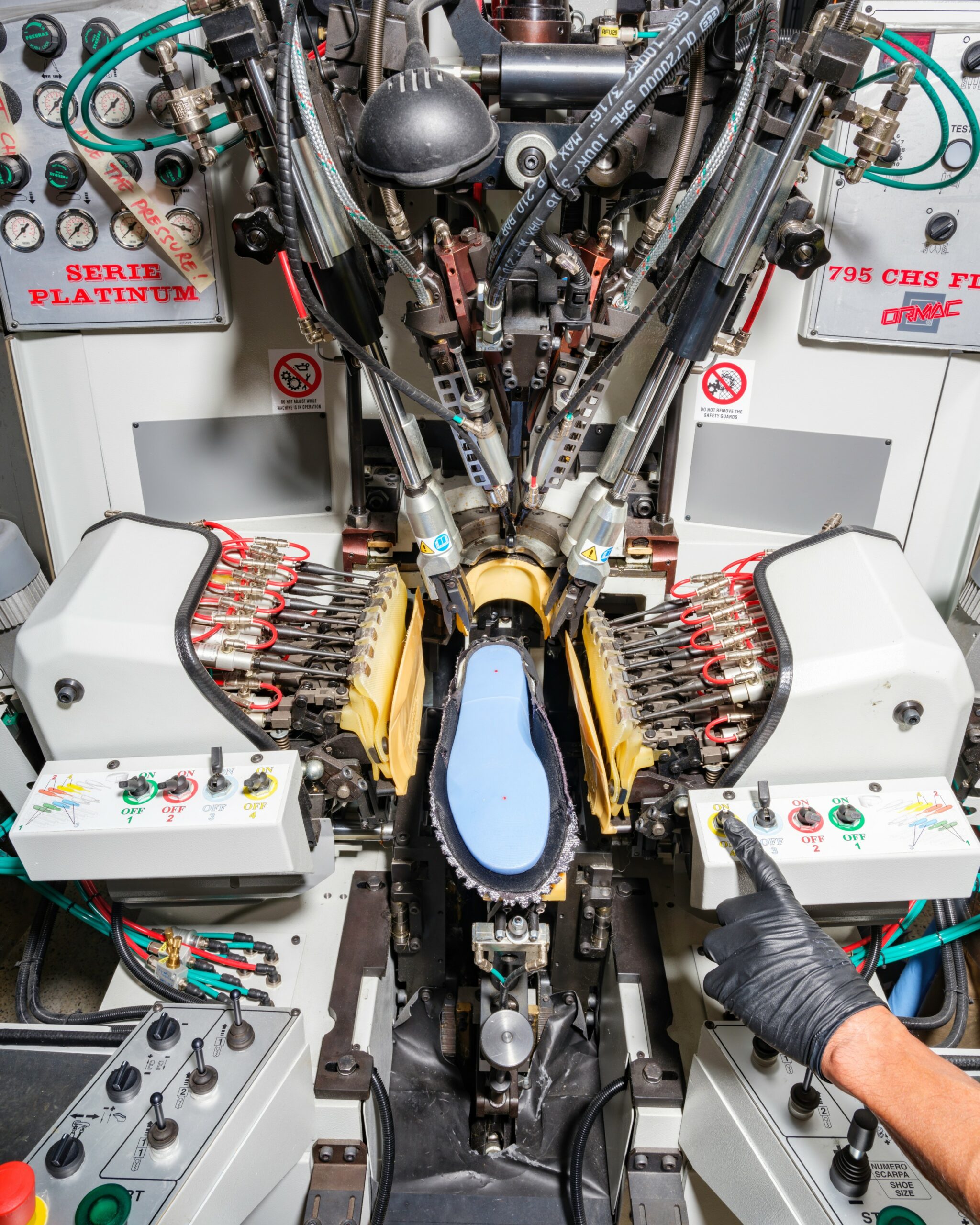
Of course, Nike is still a $100bn company and dwarfs all competitors. Analysts argue, though, that an overreliance on easy sales and retro designs such as the hyped-then-hated ‘Panda’ Dunk has dented the brand’s reputation for performance-enhancing design. Nike is again out to prove that, in terms of research and development, it can outrun and outmanoeuvre its rivals.
Behind the scenes at Nike Innovation
(Image credit: Nike)
To that end, Nike has united its innovation, design and product teams across the Nike, Jordan and Converse brands, and across all product categories, creating what McCartney calls a ‘single, athlete-focused creation engine’.
‘We’ve grown over time, and an unintended consequence of growth can be you get siloed,’ McCartney says. ‘People doing their thing in their own world. Bringing this together allows us to be really aligned on the athlete problems we’re solving.’
Behind the scenes at Nike Innovation
(Image credit: Nike)
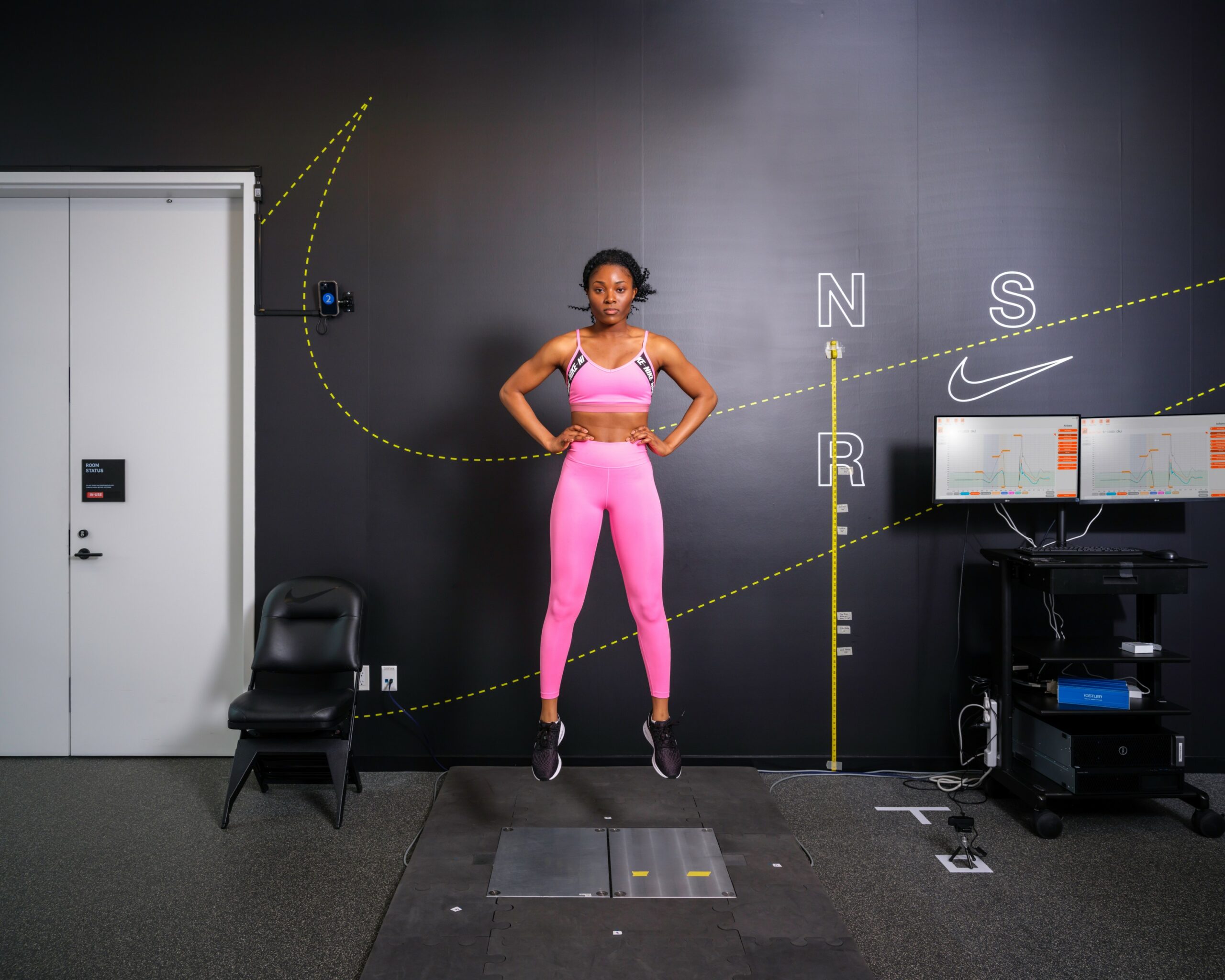
The benefit, he argues, isn’t just internal efficiency but creating centres of excellence that leverage Nike’s Sports Research Lab, its manufacturing partnerships, and its scale across three distinct brands. McCartney says the aim is to collapse the distance between insight and execution. ‘We’ve brought the organisation together, we’ve sort of created – for want of a better term – a start-up. Make athletes better. Keep it simple. Sometimes we over-complicate this.’
Detail of the new Nike Mind shoe
(Image credit: Nike)
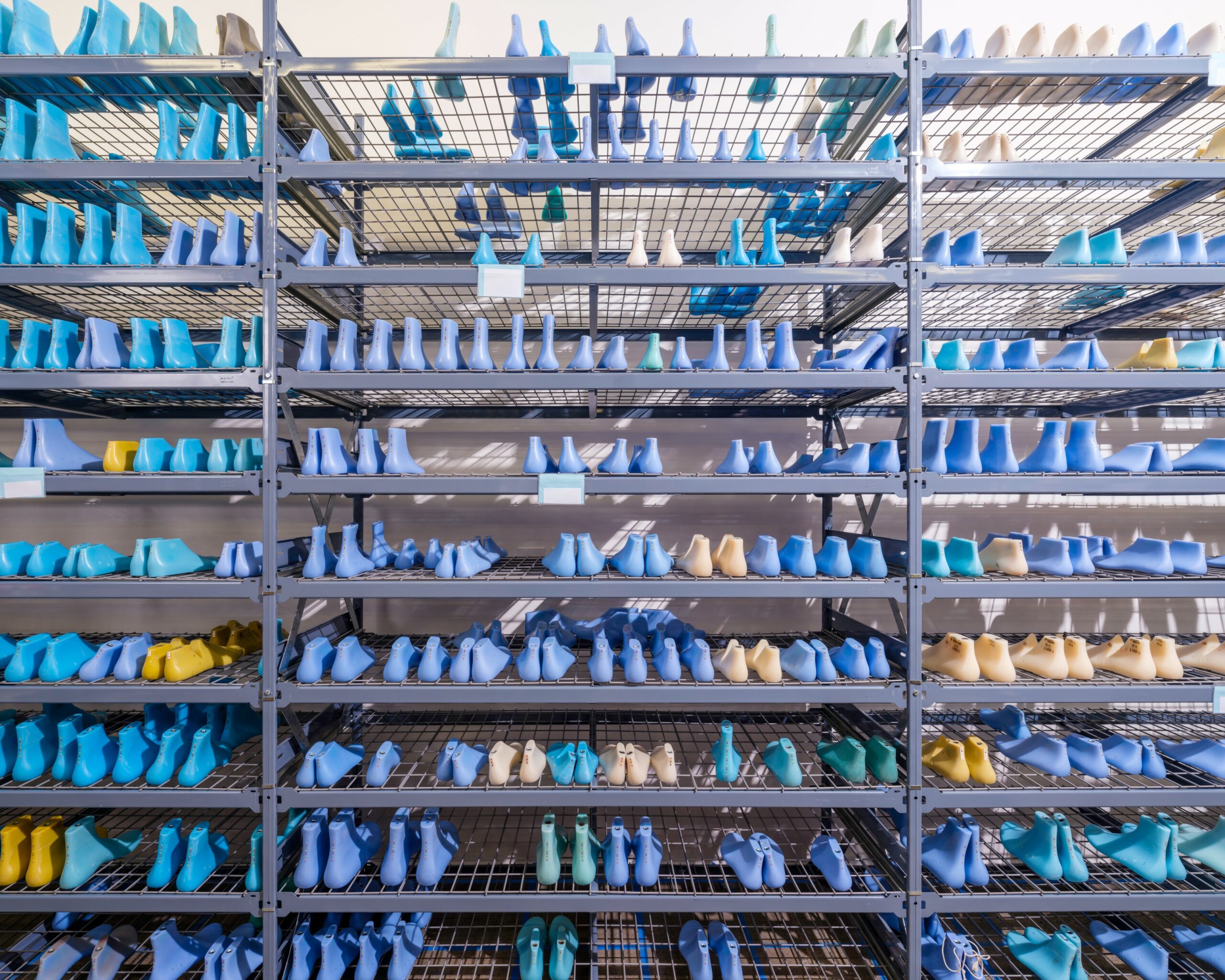
If startup is the model for this new ‘creation engine’, it’s not the scrappy suburban garage kind of startup. Based at Nike’s Portland campus, it stretches across the million-square-foot Serena Williams Building, the LeBron James Innovation Center, home to the Nike Sport Research Lab – a facility capable of imaging the brain and body simultaneously in motion – as well as the Bowerman Footwear Lab, Nike’s prototyping skunkworks named after the brand’s legendary co-founder Bill Bowerman. It involves nearly 1,000 designers, scientists, engineers, roboticists and craftspeople.
Nike Therma-FIT Air Milano Jacket
(Image credit: Nike)
The ambition of this restructuring is cross-pollination rather than deadening consolidation McCartney says. ‘We’re not trying to homogenise everything. But by bringing teams together, we’re already seeing the spontaneity and creativity that happens when you’re in one team.’
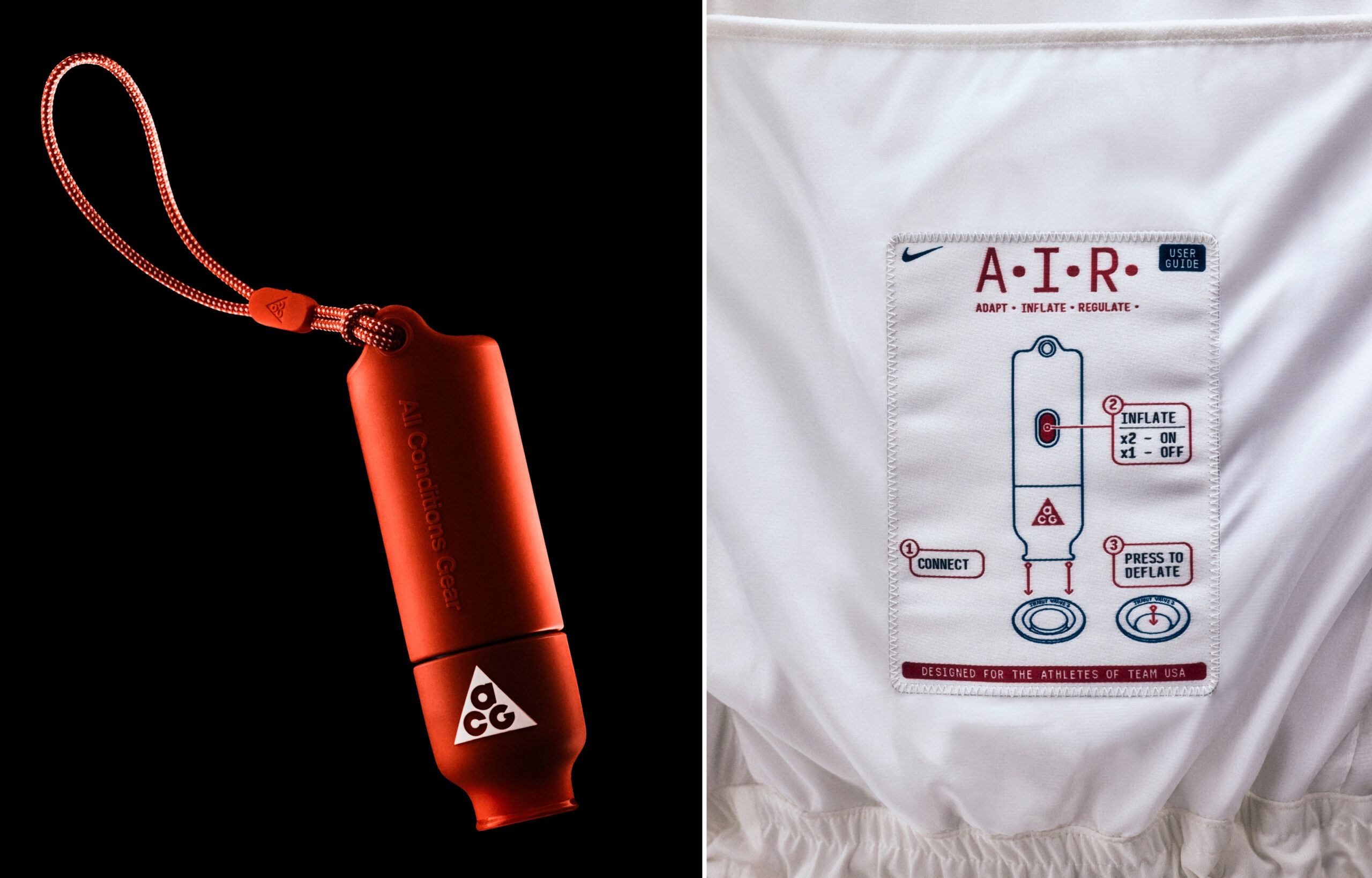
Details of the Nike Therma-FIT Air Milano Jacket
(Image credit: Nike)
The reorganisation also shifts Nike’s internal compass. ‘We really want the research lab to be at the core of everything we do,’ he says. ‘The amount of athlete data we have in the lab, the number of interactions we have with athletes around the world, putting all that science at the centre changes how we solve problems.’
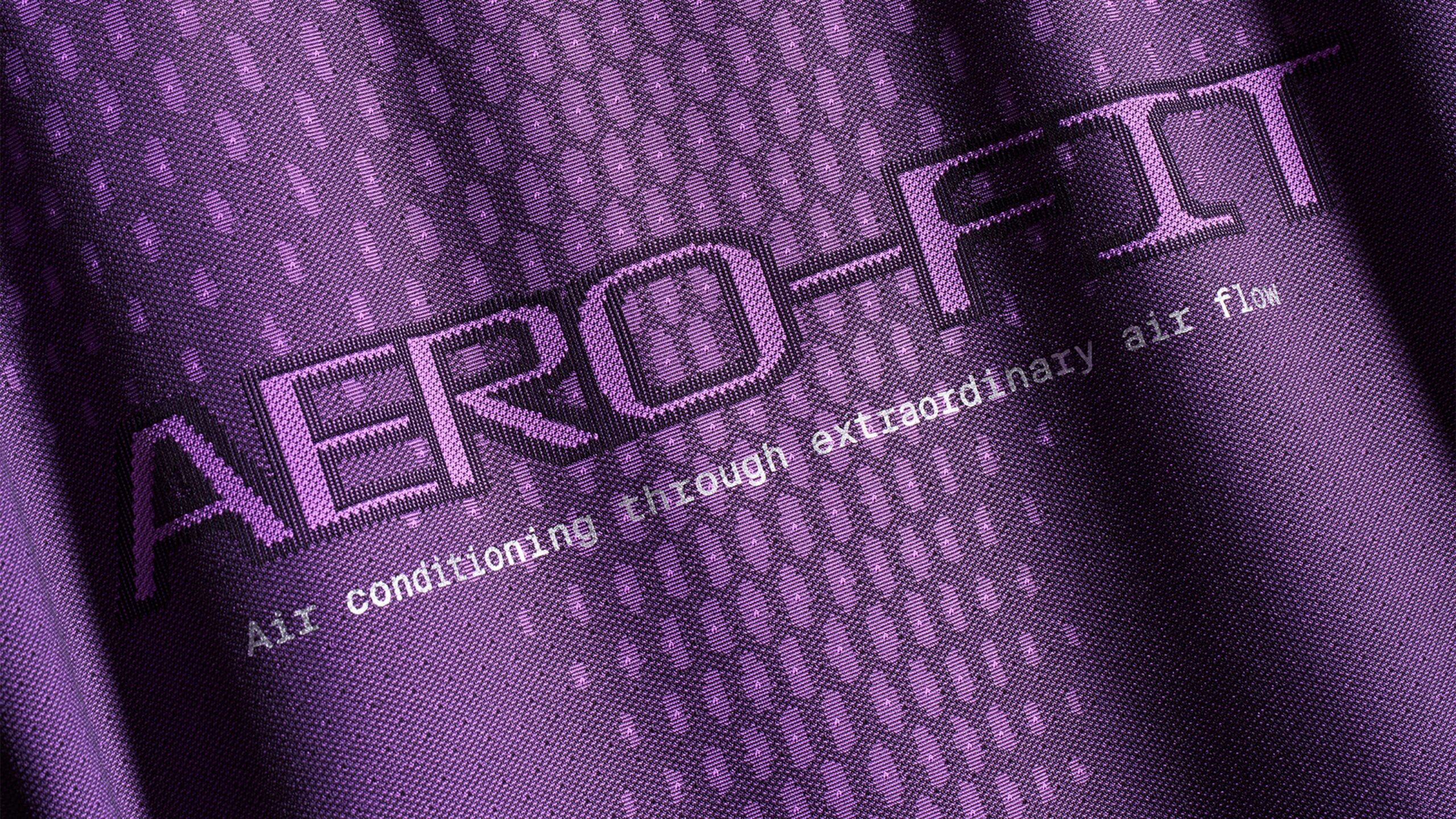
Detail of the Nike Aero-FIT shirt
(Image credit: Nike)
Project Amplify is part of that push to put hard science at the heart of Nike’s innovations. And it’s just one of a number of new innovation platforms, each representing a different facet of Nike’s expanded approach to performance enhancement that brings together physiology, neuroscience, robotics, computational design and circularity.
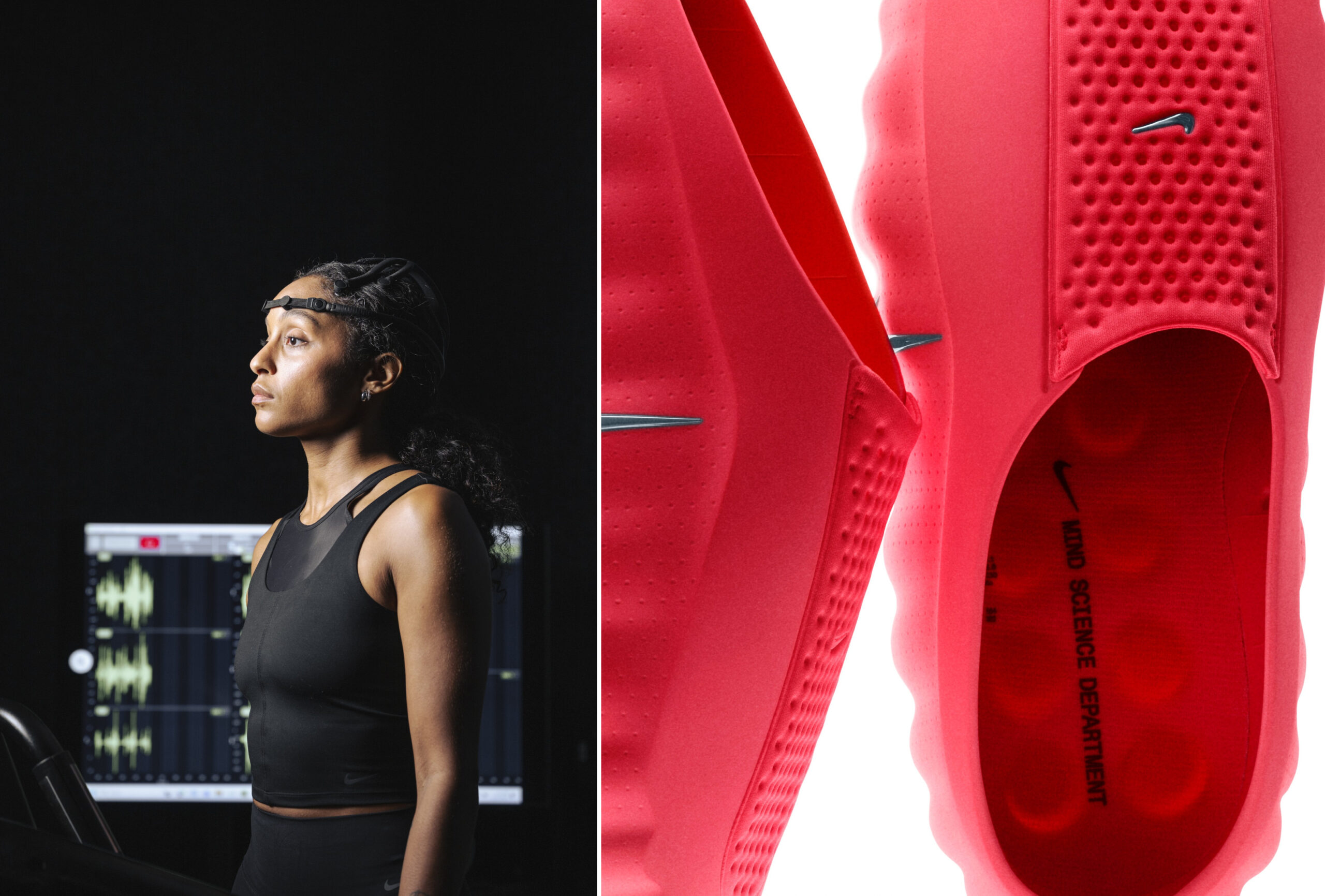
The Nike Mind shoe was developed at the Mind Science Department
(Image credit: Nike)
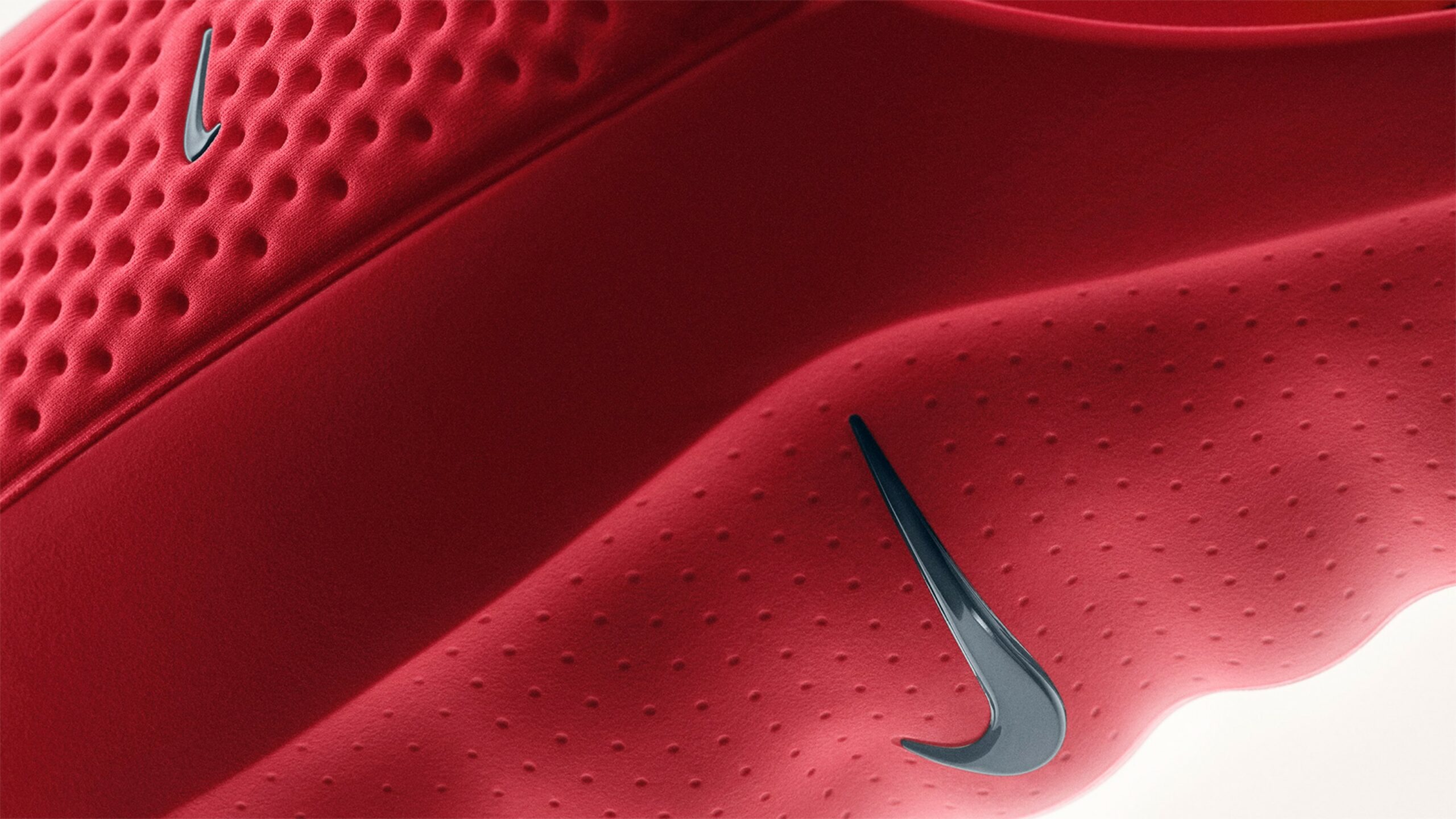
The Mind 001 mule and Mind 002 sneaker are the first outputs from Nike’s Mind Science Department – a team of neuroscientists working inside a mobile brain-and-body lab. A decade in development, the shoes use 22 foam nodes to stimulate sensory receptors in the sole of the foot, allegedly helping athletes access calmer, more present mental states pre- and post-competition.
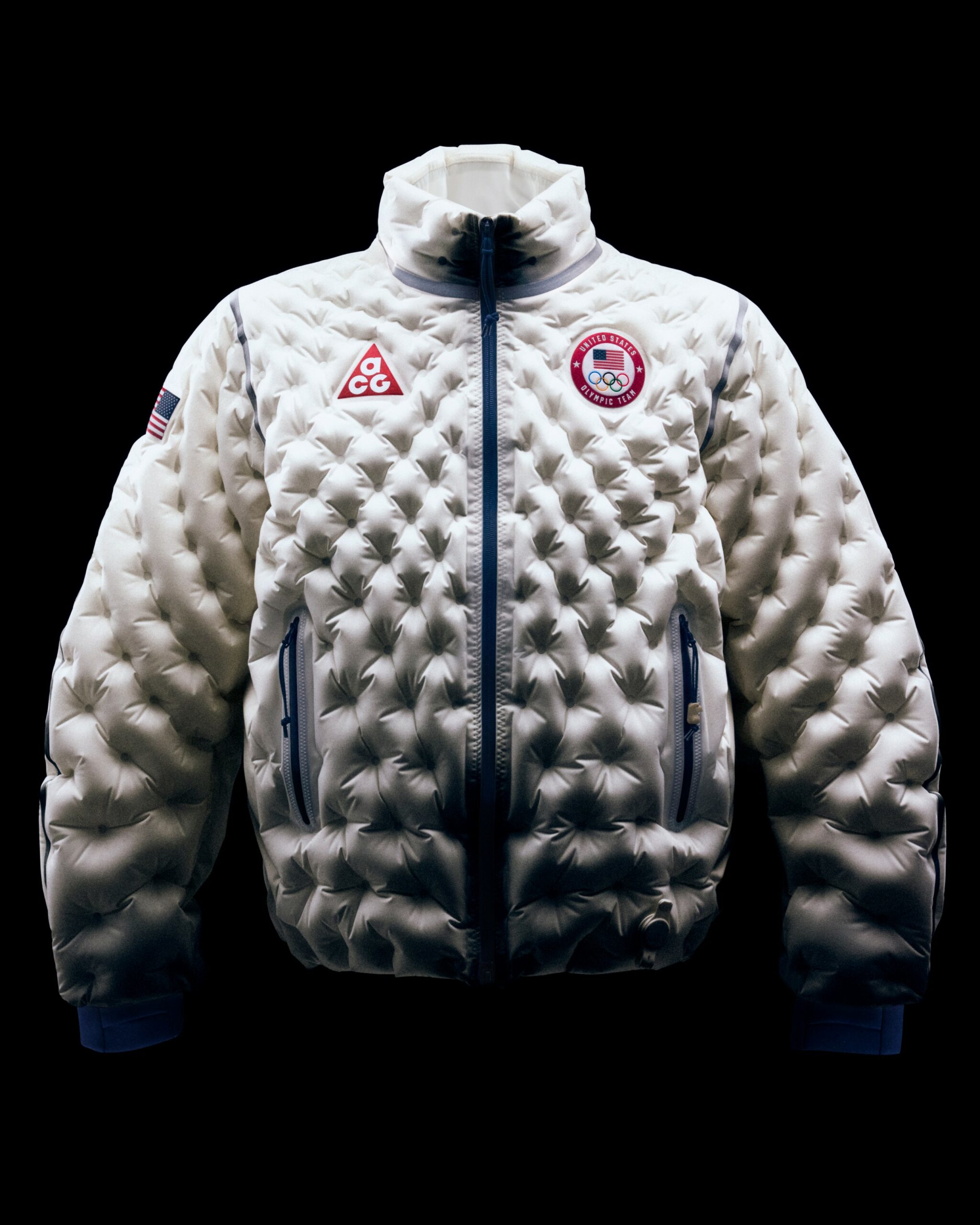
Nike Therma-FIT Air Milano Jacket
(Image credit: Nike)
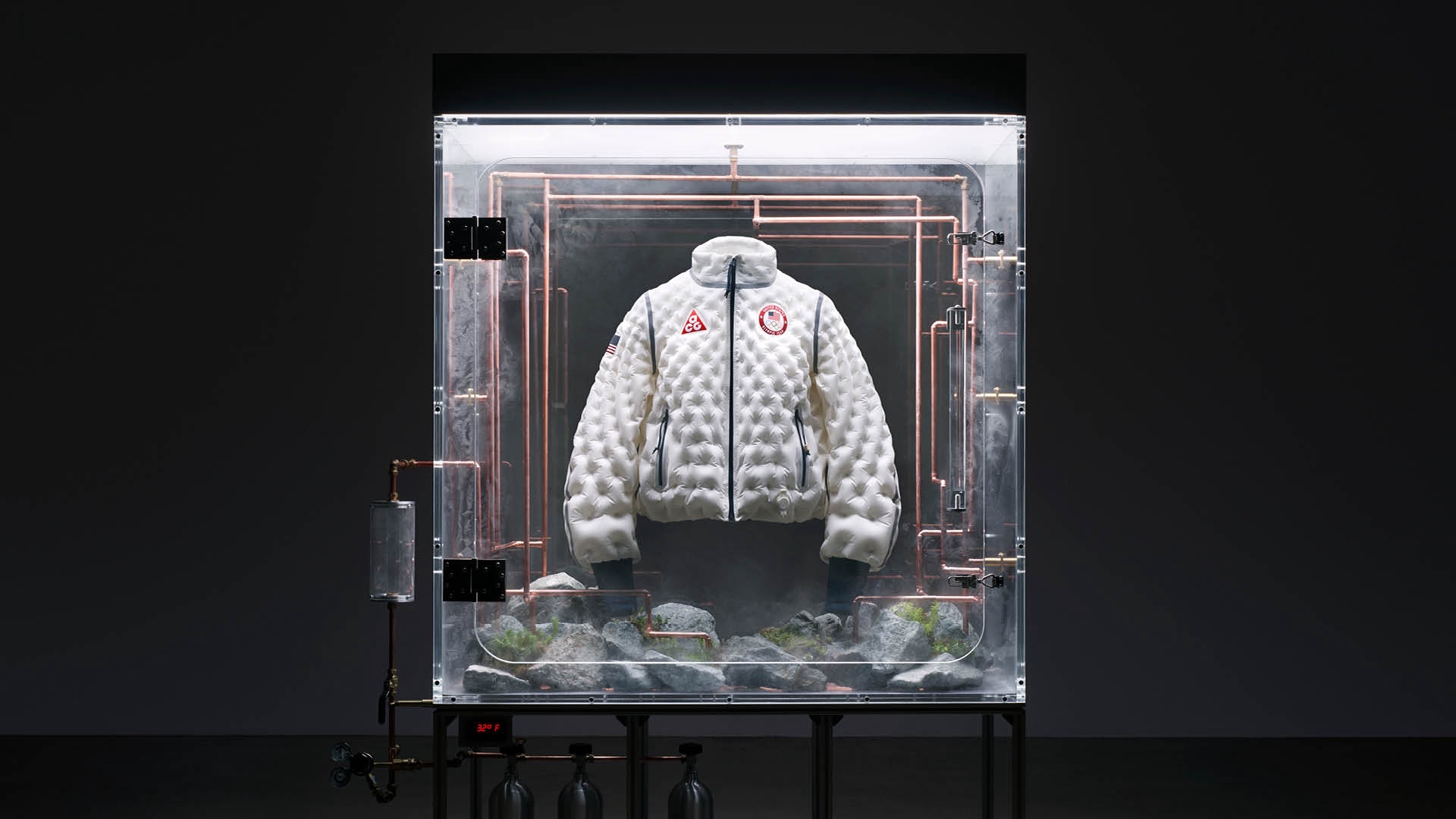
The Therma-FIT Air Milano Jacket is a sculptural two-layer, battery-powered insulating outerwear system with internal baffles that inflate or deflate in seconds. Inflate when you’re cold, deflate to cool down. Built using complex computational models, it’s Nike’s most technically engineered outerwear to date.
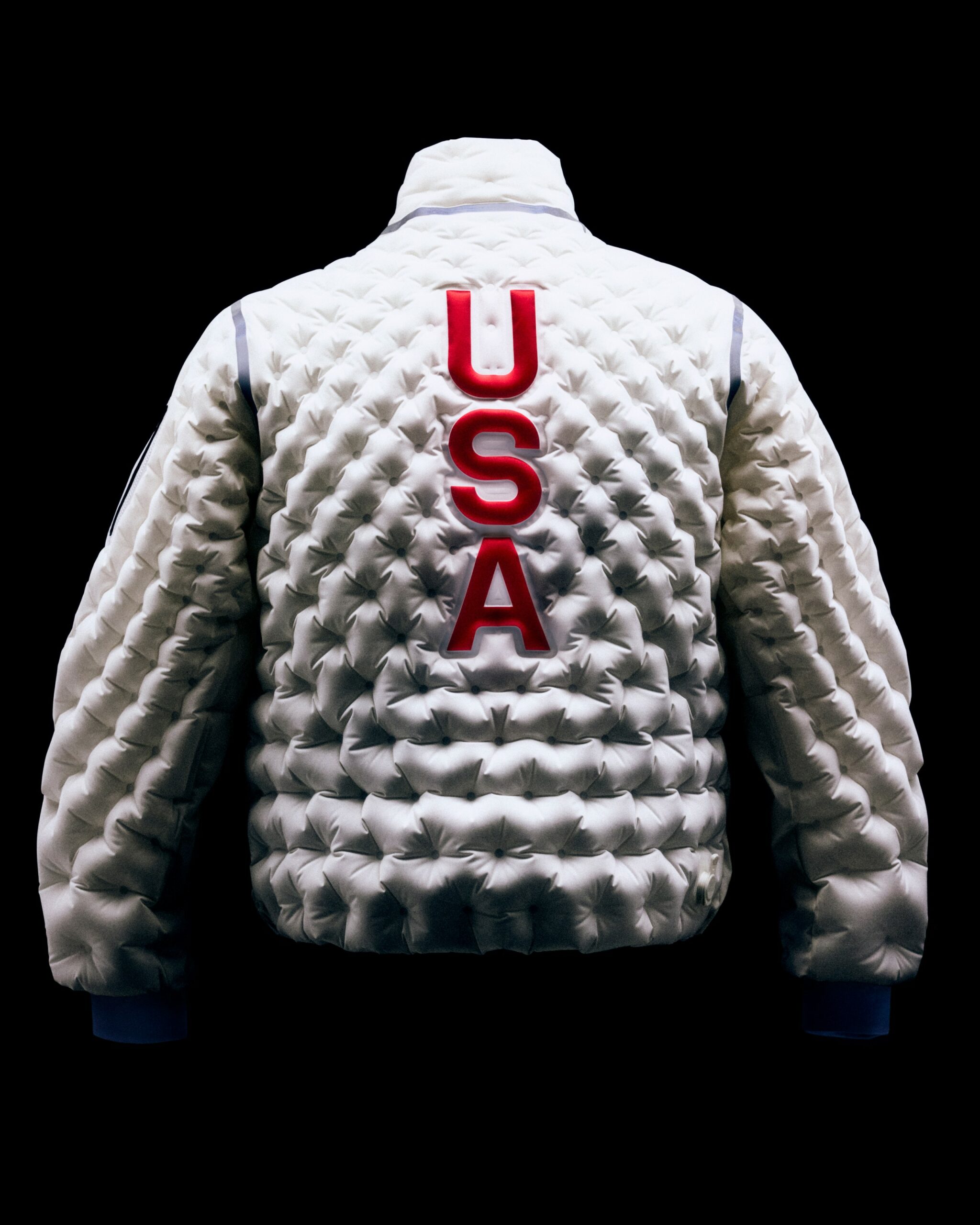
Nike Therma-FIT Air Milano Jacket
(Image credit: Nike)
Aero-FIT meanwhile is apparel engineered to move more than double the airflow of legacy Nike materials. Mesh zones have been mapped by computational airflow modelling and it’s the company’s first elite-performance apparel made entirely from textile waste.
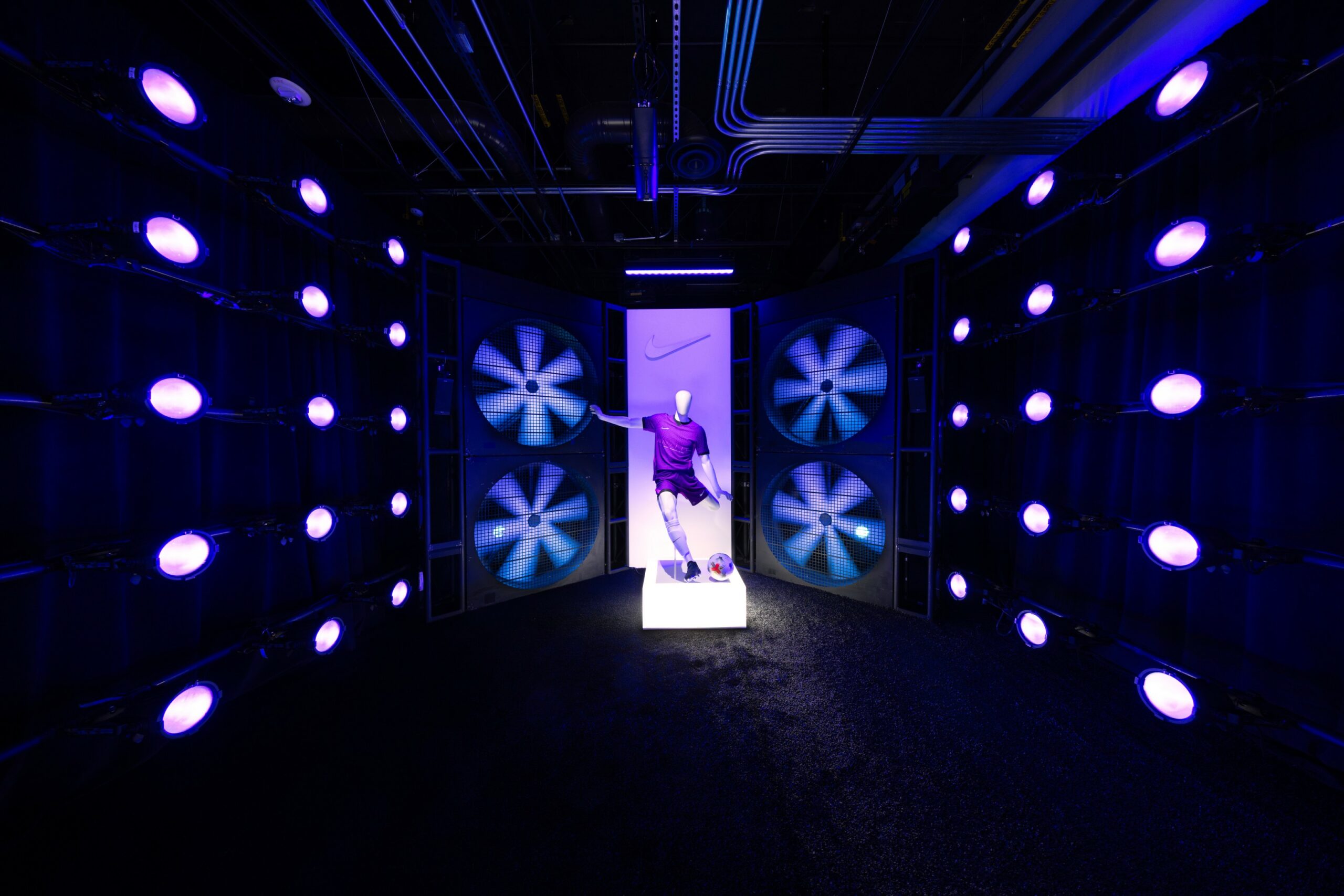
Nike Aero-FIT technology under development
(Image credit: Nike)
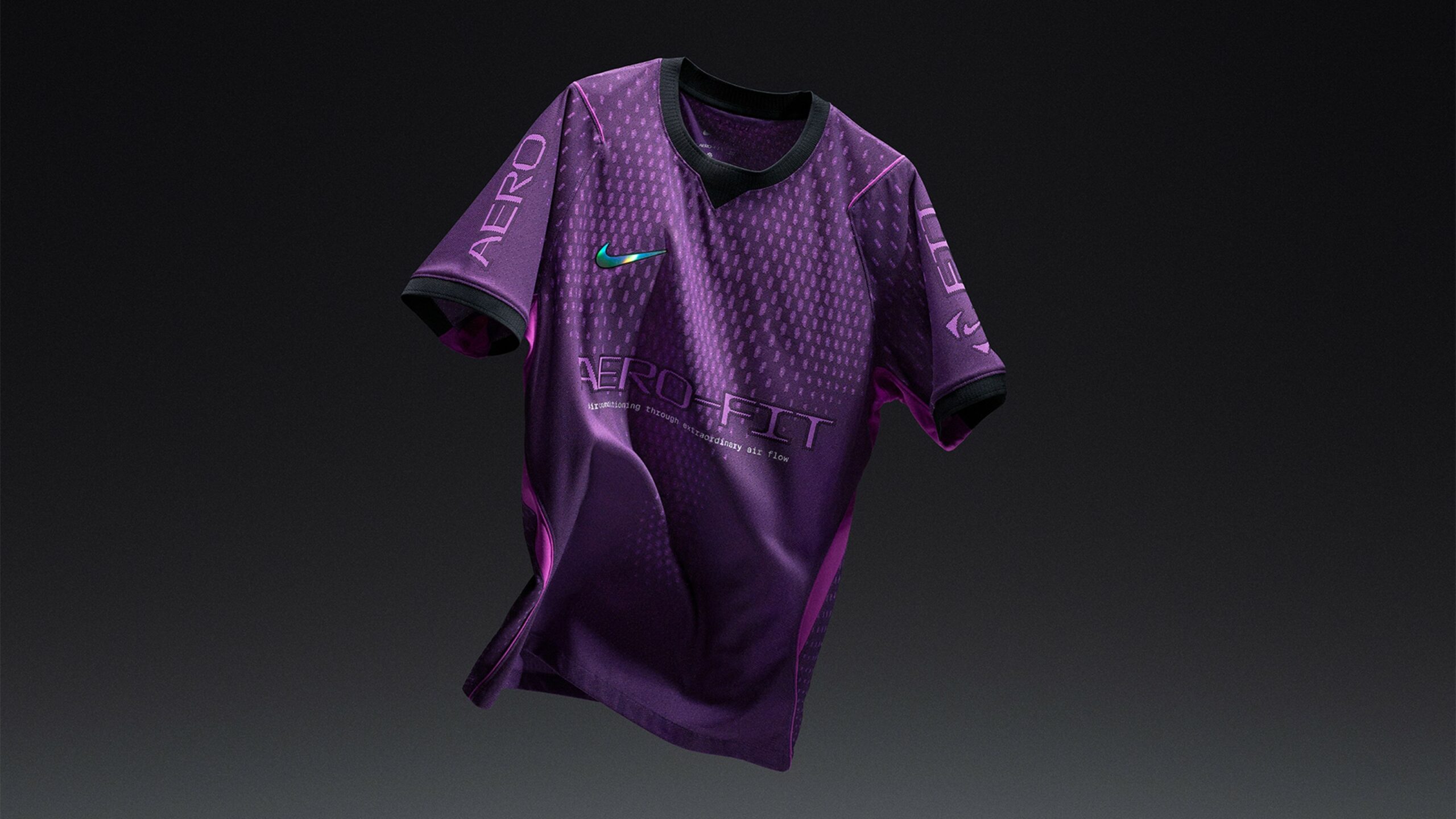
A Nike Aero-FIT shirt
(Image credit: Nike)
The focus of research and technical innovation has also have widened beyond elite marginal gains. Elite athletes though are still critical to Nike, as brand ambassadors and collaborators on product development. ‘When we solve problems for elite athletes, a lot of those benefits translate to everyday athletes as well. McCartney cites marathon icon Eliud Kipchoge. ‘Eliud told us he needed more protection in his forefoot during long runs. Then you talk to people at a local 5K and they say the same thing.’
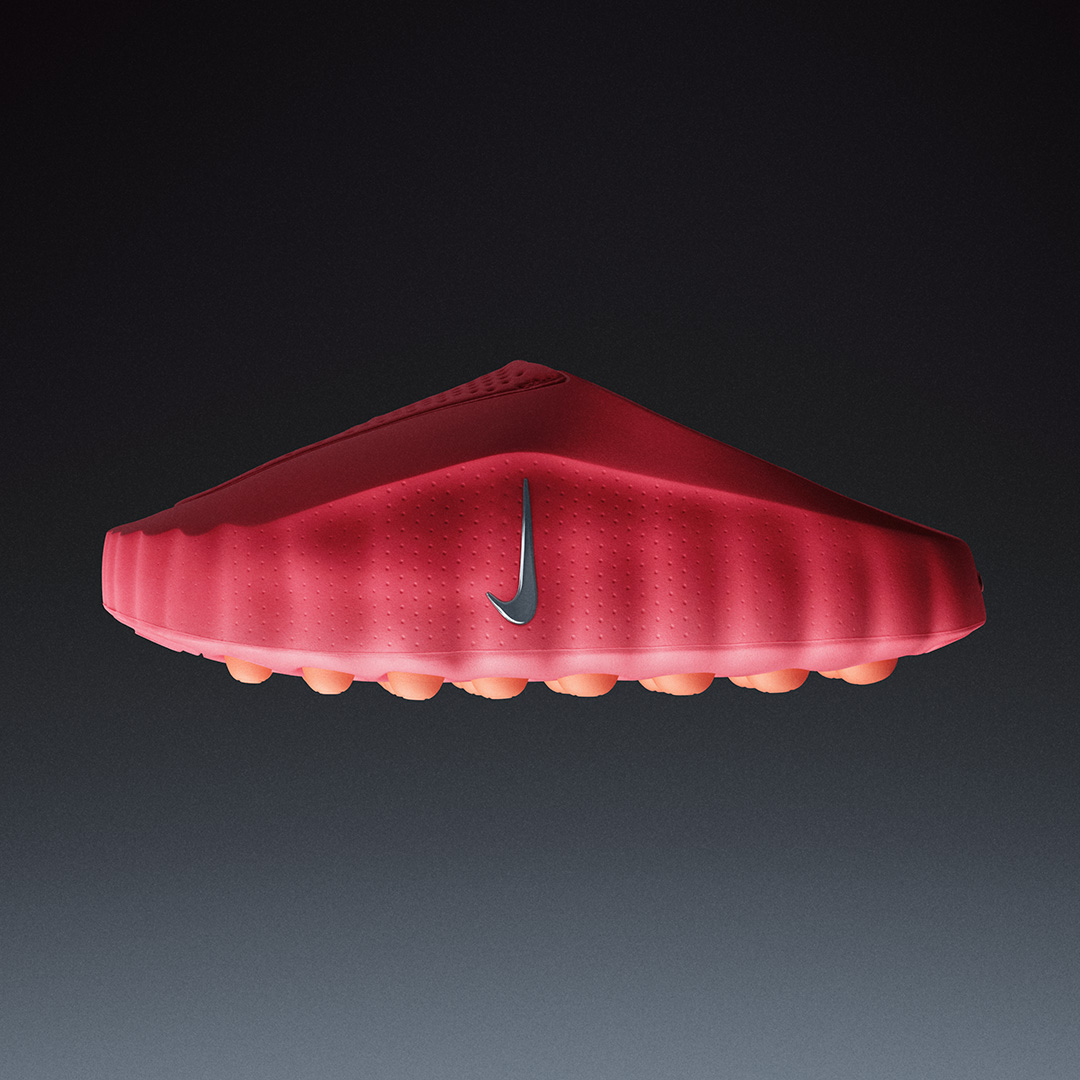
The new Nike Mind shoe
(Image credit: Nike)
All this can feel like mixed signals. Hard science vs singe-athlete insight elite vs bottom-up testing and democratisation. McCartney argues that this isn’t a new MO for Nike. For all the futuristic materials, neuroscience rigs and robotics systems they’re now experimenting with, Nike’s approach, he says, remains rooted in its earliest instincts of its co-founder.
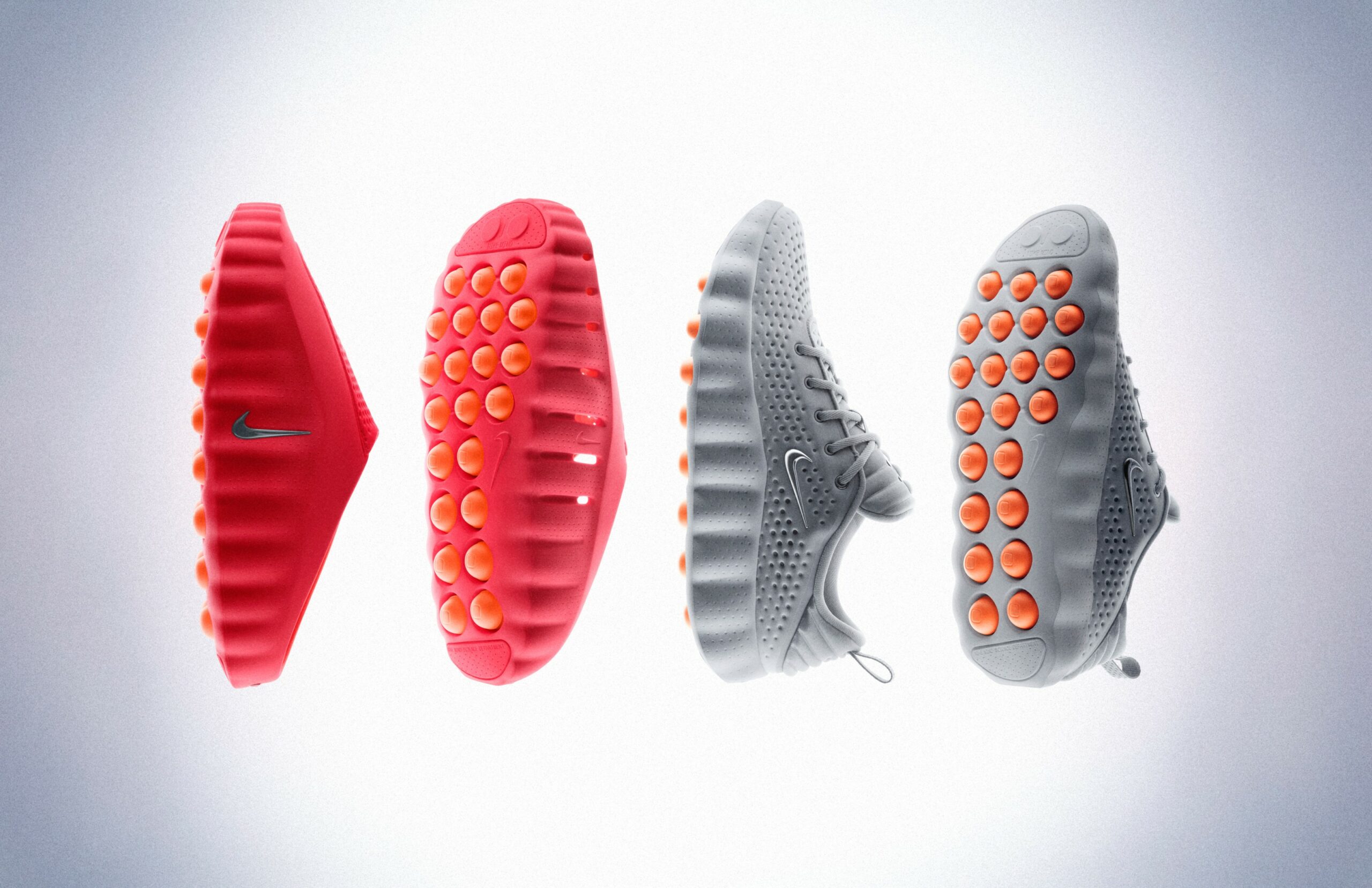
The new Nike Mind shoe
(Image credit: Nike)
‘Bill Bowerman shaved ounces off running spikes,’ McCartney notes, ‘but he also wrote a book about jogging. Sometimes we don’t communicate that.’ The tools may be different today – machine-learning airflow maps, soft-robotics gait systems – but the goal remains the same.
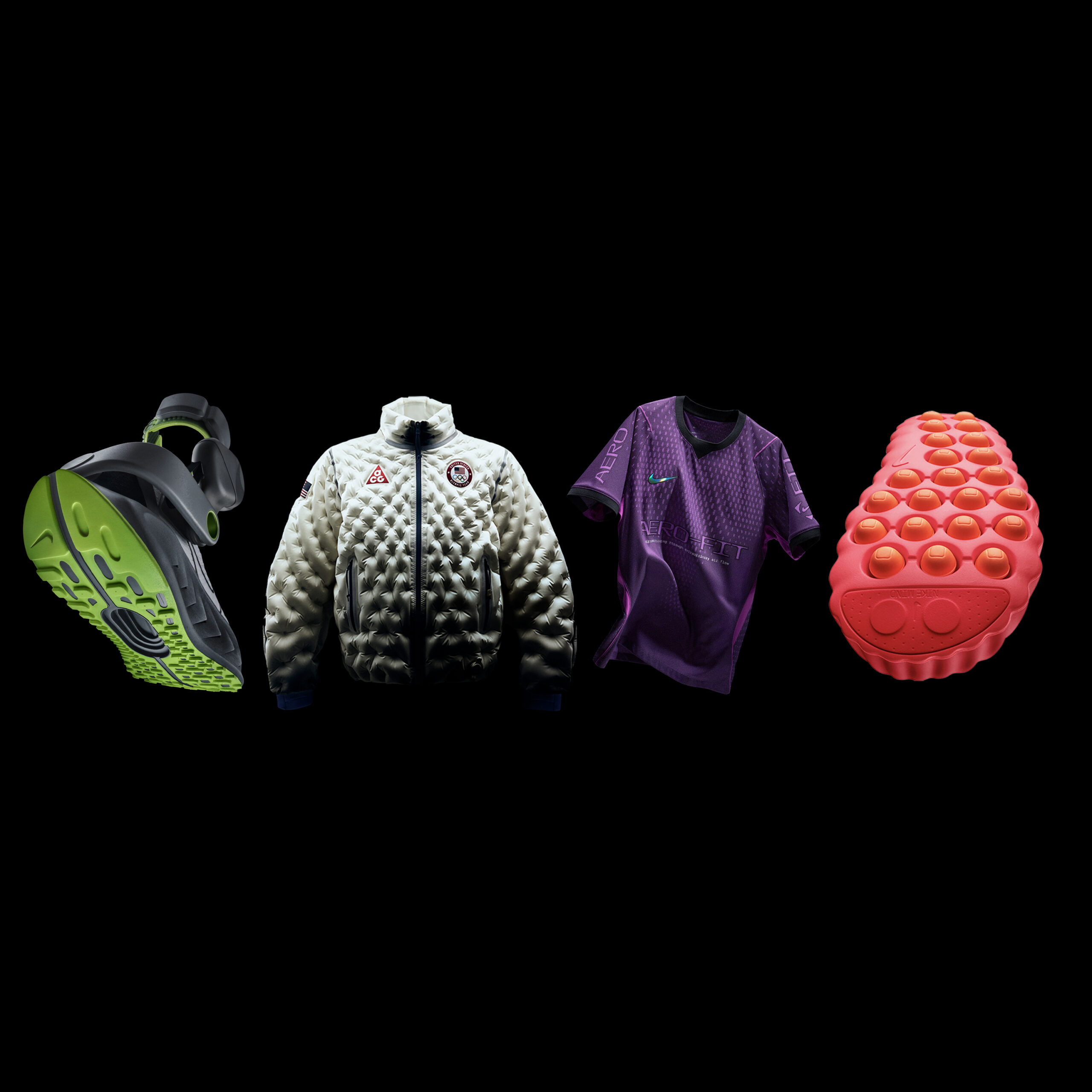
Nike’s suite of innovative ideas
(Image credit: Nike)
Help more people move, move more comfortably, more often, and eventually faster. ‘Helping people move has always been at core of who we are. So there are different solutions but it’s not a new idea.’