This post was originally published on here
A team of African scientists have developed a nanoscale drug-delivery system that can slip through the heart’s protective membrane, something standard antibiotics cannot do, offering new hope for patients with one of the deadliest forms of tuberculosis.
The breakthrough from the Wits Advanced Drug Delivery Platform (WADDP) targets TB pericarditis, a severe and often fatal condition because antibiotics cannot reach the site of infection.
“By engineering a nanosystem that crosses the pericardium and delivers bedaquiline directly to infected immune cells, we are opening a pathway to treat a condition that has long been considered almost untreatable,” said WADDP director Yahya Choonara.
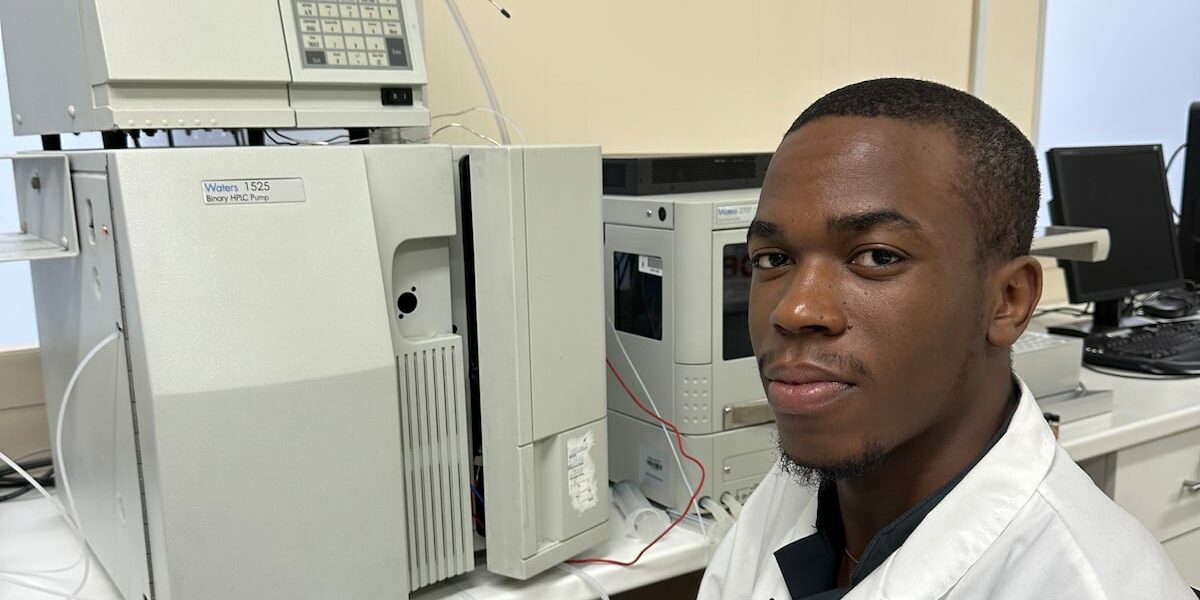
TB pericarditis is difficult to treat because the pericardium acts like a sealed shield around the heart. Simisola Ayobami Ayodele, a PhD candidate working on the project, told Sunday Times that it functions as a “fortress” that blocks most antibiotics from entering.
“Even when some drugs do manage to breach the wall, they often get trapped by proteins in the fluid or fail to work because the chemical environment inside the sac neutralises them,” he said.
The Wits team created a 100–200 nanometre particle to mimic a “Trojan Horse” which is far smaller than anything visible to the eye, made from natural polymers. This tiny carrier is coated in chitosan oligosaccharide lactate (COS), which helps it pass through the tightly sealed cells of the heart membrane.
“Take the heart’s membrane as a wall of bricks cemented tightly together. Standard antibiotics are like water thrown at the wall,” said Ayodele. “Our nanoparticle acts like a ‘ghost’ key.”
Once it passes through the membrane, a second coating, mannan, guides it to macrophages, the immune cells where TB bacteria hide.
Ayodele said the biggest challenge was designing a particle that macrophages would willingly “eat”. “We had to disguise the nanoparticle as ‘food’,” he said.
If bedaquiline can be delivered intrapericardially in sustained, low-frequency doses, this could become a blueprint for treating other hard-to-reach infections.
— Yahya Choonara, WADDP director
The system also solves a major issue with bedaquiline, an oily TB drug that does not travel easily in the body. “We had to trap this oily drug inside a shell that could travel through the body’s fluids without easily dissolving,” said Ayodele.
One of the most promising findings was how long the treatment can last.
“After 20 days, the nanoparticle system had released slowly, less than a quarter of its total drug payload,” said Ayodele. Early results show this steady release may be strong enough to kill both ordinary TB and multidrug-resistant strains, suggesting patients may need only one or a few doses.
The team believes the system could be fitted easily into existing medical procedures. Patients with TB pericarditis usually have fluid drained from around the heart. “Our innovation simply adds a step,” said Ayodele. “Once the dangerous fluid is drained, we inject the treatment through the same needle.”
Safety remains central, and early signs are promising. “Our preliminary tests on human and pig heart tissue showed that the nanoparticles did not damage the membrane or cause toxicity,” he said.
Choonara said this method could become a model for treating other difficult forms of TB. “If bedaquiline can be delivered intrapericardially in sustained, low-frequency doses, this could become a blueprint for treating other hard-to-reach infections,” he said.
Ayodele added that the same system could be adapted for lymphatic or brain TB. “TB almost always hides inside the same type of immune cell,” he said. “The same underlying technology could be adapted.”
The breakthrough is also significant for low- and middle-income countries where TB and HIV infections are high.
Ayodele said it was a “local solution for a global problem”, highlighting that the method uses existing drugs and natural materials that are affordable.
The project is still in the pre-clinical stage. The next steps include animal studies, safety checks and stability testing before clinical trials can begin.
The project is supervised by Choonara, with co-supervisors professors Pradeep Kumar and Armorel van Eyk, and supported by clinician scientist Dr Pieter van der Bijl and surgical teams at Netcare Kuils River Hospital.