This post was originally published on here
The Australian Antarctic Program will receive more than $200 million in additional funding over the next seven years to support science and logistics operations.
At a press conference outside the headquarters of the Australian Antarctic Division (AAD) near Hobart, federal Treasurer Jim Chalmers said the funding would be included in next week’s mid-year budget update.
“This is a $200 million vote of confidence in the extraordinary science that happens here and what it means for our understanding of the Antarctic area,” Mr Chalmers said.
The funding will be included in next week’s mid-year budget update. (Supplied: AAD)
A total of $208 million will be provided, much of it designed to support jobs in Tasmania, where the AAD and other Antarctic research programs are based.
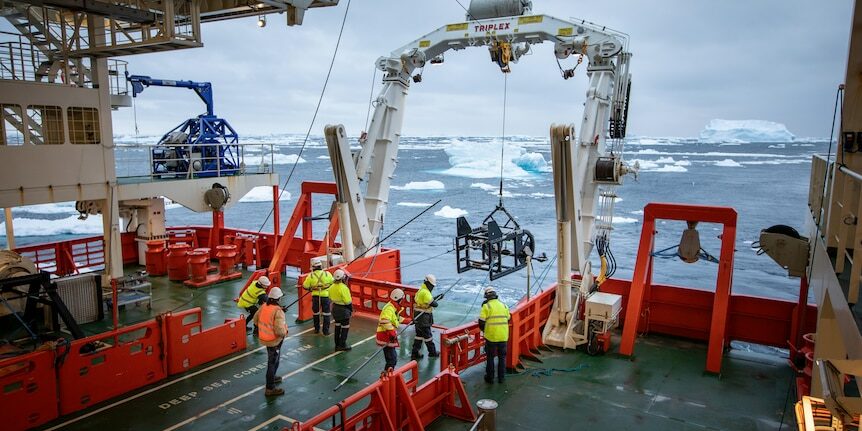
Some of the funding will allow the national icebreaker to conduct more marine science voyages in addition to its regular resupply missions to Australia’s four Antarctic and sub-Antarctic stations.
It comes after concerns were raised last year that the ship’s state-of-the-art research capabilities were being under-utilised.
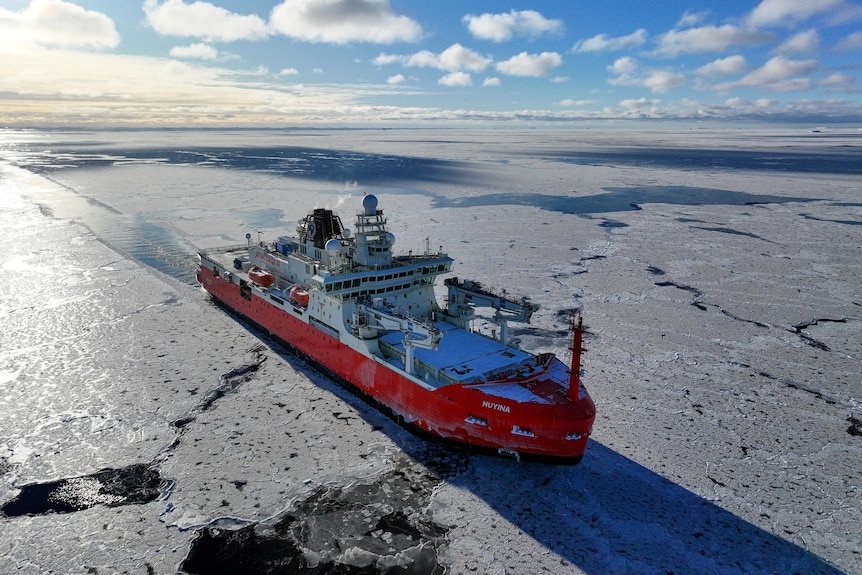
The multi-million-dollar support will allow scientists to research a range of issues, including global climate systems.
AAD boss Emma Campbell said there would be an additional 150 days of marine science over the next three years.
“I envisage dedicated marine [science] voyages, but also the opportunity to do more science en route to station,” Ms Campbell said.
She said the funding will help scientists research a range of issues, including changes in the marginal ice zone, biodiversity in the Southern Ocean and global climate systems.
To support and deliver the additional science voyages, up to 30 new technical and science jobs will be established at the AAD’s headquarters.
The new funding will also cover the increased cost of aviation in Antarctica, ensuring medical evacuation and search and rescue capabilities.
Australian Antarctic Science Council chair, Dr Nicholas Gales, said the extra funding would benefit all Australians.
“What happens in Antarctica, and fundamentally what changes in Antarctica, affects everyone in Australia,”
Dr Gales said.
“It affects the rate at which we experience floods and fires and extreme weather events.
“It affects the health of our oceans on which we all rely.
“It’s critically important information and science to guide Australia as it makes its adaptations to climate change.”
Short-term funding fix for research centre
The Australian Centre for Excellence in Antarctic Science (ACEAS), which was set to have its funding expire in the next six months, has been given $5 million over two years.
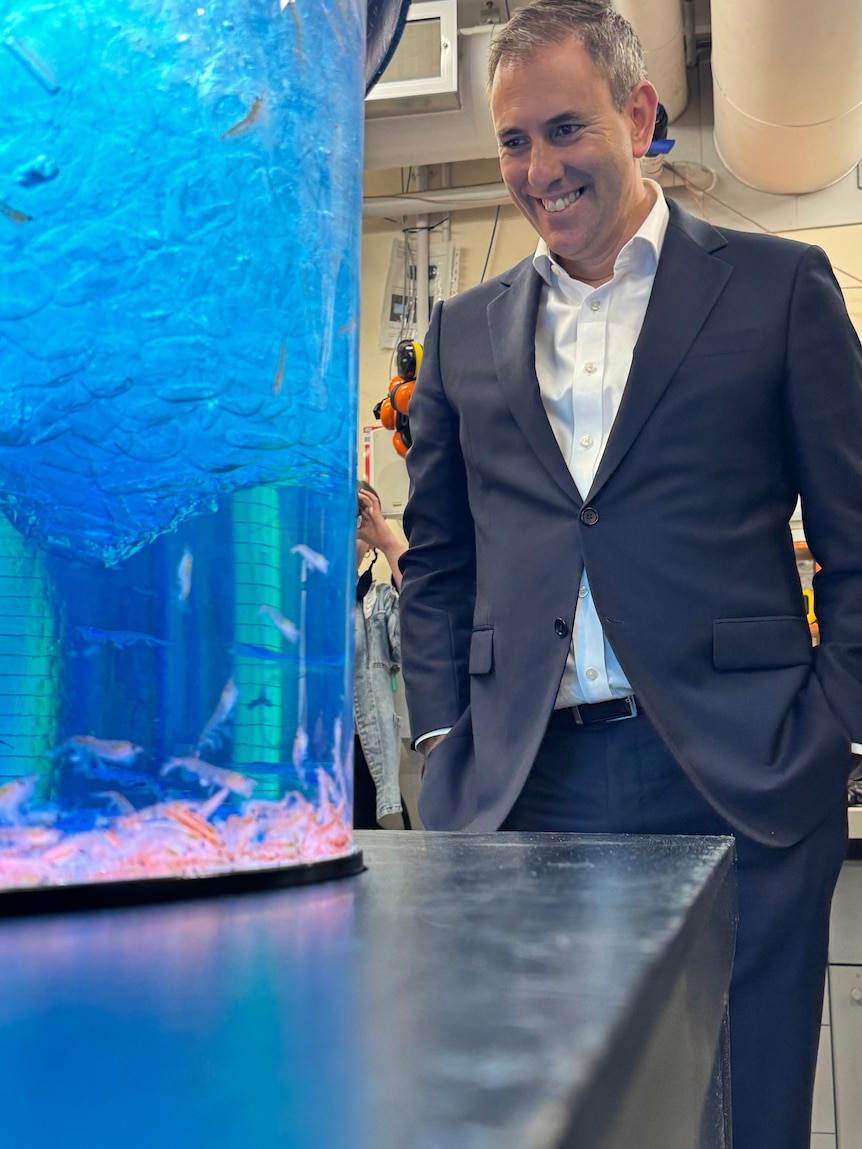
Jim Chalmers made the short-term funding commitment during a trip to Hobart. (Supplied: AAD)
In a statement, ACEAS said it “warmly welcomed” the funding lifeline.
“We are working with government to determine the details of this short-term funding fix and what it means for ACEAS’s ongoing operations and research,” it said.
“Our imperative is to ensure we can continue delivering world-leading science that helps communities in Australia prepare for climate risks emerging from Antarctica and the Southern Ocean.”
Greens Senator Peter Whish-Wilson, who last year chaired a parliamentary inquiry into funding issues at the AAD, called for additional funding over the longer term.
“Current funding for ACEAS is $6.7m per annum, which expires imminently,” he said.
“Despite lobbying for a long-term government commitment, this critical cooperative research centre has only received $5m for two years — which will result in significant job losses.”
The federal government’s latest funding announcement comes after a series of commitments over the past year.
These have included $17 million for additional marine science voyages to the Denman Glacier and Heard Island this year.
The government has also allocated $370 million over nine years to rebuild Australia’s research station on Macquarie Island, and $250 million to upgrade Davis Station in Antarctica over seven years.