This post was originally published on here
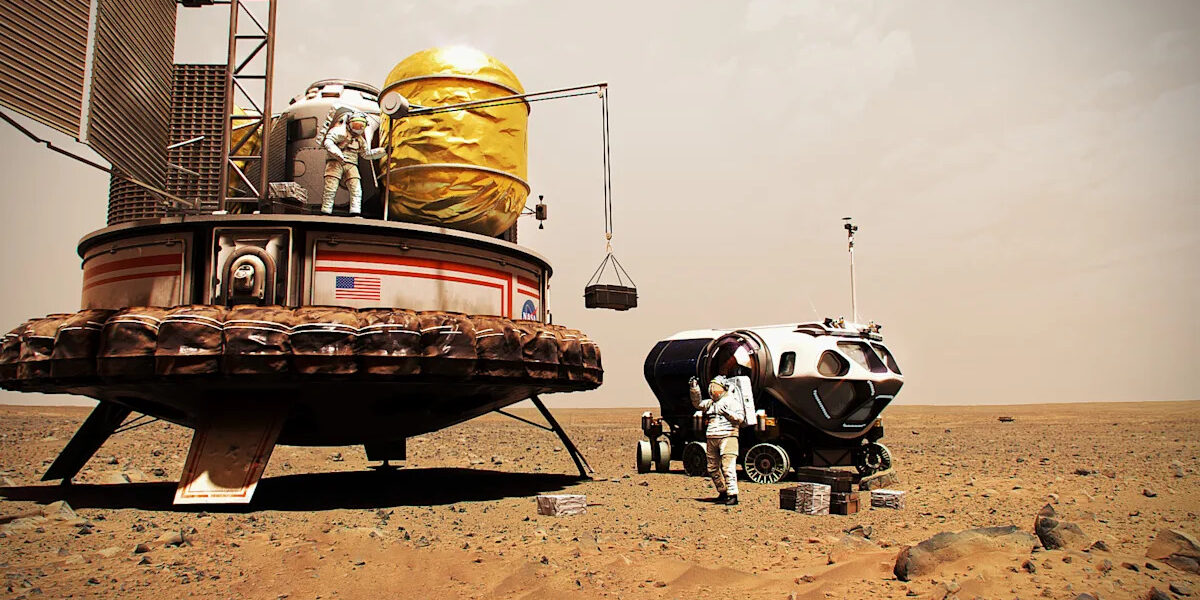
Leading US scientists and engineers have published a 200-page report, “A Science Strategy for the Human Exploration of Mars,” arguing for investing resources in visiting our most promising neighbor for human habitation. The core of it? They want to try to find life on another world. But beyond that, studying Mars’ geology, discovering new resources, and bringing samples home would all be far easier with human boots on the ground.
For many years, Mars has been a far-flung, future project that would only be possible after new, unrealized technologies were developed. But as spacecraft like SpaceX’s Starship and Blue Origin’s Blue Moon and New Glenn are further developed, Mars grows closer, and crewed missions to the planet are looking increasingly achievable within shorter timeframes. With a new NASA administrator expected to be sworn in soon, the US could pivot its efforts towards reaching the red planet sooner rather than later.
“There’s no turning back,” said Dava Newman, a professor of aeronautics and astronautics at MIT (via Ars Technica). “Everyone is inspired by this because it’s becoming real. We can get there. Decades ago, we didn’t have the technologies. This would have been a study report.”
Advertisement
Advertisement
The report provides detailed information on the benefits of sending human boots to Mars. Although the search for life was the primary concern, the study also examined how water and carbon dioxide cycle on the surface and underground, how Mars’ geology has changed over millennia, how humans fare under different gravity conditions, and how Earth microbes function on Mars, among other goals.
“The report says here are the top science priorities that can be accomplished by humans on the surface of Mars,” said Linda T. Elkins-Tanton, one of the report’s authors. “There are thousands of scientific measurements that could be taken, but we believe these are the highest priorities. We’ve been on Mars for 50 years. With humans there, we have a huge opportunity.”
The report suggests that an initial 30-day mission should be prioritized, with follow-up cargo missions enabling a 300-day mission at a later stage.
This may all be in aid of accelerating US astronauts’ arrival at Mars, as there has been concern that China could retrieve a sample from the Red Planet first—just as China could beat US astronauts back to the Moon, if something isn’t done about that SpaceX contract.