This post was originally published on here
A handful of incredibly rare solar neutrino events were detected turning carbon-13 into nitrogen-13 deep underground.
The finding confirms a long-anticipated reaction and provides a new tool for probing the universe’s smallest and strangest particles.
Ghost Particles and a New Kind of Interaction
Neutrinos rank among the most puzzling particles known to science. Often described as ‘ghost particles’, they almost never interact with ordinary matter. Trillions move through each of us every second without leaving any trace behind. These particles emerge from nuclear processes, including those happening at the heart of our Sun, yet they are extremely difficult to detect because they so rarely collide with anything.
Until now, solar neutrinos have only been observed interacting with a limited number of materials. Researchers have now achieved a first: they have documented neutrinos converting carbon atoms into nitrogen inside a massive underground detector.
A Deep Underground Facility Built to Catch Rare Signals
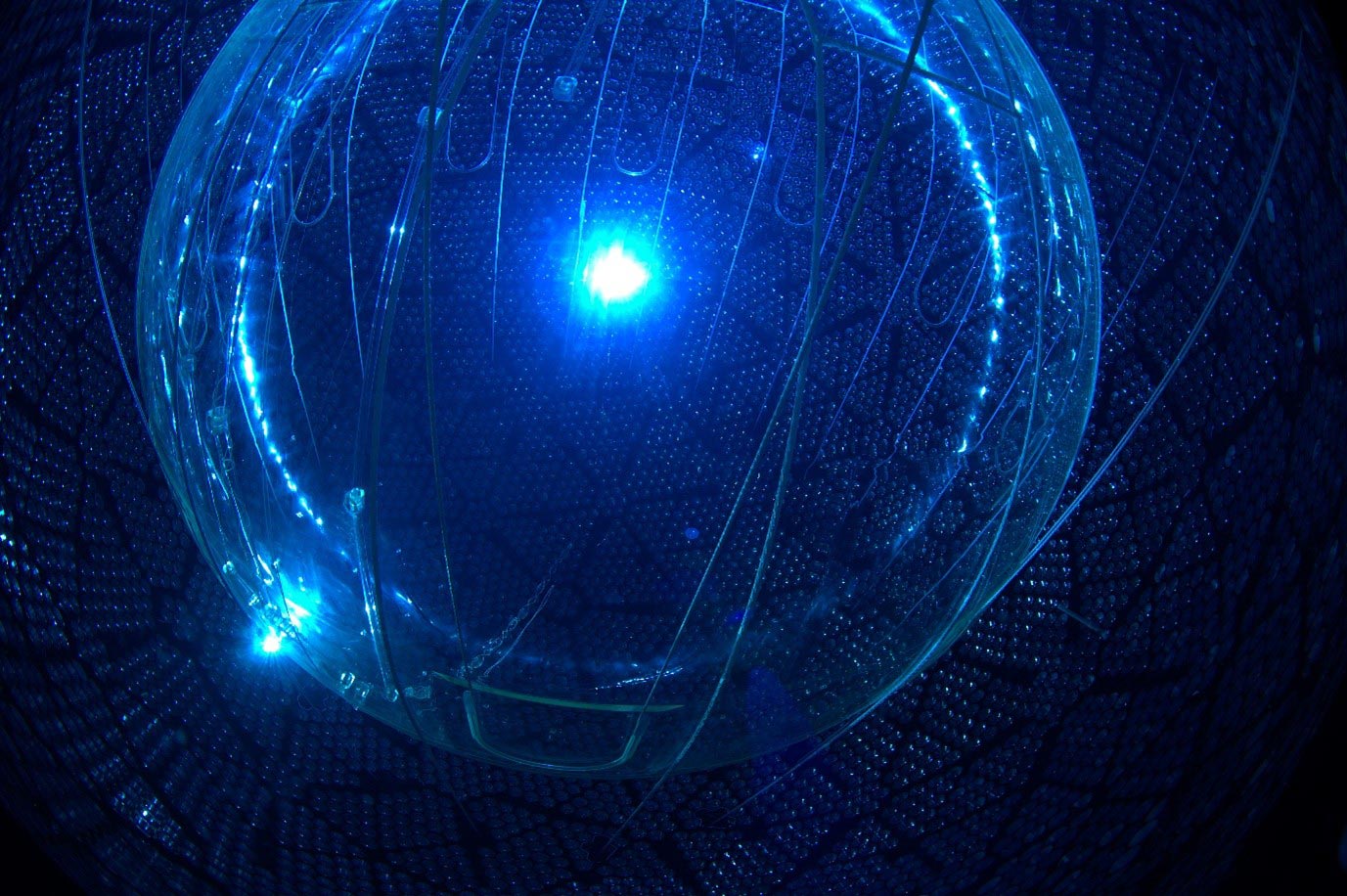
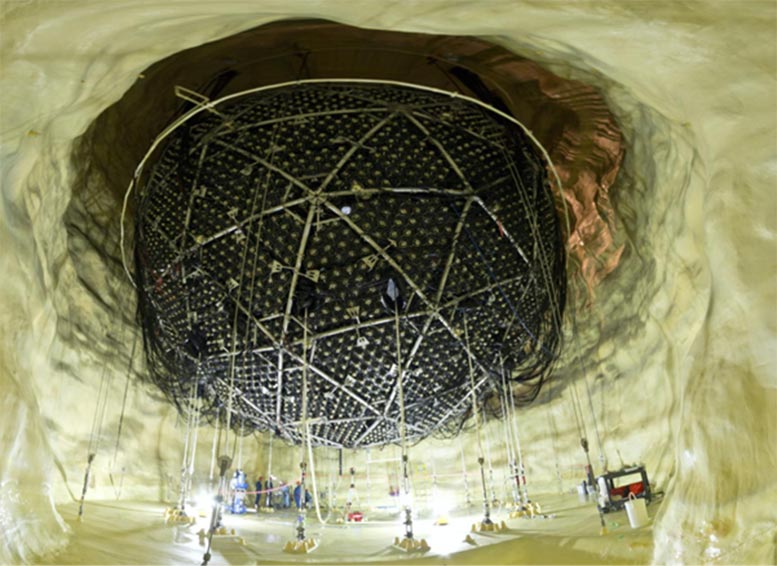
This advance was achieved by an Oxford-led team using the SNO+ detector, situated two kilometres beneath the surface at SNOLAB in Sudbury, Canada. SNOLAB operates within an active mine and is designed to block out cosmic rays and radiation that would otherwise overwhelm the faint neutrino signals the team is trying to measure.
Tracking a Two-Step Reaction in Carbon-13
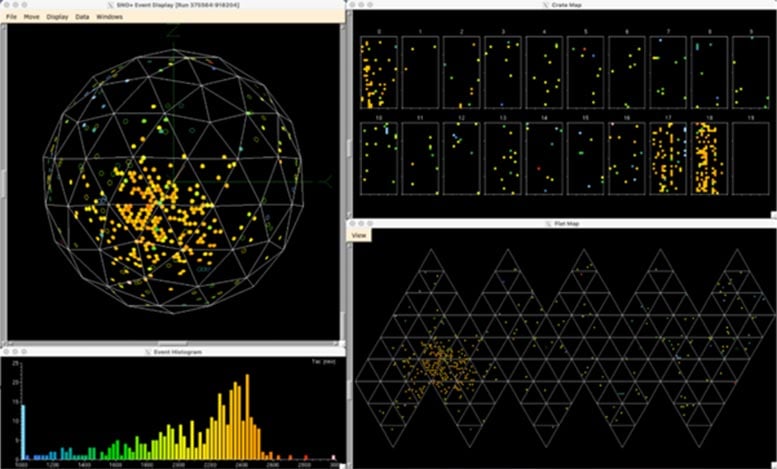
The researchers focused on events in which a high-energy neutrino strikes a carbon-13 nucleus, producing nitrogen-13. This newly formed nitrogen-13 is radioactive and decays after roughly ten minutes. To identify the process, the team relied on a technique known as a ‘delayed coincidence’ method. It searches for two related flashes of light: the first when the neutrino hits the carbon-13 nucleus, and the second several minutes later when the nitrogen-13 decays. This pattern makes it possible to distinguish genuine neutrino interactions from unrelated background activity.
During a 231-day window spanning May 4, 2022, to June 29, 2023, the analysis revealed 5.6 observed events. This number aligns with the prediction that 4.7 such events would be produced by solar neutrinos during the same period.
Why These Interactions Matter for Understanding the Universe
Neutrinos play a crucial role in scientific attempts to understand how stars function, how nuclear fusion operates, and how the universe evolves. Researchers say that this new observation sets the stage for future investigations into other low-energy neutrino reactions.
Lead author Gulliver Milton, a PhD student at the University of Oxford’s Department of Physics, said: “Capturing this interaction is an extraordinary achievement. Despite the rarity of the carbon isotope, we were able to observe its interaction with neutrinos, which were born in the Sun’s core and travelled vast distances to reach our detector.”
Co-author Professor Steven Biller (Department of Physics, University of Oxford) added: “Solar neutrinos themselves have been an intriguing subject of study for many years, and the measurements of these by our predecessor experiment, SNO, led to the 2015 Nobel Prize in physics. It is remarkable that our understanding of neutrinos from the Sun has advanced so much that we can now use them for the first time as a ‘test beam’ to study other kinds of rare atomic reactions!”
Building on the Legacy of SNO and Exploring New Frontiers
SNO+ is an updated version of the earlier SNO experiment, which demonstrated that neutrinos shift between three types known as electron, muon, and tau neutrinos during their journey from the Sun to Earth. According to SNOLAB staff scientist Dr. Christine Kraus, SNO’s original findings, led by Arthur B. McDonald, helped solve the long-standing solar neutrino problem and contributed to the 2015 Nobel Prize in Physics. These results opened the way for broader investigations into the nature of neutrinos and their cosmic importance.
“This discovery uses the natural abundance of carbon-13 within the experiment’s liquid scintillator to measure a specific, rare interaction,” Kraus said. “To our knowledge, these results represent the lowest energy observation of neutrino interactions on carbon-13 nuclei to date and provides the first direct cross-section measurement for this specific nuclear reaction to the ground state of the resulting nitrogen-13 nucleus.”
Reference: “First Evidence of Solar Neutrino Interactions on 13C” 10 December 2025, Physical Review Letters.
DOI: 10.1103/1frl-95g
Never miss a breakthrough: Join the SciTechDaily newsletter.
Follow us on Google and Google News.