This post was originally published on here
An analysis of skeletal remains from England before and during the Roman occupation confirms theories that population health deteriorated during Roman rule, but only in urban centers. This suggests that pre-Roman traditions persisted in rural areas of Roman Britain, while city dwellers experienced long-term consequences. This is reported by Phys org, writes UNN.
Details
The Roman occupation of Britain in 43 AD brought significant social upheaval. Although the Romans wrote that they brought “civilization” to the people of Britain, the increasing urbanization under Roman influence exposed people to new diseases and created class divisions that limited access to resources. Therefore, this was widely seen as a factor that negatively affected the overall health of the population.
Despite this being a common belief, health in the preceding Iron Age was relatively under-researched, and thus our understanding of the Roman impact on health is limited.
Iron Age burial practices differ greatly from the organized cemeteries we typically associate with burials. Their customs suggest they believed that for the soul to be released into the afterlife, the body had to be dismembered. This makes analysis of this period difficult, as there are significantly fewer human remains available for study, and it is not always possible to examine a complete skeleton.
Unlike adults, infants in Iron Age Britain were often buried whole, rather than cremated or dismembered. Taking advantage of this, Pitt applies a new approach using the DOHaD hypothesis in her research published in Antiquity.
The DOHaD hypothesis suggests that a child’s experiences before the age of 2 affect their health and development throughout their life. This means that so-called “stressors” — diseases, malnutrition, or even traumatic events — can affect a person’s epigenetic traits, which in turn can lead to health problems in the future and even affect subsequent generations.
Maternal and Infant Health and Urbanization
Considering the experiences of children alongside the health of reproductive (biologically female) adults can provide insight into the stressors affecting different generations and form a more representative view of the long-term socioeconomic changes associated with the Roman occupation.
“Mothers and infants are underrepresented in historical sources,” Pitt adds. “By studying them together, we can see the long-term impact of urbanization on human health, with negative traits being passed from mothers to children.”
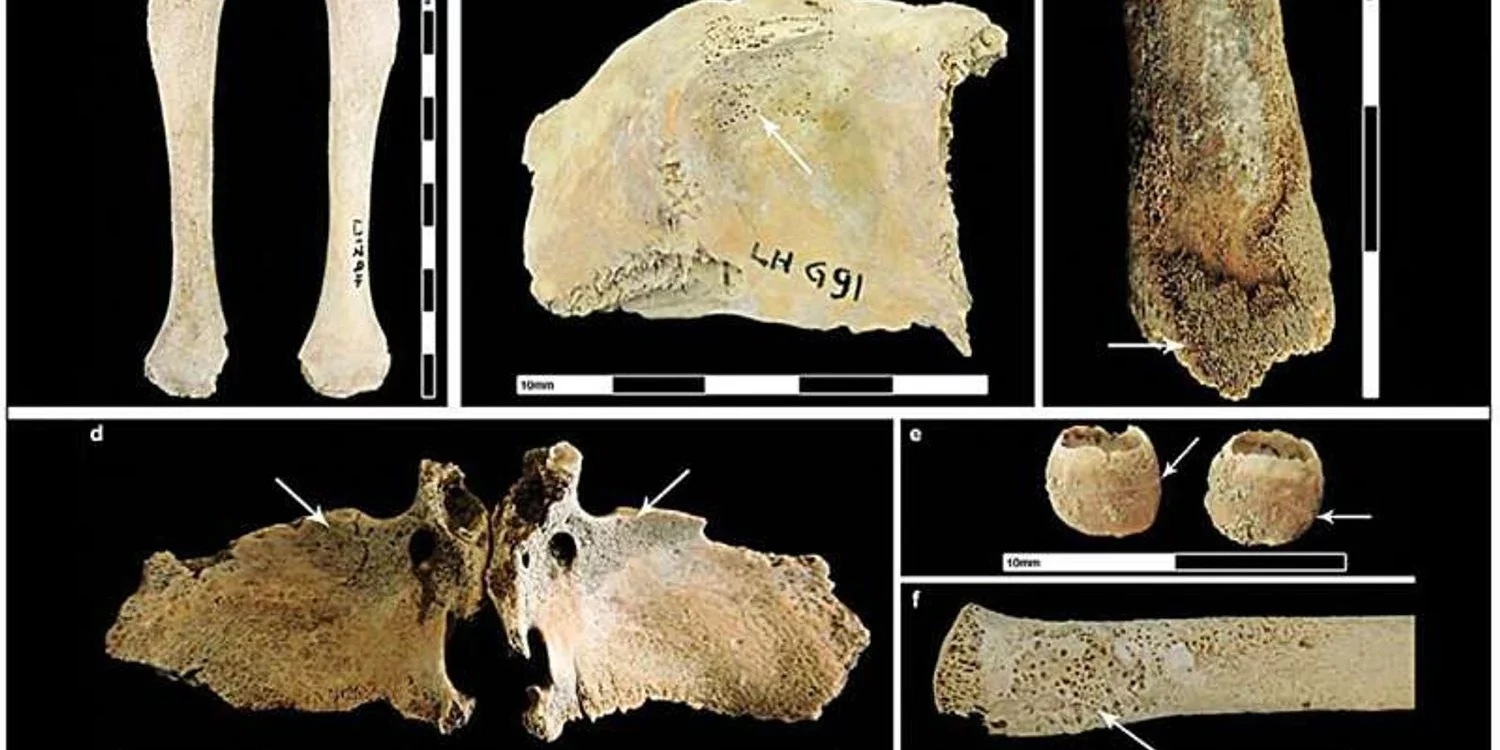
Pitt examined 646 skeletons, 372 of which were children and 274 were adult women, from urban and rural Iron Age and Roman-British sites in southern and central England.
She determined age at death and health indicators (including bone lesions), and then statistically analyzed the differences between Iron Age, rural, and urban Roman samples.
Findings on Health in the City and Countryside
She found that while there was a statistically significant increase in negative health indicators during the Roman period, this was only true for urban centers, such as civitas capitals. Rural skeletons showed slightly greater exposure to pathogens, but there was no statistical difference between health in the Iron Age and the Roman period in rural areas.
Urbanization likely led to limited access to resources, overcrowded and unsanitary living conditions, and exposure to lead, which was a key part of Roman urban infrastructure. This had a severe and long-lasting impact on health.
In contrast, rural communities did not experience these stressors. It is possible that regional Iron Age traditions persisted in rural areas, which challenges the common belief that Roman administration imposed radical cultural changes on Iron Age communities.
Implications for Modern Health
Overall, while the negative effects of the Roman occupation were largely confined to polluted and overcrowded urban centers, Pitt’s findings reveal a picture of the difficulties caused by Roman urbanization that spanned several generations.
“I believe this has serious implications for the health of modern communities,” Pitt concludes. “Today, children are born into an increasingly polluted world, and more and more families face financial difficulties. This can significantly affect the development of young children and negatively impact their health and well-being throughout their lives and even in subsequent generations.”
Scientists Uncover Mechanism Behind Accuracy of Maya Eclipse Tables21.11.25, 09:15 • 6107 views