This post was originally published on here

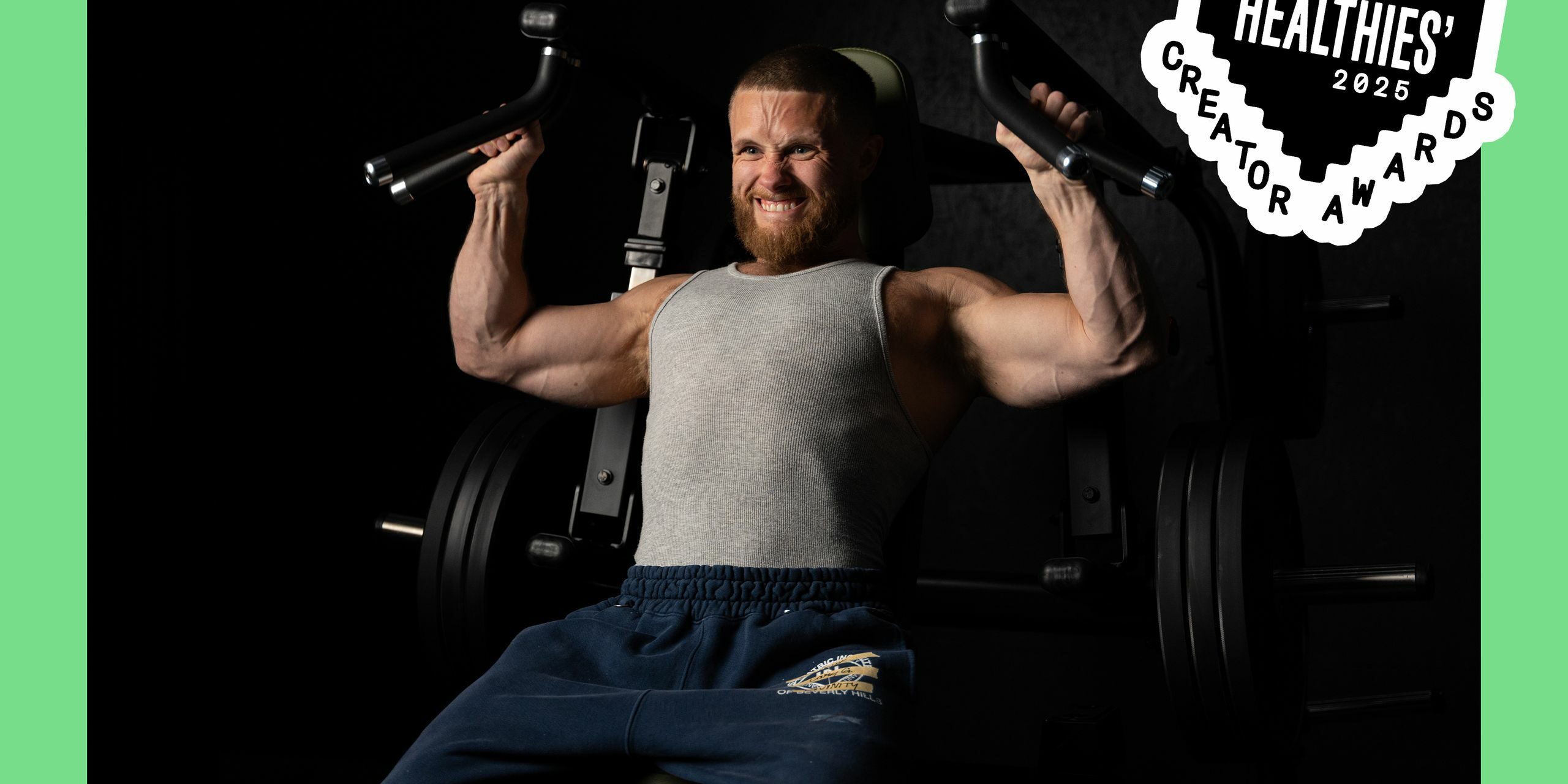
Somewhere in Toronto sits one of the most advanced gyms in Canada. With plate-loaded machines that let you adjust the resistance curve to niche isolation equipment (we’re talking a vintage Dorian Yates–style lat pullover machine and an Arnold Schwarzenegger–inspired Icarian donkey calf raise machine), this is the Pumping Iron enthusiast’s wet dream. Few know its location, however, and those who do aren’t going in to get their usual pump. You see, the Muscle Lab is not your typical commercial gym. Rather, it’s a nearly $3 million 4,000-square-foot research facility belonging to Jeff Nippard, a 35-year-old natural bodybuilder with a 7.9 million following on YouTube.
Since 2014, Nippard has been the face (and, er, body) of the fast-growing science-based lifting movement. The antithesis to “bro science,” in which gymgoers base their workout regimens on anecdotal evidence or personal experience, science-based lifting uses actual scientific research to maximize results and decrease the likelihood of injury. The fitness philosophy has been around for decades. In 1973, Nautilus (now Bowflex) founder Arthur Jones conducted the Colorado Experiment, in which, using the basic tenets of science-based lifting, he trained bodybuilder Casey Viator for 28 days. Viator reportedly emerged from the experiment 63 pounds heavier from the muscle he’d gained. Though the extraordinary results were met with skepticism, the event doubles as one of the most well-known events in science-based lifting history, and a foreshadowing of the passionate criticism it would inspire.
Online debates on how one should tailor their workouts based on the results of scientific studies are seemingly neverending. But there’s no argument on whether or not Nippard is the de facto spokesperson for the philosophy. His videos—which include explainers on various exercises and training programs, personal lifting testimonials, and workout collabs with other fitness influencers—are often the first to pop up if you Google “science-based lifting” or any of its related terms. The association isn’t lost on him. “An attack on science-based lifting is basically an attack on me,” he said in a video he posted almost a year ago.
Though he’s been consistently hitting the gym for 20 years, Nippard hasn’t always pledged allegiance to the scientific method. He says he was a self-described “bro” before discovering in 2014 that there was a research-backed way to get swole. It was then that he fell in love with the idea that “there were people actually doing research on how to build muscle and lose fat and get healthier and stronger,” he says. Nippard began posting on YouTube around the same time, mostly filming his workouts before he got into translating advanced vernacular into digestible facts for viewers, a skill he says he gained from the “general scientific literacy” his biochemistry degree from Memorial University of Newfoundland bestowed him. Much like he’s aced the art of building muscle, he’s also built a successful career as a fitness creator. With nearly 8 million YouTube subscribers, his videos regularly clear the 2 million viewer mark, and sometimes reach beyond 10 million. He’s also branched out beyond social media. In 2024 he published an instructional book called The Muscle Ladder: Get Jacked Using Science, which is a number one bestseller on Amazon for books on sports and health safety. He also sells training programs through his website, and, in 2021, launched the paid app MacroFactor for tracking nutrients. But loading up the rack and hitting record numbers so viewers can see the work behind his ripped physique is still at the center of his operation.
“The core values for me these days are still pretty similar in the sense that I always want to put integrity first,” Nippard says. “I really don’t ever want to overhype something or make super bold claims or twist evidence to fit a narrative.”
Over the past two years, Nippard had been meticulously constructing his dream research facility, the Jeff Nippard Muscle Lab. With the help of the Toronto-based design studio Nivek Remas, he’s created a space that functions as a hybrid soundstage, gym, and research lab. In one section is a dual gym setup (one for bodybuilding and one for strength training), a lab decked out with a fully functioning DEXA and ultrasound machines, for measuring body mass and muscle thickness, respectively, and a recording space for his revamped The Jeff Nippard Podcast, which already has over 72,000 subscribers. Nippard officially hard-launched the space in September, using it as a studio for recording videos and collaborations, as well as experiments that he’s hoping to get peer-reviewed and published.
“I’ve been able to reach people who want to get a bigger bench press or who want to lower their body fat percentage, but I want to be able to reach people who don’t even know they want that yet,” he says. “And so how do you reach those people? Well, you reach those through personal connection, and that’s where I think the lab comes in.”
As the science-based lifting movement exists now, the source of information at the center of any given video he films often comes in the form of an academic study—one that’s written with a lot of technical terms and doesn’t include images or commentary from its subjects. When creating videos, Nippard puts himself into the shoes of his viewers. What do they want to see? To him, it’s as little jargon as possible and a relatable narrative with visuals that show an actual transformation.
“What I want to do in the lab is actually film the subjects,” he says. “Show people their results so you have that personal connection with the people in the studies. So if I can pull more people in and get them interested in science that way, that I would consider a huge success.”
As he sees it, the university studies he’s drawn from in the past are flawed: He cites small sample sizes and a lack of connection between subject and reader. With the considerable resources and the ability to recruit potential participants from his multimillion-follower count across many social platforms, Nippard sees an opportunity to contribute to the existing body of research around science-backed lifting.
“Another motivation for me in making the lab was to advance the field forward,” Nippard says. “I’m going to be able to recruit virtually however many subjects as we want.”
As he notes in his online video tour of the lab, every piece of equipment was paid for by those who have bought training programs from his website or have used MacroFactor. He says he refused to accept anything within the facility as a gift to safeguard for unbiased results and avoid any appearance of pay-for-play. Though he does not plan to have studies performed at his private exercise lab peer-reviewed and published in science journals, he says he plans to hire an independent board of research advisers and reviewers to further ensure his results aren’t skewed for the sake of getting more views—an issue he finds with some other science-based lifting influencers, most of whom don’t do their own research or experiments.
“I hope that both I and other science-based creators can find a way to make science-based fitness stuff appealing to people and to get people in without having to distort the information in any way, or overpromise or overhype,” he says. “I think there’s a way to do it. I think it just takes extra work.”
To make all of this happen, Nippard says he’s hired a team of around 20 people—like medical staff and research assistants—as well as a network of contractors, so he can focus his attention on doing what he does best: creating as well as staying extremely ripped. One of Nippard’s first videos utilizing the lab focused on how various body fat percentages appeared on different people’s bodies, with subjects having a whirl in the lab’s DEXA and body composition machines. He’s also teased upcoming dispatches that highlight the differences between steroid users and so-called naturals, as well as those who have followed a healthy diet versus a junk diet.
In an industry where influencers and content creators come and go by the minute, Nippard’s already looking ahead to the next decade of his career. Beyond building the lab, and recording his podcast, he says he’s even working on a cookbook. He hopes that he’s seen not just as a creator who lives by science but actually contributed to it. And, for at least the next year, that’s what his main focus will be.
“I only want to continue to [increase the production value], but not to the point where it starts to feel commercial and corporate,” he says. “I want the viewer to be like, ‘Wow, I can’t believe this is free.’”