This post was originally published on here
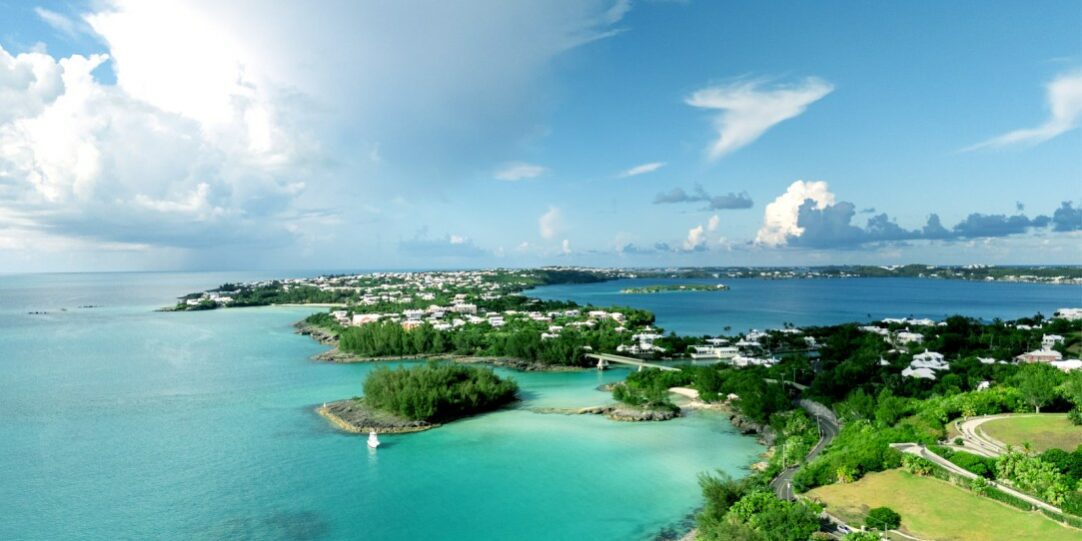
People around the world mostly know Bermuda for one thing: the mysterious Bermuda Triangle, also known as the Devil’s Triangle. Now, however, scientists have discovered a never-before-seen 12.4-mile-thick rock layer in the waters beneath Bermuda that has them baffled.
The origin of this massive stone structure hidden beneath Bermuda is not completely clear. However, its discovery may provide answers to some questions scientists have had about the tropical island for decades.
There is one particular question that the discovery may finally answer. Why, more than 30 to 35 million years after Bermuda’s volcanoes stopped erupting, has the island never sunk?
“Bermuda is an example of a hotspot volcanic ocean island that has long puzzled geoscientists,” the scientists wrote in their study published in the journal Geophysical Research Letters. “When a hot mantle plume upwells beneath a tectonic plate, it often generates a chain of volcanic islands or seamounts and a wide (∼500 km) bathymetric swell. These swells are typically thought to be dynamically supported if associated with active volcanism. In the case of Bermuda, there is no evidence for a hot mantle plume or an active chain of volcanoes. However, a large bathymetric swell persists that has not yet been explained.”
Bermuda is unlike any other island in the world
The rock layer below the Bermuda‘s oceanic crust is thicker than similar layers around the world, according to Live Science.
Island chains such as Hawaii are thought to exist because of mantle hotspots, which are places in the mantle where hot material rises, creating volcanic activity. At the point where the hotspot meets the crust, the ocean floor often buoys up. But when tectonic movement slides the crust away from that hotspot, the oceanic swell typically subsides.
“The fact that we are in an area that was previously the heart of the last supercontinent is, I think, part of the story of why this is unique,” Sarah Mazza, a geologist at Smith College, who was not involved in the study, told Live Science.
“Understanding a place like Bermuda, which is an extreme location, is important to understand places that are less extreme and gives us a sense of what are the more normal processes that happen on Earth and what are the more extreme processes that happen,” said the study’s lead author William Frazer, a seismologist at Carnegie Science.