This post was originally published on here
I learned science in a classroom without a laboratory.
Like many Nigerian children, especially in rural areas, I memorised chemical reactions I never saw, machines I never touched, and experiments I could only imagine.
Years later, I earned a Bachelor’s degree in Chemical Engineering and I am now pursuing a Master’s degree in the same field.
Looking back, I often wonder how much easier and how many more students would have survived science if learning had been visual and experiential.
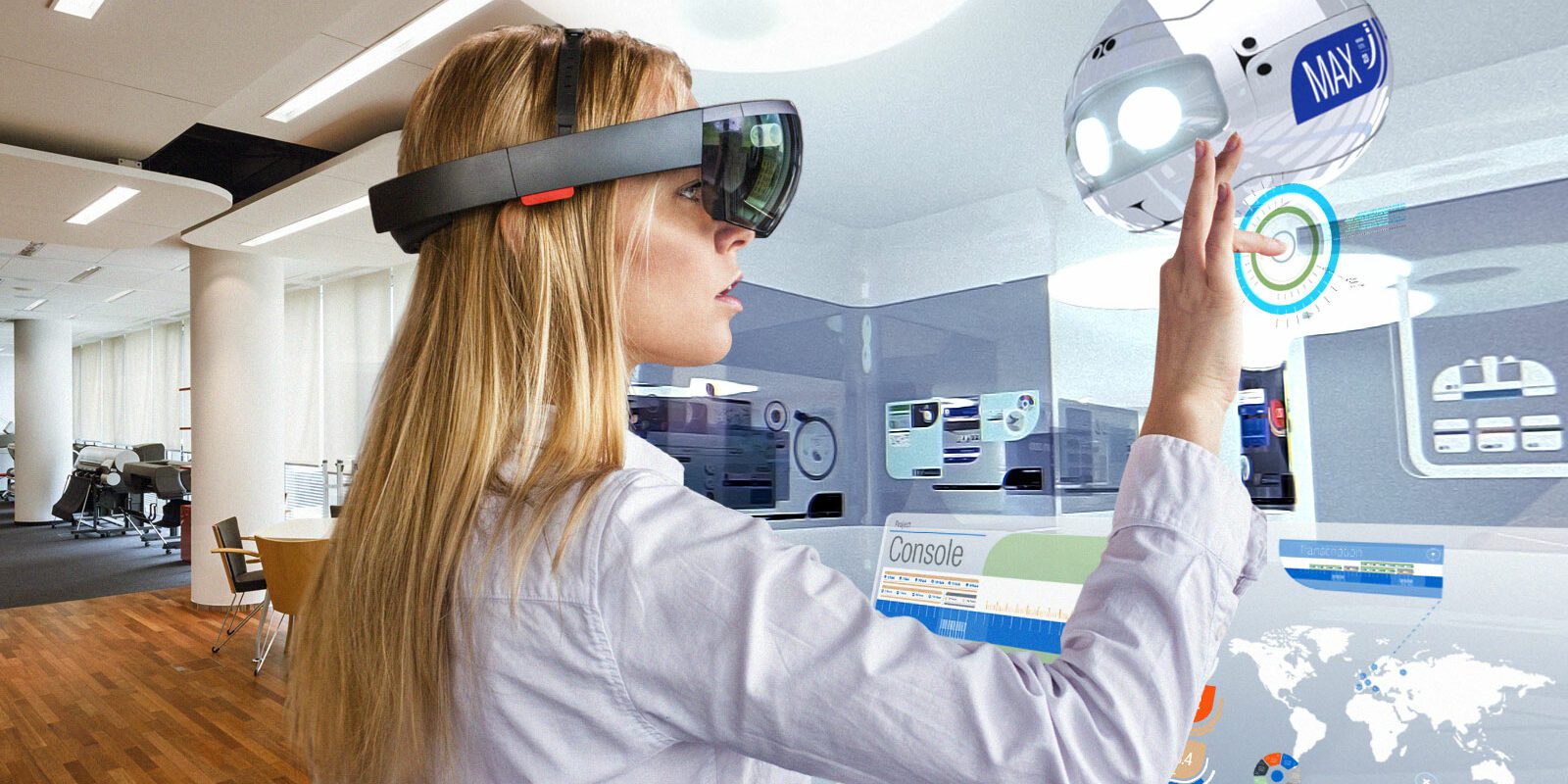
This is where mixed reality can become a game changer for science education in Nigeria.
In a typical Nigerian secondary school, a teacher draws a beaker on the chalkboard and explains a chemical reaction. Students copy notes, memorise equations, and move on.
With mixed reality, that same class can see molecules collide, observe reactions safely, and interact with 3D laboratory equipment even without a physical lab. Understanding replaces cramming.
In physics classes, students struggle with abstract topics like force, motion, and electricity. Mixed reality allows students to visualise current flow, simulate motion, and manipulate variables in real time.
Concepts that once confused students suddenly make sense. Science becomes real, not frightening. Biology students, instead of memorising diagrams, can explore the human heart, plant cells, or ecosystems in three dimensions.
For many children, this is the first-time learning feels exciting. Participation increases. Fear reduces. Confidence grows. The beauty of mixed reality is that it does not require perfection.
With basic smartphones, affordable headsets, offline science content, and solar-powered charging, even rural schools can benefit. One trained teacher and a shared device can transform an entire classroom.
Beyond understanding, mixed reality awakens ambition.
When a child virtually steps into a laboratory, refinery, or research facility, science stops being distant. The child begins to imagine a future as an engineer, scientist, or innovator.
Exposure changes direction. But this transformation cannot happen without commitment. Parents must support learning, protect educational devices, and value science education. Schools must be willing to innovate, not fear technology.
Private organisations, universities, and education-focused NGOs must invest in pilot programmes, starting with science subjects where failure rates are highest.
Nigeria cannot keep teaching science as theory alone and expect technological progress.
We cannot keep losing brilliant students because learning was abstract and discouraging.
Mixed reality will not replace teachers but it will empower them. It will not fix every problem but it will unlock understanding.
Most importantly, it will give the average Nigerian child something many never had: the chance to truly see and understand science.
The future of Nigeria’s innovation depends on what we allow our children to experience today. The time to bring science to life is now.