This post was originally published on here
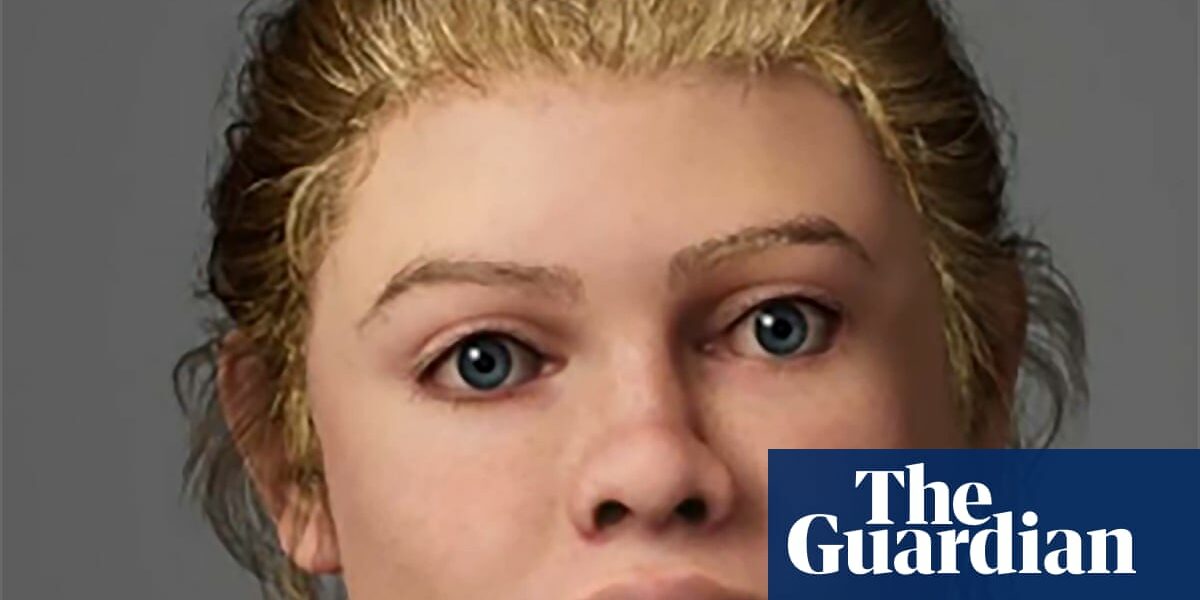
Beachy Head Woman, a Roman-era skeleton once hailed as the earliest known black Briton and who scientists later speculated could be of Cypriot descent, has now been shown to have originated from southern England.
The mystery of the skeleton’s shifting identity was finally resolved after advances in DNA sequencing produced a high quality genetic readout from the remains.
Previously, forensic anthropologists had suggested that the woman may have been of sub-Saharan Africa origin based on an analysis of the skull and, in 2016, a plaque was erected to “to commemorate the first black Briton”.
Doubts about this theory emerged when an initial DNA analysis pointed to Cyprus as a more likely origin, although this result was not conclusive.
“She’s had quite a journey,” said Dr Selina Brace, of the Natural History Museum in London, and senior author of the latest research. “She was held up as a public figure. Now she’s being used to show how science advances. She’s just this local girl who grew up in Eastbourne.”
The skeletal remains were uncovered in 2012 in the collections of Eastbourne town hall, with details on the box she was found inside suggesting the skeleton had been found at the nearby headland, Beachy Head, in the 1950s.
Radiocarbon dating showed the woman died between 129 and 311AD, corresponding to the Roman occupation of Britain. Analysis of her skeletal remains suggest she was about 18 to 25 years old when she died and stood at just over 4.9ft tall. A healed wound on her leg suggests a serious but non-fatal injury at some point in her life. Dietary analysis looking at the carbon and nitrogen values in her bones also revealed that her diet was likely to have included a lot of seafood and that she had lived in the local area.
However, the story Beachy Head Woman became more intriguing when an initial skull morphometry analysis suggested she originated from sub-Saharan Africa, a finding that featured in a David Olusoga’s 2016 BBC series Black and British: a Forgotten History (later versions removed the segment, in response to updated findings).
“A number of features for the skull suggested that it could be from sub-Saharan Africa. Everything was couched in some caution, though,” said Prof Caroline Wilkinson, a forensic anthropologist at John Moores University, who performed the initial analysis and is a co-author of the latest findings.
More recently, Wilkinson added, there has been a shift away from making ancestry classifications based on skull shape. “We know that variation in faces overlaps between different populations,” she said.
When Brace and colleagues attempted a DNA analysis in 2017, the results strongly suggested the skeleton was not of African origin and, after a vote by parish councillors, the plaque was taken down. Cyprus was a closer match, but the findings were inconclusive as the DNA was so degraded that only a tiny fraction of the genome had been retrieved.
The latest analysis used a technology known as capture arrays, which are designed to pull out tiny fragments of ancient DNA so that a more complete sequence can be patched together. This produced a more than tenfold improvement in the DNA coverage and revealed that Beachy Head Woman descended from the local British population of Roman-era southern England.
“It doesn’t alter the story of Britain,” said Brace. “It just alters her story and we owed it to her to put that right.”
The findings are published in the Journal of Archaeological Science.