This post was originally published on here
A single blood protein can make aging stem cells act young again.
As people age and notice changes like graying hair or reduced muscle strength, their immune system also undergoes shifts. One key change involves the stem cells that give rise to blood and immune cells, which can accumulate mutations over time and raise the risk of cancer or other problems.
Scientists at the University of Illinois Chicago have identified a cellular process that contributes to this form of aging. Their research, reported in the journal Blood, points to declining levels of a protein known as platelet factor 4 as an important factor. When the team added this protein back to older blood cells, they were able to reverse several aging-related changes, suggesting a potential target for treating or preventing disorders of the blood and immune systems.
Blood stem cells and immune balance
Hematopoietic stem cells, often referred to as blood stem cells, reside in the bone marrow and serve as the source of the body’s blood and immune cells. “Our hematopoietic stem cells are very rare,” said UIC’s Sandra Pinho, associate professor of pharmacology and regenerative medicine in the College of Medicine. “We call them the Holy Grail of the immune system.”
In younger individuals, these stem cells readily produce both main categories of blood cells. One group is myeloid cells, which include certain immune cells along with red blood cells that carry oxygen. The other group is lymphoid cells, which include T and B cells that play a central role in defending the body against infections.
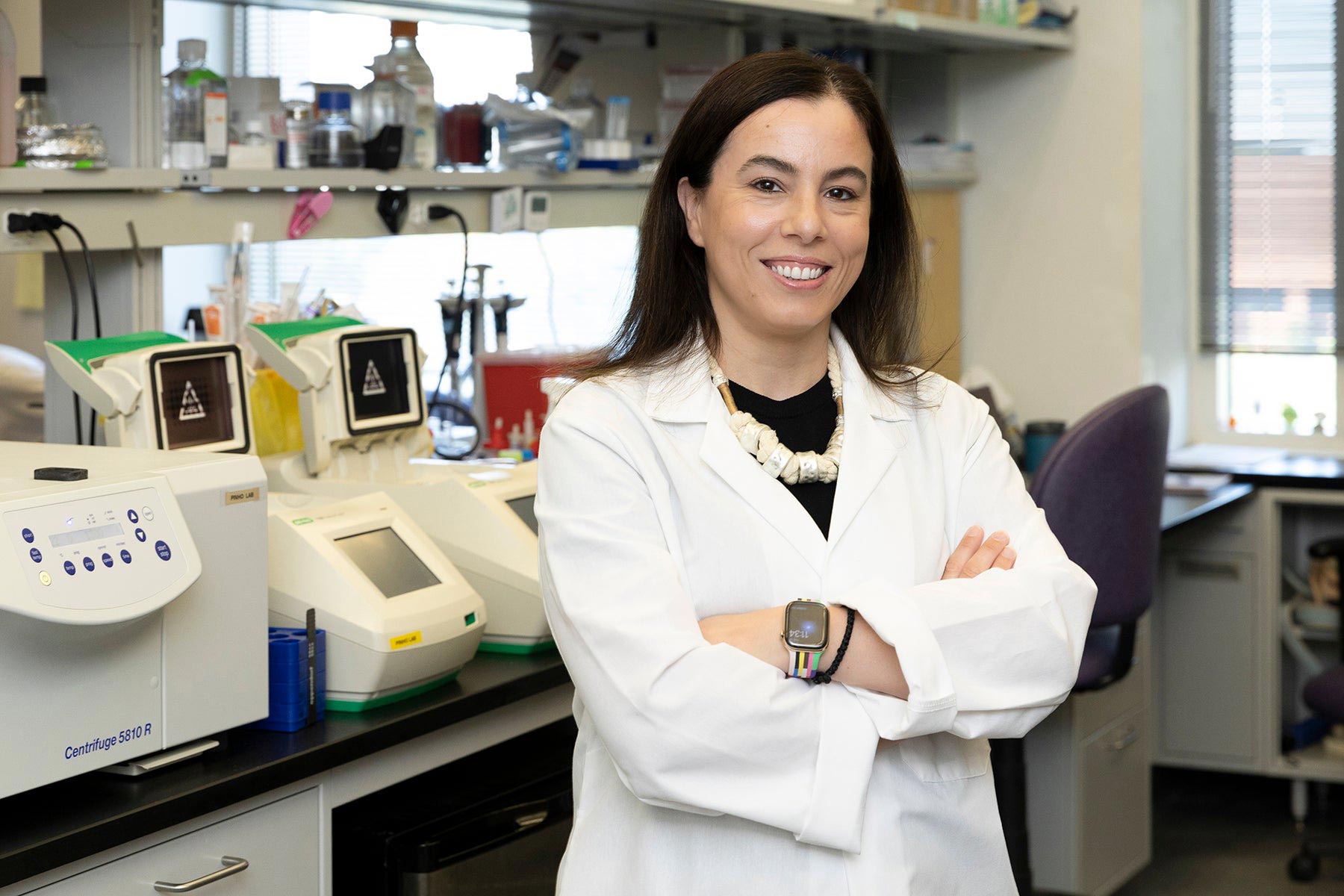
But as the body ages, the hematopoietic stem cells are more inclined to become myeloid cells and make fewer and fewer lymphoid cells. This, in turn, changes how aging peoples’ immune systems act. “That’s one of the reasons why, normally, older individuals are not used as donors for bone marrow transplantation, because their stem cells are not as potent,” Pinho said.
Platelet factor 4 as a regulator
In mice and in human bone marrow samples, Pinho and her colleagues discovered that platelet factor 4 is heavily involved in this aging process. In young mice and people, platelet factor 4 acts as a messenger, telling hematopoietic stem cells, especially the ones that generate myeloid cells, to stop multiplying and preventing them from proliferating out of control. With age, the immune cells produce less platelet factor 4, allowing them to proliferate.
“When stem cells start to divide more often than they should, and if their proliferation is not regulated, they can accumulate mutations over time,” said Pinho. In humans, these mutations can lead to inflammation, increase the risk of blood cancers, and even contribute to cardiovascular disease.
Reversing aging signals in stem cells
But incredibly, the scientists found that supplying platelet factor 4 to older mice undid signs of aging in their hematopoietic stem cells. They gave the animals a blood infusion of platelet factor 4 every day for over a month and found that their immune and blood cells appeared and acted much younger.
The same was true when the researchers added the protein to older human stem cells in experiments in the lab. “It rejuvenated the aging of the blood system,” Pinho said.
Though the effect was strong, platelet factor 4 won’t be a silver bullet that reverses the aging of all tissues and prolongs the lifespan of elderly human patients alone, Pinho said. But it could be a component of other rejuvenation methods to positively affect age-related diseases.
“It’s clear evidence that it’s possible to reverse, intrinsically, certain age-associated disorders,” Pinho said.
Reference: “Platelet factor 4 regulates hematopoietic stem cell aging” by en Zhang, Charles E. Ayemoba, Anna M. Di Staulo, Kenneth Joves, Chandani M. Patel, Eva Hin Wa Leung, Maura Lima Pereira Bueno, Xiaoping Du, Mortimer Poncz, Sang-Ging Ong, Claus Nerlov, Maria Maryanovich, Constantinos Chronis and Sandra Pinho, 4 December 2025, Blood.
DOI: 10.1182/blood.2024027432
Never miss a breakthrough: Join the SciTechDaily newsletter.
Follow us on Google and Google News.