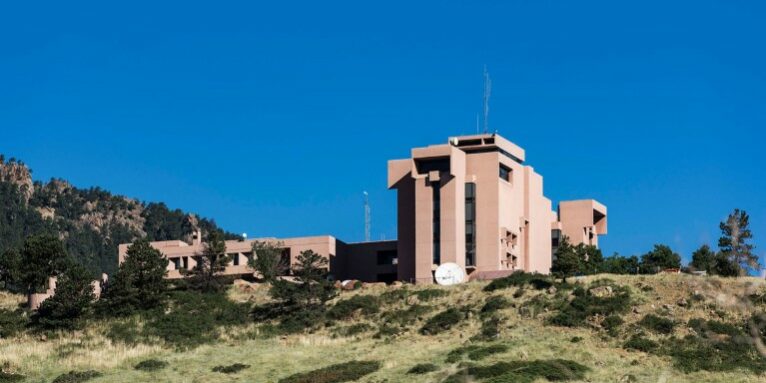
The National Center for Atmospheric Research in Boulder, Colorado, has been targeted for breakup by the Trump administration.Credit: John Greim/LightRocket/Getty
New Orleans, Louisiana
The administration of US President Donald Trump intends to dismantle the National Center for Atmospheric Research (NCAR), a world-leading Earth-science centre in Boulder, Colorado. The centre’s modelling and Earth observations underpin a wide range of US and global research, especially on climate.
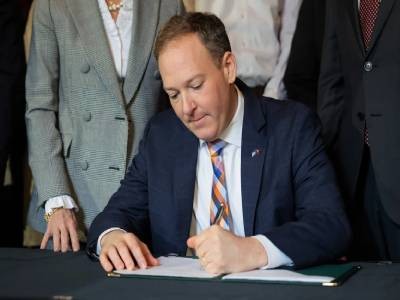
“This facility is one of the largest sources of climate alarmism in the country,” wrote Russell Vought, Trump’s budget director, announcing the planned closure in a post yesterday on the social-media platform X. In a statement, the White House called NCAR “the premier research stronghold for left-wing climate lunacy”. The plan was first reported by USA Today.
The White House said that the National Science Foundation (NSF), which provides funding for the centre, “will be breaking up NCAR to eliminate Green New Scam research activities. Any vital functions, such as weather modeling and supercomputing, will be moved under the purview of another entity or location.”
On Wednesday, the consortium that runs NCAR received a letter of intent from the NSF regarding the planned breakup of NCAR, consortium president Antonio Busalacchi told Nature. The letter requested information regarding divesting, transferring or restructuring the various components of NCAR. It mentioned NCAR’s research aircraft fleet and its supercomputing center in Cheyenne, Wyoming, as components that might be relocated. “Morale is terrible,” Busalacchi says.
Any such action will be challenged by members of Congress. “We will fight this reckless directive with every legal tool we have,” Joe Neguse, a Democrat who represents Boulder in the US House of Representatives, said in a statement. Congress sets the federal budget and can direct the US government to fund NCAR.
A non-profit consortium of more than 130 colleges and universities, known as the University Corporation for Atmospheric Research (UCAR), operates NCAR for the NSF. The most recent agreement between the NSF and UCAR, which was signed in 2023, provides US$938 million to run NCAR for five years. Cancelling that award would eliminate the majority of NCAR’s annual budget. The rest of the budget comes from an array of federal and non-federal sources.
Central resource
News of the intended closure rippled quickly through the earth science community, with many starting a #SaveNCAR discussion across social-media platforms. “Dismantling NCAR is like taking a sledgehammer to the keystone holding up our scientific understanding of the planet,” wrote Katharine Hayhoe, a climate scientist at Texas Tech University in Lubbock, on social media, adding that the laboratory is the “global mothership” of atmospheric science.
The move “is just another unbelievably reckless blow to American science,” says Dawn Wright, an oceanographer and geographer at Esri, a geographic information system company in Redlands, California. “If the NSF does follow through with these plans to break up NCAR, that’s just going to decimate a huge chunk of the US climate research that we all depend on.”
The NSF established NCAR in 1960 to support US atmospheric science research that requires computing or other resources beyond the means of any single institution. “If you cancel this, you will devastate atmospheric science,” says a researcher who formerly worked at the NSF and requested anonymity because of the sensitivity of the situation. “That’s different from other sciences that are more distributed.”
Work at NCAR played a key part in the rise of modern weather and climate forecasting. For instance, the lab pioneered the modern dropwindsonde, a weather instrument that can be released from an aircraft to measure conditions as it plummets through a storm. The technology reshaped the scientific understanding of hurricanes, says James Franklin, an atmospheric scientist and former branch chief of the hurricane specialist unit at the US National Hurricane Center in Miami, Florida.
Enjoying our latest content?
Log in or create an account to continue
Access the most recent journalism from Nature’s award-winning team
Explore the latest features & opinion covering groundbreaking research