This post was originally published on here
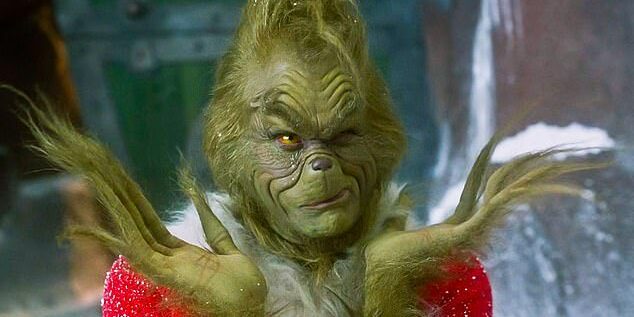
He’s the unique grumpy green creature born from Dr Seuss‘s imagination – but a scientist has now figured out which animals the Grinch resembles the most.
Despite being one of the holiday season’s most familiar icons, it’s impossible to pin him to one specific species.
With his snub nose, pot belly, yellow eyes, long fingers and bright green fur, he truly is in a league of his own.
Lucy Hyde, a lecturer in anatomy at the University of Bristol, has 14 years of experience teaching the structure of the human body.
Now, she has turned her attention to the Christmas villain, in a bid to unmask him once and for all.
‘Beneath that snarl and green fur, what kind of creature is he, really? Not even Dr Seuss really had an answer,’ she wrote on The Conversation.
‘As an anatomist, I can’t help but wonder what the Grinch would look like on the dissection table – and what his skeleton, muscles and brain can tell us about his unique origins.’
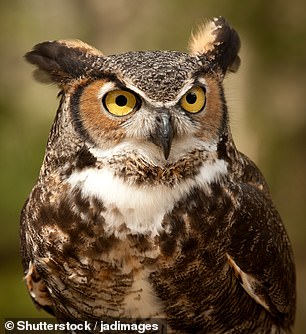
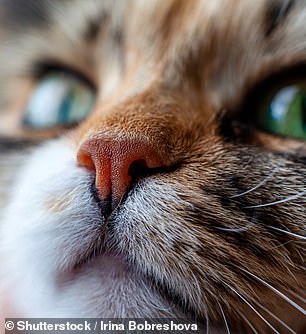
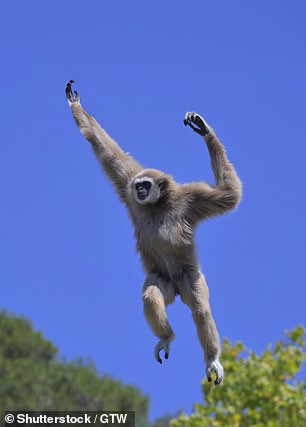
Beneath his grouchy exterior, the Grinch is actually an unusual blend of monkey, dog, cat and owl, she said.
The skull
The Grinch’s skull would be quite unlike anything found on Earth or in the fictional town of Whoville, Ms Hyde explained.
‘Structurally, the Grinch’s facial skeleton would blend primate and canine traits: short broad snout, high cranium and powerful jaws,’ she said.
‘It’s a face evolved for expression, adeptly capable of sneering, gloating and ultimately smiling with genuine warmth.’
His cheekbones are broad and flared to help accommodate the large muscles needed to lift the corners of his mouth into his trademark exaggerated smirk, she explained.
A large bony canal would exist underneath his eyes, carrying nerves to his whisker-like facial hairs. ‘Like a cat’s whiskers, they’d help him sense approaching Whos,’ Ms Hyde said.
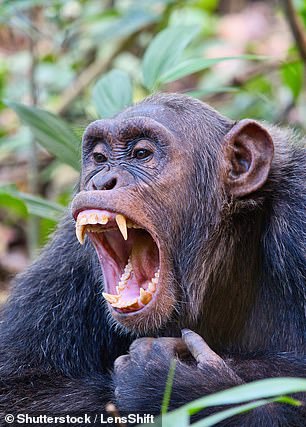
‘His teeth would be similar to a chimp’s, with sharp canines for tearing, sturdy molars for grinding tougher festive fare and incisors adapted for nibbling fruitcake or the occasional candy cane.’
Meanwhile his upper jaw would have to be ‘robust and slightly vaulted’ in order to give resonance to his infamous laugh.
The face
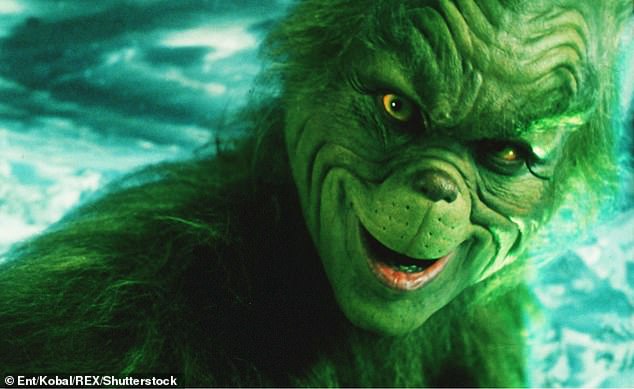
The Grinch’s eyes, with large, forward-facing eye sockets, suggest a crepuscular lifestyle – most active at dawn and dusk – Ms Hyde said. Meanwhile their yellow colour is comparable to the eyes of owls and cats, which are adapted to low light.
His nasal aperture – the pear-shaped, bony opening at the front of the skull – would be tall and narrow with a complex set of internal bones to warm the cold alpine air where he lives, she explained.
Meanwhile the constant twitching of his nose might indicate a highly-attuned sense of smell, while his repertoire of expressions indicates a complex set of facial muscles.
The spine
‘His spine would probably resemble a cross between a gibbon and a cat – long, flexible and sinuous,’ Ms Hyde said.
His lower back would be ‘extended and highly mobile’, allowing for the characteristic slouch and coiled posture, while his neck bones would be elongated to let him tilt and crane his head.
‘Like a cat, he’d be digitigrade – meaning he walks on the balls of his feet and toes rather than on the soles,’ Ms Hyde added. ‘This stance softens each step.’

The brain
Judging by his behaviour, the Grinch’s frontal lobes would be on the small side, explaining his flat and small forehead, she said.
Since this region governs planning, impulse control and moral reasoning, it would explain why he lacks these abilities at the start of the story.
His temporal lobes – which process sound and memory – would be large and active, while parts of the brain that control vision, coordination and spatial awareness would also be well developed.
The heart
‘No anatomical analysis of the Grinch is complete without addressing the moment when ‘his heart grew three sizes’,’ Ms Hyde added.
‘Biologically, such a sudden expansion would be catastrophic. In humans and other mammals, an enlarged heart is a dangerous condition linked to heart failure, arrhythmias and poor pumping efficiency.’
In fact, references to his ‘growing heart’ are likely a metaphor for his brain becoming more socially attuned as the story develops, she said.
‘To anatomists, the Grinch is more than a Christmas curiosity,’ Ms Hyde concluded.
‘He’s a case study in form and function. And in his final form, anatomy and morality align.
‘The muscles that once powered a sneer now lift into a genuine smile. The hands that stole presents now carve roast beast. His limbic system now fires with satisfaction.
‘So perhaps the real message of the Grinch’s anatomy is this: change is always possible.’