This post was originally published on here
A rare earthquake in Myanmar revealed how a long, mature fault can transmit energy directly to the surface. The discovery may change how scientists evaluate the danger posed by major faults around the world.
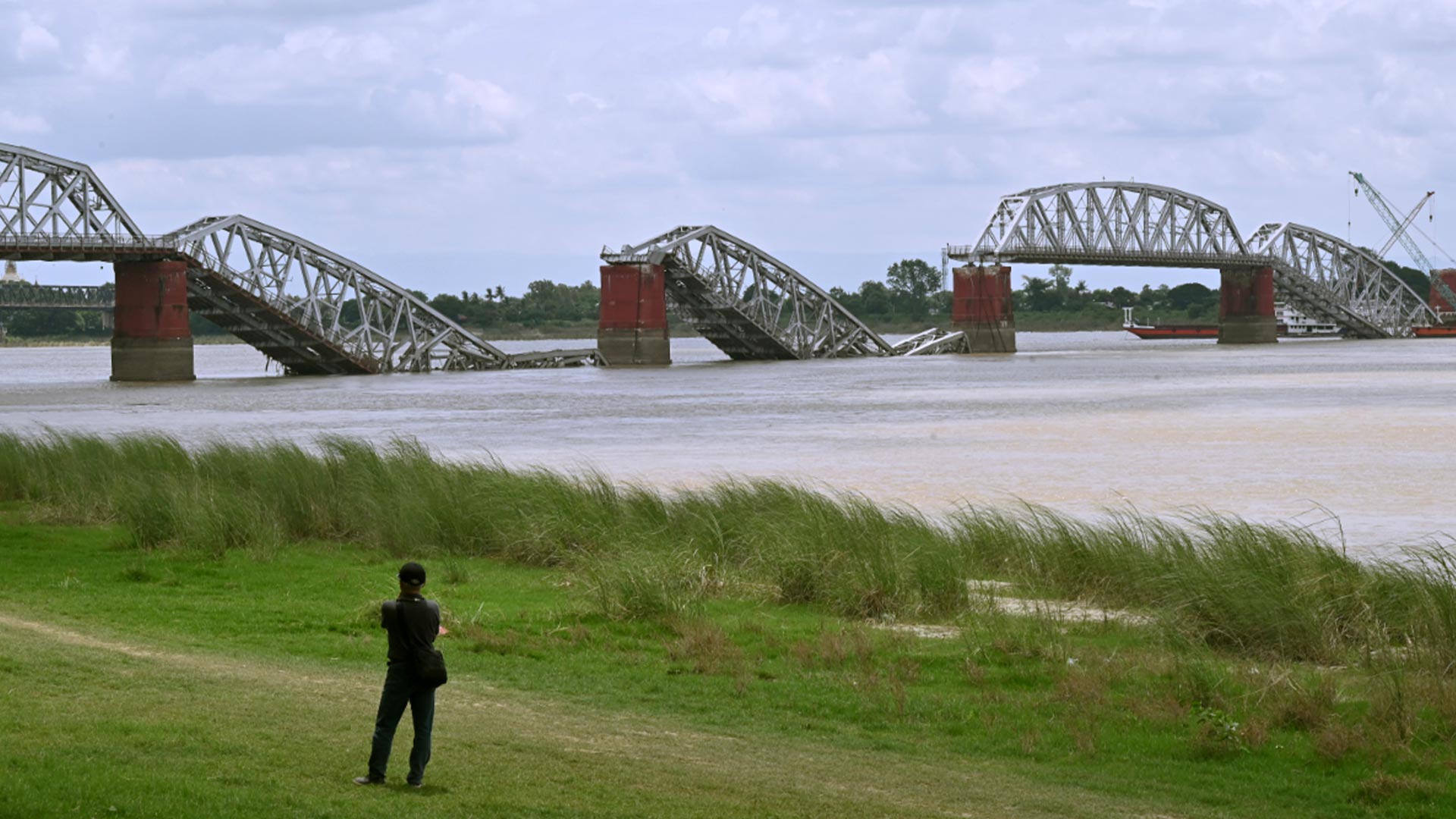
The powerful earthquake that struck Myanmar on March 28, 2025, has provided scientists with a rare opportunity to closely examine how some of the most dangerous fault systems on Earth behave, including those similar to California’s San Andreas Fault. While earthquakes are typically chaotic and difficult to interpret, this event occurred along an unusually straight and geologically “mature” fault. That unique setting created near ideal conditions for researchers to observe how energy is released during a major continental rupture.
Because the fault involved has been active for millions of years, it lacks many of the bends and rough features that complicate most earthquakes. This simplicity allowed scientists to see seismic processes more clearly than usual.
Scientists Target a Longstanding Earthquake Mystery
An international research team led by The University of New Mexico set out to study how mature faults rupture during large earthquakes. Their work focused on a long debated question known as the “shallow slip deficit.” In many earthquakes, scientists observe that movement at the Earth’s surface is far smaller than movement deep underground. This has raised uncertainty about whether some of the energy is absorbed by surrounding rock or simply not captured by measurements.
By examining the 2025 Myanmar earthquake, the researchers aimed to determine how energy travels along an ancient and relatively simple fault system, and whether deep motion is fully transferred to the surface.
The findings were published in Nature Communications in a study titled, “Mature fault mechanics revealed by the highly efficient 2025 Mandalay earthquake.” The research was led by UNM Assistant Professor Eric Lindsey in collaboration with scientists from Taiwan and Myanmar.
Turning to Satellites When Fieldwork Was Impossible
Ongoing armed conflict in Myanmar, combined with infrastructure damage caused by the earthquake, prevented scientists from conducting rapid field investigations. Instead, the research team relied entirely on satellite-based remote sensing to gather their data.
“We used two primary satellite technologies: Optical Image Correlation (using Sentinel-2 satellites) to track how pixels in satellite photos moved between two images collected before and after the quake, and Interferometric Synthetic Aperture Radar (InSAR) using Sentinel-1 satellites, which measures the change in distance to the ground from the satellite between two consecutive passes. These tools allowed us to measure ground shifts with incredible precision without setting foot in the danger zone,” explained Lindsey.
How InSAR Tracks Subtle Ground Changes From Space
InSAR operates much like a highly advanced version of “spot the difference,” using radar signals to detect extremely small changes in the Earth’s surface from orbit. As a satellite travels overhead, it sends radar pulses toward the ground and records the signals that bounce back.
“By comparing the time it takes for the signal to bounce back to the satellite from each point on the ground, we can detect changes in the ground’s elevation or position down to a fraction of an inch. It allows us to map exactly how the Earth warped over an area hundreds of miles wide, day or night, and through clouds,” said Lindsey.
This technique made it possible to reconstruct the earthquake’s effects across a vast region with exceptional detail.
A Rupture Spanning Nearly 500 Kilometers
The earthquake rupture extended for almost 500 kilometers. To visualize that scale, it is comparable to a crack stretching from Albuquerque to Denver, with the land on either side suddenly sliding past each other by 10 to 15 feet.
“Most earthquakes we study break much shorter fault segments—perhaps 30 to 60 miles long. It is incredibly rare and scientifically significant to see a rupture that is this long, continuous, and straight,” Lindsey said.
Such a long and uninterrupted rupture provided researchers with an exceptional natural experiment.
A Fault Comparable to California’s San Andreas
The earthquake occurred along the Sagaing Fault, which is a strike slip fault. In this type of fault, the two sides move horizontally past one another, similar to cars brushing against each other on a highway.
“This is just like the San Andreas fault in California,” Lindsey said. “We also describe the Sagaing fault as ‘mature,’ which means it has been slipping in the same way for millions of years. Over that vast time, the rough edges and bends in the fault have been ground down. Because it is so smooth and straight, the earthquake rupture could travel very efficiently across a huge distance.”
That long history of motion has shaped the fault into a structure that allows seismic energy to move with minimal resistance.
No Evidence of Missing Surface Motion
For many years, scientists have noted that surface movement during earthquakes is often much smaller than motion deep underground, a phenomenon referred to as the “Shallow Slip Deficit.”
“We found that in the 2025 Mandalay earthquake, this deficit was non-existent. The massive amount of slip that happened miles underground was transferred 100% to the surface,” explained Lindsey.
This outcome differs sharply from many recent earthquakes, where surface movement was reduced because energy was spread across networks of small fractures rather than concentrated along the main fault.
“This shows that on mature, smooth faults, the energy is highly focused and comes right to the surface,” Lindsey said. “This is significant because it means the ground shaking near the fault line might be more intense than our current hazard models predict for these types of faults.”
One Earthquake Linked Multiple Fault Segments
The research also revealed that the rupture was able to connect several fault sections into a single, continuous 500 km event. It crossed boundaries that scientists had previously believed might stop an earthquake from spreading further.
“We found that the fault followed a historical pattern: it slipped less in areas that had experienced earthquakes in the 20th century and slipped the most in areas that hadn’t broken since the 1800s,” Lindsey said. This behavior is known as “slip predictability.” It suggests scientists may be able to estimate how much movement could occur on fault segments that have not yet ruptured, improving long-term earthquake planning and preparedness.
Why Satellite Science Matters for Public Safety
The study underscores the growing importance of satellite observation in modern earthquake science. Even in a conflict zone where traditional fieldwork was not possible, researchers were able to produce one of the most detailed views of earthquake mechanics ever captured.
“It’s a testament to how global scientific collaboration and open data access (like the Copernicus Sentinel missions) can help us understand natural hazards that affect millions of people,” Lindsey said. “The significance lies in safety. This earthquake showed us that mature faults can be much more efficient at transmitting energy to the surface than younger ones, which has direct implications for how we build infrastructure to withstand the ‘Big One’ in the United States.”
Applying These Methods Closer to Home
Lindsey noted that New Mexico sits on a very different fault system called the Rio Grande Rift, which is pulling apart inside of sliding sideways.
“The remote sensing techniques we refined in this paper are the exact same methods we can use to monitor safety issues close to home,” he explained.
By using InSAR to track ground sinking caused by aquifer depletion in New Mexico, along with slow ground movement linked to the rift and deep magma body inflation beneath Socorro, researchers can help state officials better allocate resources and prepare for future seismic risks.
“Understanding the physics of ‘mature’ faults helps us understand the general mechanics of the earth’s crust, which improves earthquake hazard models globally,” Lindsey concluded.
Reference: “Mature fault mechanics revealed by the highly efficient 2025 Mandalay earthquake” by Eric O. Lindsey, Yu-Ting Kuo, Yu Wang, Myo Thant and Tha Zin Htet Tin, 8 December 2025, Nature Communications.
DOI: 10.1038/s41467-025-65942-2
Never miss a breakthrough: Join the SciTechDaily newsletter.
Follow us on Google and Google News.